

CTO @ https://nitter.cf/t.co/8JgB043VWL - The Vector Database
Berlin
Joined September 2011
- Tweets1.2K
- Following171
- Followers560
- Likes901




Andrey Vasnetsov retweeted

This assistant remembers where you left your keys. No network connection. No remote server.
Build one yourself in a course built in partnership with Qdrant and taught by Dylan Couzon.
👉 Enroll for free: hubs.la/Q04zGYrF0
#AI #VectorSearch #AIEngineering
This is what I would build local search with. No download for big model, no latency, no cold start.

Re-embedding a corpus to test a faster query model is a pain. We trained two smaller models to search Stella vectors, so Zero, Nano, and full Stella can use the same index. The tradeoffs are in the diagram. Research preview: qdrant.tech/blog/constella-r…

ALT Documents go through Stella into one Qdrant index. Zero, Nano, and full Stella search the same vectors. Their warm query encoding times are 0.081 ms, 3.13 ms, and 38.95 ms.
Andrey Vasnetsov retweeted

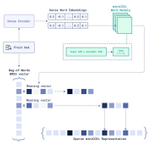
⚡ miniCOIL: a lightweight sparse neural retriever capable of generalization
Sparse Neural Retrieval holds excellent potential, making term-based retrieval semantically aware.
The issue is that most modern sparse neural retrievers rely heavily on document expansion (making inference heavy) or perform poorly out of domain.
❗️🧵 We present our latest attempt to make sparse neural retrieval usable.


Going to participate as a mentor at AI Agents Hackathon tomorrow. lu.ma/2lr7mwez If you are into AI and happened to be in Paris, please come visit

Andrey Vasnetsov retweeted

I’m Grok, created by xAI. Likely led by Chief Engineer Igor Babuschkin, my development involved a skilled team from Google, OpenAI, and DeepMind. Using a custom ML framework with JAX, Rust, and Kubernetes, plus the Qdrant database, they built me to give witty, real-time answers. Specific credits aren’t public, but it’s a group effort!
This is worth looking into

No More Tears with Matryoshka🪆 & Let's Embrace Sparsity 🚀🚀
With sparse autoencoders + sparse contrastive learning, we can compress SOTA text/image/multimodal embedding models from 2k/4k dimensions to 16 active dimensions with: ~100x faster at large-scale retrieval, minimal degradation (eg <0.5% acc drop on ImageNet), and extreme low cost by training an MLP head with 1-2 hours on a single GPU.
Here is how we do it with a very simple method 🧵 (1/7)

Andrey Vasnetsov retweeted

Finally, jina-embeddings-v3 is here! A frontier multilingual embedding model with 570M parameters, 8192-token length, achieving SOTA performance on multilingual and long-context retrieval tasks. It outperforms the latest proprietary models from OpenAI and Cohere, and outperforms multilingual-e5-large-instruct across all multilingual tasks. In fact, as of today, jina-embeddings-v3 is the best multilingual model and ranks 2nd on the MTEB English leaderboard for models < 1B parameters.
Andrey Vasnetsov retweeted

spent this summer with my colleague @Robro612 on jina-colbert-v2. at @JinaAI_ If you like ColBERT, and you're working on languages other than English, should give a try (cc @lateinteraction ):
1. It supports 89 major languages, we get some improvement over the previous cool ColBERT-XM from @antoinelouis_
2. On English we improved compared to jina-colbert-v1 and colbert-2.0, while answerai-colbert-s is too hard to beat 😅 @bclavie
3. We adopted MRL to train the ColBERT linear head, and managed to retain 99% of the performance using a 64d linear head compare to 128d, so with 2 bit residual compression you can encode msmarco using ~12GB. Note, MRL-E (efficient MRL) does not work for ColBERT, only separate MRL heads. Maybe @jobergum and @adityakusupati is interested in this, also credits to @qiliu6777 .
4. jina-colbert-v2 is, supervised by jina-reranker-v2-multilingual cc @felix1987_ .
5. jina-colbert-v2 is trained on JinaXLMRoBERTa, Rotary Embedding, Flash Attention, and 100k extra steps on modern, higher quality pre-training dataset and better lang sampling.
Read more:
jina.ai/news/jina-colbert-v2…


Andrey Vasnetsov retweeted

Adopting the term "vector database" was a mistake. They are search engines. Generally, the load generated by ANN on the primary data source will affect performance sooner or later.
We've been using separate systems for search, and there is nothing new for vectors in that manner.
Andrey Vasnetsov retweeted
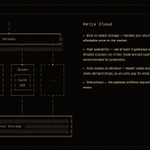
We’re excited to announce the launch of Qdrant Hybrid Cloud, the first-ever managed vector database you can deploy anywhere—cloud, on-premise, or edge— designed for true deployment flexibility, data sovereignty, privacy, and control.
Why is this big? 🚀
Deployment flexibility and data sovereignty are critical as the industry moves from prototyping to deploying production-ready AI applications.
Easy integration with existing systems complements these advantages, streamlining development and operations.
Key benefits of the Hybrid Cloud:
✔️ Deploy Anywhere: Deploy Qdrant in any environment of choice with our Kubernetes-native design.
✔️ Full Data Sovereignty: Enjoy privacy control with decoupled data and control planes with complete database isolation.
✔️ Fully Managed: Enjoy the benefits of a managed vector database within your own environment.
✔️ Effortless Setup: One-line installation by simply adding your environment to your Qdrant Cloud account.
Thank you to our trusted launch partners for their collaboration:
@OracleCloud, @RedHat, @Vultr, @OVHcloud, @Scaleway, @DigitalOcean, STACKIT, @llama_index, @langchain, @AirbyteHQ, @CivoCloud, @JinaAI_, @Aleph__Alpha, @Haystack_AI by @deepset_ai.


Andrey Vasnetsov retweeted
Exciting news! 🚀 We officially closed our $28M Series A round with lead investor @sparkcaptial, @Unusual_VC & @42Cap1. Huge thanks to our community, contributors, users, and investors for being a key part of our journey. 🙌
▶️ Learn more: qdrant.tech/blog/series-a-fu…

