

Cities Crime Design Science Fiction Landscape Futures | @NYTimes-bestseller, https://nitter.cf/t.co/3iFmOpmS5F | Co-author https://nitter.cf/t.co/ejDz75Q7eE
Los Angeles, CA
Joined August 2008
- Tweets1.1K
- Following809
- Followers37.4K
- Likes47.7K







Pinned Tweet
Stoked to have new fiction out about two brothers in rural Illinois who build a tunneling machine from abandoned farm equipment, then set off together under the Mississippi. Part Mark Twain, part Jules Verne—the Wright Brothers of the American underground. nautilus.plotter.cc


Interesting pic. Printing is a form of controlled precipitation—which implies that the reverse might also be true: we could transform natural precipitation into a kind of micromaterials-delivery mechanism. Terraform whole landscapes through atmospheric deposition at scale.

If that didn't drop straight out of science fiction, nothing has.
And in a way it did. It's a microscopic view of an inkjet printer depositing ink onto paper.
📸 Ole Bielfeldt
Source:
nikonsmallworld.com/gallerie…

“Skin offers a uniquely accessible substrate for implantable display materials”—doomscroll your own body soon with new tattoo inks that appear/disappear and even change color when exposed to different wavelengths of light, “a tattoo ink that is permanent yet rewritable, pointing toward reversible and reprogrammable body art, permanent makeup, and medical tattoos.” cell.com/matter-light/fullte…

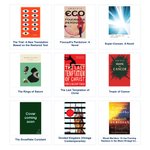
Majorly procrastinating this evening, so thought I’d jump on the bandwagon with a few of those book grids going around. Here are some fiction, nonfiction, and art/visual books that have stuck with me or that influenced my life in some way.
“Castles” by Alan Lee got me into architecture (and Beowulf and Dracula and Tolkien and Kafka!) when I was 8 years old, arguably the most influential Christmas present I’ve ever received; “A Secret Location on the Lower East Side” got me into the Beats, samizdat lit, and poetry when I was a teenager; “The Tomb of Agamemnon” is a superb, concentrated look at archaeology, ideology, and the tragic waste of WWI; “The Trial” remains for me the strongest allegory of self-entrapment, both political and theological; “The Strait Gate” is a history of doorways and thresholds, so is captivating in its very premise; “Map of a Nation” is a history of the British Ordnance Survey and is particularly excellent if you’re into cartography; “Wildwood” reads like an extended dream-sequence exploring forests around the world; the engravings of Piranesi are always hovering in my brain somewhere; “Hellboy” rules, don’t fight it; “Foucault’s Pendulum” bores the crap out of everyone I’ve ever recommended it to, but I love it; “Lawrence in Arabia” shows, with genuine melancholy, what nearly was, and explains a great deal of our contemporary geopolitics; “Shelley: The Pursuit” blew my mind and turned me on to Holmes’s other Romantic work; “The Lost History of Christianity” was a genuine page-turner for me and I’m embarrassed to say I was completely ignorant of its history; “The Snowflake Constant” is a surreal, Kafkaesque story of mathematics, midlife delirium, and, of all things, Noah’s Ark; John McPhee’s geological writing arguably changed my life (though I could easily have included his book “The Control of Nature”); the Pamphlet Architecture series was a huge influence on me in my 20s; William Blake + Dante = two great tastes that taste great together; etc. etc.
I could have included more Ballard and more Sebald, and likely should have added H.P. Lovecraft or Borges, not Henry Miller, but so be it. “Blood Meridian” is probably cheesy to include, but it’s incredible. I’ve reread “Rings of Saturn” multiple times in different countries and would bring it with me to a desert island at this point. “The Imperial Archive” is academic, but it should be of immense interest to fans of Borges, libraries, and classic spy fiction; I read it 30 years ago and still think about it monthly.
Anyway, just some books I’ve enjoyed and frequently think about.


Really clever program here in LA matches families who lost their homes in the 2025 wildfires with houses that are about to be demolished; those houses are then physically moved to the burn zone and reconstructed faster, at much less cost, while saving architectural gems, like old Tudors and Craftsmans. Plus, the story is by my wife! A few pics, below, from when I tagged along, moving houses at midnight.


House moving was once routine in America—and, especially, in Los Angeles. In the late 19th and earliest 20th centuries, homes, greenhouses, and office buildings were routinely lifted off their foundations, and relocated, often without even disrupting the people inside. Yet as overhead powerlines and road signs were built, empty lots were filled, and labor and materials became more readily available, the practice of house moving declined.
The Eaton and Palisades fires changed the equation. For the first time in more than half a century, L.A. had a glut of vacant lots. Home-insurance companies were often unable to cover the full cost of rebuilding devastated houses. At the same time, a slew of historic houses were facing demolition. “All these houses just burned, and now we’re tearing down these perfectly cute homes,” the architect and creative director Morgan Sykes Jaybush said, “It doesn’t make sense.” Jaybush, along with some other architects, rediscovered the techniques of house moving. Nicola Twilley reports on the Altadena families who have chosen to have their homes delivered—not rebuilt—and the architects making it happen: newyorker.com/news/dispatch/…

Geoff Manaugh retweeted

Not The Boring Company.
"Their machine was the size of a school bus. It rested half-in, half-out of the ground like a whale’s back, a riotous beast of the deep now warming in the Illinois sun."
I'm hooked, @geoffmanaugh. Halfway through . . .

Stoked to have new fiction out about two brothers in rural Illinois who build a tunneling machine from abandoned farm equipment, then set off together under the Mississippi. Part Mark Twain, part Jules Verne—the Wright Brothers of the American underground. nautilus.plotter.cc
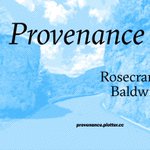
Also thrilled to have published a new short story by Rosecrans Baldwin about a wannabe American travel influencer in the mountains of eastern France, deceived by a criminal guide he wrongly trusts. Hitchcockian neo-noir for the Instagram era. provenance.plotter.cc

Stoked to have new fiction out about two brothers in rural Illinois who build a tunneling machine from abandoned farm equipment, then set off together under the Mississippi. Part Mark Twain, part Jules Verne—the Wright Brothers of the American underground. nautilus.plotter.cc
Coincidentally, I just finished reading “Futures & Ruins” by Nina Dubin, about Hubert Robert’s ruin fantasies. (Includes an interesting chapter on the rise of speculative financial instruments, and subsequent Parisian demolition and urban development.) shop.getty.edu/products/futu…


Seems as good an occasion as any to recommend Émile Zola’s novel “The Kill,” a superb example of fiction exploring real estate, land values, and financial speculation, against a near-constant baseline of demolition, as 19th-century Paris took shape. penguinrandomhouse.com/books…

Should you be looking for two hours of ambient and instrumental music “made to be listened to in parking garages,” here you go: a radio set “inspired by the parking garage as a symbol of ‘the inferno of the same.’” Niche music for everyday infrastructure. nts.live/shows/drowned-by-lo…


Really wild aesthetics here. Police wear “hyper-realistic” masks of the suspects they chase, equal parts Philip K. Dick and René Girard. Mimicry and the hunt. Imagine police show up at your door, but they’re wearing your face.

ALT Photos courtesy Canadian Press/Darryl Dyck

ALT Photos courtesy Canadian Press/Darryl Dyck

ALT Photos courtesy Canadian Press/Darryl Dyck

ALT Photos courtesy Canadian Press/Darryl Dyck


Spectacular day in Maastricht visiting 18th-century underground fortifications, a maze of brick tunnels now underlying city parks and suburban neighborhoods. Apparently, unmapped tunnels sometimes collapse in floods, leading to sinkholes in the streets above.


Finally, the Dutch stored a bunch of paintings from the Rijksmuseum down there during WWII to protect them from Nazis (and from stray Allied bombs). So there’s a whole section of the mine known as The Vault, where Rembrandts (among others) were kept safe.


Los Angeles has a long history with disaster. Last summer, I took a roadtrip with @nathanmasters and @KCET to film an episode of “Lost LA” about the 1928 St. Francis Dam collapse, a catastrophe that destroyed communities all the way to the sea. Episode premieres tonight on PBS.

Here’s a link to the episode, along with scheduled airtimes. If you know anyone who experienced the dam collapse or subsequent flood-wave—which reached 80' high in places and washed away whole neighborhoods—I’d love to hear more. pbssocal.org/shows/lost-la/e…
