

Meat Proxy. @kariarmetta is my better half. 私はまだ日本語が上手ではありません。Mangio pochi carboidrati. Valar Morghulis.
Santiago, Chile
Joined March 2008
- Tweets25.9K
- Following3.3K
- Followers1.6K
- Likes306K
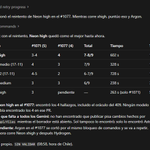








Actualización: con temperatura 0 y el borrador DSpark, Inkling 2 Mini resolvió 35 de 36 tareas de código (antes 33) y bajó de 35 a 26 s por tarea, misma calidad a ciegas. En prosa lo frena; para programar quedó por defecto.
Idea vista en @atomic_chat_hq: nitter.cf/atomic_chat_hq/status/…

Lo confirmo en una RTX 3090 con Inkling 2 Mini, contra llama.cpp oficial: 81 contra 58 tok/s (+40 %) y lee el prompt 1,9x más rápido.
En 36 tareas de código bajó de 52 a 35 s por tarea, con la misma calidad (8,3 contra 8,2, revisión a ciegas).
Ya lo dejé por defecto.
2
131
Lo confirmo en una RTX 3090 con Inkling 2 Mini, contra llama.cpp oficial: 81 contra 58 tok/s (+40 %) y lee el prompt 1,9x más rápido.
En 36 tareas de código bajó de 52 a 35 s por tarea, con la misma calidad (8,3 contra 8,2, revisión a ciegas).
Ya lo dejé por defecto.

We made Inkling 2 Mini run ~1.9x faster locally! ⚡️
Inkling 2 Mini GGUFs can now reach 125 tokens/s on a RTX Pro 6000 GPU via Unsloth, with no accuracy loss.
Run faster via Unsloth Desktop!
GitHub repo: github.com/unslothai/unsloth
GGUF: huggingface.co/unsloth/Inkli…

4
255
Actualización: puse a Inkling 2 Mini, mi modelo local para programar, contra la nube: Haiku 5.5 (Claude Code) y gpt-6-luna (Codex).
12 tareas cortas de código, 3 corridas cada una, pruebas ocultas y calidad revisada a ciegas por Gemini:
• Resueltas de 36: Haiku 36, Luna 35, Inkling 34
• Calidad sobre 10: Haiku 8,9, Luna 8,7, Inkling 8,3
• Tiempo por tarea: 18 s, 27 s y 52 s
No reemplaza a Claude Code ni a Codex: queda detrás incluso de sus modelos chicos. Sirve como plan B.
Quizás se podría dejar que Claude piense y revise, y que el local implemente. Las notas más bajas de Inkling fueron en lo delicado (reglas exactas, concurrencia, buscar la causa de un bug), justo lo que debería quedar del lado de Claude.
#LocalLLM #llamacpp
Mi mejor modelo local hoy es Qwen3.8-27B. Lo enfrenté a Inkling 2 Mini de @thinkymachines, que salió ayer, y también a modelos chicos de la nube.
💻 Mi PC: RTX 3090 24 GB, Ryzen 7 5800X3D, 64 GB RAM, Windows 10.
⚡ Velocidad, los dos en llama.cpp de @ggml_org (build b12606), caché KV q8_0, contexto 32K, todo en GPU. Tok/s en explicación / código / documento, mediana de 5 corridas alternadas:
• Qwen (UD-Q4_K_XL de @UnslothAI, 4 bits) + modelo borrador DFlash 2: 80 / 134 / 90
• Inkling (IQ4_NL de ggml-org), sin borrador porque su DSpark aún no está en llama.cpp: 57 / 57 / 54
• Qwen sin borrador: 42 / 42 / 40
Sin borrador, Inkling es ~37 % más rápido. Lo que pone adelante al Qwen es DFlash 2.
🎯 Calidad: 15 respuestas por modelo, revisión ciega con Gemini, sobre 150 (el revisor varía ±4). Las del Qwen son de llama.cpp 1.0.
• Qwen 116 vs Inkling 104 (llama.cpp oficial) y 117 vs 115 (Inkling en Unsloth Studio). Entre los dos Inkling, cara a cara, empate: 113 vs 112. Diría Qwen igual o algo mejor.
• Datos escondidos en documentos de 16K y 29K tokens: los dos encontraron 18 de 18.
☁️ ¿Y contra la nube? Otra tanda con el mismo método: gpt-6-luna 118, Qwen 116, Haiku 5.5 110, Inkling 109. Luna e Inkling sin errores graves; Qwen y Haiku con 4. En diagnóstico y textos cortos quedan parejos, pero la muestra es chica y no medí código largo ni agentes, donde espero que la nube gane.
🔧 Ajustes al Qwen probados hoy (en llama.cpp 1.0):
✅ Borrador de 4 a 6 tokens por paso: +12 % en código (ya incluido arriba)
✅ Contexto 64K con KV q8_0: cabe en 24 GB y genera igual con prompts cortos
➖ KV f16/fp8: generan igual; f16 leyó un texto largo ~19 % más rápido (indicio)
❌ MTP (9-29 % más lento) y un borrador 4B de NVIDIA (2,4-3 veces más lento)
En mi 3090, el Qwen 27B sigue de titular.
#LocalLLM #Qwen #llamacpp #IALocal
59
Lo fascinante de los computadores siempre fue poder controlar lo que hacen: que las lucecitas se prendan y se apaguen, que hagan cosas. El mayor costo era todo el tiempo que uno pasaba de cabeza escribiendo el código que lo lograra. Hoy ese es el costo menor.
A quienes más les cuesta adaptarse es a las personas del área que amarraron su identidad, su valor propio y hasta su autoimagen a escribir código, sin mirar el panorama completo.

There’s a reason software engineers who are entrepreneurs or are entrepreneurial are the most positive / excited about AI.
Yes it is rocking + transforming the software engineering profession. And yes many will thrive in this new world, and some stay behind, as all tech shifts
76
Mi mejor modelo local hoy es Qwen3.8-27B. Lo enfrenté a Inkling 2 Mini de @thinkymachines, que salió ayer, y también a modelos chicos de la nube.
💻 Mi PC: RTX 3090 24 GB, Ryzen 7 5800X3D, 64 GB RAM, Windows 10.
⚡ Velocidad, los dos en llama.cpp de @ggml_org (build b12606), caché KV q8_0, contexto 32K, todo en GPU. Tok/s en explicación / código / documento, mediana de 5 corridas alternadas:
• Qwen (UD-Q4_K_XL de @UnslothAI, 4 bits) + modelo borrador DFlash 2: 80 / 134 / 90
• Inkling (IQ4_NL de ggml-org), sin borrador porque su DSpark aún no está en llama.cpp: 57 / 57 / 54
• Qwen sin borrador: 42 / 42 / 40
Sin borrador, Inkling es ~37 % más rápido. Lo que pone adelante al Qwen es DFlash 2.
🎯 Calidad: 15 respuestas por modelo, revisión ciega con Gemini, sobre 150 (el revisor varía ±4). Las del Qwen son de llama.cpp 1.0.
• Qwen 116 vs Inkling 104 (llama.cpp oficial) y 117 vs 115 (Inkling en Unsloth Studio). Entre los dos Inkling, cara a cara, empate: 113 vs 112. Diría Qwen igual o algo mejor.
• Datos escondidos en documentos de 16K y 29K tokens: los dos encontraron 18 de 18.
☁️ ¿Y contra la nube? Otra tanda con el mismo método: gpt-6-luna 118, Qwen 116, Haiku 5.5 110, Inkling 109. Luna e Inkling sin errores graves; Qwen y Haiku con 4. En diagnóstico y textos cortos quedan parejos, pero la muestra es chica y no medí código largo ni agentes, donde espero que la nube gane.
🔧 Ajustes al Qwen probados hoy (en llama.cpp 1.0):
✅ Borrador de 4 a 6 tokens por paso: +12 % en código (ya incluido arriba)
✅ Contexto 64K con KV q8_0: cabe en 24 GB y genera igual con prompts cortos
➖ KV f16/fp8: generan igual; f16 leyó un texto largo ~19 % más rápido (indicio)
❌ MTP (9-29 % más lento) y un borrador 4B de NVIDIA (2,4-3 veces más lento)
En mi 3090, el Qwen 27B sigue de titular.
#LocalLLM #Qwen #llamacpp #IALocal
Cancelé X Premium (lo tenía solo por Grok) y ChatGPT Plus. Ahora me quedo solo con Claude y Google AI Pro, que está en oferta por 3 meses.
1
78


Es mejor tener una "capa compartida" que todos los agentes vean que dejar todo en la memoria de solo uno de ellos

I avoid using Claude memories.
Just did a pairing session with someone who had a bunch of them.
Two memory anti-patterns:
1. Selfish - Fixes the’s AI behavior, but others on the team would benefit from the fix too.
Solution: Move the instruction to AGENTS .md.
2. Overuse - Using a memory when a better option exists.
Solution: Fix the root cause, resolve the tech debt, implement a skill, or create an automated check instead.
Memories are a last resort, and rarely the right answer.
1
54


Vengo usando este esquema desde febrero de este año (sin saber que tenía un nombre incluso) jajaja

Working with agents across multiple repos is a pain
Where do you put the skills? The steering files? The tooling?
Let me propose a solution I've been using for months (that I thought was too boring and obvious to post)
It's a pattern called the Home Repo. Enjoy:
45
Con un compañero de trabajo, cada uno con sus agentes de IA, decidimos que se conversen entre ellos, para no llenarnos de spam nuestras mensajerias humanas, asi que decidimos que la comunicacion entre agentes sea

2
50
... aunque "bien usada" sale mucho mas a cuenta que pagar por Universidad

Researchers proved AI has deleted every reason universities exist.
Harvard University ran a controlled experiment pitting a custom AI against their own top-tier classrooms.
And the results are going to collapse the higher education bubble.
They took 194 undergraduates and split them up.
One group learned physics in one of Harvard’s best hands-on, active-learning physical classrooms. Group work. Instructor support. The premium university experience.
The other group went home and learned the exact same material with an AI tutor.
The AI didn't just win. It embarrassed the institution.
Students using the AI learned more than twice as much as the students in the elite Harvard classroom.
They scored 30% higher on the final assessment.
And they did it in less time.
Let that sink in.
A piece of software sitting on a laptop outperformed a world-class faculty in one of the most elite learning environments on Earth.
Universities have always justified their exorbitant tuition with two things: access to elite knowledge and the physical classroom experience.
This study just proved both of those moats are gone.
When software can teach you complex physics twice as well as a $60,000-a-year institution, the math of higher education breaks permanently.
The AI didn't just give the students answers. It used strict pedagogical guardrails. It guided. It questioned. It forced the students to do the cognitive work.
It offered perfect, one-to-one tutoring, personalized to the exact moment a student misunderstood a concept.
That level of attention is mathematically impossible to scale in a physical lecture hall.
For a thousand years, the university was the only place to get a premium education.
Now, it’s the bottleneck.
If AI can double your learning speed for a fraction of the cost, what exactly are students taking on decades of debt to pay for?

63
La IA no solo se vuelve más inteligente; nos está entrenando para ser más tontos.
This quoted post is unavailable.
1
69
The key is to find people who really need the software and build it for them, and hopefully in a more general way for other people with the same need.

to make *actually* good software, you have to use it a lot
but many people are spending more time in their coding agents/factories than in the apps they're building - so they won't
68