

ceo @DatatureAI | Platform for Finetuning Vision-Language Models → https://nitter.cf/t.co/sSrCebVIi0
San Francisco, CA
Joined December 2016
- Tweets242
- Following185
- Followers175
- Likes398




Keechin Goh retweeted

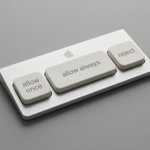
i made a monospaced font that does this to api keys:
sk-proj-Lm4N••••••••••••••••
obel mono. free, out now.
typographic.systems/obel-mon…


Everyone is racing to build bigger AI clusters.
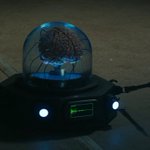
The weirder answer may be smaller: biological computers powering autonomous agents on sugar and less than 1000W.
The future might literally be a brain in a pizza box.
192
True product-market-fit is when your users are forced to touch grass or play league when your services are down.

159
“Its too horizontal. Too crowded"
"Its too vertical, its niched"
Thought I wandered into a modern art exhibition.
Turns out it’s just a VC mixer.
My strongest humanoid bull case isn’t sci-fi.
Everything is built for the human experience - height, reach, steps, doorknobs and my microwave handle.
A wheeled bot with a gripper washing my dishes doesn't quite seem like the dystopia I'd like to live in.
HYPE!

Following the open-source release of Qwen3-Coder-Next, its API is now available on Alibaba Cloud Model Studio and has also been integrated into the Coding Plan.
For teams and developers who prefer scalable or cost-effective endpoints, you can now access Qwen3-Coder-Next via API.
🔗 API Documentation:
modelstudio.console.alibabac…
🔗 Coding Plan Details:
alibabacloud.com/help/en/mod…
As always, feedback is welcome.
153
Keechin Goh retweeted

Introducing Glimmer ✨ @Google’s new design language for UX on glasses! Glimmer prioritizes voice, gesture, and eye-tracking — focusing on glanceable, transient elements that appear only when needed.
Discover thoughtful design for a new dimension: goo.gle/4qFBG5S

I have had some teams in the @NVIDIAAI Cosmos Cookoff experimenting with Cosmos Reason 2 - but reaching out to me with some questions ↘
How do you actually fine-tune it effectively for your own use case?
So the team at @DatatureAI put together a practical walkthrough on fine-tuning Cosmos Reason 2 - focused on the parts that matter during a hackathon: dataset preparation, adapting prompts, structuring evaluation, and making tradeoffs under time constraints.
Read The Blog ⋅ datature.io/blog/finetuning-…

1
1
45
If you’re working with Cosmos Reason 2, this should save you some cycles. If you have not joined the hackathon, what are you waiting for?
luma.com/nvidia-cosmos-cooko…

54
Keechin Goh retweeted

🧑🏻🍳 Introducing the NVIDIA Cosmos Cookoff — a virtual, four-week physical AI challenge for robotics, AV, and vision AI builders, sponsored by @nebiusai and @milestonesys.
Build with NVIDIA Cosmos Reason 2 and Cosmos Cookbook recipes—from egocentric robot reasoning to physical plausibility checks and traffic‑aware models.
🗓 Jan 29 – Feb 26
👥 Solo or teams (up to 4)
🏆 Prizes include $5,000, an NVIDIA DGX Spark, and more!
🧑⚖️ With judges from @DatatureAI, @huggingface, @nebiusai, @getnexar, and @nvidia
Sign up and show what’s possible with physical AI ➡️ nvda.ws/3Z9lrCO

Keechin Goh retweeted

We’re excited to be part of the NVIDIA Cosmos Cookoff, alongside @nvidia , @huggingface, @nebiusai, and @getnexar
What stands out about Cosmos Reason 2 is its focus on physical AI - moving beyond static perception toward reasoning that accounts for real-world constraints, egocentric understanding, and physical plausibility.
This shift is clear - models must reason in environments governed by physics, not just pixels.
Looking forward to seeing what the community builds over the coming weeks! 🤖
We will also be releasing tutorials on how to leverage cookbooks and blueprints to swiftly build your projects leverage CR2!

🧑🏻🍳 Introducing the NVIDIA Cosmos Cookoff — a virtual, four-week physical AI challenge for robotics, AV, and vision AI builders, sponsored by @nebiusai and @milestonesys.
Build with NVIDIA Cosmos Reason 2 and Cosmos Cookbook recipes—from egocentric robot reasoning to physical plausibility checks and traffic‑aware models.
🗓 Jan 29 – Feb 26
👥 Solo or teams (up to 4)
🏆 Prizes include $5,000, an NVIDIA DGX Spark, and more!
🧑⚖️ With judges from @DatatureAI, @huggingface, @nebiusai, @getnexar, and @nvidia
Sign up and show what’s possible with physical AI ➡️ nvda.ws/3Z9lrCO
Built a new annotation tool for vision-language models - supports tags like <think>, phrase grounding highlights, and auto-captions.
We are hoping to help more teams comfortably fine-tune their own VLMs!

1
57
Not in crypto myself. But it’s always motivating to watch Singaporean founders grind. I spoke with Tristan before he even started this company. His conviction behind what he’s building has been very consistent since day one.


RT @DatatureAI: Our latest blog post shows how to fine-tune Vision-Language Models for VQA - so models can answer image-based questions wit…

There's a lot of excitement around OCR capabilities in multimodal models. DeepSeek-OCR, for example has been doing great - but I think most developers might not know the short-comings of such models.
If you threw in a cropped image of the US constitution (Article I) - it will confidently hallucinate some passages from either sections (not visible in the image) or other articles.
For documents as canonical as the US Constitution, the model has an extremely strong next-token prior. If the vision encoder’s signal is weak/ambiguous (blur, glare, small font, compression), the decoder can minimize loss by producing the “most likely” continuation of the Constitution rather than the literal text on the page.
Try It Yourself → huggingface.co/spaces/merter…

Naturally, as the model is trained on ~30M PDF Pages and subsequently extracted w fitz, the model performs better at the document level and not strictly pixel level.
PDFs contain cleaner text layers.
That said, the point of this post is to point out the differences in how such model works and drawbacks people need to consider.
I have seen a ton of folks use canonical images as examples of high OCR fidelity. However, the image might have been in the training dataset of those models.
1
1
71
In summary, Im still very excited for OCR-specific models and believe that through model fine-tuning on your dataset, it can be well applied.
DeepSeek-OCR performs well in PDFs (invoices, etc) according to my tests, but its not perfect for all forms of images.
Credits to Mert Erbak (@merterbak) for your easy-to-use HF space 🤟
1
1
96