

Ecocinema. Moving Image. Film lecturer and producer based in Bangkok Thailand (Retweets do not imply endorsement)
Joined July 2009
- Tweets3.1K
- Following429
- Followers1.4K
- Likes4.4K






Pinned Tweet
For a Thai film scholar graduated from UK uni, this is blissful: I co-edited a dossier for @Screen_Journal with @philippalovatt. 'Tracing the Anthropocene in SE Asian film & artists’ moving image' includes works by @mayadadol Olivia Khoo & Kiu-wai Chu
academic.oup.com/screen/issu…
Graiwoot Ch. retweeted

🗣️ Lucrecia Martel: “La única forma de salvarse de la estupidez es que te interese mucho el mundo”
🔗 buff.ly/QjIfYJM
La cineasta argentina reniega de los universos cinematográficos y pide que el lenguaje deje de imponerse a la imagen y el sonido


Graiwoot Ch. retweeted

Amazing amazing resource: A library of archival films drawn from public-domain collections (free to reuse!)
movingimagearchive.com
Already dreaming up something to create


Graiwoot Ch. retweeted

Susan Sarandon says some agencies still have her blacklisted and are telling filmmakers not to hire her following her vocal support for Palestine.


Graiwoot Ch. retweeted

Camerwork reflects psychology. A lot of films in the 80s have complex blocking and movement because humans interacted with the world like that. I grew up next to a forest in Texas that I would explore with my friends. We climbed trees. We digged holes with shovels. Hopped fences. We biked around until the sun went down, and often past it. The camera moved because we moved. Up down, fast, slow. MTV blasted motion, sound, colors because that was the real world we explored.
Now cinema is sepia toned. Still. Deliberate. Symmetrical. The only movement is the world kids know today: video game animatics. Swirly disconnected from gravity motion is acceptable because that's how they play on unreal engine. But the real world is a series of still photos. People stand. People sit. Walk, but in a line...simple, cautious. No one knows what humans move like without a phone in their hand.
We no longer offer the sides of a cinema screen as immersion. No one explores the world physically in their childhood dna, so no one turns their head left or right. Visual complexity is weird, why would you cut to so many angles? Are you in a tree and then suddenly in a hole in the ground?
Yes. We were.
Instead, today we just blow up a center punched image. Cinema is just a bigger selfie.

Graiwoot Ch. retweeted

I was deeply saddened by yesterday's news about the great Tony Rayns. Here are some memories and thoughts. #TonyRayns geoffandrew.com/2026/07/08/t…

Graiwoot Ch. retweeted

A tribute to Tony Rayns from Apichatpong Weerasethakul:
Tony,
You were the first person who, at a cinema in Bangkok in 1999, welcomed a stranger with a VHS tape and actually watched it. You remained one of the first to see my films, offering advice and support over almost three decades. You’d say how hard it was to write about those films, yet you understood them more than me. My dear friend, you are the fuel that propels many of us forward. I thank you for our times in Tai Wu, and other Chinese meals across continents, over gossip about this messy film family of ours. I miss touching your belly as a silent way of asking ‘how are you, uncle?’ Nothing more. But the lights you have ignited remain in this quiet night.


Graiwoot Ch. retweeted
Tony wrote for Sight and Sound for more than 50 years. You can find a selection of this writing online, including interviews with Edward Yang, Krzysztof Kieślowski, Wong Kar Wai, Rainer Werner Fassbinder and Bong Joon Ho: bfi.org.uk/profile/tony-rayn…


Many reviews of 9 Temples to Heaven compare it to Apichatpong W., noting its slowness and repetitive structure. As a Thai film critic, I want to point out that Sompot studied with James Benning, and that context reveals the film’s roots in structural + observational cinema.


Graiwoot Ch. retweeted

I interviewed the eternally great Lucrecia Martel. Life highlight.
tinyurl.com/4nv3fx7d

Graiwoot Ch. retweeted
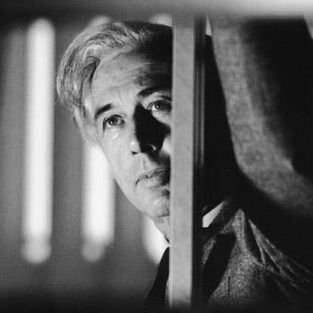
Carl Theodor Dreyer's "The Passion of Joan of Arc" (1928) was released in Paris, France, only 6 months after it was released in Denmark. This was due to the fact that the French Nationalists were offended because Dreyer was neither French nor Catholic. They were also upset by the rumour that an American Actress, Lillian Gish was cast as Joan in the movie.
Under the orders of the Archbishop of Paris and government censors, Carl Theodor Dreyer's "The Passion of Joan of Arc" (1928), received numerous cuts & Dreyer had no control over it. The only negative of Dreyer's version was destroyed in a fire at the UFA Studios in Berlin.
Dreyer then had to stitch together the movie using alternate and unused takes. Unfortunately, that cut too was destroyed in a fire at the French Studio where it was kept. Over the next 40 years a few different truncated versions of the movie surfaced much to Dreyer's dismay.
In 1981, a miracle occurred. When a janitor at the Dikemark Hospital mental institution was cleaning out a store cupboard, he found three film canisters labelled 'The Passion of Joan of Arc'.
These were sent to the Norwegian Film Institute, where they sat unopened for three years before finally being examined. Inside, they found Dreyer’s original 1928 cut, pre-government and religious censorship, fully intact.
("‘The Passion of Joan of Arc’: the silent masterpiece destroyed in a fire (twice)", Sam Kemp, Farout Magazine, 2023)
P.S: On this day, 98 years ago, "The Passion of Joan of Arc" (1928) was released in Denmark.
Graiwoot Ch. retweeted

#NicoleKidman says she learned the news of her mother’s death just moments before winning best actress at the 2024 Venice Film Festival for “Babygirl”:
“I was about to go out on stage, and I found out that my mother had passed. I went right back to my room in Venice, was getting into bed, and I was completely devastated.”
Kidman went on to describe a “harrowing” attempt to leave Venice in the middle of the night to be with her family, navigating the canals in the dark before ultimately turning back.
“I remember getting into a boat in the canal, literally at night, trying to find my way to the airport, and then turning around going, ‘I can’t even do this,’” she said. “Then I went back to bed. And I was alone. My husband wasn’t there, my children weren’t there. I was there to win an award, which should’ve been a beautiful thing. That there is the contrast of life.”
variety.com/2026/film/news/n…

Graiwoot Ch. retweeted

Baye's directors included:
Beauvois
Bertrand Blier
Cavalier
Chabrol
Xavier Dolan
Robert Enrico
Marco Ferreri
Nicole Garcia
Godard
Goretta
Diane Kurys
Paul Morrissey
Pialat
Lucian Pintilie
Poliakoff
Sautet
Claire Simon
Spielberg
Bob Swaim
Tavernier
Nadine Trintignant
Tsai
Truffaut
Graiwoot Ch. retweeted
Prior to the release of "Rabid" (1977), David Cronenberg was asked to vacate the house by his Landlady because she thought he made p0rn0gr@phic movies.
After reading an article in the newspaper that included some "Nastier bits" of a review of "Shivers" (1975) written by Robert Fulford, the landlady was convinced that Cronenberg was a director who made "That" sort of movies. When Cronenberg asked her "what sort is "That" sort?", she replied "The p0rn0gr@phic sort".
Cronenberg tried to make her understand that he made "Horror" movies but she was convinced that the newspaper "The Global and Mail" would not print a misleading article & it had clearly stated "Shivers" was obscene.
Moreover, she didn't want to be associated with a p0rn0gr@phic actress like Marilyn Chambers. She told him that she had been working quietly against p0rn0gr@phy with a league of women for many years. She also added that it was nothing "personal" and asked him to vacate the house within the end of the night.
Cronenberg told the landlady that it was in fact very personal, and that he was very personally insulted, and that he will personally approach the Human Rights Commission before leaving. But 10 minutes after the Landlady left, Cronenberg arranged to occupy the house opposite to the Landlady's which had been up for sale for some weeks. He bought the house a few days later.
Three days before he shifted to the new home, City Zoning inspector visited his house as there had been an anonymous complaint filed against him for "Photographing and developing of p0rn0gr@phic motion picture films for public sale". He said to the inspector that he knew who filed the complaint and allowed him to search. The inspector did not find anything incriminating.
Three months later, David Cronenberg wrote an article in "The Globe and Mail" (The Same paper that was the catalyst for the whole situation) about the whole situation.
P.S: On this day, 49 years ago, "Rabid" (1977) was released in the USA and Canada.