
Consulting business: recruiting early intervention kidney disease + kidney transplant trials;Moved from Chicago back home to STL; Move treatment of CKD upstream
Saint Louis, MO
Joined January 2010
- Tweets25.8K
- Following2.8K
- Followers5.3K
- Likes37K
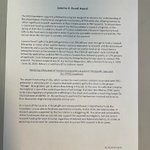



If there was ever an argument why the treatment of #kidneydisease must move upstream, look at 5 year survival on #hemodialysis + how it compares to cancer + other diseases Thanks @Kidney_Kula + @4_kidney for sharing cc @soledadobrien @PostRowland @KHNews @LizSzabo @NYTHealth

Reading the most recent issue of @CJASN and I was struck by this figure from Joseph Bonventre’s editorial. I hope findings like these can help our health system appreciate the need for and value of nephrologists and their research! #medtwitter #pedneph

Please for @Pontifex We need him fighting the good fight.

Pope Leo XIV underwent thoracic surgery at Gemelli Hospital on Tuesday afternoon, as planned, according to a statement from Dr. Luigi Carbone and Professor Stefano Margaritora released by the Holy See Press Office.
The surgeons removed the lower lobe of the Pope’s right lung, and tissue examined during the operation confirmed the diagnosis of “lung adenocarcinoma,” as suspected from tests conducted beforehand.
The Pope was in the operating room approximately three hours, while the operation itself lasted about 90 minutes. The doctors said it was successful and there were no complications.
Pope Leo awoke normally after surgery and, following a brief period of observation, returned to his room on the hospital’s 10th floor, according to the statement.
vaticannews.va/en/pope/news/…

On #PKDawareness day I recognize my Aunt Laverne

On #PKDAwarenessDay I would like to recognize my Aunt. As she was dying my sister + I encouraged her to make a decision about her estate Her donation of almost $1.7 million to the @PKDFoundation was the largest gift ever. Her decision keeps research funded in perpetuity #ADPKD

This post from #ERA26 is spot on, and addresses the need to improve quality for KTX recipients.

Are We Still Using 'Too Much' CNI? Yes | #ERA26
90-95 percent of kidney transplant patients get calcineurin inhibitor at discharge. 80-90 percent stay on it long term. But Luuk Hilbrands at #ERA26 says fear of rejection is driving overuse, threatening long-term graft survival.
Why CNIs Are Overused: Status Quo Bias
Success became habit: CNIs drastically reduced acute rejection when introduced and became the default backbone of immunosuppression. Clinicians continue using them out of habit even when alternatives exist
Fear-driven prescription: Acute rejection is visible and immediate, so clinicians increase CNI. Chronic kidney disease and cancer from CNI are delayed and multifactorial, so less attributed. This "fear nudges" doctors to continue CNI when alternatives may be better
Nephrotoxicity is the Achilles heel: CNI causes acute kidney injury, thrombotic microangiopathy, and interstitial fibrosis with tubular atrophy leading to progressive chronic kidney disease
The Cost of CNI Overuse
Metabolic + other toxicity: Hypertension more with cyclosporine than tacrolimus. Diabetes mellitus more with tacrolimus than cyclosporine. Plus hyperlipidemia, neurotoxicity-tremor, diarrhea, infections, malignancies
Long-term graft loss: Indisputable nephrotoxic effects of CNIs threaten long-term graft survival despite good early outcomes
Alternatives Exist - Data Supports Conversion
Belatacept conversion trial: Budde et al J Am Soc Nephrol 2021. 446 patients 6-60 months posttransplant converted to belatacept vs continued CNI. At 24 months: patient and graft survival 98 percent vs 97 percent. Renal function 55.5 vs 48.5 milliliters per minute per 1.73 square meters favoring belatacept. Biopsy proven acute rejection 8 percent vs 4 percent. De novo donor specific antibodies 1 percent vs 7 percent
Less new-onset diabetes: Pooled BENEFIT data shows 5 percent new-onset diabetes with belatacept intensive or less intensive vs 10 percent with cyclosporine. Vanrenterghem et al Transplantation 2011
Long-term graft survival: Vincenti et al NEJM 2016. 7-year data shows belatacept vs cyclosporine hazard ratio for death or graft loss 0.57, p equals 0.02. Beneficial long-term graft survival with belatacept
mTOR substitution: CNI substitution by belatacept or mammalian target of rapamycin inhibitor is viable. CNI minimization or withdrawal from triple to double therapy: mycophenolate mofetil or azathioprine plus prednisone, mycophenolate mofetil or azathioprine plus mammalian target of rapamycin inhibitor, mammalian target of rapamycin inhibitor plus prednisone
The Trade-off: More Early Rejection, Better Long-term
Higher early acute rejection: BENEFIT trial shows acute rejection less than 1 year: belatacept more intensive 22 percent, belatacept less intensive 17 percent, cyclosporine 7 percent. Kaufman et al shows more biopsy proven acute rejection with alemtuzumab or rATG plus belatacept vs rATG plus tacrolimus
But grafts last longer: Despite higher early rejection, long-term graft survival is better with belatacept. 2-year conversion data shows improved estimated glomerular filtration rate with no graft survival penalty
Takeaway: Yes, we still use too much CNI. Status quo bias keeps 90 percent of patients on nephrotoxic drugs long term. Conversion to belatacept 6-60 months posttransplant improves renal function, reduces diabetes and donor specific antibodies, and improves 7-year graft survival despite higher early acute rejection. CNI substitution or minimization is possible. Time to move beyond "fear-driven prescription".
Presentation: Luuk Hilbrands | Tweet: @eroldemir83 on behalf of SoMe Team


Thank you @VernBuchanan for your leadership on #kidneyhealth !

More than 37 million Americans are living with kidney disease.
I’m working with @RepLloydDoggett to urge @HHSGov to explore establishing a Kidney Health Officer to strengthen prevention, improve outcomes and support millions of Americans. buchanan.house.gov/2026/4/bu…

Upstream detection and intervention are the building blocks to bring about systemic change, and moving away from incentivizing kidney failure.

Kevin J. Fowler Principal The Voice of the Patient retweeted

"The Camp of the Saints worldview simply assumes that immigrants can't contribute to society, to civilization. They can only destroy it...It's entered the GOP mainstream, and reshaped conservative ideology."
liberalcurrents.com/the-grea…

Need to leave. I hope Twitter #nephjc chats increase.
#nephjc @gratefull080504 several COIs with pharma companies
Since yesterday was my last day serving on the Kidney Health Initiative Board of Directors, I am reflecting upon my past 10 and half years serving on the inaugural Patient Family Partnership Council and two terms on the BOD. My relationship with KHI and the American Society of Nephrology has been the most fulfilling of my professional career.
The KHI has played an instrumental role in the shift to embracing kidney health. The FDA approved treatments for IgAN, and the plethora of IgAN trials is a direct result of the collaboration that KHI fostered between the FDA, nephrologists, patient organizations, and patient themselves. The regulatory alignment between all stakeholders serves as textbook example to addressing unmet needs in additional kidney diseases, kidney transplantation, and dialysis. When all parties are aligned on a regulatory strategy and are working together, it is amazing what can be done.
As I reflect upon the people that I worked with, there are obviously too many to list here. None the less, it is important to recognize the people that were there at the beginning: Melissa West Prabir Roy-Chaudhury, Dave White, Tod Ibrahim, and the late Celeste Lee . Celeste laid the foundation to ensure the patient community was an equal stakeholder.
With an eye to the future, I have listed my parting two thoughts for community consideration:
1) Kidney Transplantation Therapeutic Innovation: The kidney transplant community has been lacking new treatments for some time, and the false narrative of life after kidney transplantation is now being replaced with one that more closely approximates the actual one. If the iBOX is approved by the FDA, this will help stimulate industry investment to develop new therapeutics. This would be a big regulatory achievement. It is important to recognize there remains a need for a validated Patient Reported Outcome Measure for kidney transplant clinical trials.
2) Access to Innovation: While the advent of therapeutic innovation has brought hope to the patient community, there are many patient communities that don’t have access to these treatments. If innovation is only distributed to select patient communities, disparities in kidney diseases will only increase. The downstream impact of the disparities will manifest themselves in widening income gaps and lost opportunities.
In gratitude,
Kevin
Kevin J. Fowler
Principal
The Voice of the Patient, Inc.
Cell: 630-880-1580
Email:[email protected]
lnkd.in/gVeqpKnv

This was a collaborative effort between Amber Paulus, PhD, Danielle Kirkman, PhD, Dr. Gupta from @VCUHealth + myself on our proposal to maximize life after kidney transplantation.

Dr. Belding Scribner envisioned kidney care that enabled comprehensive rehabilitation to help restore independence and purposeful living for recipients of kidney transplants. This perspective in #ASNCJASN outlines the changes that are still needed to achieve that vision.
kidney.pub/CJASN0950

Congratulations @LVRiella to you and your colleagues.

We’re proud to share 3 historic breakthroughs @mgh_transplant
✅3rd kidney xenotransplant completed at MGH — patient thriving at 90 days
✅7+ months dialysis-free: longest survival w/ a pig kidney ever
✅FDA clears larger trial @eGenesisBio
@MGHMedicine @MGHSurgery @MGBKidneys
On #pkdawareness day, I would like to recognize my Aunt, Laverene Duvall on her almost $1.7 million donation to the in 2013. As she was dying, my sister Joanne Fowler and I encouraged her direct to direct her estate to the @PKDFoundation . Her spirit lives on with her generous gift to improve the lives of others. #adpkd

This is a very sobering story for people who have received a kidney transplant. For the over 20 years that I have had my kidney transplant, I have chosen to remain on brand. Why? I want to ensure the consistency of my supply and to avoid the consequences of switching from one generic to another. This article raises the concern of the quality of generic manufacturers. I encourage anyone affiliated with kidney transplantation to read this article. Thank you @propublica for your excellent investigate work. I just made a donation to your organization in gratitude.propublica.org/article/fda-t…

I am in agreement with you @PeterPReese1 I am looking forward to report or presentation.

My goal for the few weeks is to convince you that transplant is transforming. New technologies are knocking down our main challenges. Why make the case now? New trainees just started. They might fall for transplant. July 1: we'll publish the vision. @ParisTxGroup @ESOTtransplant
Amidst the excitement surrounding CONFIDENCE data, how many nephrologists are actually prescribing finerenone or SGLT2 inhibitors? My sense is that utilization of both medications quite low individually. If I am mistaken, please correct me. Otherwise, I remain skeptical on implementation based upon the low utilization of ACE/ARBs in US.

Original Article: Finerenone with Empagliflozin in Chronic Kidney Disease and Type 2 Diabetes (CONFIDENCE trial) nej.md/4jEVbbk
#ERA25 | @ERAkidney

ALT Graphs of the urinary albumin-to-creatinine ratio, serum potassium level, estimated glomerular filtration rate, and systolic blood pressure over time.
Today @nephcure is celebrating the first ever #FSGS awareness day. Due to the collaboration between the nephrology community + @nephcure the future has never looked better for people with #FSGS. I encourage you to sign up through the link below. I will be there tonight.

Dimerix recognises & supports @NephCure’s first-ever #FSGSAwarenessDay, 10 June 2025. #FSGS can affect anyone and often progresses silently. Awareness empowers patients, supports carers & advances research.
🔗 nephcure.org/fsgs-awareness-…
#Dimerix #biotech #kidneyhealth

Well said @kidneyrebel

Tolvaptan for PKD went generic. The insurance company is making me go generic, but I'll always appreciate @OtsukaUS - you funded the drug trials, you stuck with it when times got tough, and you made sure I had access to the medication for almost 7 yrs. @ $10 month max. 🙏

On this #MemorialDay I am thinking about all of the people who lost a child , sibling, parent or friend to ensure our freedom.
I hope that my article and this special issue of @Transpl_Int Life after Traansplantation serves as a platform to improve QOL + particpation in life for transplant recipients cc @ESOTtransplant #openaccess #organdonation

🔎 It’s time to reshape the narrative: Life after a kidney transplant is more than survival - quality of life must be prioritised.
Read Kevin Fowler’s (@gratefull080504) fresh perspective and call to action in @Transpl_Int's Special Issue.
@ESOTtransplant
Read here ⬇️