
Associate professor of CS @ZJU_China Previously: @Penn, @Tsinghua_Uni Computational Neuroscience & Brain-inspired Intelligence
Joined July 2020
- Tweets143
- Following578
- Followers572
- Likes326
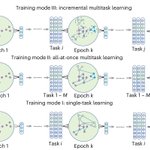
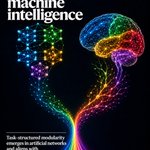





Why do neural networks become modular? Our paper is now out in Nature Machine Intelligence! @NaturePortfolio We show that multi-task learning promotes modularity under limited capacity and task demands help explain features of brain architecture in addition to the spatial constraints.
Great thanks to all the co-authors. @WHYWYH007 @yifannnwu @DaniSBassett @marcelomattar
rdcu.be/YJ12NBxvrHsa


Shi Gu retweeted

The problem with Anthropic's consciousness paper
My last post got more attention than I expected, and the question I keep getting is some version of "okay, so what is actually wrong with the paper?". Let me try to explain.
First, the core result is fine. Reading out intermediate-layer representations and asking which ones the model can actually use downstream is a real question, and people have been poking at it for years. The J-lens is a reasonable tool. If you strip the paper down to the linear algebra, it is a decent piece of interpretability work.
My problem starts one level up. This did not need to be a paper about consciousness. It did not need global workspace theory, it did not need the brain, and it did not need the word "conscious" anywhere near it. The same experiments, the same figures, the same tool, all survive perfectly well as plain interpretability. Someone chose to wrap it in neuroscience. That choice is the product, not the science.
At the end, this is the main thing. Almost everything Anthropic ships as blogs/papers/posts is PR. They build genuinely good models and they are even better at packaging them.
A publication used to carry a specific kind of weight. People spent years on something and wanted to tell the world what they found. It happened mostly in academia, with a few industrial labs as the exception, Bell Labs, IBM and Google (for a while), but the distance between the paper and the product was real. When you read a paper you could assume the authors were not trying to sell you something underneath the ideas. There were outliers, but they were the minority, and the researchers you trusted would not risk their name on a narrative.
We are not in that world anymore. Every startup now publishes blogs and papers to raise its visibility, and that is fine, that is marketing and everyone knows it. Anthropic does something more effective. They erase the line between legitimate research and PR. We get confused because the models are so good, so we assume the outputs are research. A lot of the time they are selling us something. Sometimes it is "our models are safer," sometimes it is "our models are more capable," sometimes it is positioning for regulation. The consciousness framing serves a narrative they already committed to, models that look more and more like the brain, from a lab that has publicly tied itself to AI welfare and moral patienthood. The direction of the push is not subtle.
If you want the sharper version of the technical objection (disclaimer: I'm not an expert) Global workspace theory is a theory of access, not experience. Ned Block's distinction between access consciousness and phenomenal consciousness exists precisely to block the inference this framing invites. Access tells you nothing about whether there is anything it is like to be the system. The paper is careful enough to say it demonstrates no subjective experience. But that disclaimer is not what propagates. What propagates is "consciousness" in the same sentence as "Claude," published by Anthropic, borrowing the vocabulary of neuroscience to lend biological weight to a subspace of activations. The paper keeps the rigor of Block's vocabulary and drops the rigor of his argument. Most people who see the headline will never read either one.
Of course a lab named Anthropic is going to anthropomorphize its models. But we should be able to separate a good interpretability tool from the story it is dressed in.
So that is my problem. Not the math. The narrative bolted onto the math, and our willingness to keep calling it research.
This is a great step toward a cognitive theory of LLMs: maybe they don’t just compute tokens, but form a kind of internal workspace.
But cognition is not just representation. In brains, what matters is also control: what gets routed, what gets stored, what gets suppressed, and what gets acted on. That is where LLM analogies to brain memory still feel thin.
Relatedly, our work and others have found modularity in RNNs/LLMs that parallels modular organization in the brain. The open question is no longer whether these parallels exist, but what mechanisms actually make them useful.
@Jack_W_Lindsey @GuangyuRobert @pengrui_han
[1] Gu et. al., Sci. Adv. 2024, Representation induces modularization
science.org/doi/abs/10.1126/…
[2] Yang et al. Nat. Neuro. 2019, Task representation causes compositionality nature.com/articles/s41593-0…
[3] preprint 2025, Multi-task load induces modularization.
researchsquare.com/article/r…
[4] preprint 2026, modularization in LLM representation.
pengrui-han.github.io/LLM_Mo…

Shi Gu retweeted

Scientists keep finding interesting parallels between LLMs and brains
@Jack_W_Lindsey and team found that complex internal reasoning and verbal reports use only a small subspace in LLMs, kind of like how our conscious thoughts only involve a small part of our brain
They used Sonnet 4.5. Similar things should be found in more powerful open-weight models like GLM 5.2
Shi Gu retweeted

Introducing SWE-Together: a multi-turn benchmark built from real user–agent coding sessions.
Coding agents are often benchmarked like exam-takers: given the full spec up front, then graded on the final code. But real coding help is a conversation — users clarify goals, add constraints, and correct course along the way.
SWE-Together turns real coding work into a reproducible, verifiable benchmark: 109 repo-level tasks curated from 11,260 recorded sessions, replayed with a reactive LLM user simulator that preserves the original user’s intent.
We evaluate agents as collaborators, not just patch generators: final pass rate and how many user interventions were needed to get there.
In this evaluation snapshot, claude-opus-4.8 currently leads among the 7 agents we tested — achieving the highest pass rate while requiring the fewest user interventions.
📄 Paper: arxiv.org/abs/2606.29957
💻 Code: github.com/Togetherbench/SWE…
🌐 Website: togetherbench.com

Shi Gu retweeted
Excited to share “Knowledge Transfer Scaling Laws for 3D Medical Imaging”.
How should we mix multi-modality medical images for pretraining?
We show that domain scaling exponents vary by 3.5×, and cross-domain transfer is highly asymmetric.
Our transfer-aware scaling law yields a closed-form optimal mixture, beating data-proportional sampling by up to 58% and revealing a clean “hub-and-island” structure across imaging domains.
arXiv: arxiv.org/abs/2605.06859

Wrote a note on the future of AI coordination via thought experiments.
Key Point: Division of labor is not a human accident but a general law of collaboration that emerges rather than being designed. Human or AI, the law holds.
guslab.org/shares/undesignab…
@DarioAmodei
Shi Gu retweeted

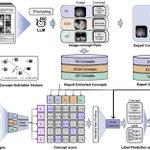
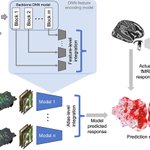
To the best of our knowledge, this is the first large-scale fMRI dataset to record neural responses to matched visual-linguistic stimuli within a paired paradigm, enabling systematic investigation of cross-modal interactions across the cortex.

Although post-hoc and probably inaccurate, we can still have some kind of picture about the embedding and geometric evolution of the loss landscape. For the brain-inspired/neuromorphic learning, can we think similarly beyond "intuition"?
Shi Gu retweeted

Mitigating racial bias from LLMs is a lot easier than removing it from humans!
Can’t believe this happened at the best AI conference @NeurIPSConf
We have ethical reviews for authors, but missed it for invited speakers? 😡

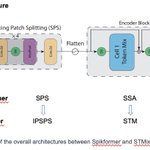
Attending #NeurIPS2024 today. Excited to see old and new friends. Our presentation on spiking neural networks (SNNs) will be on Wed 11 Dec 11 a.m. PST 2 p.m. PST at East Exhibit Hall A-C #2410. Happy to chat on NeuroAI both from neuroscience and AI views.

Surprised and excited to see the Nobel Prize in Physics awarded to Hopfield and Hinton @NobelPrize . Beyond the AI4Science, I believe that we should also develop the Science for AI. AI is not only the method but also the object that need to be understood.
We did some exploration on understanding the learning in AI through the scope of network science. It would be great to gather more researchers to work on such exciting topics! science.org/doi/full/10.1126…

How will the multitask and incremental learning help shape the modularized structure of both ANNs and brain networks? Meet me at poster A24 on Tuesday at #CCN2024 @CogCompNeuro. Excited to meet old and new friends!!!

Heading to Boston today for #CCN2024 @CogCompNeuro. Happy to chat on neural network, neural computing, and AI behaviors during the stay.
Why does the neural network display modular structure during learning and how does the modularity characterize neurodevelopment and cognitive behavior? Please check our recent paper in @ScienceAdvances with @marcelomattar. science.org/doi/10.1126/scia…