


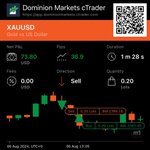
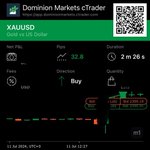
Gunnr retweeted

I’m creating a front-end portal for the public to see how the U.S. stock market is manipulated and operated with precision by leading banks and hedge funds.
I came out as a whistleblower reporting this work to the @SECGov—discovering that the entire public market operates on real time risk-analysis and communication between trading divisions to calculate ‘risk’ and effectively code the same product to engage in system-automated trading and market manipulation.
The U.S. stock market in the most plain technical terms is a product of elite capital investment firms using a combinatorial of the same information to trade, purchase stocks ‘long’, bet on stocks ‘short’, know how much money to ‘risk’, and discreetly use the following information to hide from regulators.
Advanced trading teams use the following information to score, rank, and identify ’relevant’ algorithms using basic technical analysis to set chain reactions for other aggressive hedge funds to exploit.
This system aggregates timeframes, equities, and a term called ‘SMA outfits’ to monitor and control the outcomes of the U.S. stock market. The implications of this are simple. Our administration knows about this, often using the news that may appear as a driving force for the price of stocks to push the market higher or lower. Leading hedge funds will be reaping record profits without any reason to care for looming inflation that will eventually destroy the average American’s pockets.
This is a call for clarity and transparency.
The U.S. stock market operates on [1-59 seconds, 1-59 minutes, 1-23 hour][NYSE NASDAQ CBOE exchange listed equities][1-999 SMA outfits + advanced SMA Outfit ciphers][OHLC contact] in order to seamlessly structure and move markets to reward or degrade money from other market participants.
This is all back-end coded. In order to understand this you need to have the very basics defined. Understanding the stock market through this lens will indefinitely shift your understanding of finance.
Glossary:
“Equity”
— An equity in this context often represents a singular stock, index, exchange traded fund [ETF], or commodity price.
That can mean a popular stock like GameStop, Gold’s XAUUSD, the NASDAQ’s IXIC or QQQ, and proshare multi-leveraged securities like the TQQQ or SPXU.
“Timeframe”
— Timeframe in this context refers directly to candlestick charts that accurately reflect a stock’s historical performance. A timeframe can range from prefixes like 30 seconds to 30 minutes. Timeframes are part of the encryption process used for SMA outfit detection.
“SMA outfit”
— Simple Moving Average outfit is a technical term for a structure of an equity’s price.
This structure is relevant to specific relationships between recorded Open/High/Low/Close [OHLC] values on an individual equity, outfit, and timeframe.
“SMA Outfit detection”
— Each thread is the product of a tabulation of records that asses each NYSE/NASDAQ/CBOE listed stock, and relationship detection between OHLC values on a singular outfit and singular timeframe to produce a signal.
— SMA Outfit detection is best represented as ranking precise timeframe-candle data to a ‘SMA Outfit’ and structuring ‘risk’ for banks and leading trading divisions to identify ‘risk’ and opportunity’ with historic use.
Something fundamental to consider here is just how little these massive financial institutions are risking when placing these trades. These threads operate with extreme to-the-penny precision to prove a point about how well organized U.S. stocks move to reward aggressive financial divisions.
Each thread is shared with near-second precision using an automated system documenting snapshots of a specific equity, outfit, timeframe and the specific protocol. All threads are posted and never destroyed. Threads terminate on a complete profit-taking or the strike of a negative parameter.
Gunnr retweeted
I have published all of the algorithms that operate the US stock market. Repost— inform the rest of the world.
This page is a masterclass in cryptography and actual financial analysis used by banks and wealth offices. It’s not beyond me the info can be a bit much— but it’s there and evidence based for everyone to browse.
No other literature like this exists.
Please repost if the resources on this page have enabled your understanding of the United States Stock Market. If the 100% accurate LIVE major market (re: Nasdaq, S&P 500, DIA, VIX, proshare) calls shared by this page have transformed your understanding of public equities.
Leading trading divisions that use actual cryptography [data science and stat analysis] to ‘outfit’ equities for profit—through arbitrage.
Finance is nothing more than our financial institutions using extremely practical tools [simple moving averages are literally the most basic form of ‘technical analysis’] in order to manufacture the entire US stock market. This simple yet parameter limited game is done to enable trading teams to figure out when there’s enough capital in a leading equity— trigger the equity/etf/index to move in either direction.
That’s it. Insiders [banks] are in. Other leading institutions that know this game follow the leader. That’s what I share. Live. In real time. Abjectly.
What you are seeing here is beyond 2008 level blithe—fraud beyond parallel. It’s being shared with the @SECGov .


Gunnr retweeted
52 Trading Never-Dos: Lessons Every Trader Learns The Hard Way
1) Never oversize. That is when you start becoming irrational. Blowing up while still being right is the fastest way to ruin.
2) Never trade when tired or sleep-deprived. Decision fatigue has ended more traders than liquidation ever could.
3) Never trade without a defined edge. Entering without one is just gambling with extra steps. If you can’t explain your edge in a single sentence, you probably don’t have one.
4) Never enter a position out of boredom. The desire to always be in a trade leads to suboptimal returns. More often than not, doing nothing is the best move.If you find yourself taking trades just to feel busy or because you “haven’t traded in a while,” check yourself. Trading for action leads to sloppy decisions and losses.There’s no prize for the most trades – only for the most profitable trades. Sometimes the best trade is no trade
5) Never trade after a big loss. Tilt sets in, and you try to win it all back in one bad bet. Trying to recover everything at once is a guaranteed way to lose even more.
6) Never enter a position without an exit plan. Whether it’s a time-based stop, price stop, invalidation, or catalyst-driven exit—define it before you enter. Remember, the last moment of objectivity is before you place the trade.Once you’re in, it’s much harder to admit you’re wrong, so decide beforehand when to cut the loss.
7) Never marry your bags. The market doesn’t care about your conviction. Cut or be cut.
8) Never trade your PNL—trade the market. Chasing losses or fixating on past wins clouds judgment and distorts execution.
9) Not all views are meant to be traded. The best trade is often no trade. Preserving capital and mental bandwidth for when odds favor you is more important than forcing activity.
10) Never fight the trend. The wave is stronger than you. Adapt or get wiped out.
11) Never try to knife catch without reason. "Cheap" can always get cheaper.
12) Never break your trading rules or deviate from your plan in the heat of the moment. Your rules exist for a reason – usually learned from painful experience. The moment you convince yourself “just this once” to ignore a rule (like moving a stop, or doubling down, or trading too big), you open the door to chaos. Discipline is doing the right thing even when it’s hard. As one trading maxim goes, plan the trade and trade the plan.
13) Never fire all your bullets at once.
14) Never trade outside your comfort zone. If a position is too big, you’ll start making fear-based decisions, thinking that market or someone is trying to liquidate you seeing ghosts where none exists. Size your trades proportional to the quality of your sleep at night.
15) Never let ego keep you in a bad trade. Admit when you're wrong—cut, reset, move on.
16) Never underestimate market reflexivity. Strength can always go higher, weakness can always go lower.
17) Never assume liquidity will be there when you need it. The exit door is always smaller than you imagine—liquidity isn’t something you decide, the market does.
18) Never mistake randomness for strategy. Buying because price is going up or shorting because it “feels high” isn’t trading—it’s blind betting. Even with good risk management, you’ll bleed out over time if your entries are based on nothing.
19) Never make the same mistake twice. Trading mistakes are inevitable, repeating them is unacceptable. Never lose the same way twice
20) Never forget to play defense. Being wrong is acceptable, staying wrong is not. Protecting capital always comes first. "Don’t focus on making money; focus on protecting what you have.”
21) Never just focus on offense. Survival > everything. If you don’t bet, you can’t win. If you lose all your chips, you can’t bet.
22) Never fall into lifestyle creep after one big win. The problem starts when you begin forecasting annual income based on a single lucky trade.
23) Never forget to turn defensive after a hot streak. Big losses come after a series of wins when overconfidence sets in. Check your ego—your last big trade means nothing to the market.
24) Never let pride, ego, or overconfidence take over. Always stay humble.|
25) Never trade in situations where you don’t have control. for eg. FOMC events
26) Never get complacent. A strategy that worked in one regime may stop working in another. Trading is a craft that requires continuous self-improvement. Comfort Is Often the Enemy of your PNL. Never assume you know for sure what the market will do. “We have two classes of forecasters: those who don’t know — and those who don’t know that they don’t know.” Never assume your edge is permanent. Markets evolve, edges fade, and what worked last cycle may be useless in the next. Keep refining, keep testing—stagnation is death.
27) Never ever average losers after your reasoning has been invalidated
28) Never trade with certainty, trade with conviction.
29) Never assume the market “must” do something, especially based on recent patterns.The market doesn’t owe you continuity or logic. Just because a market has been rising (or falling) steadily doesn’t mean it can’t abruptly reverse. Avoid words like “surely” or “can’t possibly” in trading. Stay flexible – anything can happen. As a reminder: never say never about market behavior.
30) Never mistake win rate for everything. Maximizing winning trades for the sake of feeling good is a trap. Taking profits too early or avoiding necessary small losses ultimately hurts profitability.
31) Never underestimate discipline, patience, risk control, and execution over alpha generation. Plenty of traders have great alpha flow but don’t know how to use it.Good execution involves choosing not just what and how to trade, but when not to trade. Sometimes the best execution decision is no trade at all if conditions aren’t suitable. Always ask: “Do I have an edge here, or am I flipping coins?” If it’s the latter, save your capital for a better spot.
32) Never fall apart after a big loss or get euphoric after a big win. Emotional resilience is a trader’s strongest asset.
33)Never ignore price action after news. If the market reacts opposite to what you expected, get out. The market is telling you something you don’t see.
34) Never trade on borrowed conviction. If you buy on someone else’s tip, you’ll need them to call your exit too—and when they go silent, you’re stuck. As Livermore said: “Nobody makes big money on what someone else tells him to do.” Hone your own craft, build your own system. If you can’t trust your own decisions, you’re just a pawn in someone else’s trade.
35) Never go against your intuition. If something feels off, it usually is.
36) Never try to Catch Every Move It’s tempting to try to grab every up and down in the market, but that’s a fool’s errand. Always come from the mindset of abundance and not scarcity, markets will still be there and there are ample opportunities in the market to make you whole,
you don’t need to swing at every pitch.
37) Never underestimate the power of failure. Failing early and failing often—while staying in the game—is how you get better.
38) Never hold onto losers when your thesis is invalidated, especially after a massive drop. "I’ve lost too much to sell now" is how you go to zero.
39) Never let "getting back to break even" dictate your decisions. That mindset leads to overtrading and eventually, full liquidation.
40) Never focus only on entries. A trade isn’t over until you’ve exited. Knowing when to cash out is just as important as knowing when to enter.
41) Never ignore the “boring” part (position sizing, stops, risk/reward) – it’s what keeps you in business.Don’t wait for a catastrophic loss to teach you this lesson.
42) Never trade for the adrenaline rush, Trade for the win
43) Never fall into the illusion of strength—it’s often just lagging behind reality.
44) Never stay/enter in a position out of 'HOPE' and wishful thinking
45) Never underestimate risk management. Prioritize protecting capital over chasing profits. "Take care of your losses, and the profits will take care of themselves."
46) Never exit/enter a position recklessly. The same way you scale in, you should scale out—"all in, all out" is a recipe for disaster.
47) Never make a bet you can’t afford to lose. No single trade should ever be big enough to take you out of the game.“The most important advice is to never let a loser get out of hand.” You should be able to be wrong 20 or 30 times in a row and still have capital left. Never allow a single position to jeopardize your trading career
48) Never trade outside your edge. If it’s not there, sit out. Forcing trades outside your framework is how accounts erode.
49) Never assume your edge is permanent. Markets evolve, edges fade, and what worked last cycle may be useless in the next. Keep refining, keep testing—stagnation is death.
50) Never judge a trade solely by its outcome. Good trades lose money sometimes, and bad trades can get lucky. Focus on execution over results.
51) Never worry about looking stupid or staying in a position because of your public opinion. I have seen many a men die before their time because they were worried about getting publicly ashamed. Cut your losses without hesitation. The market doesn’t care about your pride—neither should you.
52) Never underestimate the power of stepping away. If you’re in a losing streak, liquidate everything and take a break. Mental capital is just as important as financial capital. The key is to break the negative emotional spiral
Once you come back keep your size small and increase exposure only when you gain back your confidence.
These lessons were learned thanks to the books I’ve read, the smart traders I’ve learned from, and the endless mistakes I’ve made along the way.
Trading is lonely. It hurts. It makes you question everything. But if I had to choose again? I’d still take this over everything.


Gunnr retweeted
You know even though I've documented the trade that has effectively worked its way into tanking the entire united states stock market, even as a paid whistleblower, this is just another Friday... to me. haha. lol.
This is my threaded RWM at 18.03 .
Real time threaded information you will never see anywhere else in the world. Fact.
#StockMarketCrash .


Gunnr retweeted

Gm
The new year is ahead of us, bringing us endless methods to make money and change our lives.
We’re in a peak time of opportunity:
•Technology is advancing fast
•Crypto adoption is exploding
•Property prices keep rising
The list could go on, but most people will STILL miss out on “taking a piece of the pie” because they lack a plan.
Here’s how you can fix that 👇🏼

Gunnr retweeted
This is market manipulation—but hey polymarket isn’t regulated.
But when I say firms have operated a SMA outfit operating on the integer 420 years before he openly speaks about market manipulation… I’m the crazy one. At least I have the paper trail to back up my words.

Gunnr retweeted

At SELF, we know how fast AI is changing the digital landscape. Soon, it will be nearly impossible to tell the difference between AI bots and real people. This is already happening on platforms like X (Twitter), Amazon, YouTube, and Telegram, where AI bots can blend in with real users—impacting things like engagement, comments, reviews, and online communities.
As this challenge grows, the need for tech that can identify and separate AI bots from humans will be more important than ever.
Our upcoming SELF Web3 dashboard, currently in development and powered by $SELF IDs, will address this issue. Backed by top-tier ISO27001 security, it promises a safer and more secure way to navigate Web3.
Many overlook the power of token-gated solutions as a natural defense against AI agents/bots. SELF will elevate this concept, ensuring genuine and authentic online engagement while eliminating the need for email and password logins.
Stay tuned for more info!


Gunnr retweeted
I could post 1000 more but ya. I don’t take anything here for granted. Thank you for giving me space to communicate this wonderful humans. So cool.


