







Mao Zedong's Great Leap Forward killed an estimated 45 million people between 1958 and 1962, and the backyard steel furnace campaign sits at the center of that catastrophe as a textbook case of central planning consuming itself alive.
Mao's logic was simple. If the Soviet Union had industrialized through state-directed production, China would do it faster and bigger. He ordered peasants across every province to smelt steel in small furnaces built on collective land. Party officials set output quotas with no reference to the resources, skills or demand that actually existed. Farmers melted down their own plows, woks and door hinges to hit the numbers, and stripped hillsides bare for fuel. What came out of those furnaces was mostly pig iron so brittle it had no industrial use. The quotas got reported as fulfilled, the statistics traveled up the command chain, and Beijing celebrated a triumph that existed only on paper.
Think about what those farmers abandoned to stand at furnaces all day. By most estimates, the 1958 harvest was decent. With the rural labor force diverted to smelting, the crops rotted unharvested in the fields. Free market economists call this opportunity cost: every hour a farmer spent producing worthless slag was an hour not spent producing food. Had anyone been allowed to use the price system, it would have made that tradeoff visible at once, because prices signal scarcity. Planners issue directives and wait for reality to disobey them.
Local officials who reported shortfalls faced execution or the labor camps, so they reported surpluses. Beijing then exported grain, partly to pay its debts to the Soviet Union and partly to project an image of socialist success, while provinces like Anhui and Sichuan descended into mass starvation. The state had monopolized food distribution, so when the numbers were wrong, there was no private market or informal trade left to move grain to the dying. The apparatus built to feed people became the mechanism that starved them.
Abolish private property and price signals, and you get 45 million corpses and a generation of Chinese children stunted by famine.

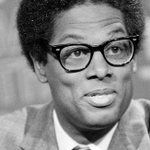
Thomas Sowell spent decades teaching foundational truths that most economists actively avoid:
1. Knowledge is dispersed, not concentrated. No central planner holds enough information to allocate resources better than millions of individuals making voluntary decisions for themselves. Prices carry that information. Suppress prices through rent control, wage floors, or currency manipulation, and you blind producers and consumers simultaneously.
New York City's rent-controlled apartments sit perpetually occupied by people who no longer need them, while families who actually want to live there cannot find vacancy. The shortage is a policy product, manufactured deliberately.
2. Sowell's other major contribution is his insistence on asking the question almost nobody asks: compared to what? Every policy creates trade-offs. Welfare programs redirect capital from productive uses, discourage work at the margin, and trap families in dependency across generations. The question is never whether a program produces some benefit. The question is what you sacrifice to get it.
His work on discrimination cuts through comfortable narratives with mathematical precision. Groups with identical legal status show radically different outcomes across time and geography, and those gaps trace to culture, incentive structures, and historical capital accumulation, not primarily to current discrimination. The Caribbean-born Black population in the United States outearned American-born Black workers throughout the mid-twentieth century. That fact alone dismantles the simple oppression narrative that politicians rely on to justify racial preference programs.
3. The deepest lesson Sowell spent fifty years pressing is that good intentions produce catastrophic results when disconnected from incentive analysis. You personally pay the price for every well-meaning intervention that ignored how real people actually respond to real incentives. Compassion without economics is not virtue, and it ends up doing more harm than good.

Germany did it before. The question worth asking now, with Europe's largest economy grinding through its third consecutive year of stagnation, is whether Germany can summon the nerve to do it again.
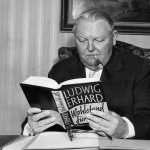
In 1948, Ludwig Erhard did something that struck most of his contemporaries as insane. He abolished price controls overnight, slashed rationing, and replaced the worthless Reichsmark with the Deutschmark at a brutal conversion rate. The occupying Allied authorities were furious. Labor unions called a general strike. Erhard told the critics to wait two weeks.
They waited. Industrial output jumped 50 percent within months. By 1950, real wages were rising and the black market, which had functioned as the actual German economy under Allied price controls, simply evaporated. Prices fell as production caught up with demand. Consumer goods reappeared on shelves for the first time in a decade.
In a sound monetary environment, rising productivity drops prices and you get richer in real terms without a central bank engineering 2 percent annual inflation to pick your pocket. The Deutschmark held its value. Savings meant something. Capital formation exploded because businessmen could actually calculate future costs without guessing what the currency would be worth next year.
Germany's neighbors ran the opposite experiment, keeping controls and soft money, and watched their recoveries crawl.
The 2026 German government faces energy costs triple their 2019 levels, a manufacturing sector hollowing out, and a central bank it no longer controls. Erhard's playbook sits on the shelf. Cut the regulatory burden, restore price signals, stop the spending. This is not complicated; the political will is the only scarce resource.

India, 1991. Nehru's government had built an economic crisis deliberately, brick by brick, over four decades of central planning, import licensing, and a regulatory maze so dense it had its own name: the License Raj.
India blocked foreign goods with tariffs exceeding 150 percent on many categories, restricted private investment through the Industrial Disputes Act, and ran chronic fiscal deficits financed by the Reserve Bank of India printing rupees. The Gulf War of 1990 then spiked oil prices and triggered remittance collapse when Indian workers fled Kuwait. Foreign exchange reserves fell to $1.2 billion by June 1991, enough to cover maybe three weeks of imports. The government physically airlifted 47 tonnes of gold to the Bank of England as collateral for an emergency IMF loan.
That gold flight is the verdict on sixty years of Fabian socialism in South Asia.
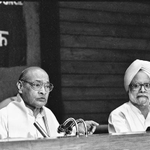
Rajiv Gandhi's assassination in May 1991 added political chaos to fiscal ruin. P.V. Narasimha Rao took office and appointed Manmohan Singh as Finance Minister. Singh cut tariffs, devalued the rupee, dismantled large chunks of the licensing system, and opened sectors to foreign direct investment.
Growth responded immediately. GDP, which had crawled at roughly 1.1 percent in 1991-92, accelerated through the mid-1990s, reaching above 7 percent by 1996. Capital flows toward you when you stop treating investors as enemies of the state.
A cautionary note: Singh's liberalization was partial. Land markets stayed distorted, labor law remained protectionist, and state-owned banks continued misallocating credit. India's subsequent boom carried those structural weights forward, which explains why the economy periodically lurches into currency stress even today. Partial reform buys time. It doesn't buy sound money.

You diversify your investments, so why not diversify where you keep them?
I hold some of my Bitcoin myself and some with Xapo Bank, where it sits in bunker storage, and I have a private banker.
Join Xapo Bank and earn up to USD 500 in Bitcoin!
Use this link: xapobank.com/en/membership?r…
Or my referral code: UWE-JDN-P
🤝 Paid partnership

Erdogan saw a currency lose half its value and blamed bankers for noticing.
Between 2018 and 2024, the Turkish lira lost 80 percent of its value against the dollar. Consumer price inflation officially hit 85 percent in late 2022, though independent trackers like ENAG put real inflation closer to 170 percent. Erdogan's explanation was that a shadowy "interest rate lobby" of foreign speculators was attacking Turkey by pressuring rates upward. He fired three central bank governors in two years for daring to tighten monetary policy.
Credit expansion beyond real savings creates inflation. That is basic accounting. When the Central Bank of the Republic of Turkey held rates at 8.5 percent while inflation ran above 80 percent, it was handing out deeply negative real rates, which means it was printing purchasing power and transferring it from savers to debtors, primarily the state and politically connected construction firms. Erdogan's son-in-law Berat Albayrak served as finance minister during the worst of the 2018 collapse, before resigning via Instagram.
The "interest rate lobby" conspiracy inverts causation with spectacular audacity. High rates are the market's response to inflation, not its cause. Suppress the response and the fever climbs. Murray Rothbard made this clear in The Mystery of Banking: cheap credit is the disease, not the medicine.

The "Tequila Crisis" sounds awesome; it wasn't.
The Mexican peso crisis of 1994-1995 was the entirely predictable result of a government pegging its currency at a price nobody could defend, borrowing dollars it did not have, and racking up obligations that the math guaranteed it could not repay.
Mexico's Banco de Mexico spent most of 1994 defending a peso pegged at 3.4 to the dollar. To hold that peg, it burned through foreign reserves at a spectacular rate, dropping from $29 billion in early 1994 to under $6 billion by December. Meanwhile, the government had issued tesobonos, short-term dollar-indexed bonds, in enormous quantities. By December 1994, it owed $29 billion in tesobonos against those gutted reserves. When President Zedillo devalued the peso on December 20, 1994, the peso dropped 50 percent in two weeks.
Unable to get congressional approval for a bailout, the Clinton administration raided the Exchange Stabilization Fund to deliver $20 billion to Mexico, combined with $17.8 billion from the IMF. As usual, this money didn't rescue ordinary Mexican workers, who suffered unemployment surging past 7 percent and real wages collapsing through 1995, but bailed out Wall Street creditors holding those tesobonos. Citibank and Goldman Sachs exhaled; the Mexican wage earner got austerity.
Capital controls, fixed exchange rates, and dollar-denominated debt are the unholy trinity of currency detonation. Artificial exchange-rate pegs suppress the signals that let capital move where it actually belongs. Investors assume the peg holds, misallocate capital accordingly, and the correction arrives violently rather than gradually.
The rescue also cemented moral hazard for every subsequent emerging market crisis. Lend recklessly, hold sovereign paper from governments playing currency games, and trust that Washington will make you whole. It did in 1995. It did again in 1997, 1998, and beyond.

George Soros made a billion dollars in a single day by betting against a government's delusion. That delusion was the British government's conviction that it could fix the pound sterling to the Deutsche Mark at an artificial rate and hold it there by sheer political will.
The European Exchange Rate Mechanism required member currencies to trade within tight bands around agreed central rates. Britain joined in October 1990 at 2.95 Deutsche Marks to the pound. German reunification forced the Bundesbank to run high interest rates to contain inflation on its home turf, while Britain sat in recession and desperately needed rate cuts. These two realities could not coexist inside the same fixed-rate cage.
Currency pegs require governments to tell the market it is wrong. Markets rarely cooperate.
By September 16, 1992, traders understood the math before John Major's cabinet did. If Britain could not sustain German-level interest rates without destroying its own economy, the peg would break. Soros' Quantum Fund shorted ten billion pounds sterling. When the Bank of England bought pounds to defend the rate, it burned through fifteen billion dollars in reserves in a single afternoon. The Treasury hiked rates from 10% to 12%, then announced a further rise to 15%, all in the space of hours. It accomplished nothing except advertising panic.
By evening, Norman Lamont stood outside the Treasury and withdrew Britain from the ERM. Rate hikes canceled, the pound devalued.
Fixed exchange rates between politically independent nations are promises nobody can keep permanently, because each government faces different domestic pressures and will always choose its own economy over the peg. The man on the street feels the cost in higher mortgage rates, disrupted business planning, and the quiet inflation that follows devaluation.
Governments price currencies the same way Soviet planners priced bread. Eventually, reality corrects the error, and the correction is never gentle.

The teams at Adopting Bitcoin and Bitcoin Ekasi are the real deal. People who believe in a cause and won't sell out.
They deserve full support from the Bitcoin and broader free-market communities.

Adopting Bitcoin Cape Town (@abcptza) has reached a crossroads.
For three years running, 2024, 2025 and 2026, we hosted three successful conferences, co-hosted by @Machankura8333 and ourselves, and run entirely by unpaid volunteers, without massive sponsorship. Pulling that off, three times in a row, is a significant milestone.
We also achieved something we set out to do: reach large civil society organizations and, through them, reach their members. And we didn't know who those organizations would be, but they showed up.
John Endres (@senderman) of the Institute for Race Relations (@IRR_SouthAfrica), Russell Lamberti (@RussLamberti) representing Sakeliga (@Sakeliga), and David Ansara (@DavidAnsara) of the Free Market Foundation (@FMFSouthAfrica) all spoke in 2024, 2025 and/or 2026.
This list is not exhaustive. And these aren't fringe groups. They're among South Africa's largest and longest-standing advocates for free market policy. And they have fought an uphill battle for exactly the kind of direction this country needs.
Our goal was to get them speaking to their audiences about Bitcoin, and that's happened.
Both The Free Market Foundation and the Institute for Race Relations have since published papers, videos and/or podcasts on Bitcoin:
freemarketfoundation.com/sta…
dailyfriend.co.za/2026/03/05…
While both organizations occasionally discussed Bitcoin prior to 2024, since then both groups have formalized and significantly expanded their public commentary on the topic.
I'm not claiming we caused that single-handedly, but we definitely contributed to it, even if only in a small way.
So why are we at a Crossroads?
In 2026, the Treasury and the South African Reserve Bank dropped regulatory bombshells that were, to put it mildly, insane.
The direction they want to take is a walled garden: you can hold Bitcoin, you can use Bitcoin, but only through a regulated intermediary they control, one that can force you to sell at a price of their choosing.
Calling that a watered down version of Bitcoin is an understatement. It isn't a watered down version of Bitcoin. It's entirely fake.
And yes, there's been a reprieve with the SA Government recently backing down under intense pressure, but it's clear that they'll attempt it again.
That leaves us in a position where we have to decide: where does this conference go next? And the answer is right there in the name.
Adopting Bitcoin.
Adopting Bitcoin implies exiting fiat. You are not adopting Bitcoin if you are not exiting fiat. And if you claim to adopt Bitcoin while weaseling your way further into the fiat world, you are not adopting Bitcoin.
It’s quite simple. But easy to lose sight of.
"I'm into Bitcoin, but the fiat world is what it is, we have to play by their rules, we have to work with them, and we have to accommodate them."
This may all be true. But it invariably turns into an excuse to not exit fiat. And that's not a position we're willing to keep entertaining. And if you don't get that, what are we doing here?
To be clear, this isn't about refusing to talk to anyone. It's about being unambiguous about our goal. Adopting Bitcoin means actively and continuously looking for every opportunity to move further away from fiat.
Adopting Bitcoin does not mean buying Bitcoin and settling into fiat more comfortably while the BTC/FIAT price goes up.
This isn't a rebrand.
It's a re-alignment, a return to where @abcptza was always meant to go, but were slowly pulled away from by the realities of running a conference.
The companies that make real money are the ones that find ways to weave themselves back into the fiat system. It's brutally hard for a genuinely Bitcoin-only fiat-exiting company to turn a profit.
The massively profitable players in this space are crypto casinos and pseudo-banks selling you the idea that gambling is good. That's just the world as it is.
For that reason, funding a conference like this is genuinely difficult. When you're the one staring at a venue invoice, and you know half your speaker list won't show up unless you cover their flights, you end up working with people you'd rather not work with. Not because you sold out, but because there was no other way to pay for it.
So yes, we drifted. Not on purpose, but because of the economic reality.
But we never drifted so far that we've lost sight of where we're supposed to be.
So are are we going?
Bitcoin is a silent revolution. If you're not willing to be part of that, peacefully, but without compromise, then you're not adopting Bitcoin, and you're not exiting fiat.
Bitcoin is a paradigm shift. Paradigm shifts are not easy, gentle, comfortable, or profitable. They are, by definition, disruptive, unfamiliar and unsettling for almost everyone.
We don't know if this will work. We have no idea if we can even fund a conference like this going forward. And, if we take this stance, most of the sponsors who might have thrown us scraps will walk away.
@abcptza becomes a genuine grassroots conference, funded by ticket sales or not funded at all. The sponsors left willing to stand with us will be few. And none of them are the biggest players in this space.
But we'd rather attempt it that way, and fail, than keep drifting toward a place where the conference does not make it absolutely clear.
Adopting Bitcoin is all about exiting fiat.
And that is non-negotiable.
Tickets for 2027:
pretix.eu/abct/2027
Conference website:
za27.adoptingbitcoin.org

Anheuser-Busch InBev shareholders paid a steep price for an executive decision in March 2023.
Dylan Mulvaney received a commemorative Bud Light can celebrating one year of living as a woman. AB InBev's marketing VP, Alissa Heinerscheid, wanted to broaden the brand's demographic appeal. What followed was a consumer boycott that wiped $27 billion in market capitalization from AB InBev's stock within weeks, collapsed Bud Light from America's top-selling beer to third place, and handed Modelo Especial the crown it still holds today.
When millions of working-class men who drink cheap domestic lager stop buying your product, that's a price signal. The market spoke in the clearest language it possesses: declining revenue.
Competitors filled the gap. Coors Light and Miller Lite gained market share immediately. Modelo, owned by Constellation Brands, gained permanently.
Corporate activism carries real costs, and the people who bear those costs are the shareholders, the distributors, and the warehouse workers who had nothing to do with Heinerscheid's repositioning strategy. AB InBev later let her go.
Go woke, go broke, every single time.
Nike, Jaguar, Bud Light. Will they ever learn?

Regulations should either:
Lapse every 10 years.
or
The whole system resets after 10 years, and all regulations lapse.
End bureaucratic creep!


The people most willing to use power over others are not, as a group, the most admirable. They are the people whose self-confidence is not troubled by the visible harm their decisions cause, who can dismiss opposition as ignorance or sabotage rather than legitimate disagreement, who find the exercise of authority over others not burdensome but satisfying. In competition for positions within a planning hierarchy, these people consistently outperform the scrupulous. They promise more, deliver their promises with less uncertainty, and use the institutional levers of power more ruthlessly when rivals appear.


Open borders can work when you couple them with private property, enforceable contracts, and zero access to a welfare state.
Rome collapsed because Romans stopped enforcing the conditions that made Roman citizenship worth anything. The same is happening to France right now.
The Western Empire's third- and fourth-century emperors, desperate for tax revenue and military manpower, settled entire Gothic and Frankish tribal confederacies inside the limes without demanding assimilation, military oaths, or any meaningful integration into Roman economic life. In 382 AD, Theodosius I settled roughly 100,000 Visigoths in the Balkans under their own chieftains, exempt from Roman law. They owed Rome nothing, and they acted accordingly. By 410, Rome fell.
The Austro-Hungarian Empire ran a version of the same experiment. Vienna absorbed millions of Slavic, Magyar, and Romanian subjects into a single fiscal and administrative unit without establishing coherent property rights or common rule of law across ethnicities. Capital fled the peripheral regions because contract enforcement varied by ethnicity and political connection. The empire spent itself policing internal tensions rather than producing anything.
Open borders can work when you couple them with private property, enforceable contracts, and zero access to a welfare state. Every historical collapse involved governments absorbing populations onto public land, public payroll, or public grain dole. Welfare states and open borders function as a single detonator, not two separate policies.


Sadly, it looks like no one listened.
I'm South African. I also want to talk to Americans who are about to vote Democrat. To warn you.
I come from even further into the future.
South Africa used to be a first-world country. We had the best infrastructure and hospitals in the world, and we were developing our own nuclear capability.
Today, there is literally shit running in the streets; people in our capital, Johannesburg, haven't had running water for months and more than 40 000 rape cases are reported every year.
For most South Africans, there is no such thing as healthcare. You go and stand in a queue for days, then go home.
This is what happens when you hand your country to economically illiterate progressive fools with catchy slogans.
Don't do it.
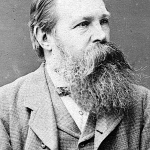
Friedrich Engels, the trust-fund kid who spent forty years bankrolling the man who called capitalism exploitation. Ironic.
Engels inherited co-ownership of Ermen & Engels, a Manchester cotton mill, in 1864. He worked there as a partner, managed workers, collected profits, and wired money to Marx in London for decades. Marx, meanwhile, wrote about the immiseration of the proletariat from rented rooms his friend's textile workers paid for. Marx fathered a child with his unpaid housekeeper, Helene Demuth, denied paternity, and let Engels take the blame publicly for years. Engels obliged. The man was a doormat with a trust fund.
Marx himself produced almost nothing marketable. "Das Kapital" Volume One appeared in 1867; he never finished Volumes Two and Three. Engels assembled them from Marx's notes after his death in 1883. The great theorist of historical inevitability couldn't finish his own book.
Two men, one the son of a factory owner and the other a chronic debtor who borrowed from his own mother, invented a theory that claimed capital accumulation is theft. Engels accumulated capital. Marx stole from everyone around him, privately and personally, before proposing to do it systematically at gunpoint through the state.
Every currency debased, every factory nationalized, every famine engineered under regimes waving their banner traces back to two comfortable Europeans who never once went hungry because prices rose, stood in a breadline, or dug a mass grave for dissidents.

Before the welfare state existed, working-class Americans built their own safety nets, and those nets caught people.
Fraternal mutual aid societies like the Odd Fellows, the Sons of Italy, and hundreds of smaller ethnic lodges ran insurance programs throughout the 19th and early 20th centuries. By 1920, roughly one in three adult American males belonged to one. Members paid modest dues, typically $1 to $2 monthly in 1900 dollars, and received sickness benefits, death payments, and access to lodge doctors who charged $1 to $2 per year per family. The Foresters of America covered 900,000 members by 1908. These institutions ran on mutual contracts between people who knew each other; it wasn't charity.
Accountability created alignment of incentives. Lodge members had every incentive to verify that sick claims were genuine, because fraudulent payouts drained their own pool. Government bureaucrats face no such incentive. Someone else bears the cost of fraud in their system.
The lodge doctor system collapsed because the American Medical Association lobbied state legislatures throughout the 1910s and 1920s to ban contract medicine. Doctors working for lodges earned less than AMA members preferred. The state obliged, eliminated the competition, and left citizens with the fee-for-service monopoly that still strips your paycheck today.
Voluntary cooperation built welfare that worked. Politicians dismantled it.

Are these the same guys who later made the COVID fatality predictions?

In 1960, Heinz von Foerster, Patricia Mora and Lawrence Amiot published a paper in Science modeling historical world population growth as hyperbolic. Their equation hit a mathematical singularity (population approaching infinity) around 2026.87, which they labeled Friday 13 November 2026. Quote: “Our great-great-grandchildren will not starve. They will be squeezed to death.” Birth rates later fell sharply, so the curve no longer holds.