

retired married 38 yrs 2 kids 5 grandkids fool who likes philosophy, sinner but loves theology cruising in the of fast lane of life with my left blinker on, 🚍
Joined February 2025
- Tweets5.4K
- Following836
- Followers640
- Likes11.7K







Hairy Fatback retweeted

Fascism and communism differ in their proclaimed ideals and share a fatal premise: the individual must be sacrificed to the collective.
Communist regimes invoke class. Fascist regimes invoke nation. Both subordinate individual rights to political power.
Their differences offer little comfort to the person crushed beneath either.


Hairy Fatback retweeted
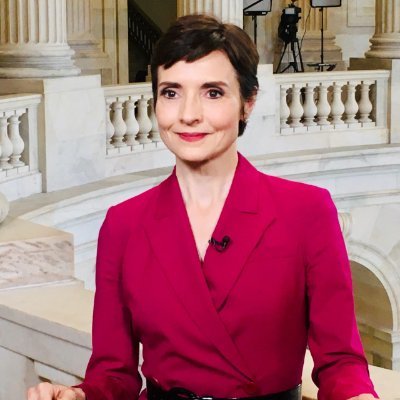
CHINESE TECH GIANT: CONSPIRACY TO STEAL AMERICAN TRADE SECRETS TO BENEFIT IRAN
via @TheJusticeDept
Chinese Tech Giant Huawei and several of its subsidiaries have been CONVICTED...
- Sanctions Violations
- Fraud
- Conspiracy to Steal Trade Secrets
- Money Laundering
"For decades the defendants conspired to secretly assist the Government of Iran, steal secrets from U.S. companies, lie to U.S. Banks and Congress and launder money."

Chinese Tech Giant Huawei and several of its subsidiaries have been CONVICTED of:
🔴 Sanctions Violations
🔴 Fraud
🔴 Conspiracy to Steal Trade Secrets
🔴 Money Laundering
For decades the defendants conspired to secretly assist the Government of Iran, steal secrets from U.S. companies, lie to U.S. Banks and Congress and launder money.
“No person or company is above the law,” said @AGToddBlanche. “For decades, Huawei and three of its subsidiaries conducted their business in the United States on the basis of lies and theft. Thanks to the work of the FBI and our federal prosecutors, those who engaged in these criminal activities will be held accountable.”
🔗: justice.gov/opa/pr/chinese-t…


Hairy Fatback retweeted

We are pleased to announce that friends and family contributions to individual Trump Accounts crossed the $1 billion mark today.
The American people are investing in Trump Accounts with a generosity that represents the finest instincts of our national character.
With every contribution, we are bringing the promise of long-term financial security within reach of American children from every kind of family and every kind of background.

Over $1 billion has been donated by friends and family directly to children’s Trump Accounts — a historic milestone to help give every American child a stronger financial future!
This billion-dollar milestone was made possible by contributions from more than 3 million friends and family members.
trumpaccounts.gov/news/frien…
Hairy Fatback retweeted

In 2022, I gave a speech at the Oxford Union which went mega-viral around the world because it was the first time millions of people had heard a fact-based critique of climate hysteria. It was considered extremely "controversial" at that time.
Do you hear the silence now?
The people who pushed the Net Zero scam on Western countries are nowhere to be seen. Even St. Greta of Climate Change has moved on!
Only a few morons, who sadly form much of our political class, are still sticking to the idea that the way to save the planet is to destroy our economy. Everyone else gets it now.
This is what human brains do, over and over, throughout history. They invent a new delusion and all go crazy together. If you dare to challenge it, they will attack you instead of questioning how they came to believe what they believe they believe. Madness of crowds.
Hairy Fatback retweeted
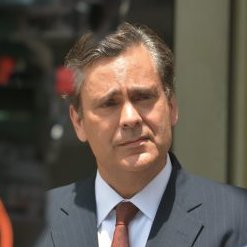
The release tonight in the Omar case includes a couple of revealing elements, including this statement from the Justice Department: "The United States believes that ILHAN has committed [REDACTED] crimes over decades— beginning long before she was ever in Congress."...
Hairy Fatback retweeted

Joint Statement on the Eighth United States-Qatar Strategic Dialogue: An Enduring Strategic Partnership
state.gov/releases/office-of…

Hairy Fatback retweeted

Victor Davis Hanson: Elon Musk Is Unforgivable to the Left
Elon Musk doesn't understand that the Left will go after him no matter what he says or does.
“He hasn't done anything wrong, but they're gonna go after him for being an apostate.”
@vdhanson
Hairy Fatback retweeted

MAiD Deaths: 76,475
COVID Deaths: 65,118
Median age at death:
MAiD: 77.9
COVID: 86
Hairy Fatback retweeted

Iranian truckers are striking across multiple cities, threatening the transport network the Islamic Republic has been forced to rely on as the U.S. naval blockade chokes maritime trade and oil exports.
Drivers in Shiraz, Chabahar, Dezful, Masjed Soleyman and other locations have reportedly halted work over soaring fuel, insurance, repair, tire and spare-parts costs while freight rates remain stagnant. The Union of Truck Drivers and Trucking Associations Across Iran has backed the action and called for wider participation, with drivers openly blaming “incompetent officials.”
The strike hits the regime’s fallback strategy precisely where it is weakest. With crude exports heavily constrained, CENTCOM estimating more than $25 billion in blocked oil revenue, and roughly 43 million barrels reportedly stranded, the Islamic Republic has redirected more trade toward land borders and the Caspian.
But redirecting cargo does not remove the cost of moving it. Reports describe thousands of trucks queued at the Turkish border, prolonged delays at Pakistani crossings and freight costs rising as much as fivefold on some routes. Officials advertise adaptation while drivers shoulder the losses—and are now refusing to keep paying for it.
That refusal threatens more than cross-border commerce, because trucks carry food, fuel, industrial inputs and consumer goods between terminals, warehouses, factories and cities. A sustained stoppage could leave supplies stranded even after they clear customs, deepening shortages and price pressures for households already facing severe inflation and collapsing purchasing power.
Reported participation in Khuzestan, including roughly 50 trucks in Masjed Soleyman, brings the action into Iran’s oil-producing heartland. Its precise effect on energy logistics is still emerging, but the location adds another potential pressure point to an already strained distribution system.
The strike also coincides with rolling blackouts, fuel shortages, petrol-station queues and electricity-worker protests, creating disruptions that can reinforce one another. President Pezeshkian’s appearance before reporters in a darkened office, urging the public to endure winter, captures the distance between official assurances and daily conditions.
The regime faces an increasingly expensive choice between concessions under severe financial pressure and coercion that could turn a livelihood dispute into a wider political confrontation.
How far the strike spreads and how long it lasts will determine its impact, but the weakness it exposes is already clear—the regime’s alternative trade routes depend on workers whose livelihoods its policies and failures have helped destroy.
Officials can demand endurance and announce new corridors, but they cannot keep goods moving indefinitely by forcing truckers to work at a loss.

Iran’s trade squeeze is spreading inland as congested border crossings expose the limits of the regime’s alternatives to blockaded ports.
Heavy truck congestion at the Yallama–B. Konysbayev crossing between Kazakhstan and Uzbekistan illustrates the bottlenecks facing cargo moving through Central Asia.
Local reports described roughly 990 trucks, queues stretching around 40 kilometers and drivers waiting several days.
Uzbek customs subsequently said the queue had fallen to approximately 100 trucks by the morning of November 20. Officials attributed the surge primarily to growing transit from China, Russia and Belarus.
The crossing is not exclusively an Iranian supply route. But China-origin cargo can pass through Kazakhstan and Uzbekistan toward Turkmenistan and Iran—meaning Iranian imports must compete for capacity with wider regional trade.
Diverting cargo inland does not create new roads, border capacity or customs staff. It moves the pressure somewhere else.
Every additional crossing introduces another potential inspection, delay, handling charge and payment complication.
For manufacturers, that can mean missing raw materials and spare parts. For importers, higher transport and financing costs. For consumers, those costs can feed into higher prices and shortages.
This is also where the United States is seeking to increase pressure through Task Force Iron Gate.
Announced by CENTCOM on November 7, the task force coordinates efforts to disrupt advanced weapons, dual-use technology, sanctioned materials and illicit revenue moving through Iran’s land borders and the Caspian Sea.
It is not an American force physically sealing Central Asian crossings. Its effectiveness depends on intelligence, interagency coordination and cooperation from regional governments.
The Yallama congestion does not establish that Iron Gate caused the delays. It demonstrates something more basic: the alternative corridors already have constraints that additional enforcement could make more costly.
Iran can adapt through neighboring countries, intermediaries and alternative routes. But those options cannot fully replace the volume and efficiency of maritime trade.
Meanwhile, restricted oil exports threaten the foreign-currency income needed to finance imports. Finding a truck route does not solve the problem of paying for the cargo.
The regime therefore faces two pressures at once—reduced access to revenue and more expensive ways to move goods.
The blockade’s consequences do not stop at the coastline. They push trade onto slower, costlier corridors where congestion and targeted enforcement can compound the damage.
The Islamic Republic can reroute cargo. It cannot make border capacity unlimited—or replace lost oil income with longer truck queues.

Hairy Fatback retweeted
Victor Davis Hanson: Rubio to the Global Bureaucrats—We're Not Listening Anymore
Secretary of State Marco Rubio's Federalist Society speech challenged international institutions that claim moral authority while selectively enforcing their standards. From the International Criminal Court to the World Health Organization, the criticism raises a larger question: Why should the United States continue deferring to unaccountable global bureaucracies?
Full episode: youtu.be/7scP1TMJbBc
@vdhanson
Hairy Fatback retweeted
One negative to universal healthcare that nobody ever mentions is that it incentivizes the government to kill you instead of paying for that healthcare.


Hairy Fatback retweeted
Trump has said economic pressure would squeeze the Islamic Republic harder than continued military strikes—and regime officials are now admitting the damage in their own words.
In just the past few days, regime officials have described economic pressure as a threat to the system’s survival.
Masoud Pezeshkian, President
“We are engaged in a silent war that is far more difficult than one in which missiles are launched and destruction is caused. It is an economic war… and it is no easy battle.”
Mohammad Bagher Ghalibaf, Parliament Speaker
“No matter how much military power we have, if people are hungry and we don’t have financial circulation, economic growth and domestic production, we will not endure.”
Seyyed Ali Madani-Zadeh, Economy Minister
“Inflation has exceeded 80%, and the pressure on people’s livelihood is high.”
Abdolnaser Hemmati, Central Bank Governor
“The economic blockade is a silent war that has raised the exchange rate and inflation, made access to financial resources difficult, and caused problems for people’s livelihood.”
Abbas Araghchi, Foreign Minister
“The blockade must be broken. We will make every possible effort to export oil and break the choking blockade.”
Kazem Gharibabadi, Deputy Foreign Minister
“We consider the economic blockade imposed by the US an act of war, and we will take whatever measures necessary to break it.”
Alaeddin Boroujerdi, National Security and Foreign Policy Commission member
“We cannot bear the economic blockade imposed on our people.”
Vahid Ahmadi, National Security and Foreign Policy Commission member
“If we cannot sell oil, others should not be able to sell it either.”
These translated remarks include both recent warnings and earlier statements, but their message converges—military power cannot replace oil revenue, restore purchasing power or keep the economy functioning under sustained financial pressure.
The regime projects strength while its own officials explain the conditions that could undermine its survival.
And rather than accept responsibility for the policies that helped create this crisis, figures within the system threaten neighboring countries if the Islamic Republic cannot sell its oil.
Ordinary Iranians bear the hardship while the regime threatens to make the wider region pay for its predicament.

The Islamic Republic is now publicly diagnosing itself as vulnerable to collapse from within.
Parliament Speaker Mohammad Bagher Ghalibaf told parliamentary commission chairs that the “neither war nor peace” situation cannot continue. He argued that the usual political arguments—branding negotiation as surrender or talk of war as warmongering—are useless.
More importantly, he stated that the enemy has concluded another “40-day war” cannot achieve its goals. As a result, its first priority has shifted to disrupting internal security, applying economic pressure, and engineering collapse from inside Iran.
This is not routine rhetoric. Senior regime figures rarely state so clearly that the decisive threat is no longer a large-scale external war but the internal conditions that could unravel the system.
Ghalibaf framed the shift as the enemy’s calculation after recent conflicts, then prescribed the remedy: “lasting deterrence” achieved through unity, cohesion, and urgent economic measures, including energy reforms that he said must begin with gas rather than gasoline.
The push to end the limbo is not his alone; both he and President Pezeshkian have cited an explicit order from the Leader to resolve it.
The admission matters because it reveals how the regime now assesses its own position. After months of declaring military achievements and deterrence, the highest levels are acknowledging that economic strain and internal instability are the primary risks to survival.
Military readiness is still asserted—they insist any new conflict’s scope would be set by Iranian forces—but the operational priority has moved inward. That pivot is the core of the statement.
For Iranians, the implication is direct. When the regime defines economic pressure and internal disruption as the enemy’s main method of bringing the system down, everyday grievances become security problems.
Protests, strikes, shortages, inflation, and public anger can be recast as foreign-orchestrated operations rather than the results of policy failure, mismanagement, and repression. Once domestic discontent is classified as enemy activity, demands for accountability are treated as threats.
The call for “unity and cohesion” then functions less as an appeal for shared purpose and more as a warning that dissent will be handled as a security matter. This is the same framing the system has long used to justify surveillance, arrests, and force against its own population.
The contradiction is sharp and self-generated. The regime presents itself as having reached a point of military deterrence that deters another major war, yet it simultaneously identifies the economy and internal security as the fronts on which its survival is now contested.
Victory speeches about the armed forces do not restore purchasing power, end shortages, or repair public trust.
Ghalibaf is not predicting collapse, but by naming internal collapse as the adversary’s priority and elevating economic and security measures as the response, he is acknowledging that the system can be undermined from within on those grounds.
The practical test is therefore internal. The regime can treat the economic and social pressures it has identified as problems to be managed through reform and relief, or it can treat the people experiencing them as the instrument of the enemy’s strategy and move against them accordingly.
The language of lasting deterrence and cohesion supplies the justification either way. What it does not supply is evidence that military claims address the conditions the regime itself has now ranked as the greater threat.


Hairy Fatback retweeted
How to Make an Entire Society Believe a Lie
liamoutloud.substack.com/p/h…
Hairy Fatback retweeted
Today, as part of Operation Economic Outcast, Treasury is targeting key “oil trustees” the Iranian regime relies on to facilitate the sale of oil abroad. With no oil on the water outside of the U.S. military blockade and no oil loaded onto vessels since the start of Operation Economic Outcast, the regime is attempting to recoup billions of dollars from its oil trustees. In many cases, these corrupt trustees have kept the oil revenue for personal gain.
home.treasury.gov/news/press…

Hairy Fatback retweeted
...The problem is that government tends to produce less competitive products at a higher overall cost. More importantly, the true costs are hidden in city budget lines. jonathanturley.org/2026/07/2…

Hairy Fatback retweeted

Today’s ratification by the Danish Parliament of the agreement on Greenland will make us all safer, stronger, and more secure.
This agreement modernizes the United States-Denmark-Greenland defense partnership and bolsters the national security of the United States and our allies in NATO. Looking forward to more cooperation in the future.
Hairy Fatback retweeted
The Iranian regime’s attempts to infringe on Lebanon’s sovereignty through terror proxies like Hizballah will not be tolerated. The U.S. government will continue to disrupt Iran’s attempts to exert influence in the region and fund its proxies.

Today, Treasury’s Office of Foreign Assets Control (OFAC) designated the Wa Ta’awanu Association, a charity that provides cover for Hizballah’s activities under the guise of delivering humanitarian services. OFAC today also designated members of a Lebanon- and Türkiye-based gold and cash smuggling network run by Hizballah and Iran’s Islamic Revolutionary Guard Corps-Qods Force.
home.treasury.gov/news/press…
Hairy Fatback retweeted
IRAN THREAT: ELEVATED, SPIKE CYBER ACTIVITY via written Congressional testimony @SecMullinDHS
"Iranian government cyber actors and pro-Iran cybercriminals have targeted U.S. critical infrastructure networks since the conflict with Iran began earlier this year. Since February, Iranian activity has increasingly targeted the transportation, healthcare, water, energy, and financial services sectors. These operations historically have produced localized and minimally disruptive effects against poorly secured industrial control devices, but vulnerable systems and weak cyber hygiene in lifeline infrastructure could create disruptive consequences."
"The threat from Islamist terrorists, whether inspired by FTOs (Foreign Terrorist Organizations) or acting on behalf of state sponsors such as Iran, remains elevated. This threat has been fueled in part by Middle East conflicts and terrorist propaganda. Although overseas counterterrorism pressure and enhanced U.S. border security complicate FTOs’ ability to send operatives to the United States, some individuals still attempt entry to conduct attacks."
FULL Testimony after the Jump👇

