





hexlint retweeted

Warren Buffett is considered the ultimate fundamental investor, but people misunderstand what made him successful.
Early in his career, Buffett had a genuine information edge. Financial data was difficult to obtain, few investors carefully studied balance sheets, and cheap companies could remain undiscovered for years. Simply reading every annual report and calculating the real value of a business gave him an enormous advantage.
Today, everyone has the same numbers. Every financial statement is instantly available. Thousands of analysts, algorithms, and artificial intelligence systems can compare valuations within seconds. Knowing that a company trades at eight times earnings or below book value is no longer an edge. It is merely information.
This may explain why many investors influenced by Buffett, including Bill Ackman, David Einhorn, and other traditional value investors, have struggled to consistently outperform in recent years. They learned the visible part of Buffett’s process: study the accounts, calculate intrinsic value, and buy when the price appears cheap. But once everybody learned the method, much of its advantage disappeared.
Buffett himself understood this transition. With Charlie Munger’s influence, he moved away from buying statistically cheap but mediocre businesses and toward buying exceptional companies whose future value could not be fully captured by a spreadsheet.
The edge moved from quantity to quality.
The most important questions today are often the ones that cannot be answered precisely with numbers. Is the chief executive changing? Is the culture improving? Do customers genuinely love the product? Is public perception completely disconnected from reality? Is management about to become more disciplined? Has the market misunderstood how people will behave?
These things cannot always be placed neatly into a model, but they matter no less than revenue, margins, and cash flow. In many cases, they matter more because the numbers only describe what has already happened, while qualitative changes determine what happens next.
This is why most investment posts on X are worthless. They repeat numbers, announce that something is cheap, and present publicly available information as analysis. But everyone can see those numbers. Every analyst knows them. Every algorithm has already processed them. Every artificial intelligence system can explain the same apparent valuation within seconds.
Repeating the obvious is not an edge.
The modern investor’s advantage is not having more data. It is understanding what the data cannot yet show. The edge is recognizing a change in human behavior, management, psychology, positioning, or perception before that change appears in the financial statements.
Numbers tell us where the company has been. Qualitative judgment tells us where it may be going.

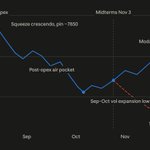
$SNAP
The past is a fact. The future is unknown.
I read many of the comments on my recent Snap posts, and almost all of them relate to the company’s past performance. I won’t argue with any of it. A lot of people also lost money along the way, so naturally, there is emotion attached to the name.
But past judgments and past pain can prevent you from seeing what is happening in the present.
And the present is where change first appears.
Green shoots do not guarantee a big tree. The future is still unknown.
Google has to work incredibly hard just to remain amazing. Snap does not need to become amazing. It only needs to go from badly managed to decent.
If Snap becomes merely decent, the stock can double.

hexlint retweeted

Holy shit they’re doubling down, and asking that people do not share the footage. Insane.

The incident has been reviewed, and we have no concerns over the officer's actions and we are satisfied that they were reasonable and proportionate in the circumstances.
We would ask that footage is not further shared to allow the legal process to take its course.
Readers added context they thought people might want to know
Police arrested the victim of an assault and allowed his attackers to flee.
x.com/Re_mi_gra_tion…
hexlint retweeted

INTERESTING CLAIM: AMERICA ACTIVELY WANTS OIL PRICES TO EXPLODE TO UNBALANCE BRICS
Geopolitical analyst Alexander Mercouris has uncovered a disturbing strategy allegedly brewing inside the United States. His sources point to heavy manipulation of financial markets designed to suppress oil prices artificially low, even while reserves are critically depleted. The prediction is clear. A sudden dramatic increase in oil prices is coming, yet some influential figures in Washington are actively encouraging this outcome.
THE SHOCKING STRATEGY
➡️ Geopolitical analyst Alexander Mercouris claims the US government is “heavily manipulating the financial markets” to keep oil prices artificially low despite “critically depleted” reserves.
➡️ His source predicts a “sudden dramatic increase in oil prices” that could hit at any moment.
➡️ Some people in the United States not only are not concerned about this but actively want it to happen.
➡️ The reason is that it would “put extreme pressure on China” and “severely unbalance the BRICS.”
THE RECESSION ACCEPTANCE
➡️ Mercouris adds that the alleged architects of this plan are “prepared to accept a global recession.”
➡️ Their aim is to “protect the dollar system” above everything else.
➡️ They also want to derail BRICS financial integration before it gains real strength.
THE BOTTOM LINE
Powerful interests in the United States may be willing to plunge the world into economic turmoil just to keep the dollar supreme and stop the BRICS from building a rival financial order.
We shall soon see whether these forces will continue to pursue their plans even after the MOU, or whether it was all just a fabrication.
#MercourisReveal #OilPriceShock #DollarDefense #BRICSUnderFire #GlobalRecessionRisk #ChinaTargeted #FinancialManipulation
hexlint retweeted

BREAKING: In response to an IRGC Navy one-way attack drone strike against a commercial vessel accused of violating orders related to the closure of the Hormuz Strait, the U.S. Navy conducted retaliatory airstrikes against two IRGC Navy bases in Sirik, on the Strait of Hormuz.
At approximately 03:32 local time, residents in and around Sirik reported hearing repeated explosions from the direction of the sea. One witness located a few kilometers from the IRGC Navy base at Tahrouyi reported multiple blasts, while others described continuous explosions and loud detonations in the waters east of Sirik.
The extent of the damage inflicted on the targeted facilities remains unknown.

hexlint retweeted

Something changed on the tracker today.
Two nights ago it was just tankers. Now a B-52 showing up, and heavy cargo flights are pouring in from Europe. The big logistics machine just switched on and none of it is hidden. A B-52 flying with its transponder on is meant to be seen by Iran.
I think the gun is being loaded in public to force Iran to sign this week. They sign in days, or this becomes the 2-3 week campaign Trump keeps describing.
If more bombers show up it’s not a bluff anymore, war is back and uglier than ever.

hexlint retweeted

A KC-46A departed Terceira and is currently operating over the Mediterranean Sea off the coast of Algeria
Boeing KC-46A Pegasus
RCH331 - 18-46055

hexlint retweeted

ALERT: San Diego off-duty cop knocks out a federal agent over a parking spot dispute at Costco, new lawsuit alleges.
DHS agent Chu Ding was leaving a parking spot at a Costco in 2024 when San Diego police sergeant Jonathan Ferraro parked behind him, waiting for a spot to open up.
According to the lawsuit, Ding tapped on Ferraro’s truck window, and Ferraro got out and called Ding a “Chinese piece of sh*t.”
Ferraro, in plain clothes, then slammed Ding onto the ground and flashed his badge, identifying himself as a San Diego Police sergeant.
Several bystanders called 911, claiming Ferraro as the attacker, but the lawsuit alleges that at least 6 911 operators labeled Ding, an off-duty federal immigration officer, as the offender.
Ding, who had a fractured rib, alleges the officers took him to the police station, coerced him into writing an apology letter, and charged him with felony assault, instead of taking him to the hospital.
San Diego County District Attorney’s Office refused to prosecute the case days later, and months later, Ding was cleared of any wrongdoing by an internal DHS investigation.

hexlint retweeted
3 of these are new tankers spotted. Bringing the number up to 13 American tankers in the sky over the ME (that I have seen). All posted in the thread.
Boeing KC-135R Stratotanker 8x
NA - 58-0122
NA - 59-1446
NA - 62-3512
RCH117 - 62-3571 (Bucharest)
NA - 63-8004
NA - 63-8872
NA - 64-14834
NA - 64-14835
Boeing KC-135T Stratotanker 1x
NA - 59-1460
Boeing KC-46A Pegasus 4x
NA - 18-46047
NA - 18-46048
NA - 18-46050
NA - 21-46089


hexlint retweeted

Everyone should read what Senior Vice President of Exxon Neil Chapman says about the oil price surge coming in 2-3 weeks
The next wave of the energy shock is approaching fast

hexlint retweeted

🇮🇷 BREAKING: Initial reports of an IRGC Navy attack on the U.S. naval fleet in the Strait of Hormuz and Sea of Oman.

hexlint retweeted

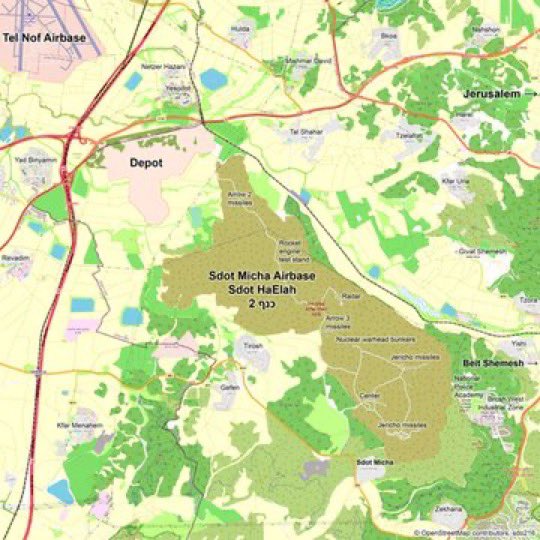
The explosion in Israel moments ago occurred near the Sdot Micha airbase.
It holds Nuclear material…
hexlint retweeted

A MASSIVE EXPLOSION HAS OCCURRED IN BEIT SHEMESH, ISRAEL
UNCLEAR WHAT THE EXPLOSION IS
🇮🇱🇮🇱‼️‼️‼️‼️‼️‼️‼️‼️‼️‼️‼️‼️‼️
hexlint retweeted

Trump on Taiwan:
When you look at the odds, China is a very, very powerful, big country. That’s a very small island.
Think of it; it’s 59 miles away. We’re 9,500 miles away. That’s a little bit of a difficult problem.
If you look at the history, Taiwan was developed because we had presidents that didn’t know what the hell they were doing. They stole our chip industry.
hexlint retweeted

There goes oil and bond yields
All that's lacking is a Barak Ravid tweet to catalyze the process and trip circuitbreakers
Aerial surveillance craft patterns in Iranian airspace periphery suggests impending large-scale operation too.
The NASDAQ might see a historic crash.


hexlint retweeted
A lot of suspicious multi-billion oil trades just took place -- suggests that Trump insiders have been informed that the Iran war resumes after the Trump-China trip is over very soon.
This has been the best way to detect advanced-warning so far in the conflict.
hexlint retweeted

China is pulling platinum into the country hard.
A major Chinese refiner reports surging physical delivery demand on the new Guangzhou Futures
Exchange platinum contract. Speculators and industrial users are opting for delivery rather than closing shorts, capturing the premium over London spot prices.
Global prices have more than doubled in the past year, inventories remain tight (~600kg vs 14.4 tons open interest for the key June contract), and Beijing’s export restrictions are tightening international supply further.
Long-term supply contracts are now being requested. Platinum is in the spotlight.
Meanwhile,@IvanhoeMines_ Platreef mine in South Africa, one of the world’s largest developing PGM projects, is ramping up production to help meet this growing global demand.
bloomberg.com/news/articles/…

hexlint retweeted

A Hungarian psychologist raised three daughters to prove that any child could become a chess grandmaster through early specialization. He succeeded. Two of them became grandmasters. One became the greatest female chess player who ever lived.
Then a sports scientist looked at the data and found something nobody wanted to hear.
His name is David Epstein. The book is called "Range."
The Polgar experiment is one of the most famous case studies in the history of deliberate practice. Laszlo Polgar wrote a book before his daughters were even born arguing that geniuses are made, not born. He homeschooled all three girls in chess from age four. By their teens, Susan, Sofia, and Judit were dominating tournaments against grown men. Judit became the youngest grandmaster in history at the time, breaking Bobby Fischer's record. The story became the gospel of early specialization. Pick a domain young, drill it hard, and you can manufacture excellence.
Epstein opens his book by telling that story honestly and then quietly demolishing the conclusion most people drew from it.
Chess works that way. Most things do not.
Here is the distinction that took him four years of research to articulate, and that almost nobody who quotes the 10,000 hour rule has ever read.
There are two kinds of environments in which humans develop expertise. Psychologists call them kind and wicked. A kind environment has clear rules, immediate feedback, and patterns that repeat reliably. Chess is the cleanest example. Every game ends with a winner and a loser. Every move is recorded. The board never changes shape. The pieces never invent new ways to move. A child who plays ten thousand games will see most of the patterns that exist in the game, and pattern recognition is exactly what chess mastery is built on.
A wicked environment is the opposite. Feedback is delayed or misleading. Rules shift. The patterns that worked yesterday may be exactly the wrong patterns to apply tomorrow. Most of the real world looks like this. Medicine is wicked. Investing is wicked. Building a company is wicked. Scientific research is wicked. Almost every job that involves a complex changing system with humans in it is wicked.
The Polgar sisters trained in the kindest environment any human can train in. Their success was real and the method was correct. The mistake was generalizing the method to fields where the underlying structure of the environment is completely different.
Epstein's research is what made the implication impossible to ignore.
He looked at the careers of elite athletes outside of chess and golf and found that the pattern was almost the inverse of what people assumed. The athletes who reached the very top of their sports were overwhelmingly people who had played multiple sports as children, specialized late, and often switched disciplines well into their teens. Roger Federer played squash, badminton, basketball, handball, tennis, table tennis, and soccer before tennis became his focus. The kids who specialized in tennis at age six and trained year-round for a decade mostly burned out, got injured, or topped out at lower levels of the sport.
The same pattern showed up everywhere he looked outside of kind environments. Inventors with the most patents had worked in multiple unrelated fields before their breakthrough work. Comic book creators with the longest careers had drawn for the most different genres before settling. Scientists who won Nobel Prizes were dramatically more likely than their peers to be serious amateur musicians, painters, sculptors, or writers.
The skill that mattered in wicked environments was not depth in one pattern. It was the ability to recognize when a pattern from one domain applied unexpectedly in another. That kind of thinking cannot be built by drilling a single subject. It can only be built by accumulating mental models from many subjects and learning to move between them.
The deeper finding is the one that should change how you think about your own career.
Specialists in wicked environments often get worse with experience, not better. Epstein cites studies of doctors, financial analysts, intelligence officers, and forecasters showing that years of experience in a narrow domain frequently produce more confident judgments without producing more accurate ones. The expert builds elaborate mental models that feel comprehensive and turn out to be increasingly disconnected from the actual structure of the problem. They stop noticing what does not fit their framework. They mistake fluency for understanding.
Generalists do better in wicked domains for a reason that sounds almost mystical until you understand the mechanism. They have less invested in any single mental model, so they abandon broken models faster. They are used to being a beginner, so they are not threatened by the discomfort of not knowing. They have seen enough different domains that they can usually find an analogy from one field that unlocks a problem in another. The technical name for this is analogical thinking, and the research on it is one of the most underrated bodies of work in cognitive science.
The single most useful sentence in the entire book is the one Epstein puts almost as a throwaway.
Match quality matters more than head start.
A person who tries six different fields in their twenties and finds the one that genuinely fits them will outperform a person who picked one field at fourteen and stuck to it on willpower alone. The lost years were not lost. They were the search process that produced the match. Every field they walked away from taught them something they later imported into the field they finally chose.
The reason this is so hard to accept is cultural, not empirical. We tell children to pick a path early. We reward the prodigy who knew at six. We treat the late bloomer as someone who failed to launch on time, when the data suggests they were running an entirely different and often more effective optimization process underneath.
The Polgar sisters were not wrong. The conclusion the world drew from them was.
If your environment is genuinely kind, specialize early and drill hard. If it is wicked, and almost every interesting human problem is, then the people who win are the ones who refused to specialize until they had seen enough to know what was actually worth specializing in.
You are not behind. You were running the right experiment all along.
