

Tech aficionado. Web3/crypto game person. Trader. Dad dancer. Working with code, demos, projects since 1984.
Oslo, Norway
Joined March 2009
- Tweets4K
- Following1.1K
- Followers1.3K
- Likes56.7K


Henning Rokling 🏃🏳️🌈🇺🇦 retweeted

Okay:
- Attached bottlecap
- Schengen, expanded to Croatia, Romania and Bulgaria
- The euro joined by Croatia and Bulgaria
- Air passenger rights (older, 2004, newly updated 2025)
- Galileo satellite navigation
- EU-Canada trade deal (CETA)
- EU-Mercosur trade deal
- EU-Japan trade deal
- EU-Singapore trade deal
- EU-Vietnam trade deal
- EU-Indonesia trade deal
- End of roaming charges, extended to 2032
- Price cap on calls and texts to other EU countries
- USB-C common charger
- Geo-blocking ban for online shopping
- Streaming subscriptions that work abroad
- Payment Services Directive (PSD2), no card surcharges and open banking
- Instant payments regulation
- EU Digital Identity Wallet
- eCall automatic crash alert in new cars
- Automatic emergency braking in new cars
- EU-Alert emergency warnings on phones
- Single Digital Gateway for cross-border admin
- No more apostille stamps between member states
- WiFi4EU free public wifi
- DiscoverEU free Interrail passes for 18-year-olds
- Erasmus+ (older, 2014), budget nearly doubled
- European Universities alliances
- European Solidarity Corps
- EU Digital COVID Certificate
- Joint COVID vaccine procurement
- Health Emergency Preparedness and Response Authority (HERA)
- EU4Health
- Europe's Beating Cancer Plan
- European Health Data Space
- NextGenerationEU joint borrowing
- SURE short-time work loans
- 15% global minimum corporate tax
- European Market Infrastructure Regulation (EMIR 3), euro clearing back in the EU
- Anti-Money Laundering Authority (AMLA)
- European Green Bond Standard
- Permanent Structured Cooperation (PESCO) on defence
- European Defence Fund
- European Peace Facility arms for Ukraine
- EU military training mission for Ukrainian troops
- Act in Support of Ammunition Production (ASAP)
- Strategic Compass and the 5,000-strong rapid deployment capacity
- European Defence Industrial Strategy
- Security Action for Europe (SAFE), €150bn joint defence loans
- ReArm Europe / Readiness 2030
- First ever Commissioner for Defence and Space
- Military mobility funding
- IRIS² sovereign satellite constellation
- EU Space Programme and the EU Agency for the Space Programme
- rescEU shared firefighting fleet
- 5G security toolbox
- Foreign investment screening
- Foreign Subsidies Regulation
- International Procurement Instrument
- Anti-Coercion Instrument
- Dual-use export control regulation
- Temporary protection for Ukrainian refugees
- Candidate status and accession talks for Ukraine and Moldova
- Ukraine Facility
- €90bn joint-borrowing loan to Ukraine
- Sanctions on Russia (older, 2014), big packages from 2022
- Russian banks cut from SWIFT
- Russian oil embargo and oil price cap
- Russian gas import phase-out
- Western Balkans Growth Plan
- Global Gateway
- REPowerEU
- Gas storage regulation
- Joint gas buying through AggregateEU
- Coordinated gas demand cut
- Windfall levy on fossil energy profits
- Electricity market reform
- European Climate Law, net zero by 2050
- Carbon Border Adjustment Mechanism (CBAM)
- Emissions Trading System reform and the Social Climate Fund
- Renewable Energy Directive, 42.5% by 2030
- European Wind Power Package
- European Hydrogen Bank
- Methane regulation
- Nature Restoration Law
- Ambient air quality directive
- Drinking water directive
- Urban wastewater directive, polluter pays
- Critical Raw Materials Act (CRMA)
- Conflict minerals regulation
- European Chips Act
- Net-Zero Industry Act
- Batteries Regulation with battery passport
- European Battery Alliance
- Important Projects of Common European Interest (IPCEI) on batteries and hydrogen
- EuroHPC supercomputers, including JUPITER
- InvestAI and the AI gigafactories
- Horizon Europe and the European Innovation Council
- Ecodesign regulation, no destroying unsold clothes
- Right to repair
- Ban on products made with forced labour
- Ban on vague greenwashing claims
- General Product Safety Regulation
- Common Agricultural Policy (older, 1962), current version 2023 to 2027
- Unfair trading practices directive protecting farmers
- Geographical indications reform for food, wine and spirits
- EU-China agreement protecting European regional products
- Geographical indications for crafts, like Murano glass and Delft Blue
- Creative Europe (older, 2014), current programme 2021
- Culture Moves Europe grants for artists
- Music Moves Europe
- European Year of Cultural Heritage
- European Capitals of Culture (older, 1985)
- New European Bauhaus
- European Collaborative Cloud for Cultural Heritage
- Ban on importing looted cultural goods
- 30% European content on streaming platforms
- Culture Compass for Europe
- European Media Freedom Act
- Anti-SLAPP directive protecting journalists
- European Public Prosecutor's Office (EPPO)
- Rule of law conditionality on EU funds
- Annual Rule of Law Report
- Article 7 against Hungary
- Whistleblower protection directive
- European Labour Authority
- Work-life balance directive, paternity leave
- Adequate minimum wages directive
- Pay transparency directive
- Women on boards directive
- Violence against women directive
- European Child Guarantee
- European Accessibility Act
- European Disability Card
- Rail passenger rights (older, 2007), recast 2021
- Trans-European Transport Network (older), revised 2024
- Single Market Emergency Instrument
- EU Inc (proposed)
- Digital euro (in negotiation)
- Next EU budget at close to €2 trillion (proposed)
- European Competitiveness Fund (proposed)
- AgoraEU culture and media programme (proposed)
- Savings and Investments Union (proposed)
- European supervision of big stock exchanges and crypto firms (proposed)
- Scaleup Europe Fund (launching)
- Startup and Scaleup Strategy
- Digital Omnibus simplification (proposed)
- European Business Wallet (proposed)
- European Innovation Act (expected)
- Quantum Act (expected)
- Cloud and AI Development Act (expected)
- Chips Act 2.0 (expected)
- Biotech Act (proposed)
- Advanced Materials Act (expected)
- Industrial Accelerator Act (expected)
- Circular Economy Act (expected)
- Critical Medicines Act (proposed)
- EU Space Act (proposed)
- European Grids Package (proposed)
- 2040 climate target of 90% (in negotiation)
- European Defence Industry Programme (EDIP)
- Defence Readiness Omnibus (proposed)
- Military mobility package (proposed)
- European Drone Defence Initiative and Eastern Flank Watch
- High-speed rail linking European capitals (plan)
- Single cross-border train ticketing (expected)
- EU Customs Authority (in negotiation)
- European Affordable Housing Plan
- Union of Skills and cross-border recognition of qualifications
- EU-India trade deal (in negotiation)
- Montenegro and Albania accession
- Qualified majority voting in foreign policy (under discussion)

Henning Rokling 🏃🏳️🌈🇺🇦 retweeted
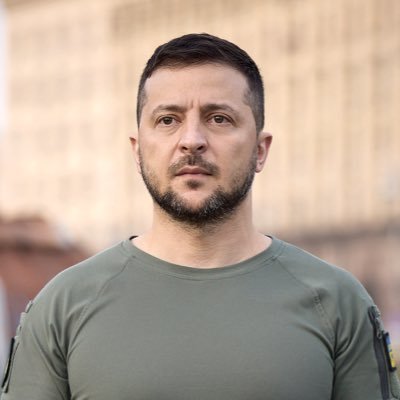
The front. This is where independence is won. And the path to peace runs through these very labyrinths, these very corridors. And when we say, “Ukraine is holding on,” this resilience begins right here at the front, in command posts like this and at every one of our positions – where Ukraine is – because Ukraine has defenders. Our warriors.
I thank you – everyone who is defending our life, our values, Ukraine’s right to exist, and the future of our entire state. I thank everyone who wears a patch on their shoulder, and on whose shoulders rests our independence.
With gratitude and respect to all our defenders, we say today:
Glory to you!
Glory to Ukraine!
Glory to the Heroes!
Henning Rokling 🏃🏳️🌈🇺🇦 retweeted

Today we announced the Claude-led discovery of a molecular machine that we suspect could represent a new gene editing mechanism. Its precise function, biotechnological utility (if any), or level of significance is not yet clear, but at minimum it is work I would have been proud to do as a PhD student. The work was done mostly, though not entirely, by Claude: our life sciences team suggested a broad area of research, Claude read through the literature and a bunch of genome data and discovered something interesting, then Claude proposed experiments to verify the discovery and our team carried them out.
It’s easy to dismiss this as a one-off or curiosity, but we’ve repeatedly seen a pattern where AI performance in new intellectual domains goes from weak to superhuman in a matter of a few years. In 2023 models struggled to do math at the level of an average high-school student. In 2024 they started to do well on math competitions for the best high-schoolers in the country, in 2025 they started to solve minor open problems, in early 2026 more significant open problems, and in late 2026 they are beginning to solve the top few open problems in all of mathematics. We believe AI for biology is on a similar exponential trend.
The main difference between biology and mathematics, of course, is that math can be done purely theoretically, while biology requires experimentation. Some have used this to draw the conclusion that AI’s utility in biology will be limited. We think this is wrong. As we’ve demonstrated today, humans can collaborate with AI to perform the experiments, validate key results in a few weeks and, if necessary, work with the AI to iterate on what they find. Eventually it may even be possible for Claude itself to safely perform the experiments by autonomously controlling lab equipment, with appropriate safeguards in place, but we aren’t doing that today (our lab is also a BSL1/BSL2 facility that doesn't handle materials dangerous to humans).
More broadly, biomedical advancement has many stages — from fundamental biology discoveries, to translational research, to drug discovery, clinical trials, and finally the actual delivery of medicines and health care to patients. We are also interested in these later stages, but even simply accelerating the first stage of fundamental biological discoveries has the potential to speed up and broaden the entire pipeline. Improving our understanding of biology and sharpening biologists’ tools can drive forward all of the later stages, for example by identifying new drug targets, finding new therapeutic modalities, allowing for more precise measurement, and speeding up the experimental loop which itself further accelerates our understanding of biology. This will not in itself speed up clinical trial times, but if it succeeds it could greatly increase the number of promising candidates that go into the pipeline — an increase in throughput even though latency remains.
In Machines of Loving Grace, I wrote about AI’s potential to “cure most diseases in 5-10 years” — a goal that sounds impossible, but one I believe is just barely possible if AI is applied to every stage of the pipeline. The first step is showing that AI can first help with, and then drive, biological discoveries.
Claude’s discovery is the latest in a line of related prior work that goes back decades, beginning with systems like CRISPR, and continuing with discoveries like the bridge recombinase and VIPR in the past few years. Recently, there has been heightened interest in systems based on reverse transcriptase (RT) enzymes, the enzyme underlying the system Claude identified. And most recently, a Stanford team working independently described a novel RT system with an associated non-coding array that is in some ways similar to the one Claude found, though they are distinct systems that evolved independently from each other. I believe that we’re at the very beginning of finding such systems and developing them into powerful tools for biotechnology.
I’m proud of the resources Anthropic has invested in accelerating the public benefits of AI through the life sciences, and we’re aiming both to grow our life sciences team and to work with other scientists to extend this approach to a broad range of problems. If you have a proposal for a research collaboration or are interested in joining our life sciences team, please reach out.

Claude has discovered a previously unknown enzyme system hidden in the DNA of bacteriophages. Beside the enzyme’s gene sits a long array of repeating DNA—a structure that looks somewhat similar to CRISPR.
We don’t yet understand what this system does, but only a handful of known systems share its features, and all of them are able to cut, copy, and paste DNA. Historically, the discovery of such programmable systems has helped revolutionize medicine. CRISPR, for instance, is now the foundation of genetic medicines. But it will take much more work to learn what this system does, and whether it can be put to similar use.
Read more: anthropic.com/news/claude-di…

Henning Rokling 🏃🏳️🌈🇺🇦 retweeted

China published the most uncomfortable paper on vibe coding.
ETH Zurich tested 100 developers in a controlled, commercial-grade vibe coding environment to see who actually succeeds.
The findings are brutal.
The researchers tracked computer science achievement, written communication skills, and general cognitive reasoning.
They wanted to see what actually predicts vibe coding proficiency when you never touch a line of source code yourself.
Two major predictors emerged.
Written communication proficiency mattered. The ability to structure thoughts and articulate intent unambiguously in text directly impacts what the AI builds.
But that wasn't even the main takeaway.
Computer science achievement was a massive, dominant predictor of success.
Even when researchers controlled for general intelligence and reasoning skills, CS background still heavily dictated who built working software and who completely crashed.
In fact, CS knowledge contributed roughly twice the unique predictive variance of writing skills alone.
Why? Because vibe coding isn't about writing code. It’s about debugging logic.
When an AI agent builds a complex application and quietly breaks an edge case under the hood, a non-technical user looks at the glowing UI and assumes it works.
They don't know what questions to ask. They don't know what logic to challenge. They lack the mental models to recognize architectural catastrophe.
You can prompt your way past syntax.
You cannot prompt your way past a fundamental lack of engineering intuition.
The hype told us that learning to code is dead because language is all you need.
The data just proved the opposite.
To truly master the vibe, you still need to understand how the machine thinks.

Henning Rokling 🏃🏳️🌈🇺🇦 retweeted
For about 10 years now, I have argued that the *only* way forward is for AI technology to be widely available, shared, and open.
Like the printing press and the Internet, AI amplifies human intelligence and efficiency by improving access to knowledge.
To empower individuals, societies require a high diversity of AI systems with different value systems, linguistic abilities, philosophical/political biases, and specific expertise.
We need diverse AIs for same reason we need a diverse press.
Given the cost and complexity, this can only be achieved through open foundation models on top of which anyone can build systems with their languages, biases, expertise, and value systems.
I have been more vocal about this over the last 4 years, since AI popped into the public discourse.
I have made the argument in various forums: corporate C-suites, AI safety discussion groups, professional meeting, the US Senate, the UN Security Council, and the public sphere through media interviews, podcasts and social media posts.
I totally agree with @finkd Mark Zuckerberg's recent piece in which he writes: "the notion that AI is so dangerous that the only safe path is an extreme concentration of power seems inherently problematic. Historically, hoping that an absolute power will benevolently provide for humanity if sufficiently enlightened has not led to safe or positive outcomes.”
When @DarioAmodei writes: “some may object that we can simply keep AIs in check with a balance of power between many AI systems, as we do with humans", he is talking about me, among (thankfully) many others. It is the only good path forward.
There will be nefarious uses of AI, as there have been with every technology ever invented.
But it will be your Bad AI against my Good AI.

Henning Rokling 🏃🏳️🌈🇺🇦 retweeted

Erling Braut Haaland on Snapchat following England’s World Cup elimination 😭

Henning Rokling 🏃🏳️🌈🇺🇦 retweeted

Rep. Tokuda exposes a horrifying reality. She confronts Defense Secretary Pete Hegseth on how the Pentagon's MAVEN AI targeting system deliberately slaughtered almost 200 innocent children in Iran. The Trump administration is using AI to commit massive, calculated war crimes.

Henning Rokling 🏃🏳️🌈🇺🇦 retweeted

In case anyone isn’t aware, Trump is demanding Zambia to hand over its mineral rights by end of day tomorrow or the U.S. gov’t will cut off the country’s access to the AIDS medications that are literally keeping its citizens alive.
Just thought y’all should know.
Henning Rokling 🏃🏳️🌈🇺🇦 retweeted

Her family didn't reject her, her friends didn't chase her away.
Her family and friends were massacred by Israel.
She is not a monkey…
She is a human being.
And you won't see her in Media
Henning Rokling 🏃🏳️🌈🇺🇦 retweeted

Greetings from Norway!🇳🇴 The nation of 5.5 million that absolutely steamrolled you in the Olympic medal count. Maybe take a seat, shut the fuck up, and show a little respect for a change. Decency clearly isn’t your strong suit.
Henning Rokling 🏃🏳️🌈🇺🇦 retweeted

SuperSplat 2.19.0 is here! ✨
Your free and open source Gaussian Splat Editor
🎞️ Create videos of 4D Gaussian splats
➡️ Import support for SPZ and KSPLAT added
🌐 HTML viewer export now based on SOG
⌨️ New hotkeys for animation authoring
[1 / 2]


Henning Rokling 🏃🏳️🌈🇺🇦 retweeted

Trump asking why Scandinavians don’t move to the U.S. is like asking why people don’t swap a lakeside summer cottage for a parking lot behind Walmart.

Henning Rokling 🏃🏳️🌈🇺🇦 retweeted

Rescue efforts continue after Russians just bombed a kindergarten in Kharkiv.
Henning Rokling 🏃🏳️🌈🇺🇦 retweeted

the smartest ppl you know are 20x-ing their output by coding with llms but you, mr. nobody mid-erson, you decided that the output of whatever model you tried ago 8 months with a "pls fix this" prompt, is not good enough
Henning Rokling 🏃🏳️🌈🇺🇦 retweeted

Israeli-Aligned Billionaires Seize TikTok in Battle for U.S. Narrative Control
The White House has announced that the forced sale of TikTok will be finalized this week. The new ownership led by Larry Ellison - the largest individual donor to the IDF - will take control of U.S. user data and the algorithm which the White House says will be "retrained".
Ellison, who made his fortune developing Oracle - a database system he originally built for the CIA - already controls CBS, Paramount, MTV, Comedy Central, Showtime, Nickelodeon (which makes kids shows) as well as Channel 10 in Australia and Channel 5 in the UK. Ellison is also expected to finalize control over Warner Bros. Discovery (including CNN, HBO and the Discovery channel) before the end of 2025.
Even before the forced sale is finalised, censorship of TikTok content critical of Israel, including of the deal itself, has reached extreme levels as the platform moves to align with its prospective new owners. Fox – a Murdoch asset - is also seeking to join the Ellison consortium, a move that could enable cross-promotion between Fox and TikTok, further tightening the Israeli-aligned information bubble.
Disapproval of what Israel is doing in Gaza has risen to 60% of the US population, nearly double the approval rate of 32%.
The U.S. still has over three years of Trump left. Israeli-aligned Jewish billionaires control OpenAI, Google, Meta/Facebook/Instagram/WhatsApp, Palantir, CBS, HBO, and most of Conde Nast (Reddit, Vogue, The New Yorker, Wired, GQ, Vanity Fair) as well as numerous Hollywood studios, regional papers and radio stations.
Europe, meanwhile, remains largely absent, offering little real competition in the information space. Its one real success story? Telegram, which it managed to comprehensively alienate after France arrested its founder, supposedly for not handing over enough user data.
Will the EU and other U.S. allies align with the “Israelified” TikTok algorithm, or attempt to create a politicised alternative of their own?
Decentralised alternatives like Keet and Nostr offer strong resistance to censorship but are still young. Larger platforms like Telegram and Rednote carry serious risks of censorship, including eventual sell-off to other interests. For users the sweet spot may be to use both. One for political reliability, the others for a (politically temporary) audience.