

zing, vecht, huil, bid, lach, werk en bewonder | tweets op persoonlijke titel
Gouda
Joined January 2010
- Tweets4.8K
- Following416
- Followers318
- Likes1.3K








André huykman retweeted

THE TRUMP EFFECT AND THE CONFIDENCE TRAP: HOW PERCEPTION DEFEATS INTELLIGENCE
It seems that hardly anyone still doubts that Trump is an idiot. His absurd behavior, economic ignorance, limited vocabulary, narcissism, contradictory statements, and constant reversals have even earned him the nickname TACO — Trump Always Chickens Out. But the real question is: how did someone like him become president of the United States?
Niccolò Machiavelli offered an explanation 500 years ago. Power is a performance. The winner is not necessarily the person who knows the most, but the one who performs most convincingly. Politics rewards appearances, confidence, and the ability to create an image of strength. People do not always seek truth. They seek certainty.
Intelligent people recognize complexity. They understand consequences, compromises, probabilities, and uncertainty. They hesitate before making promises because they know reality rarely offers simple answers. But crowds often interpret caution as weakness. One person says, “We need to analyze the consequences.” Another declares, “I know exactly how to fix everything!” Guess whom the crowd follows.
Modern psychology describes a related phenomenon: the Dunning-Kruger effect. People with limited competence may overestimate their abilities, while genuine experts are often more conscious of what they do not know. Confidence becomes a substitute for competence. The louder someone speaks, the more certain they appear, and the easier it becomes for others to mistake conviction for knowledge. As Shakespeare wrote, “The fool doth think he is wise, but the wise man knows himself to be a fool.”
This is the trap of modern politics. People who speak as though they know everything can attract enormous audiences, while those who carefully explain complicated realities struggle to be heard. But the greatest danger begins when such a leader actually gains power.
Machiavelli wrote: “The first method for estimating the intelligence of a ruler is to look at the men he has around him.” A weak leader fears strong personalities. He dislikes independent judgment, criticism, and anyone who might demonstrate greater competence. Instead of surrounding himself with experts, he chooses loyalists. Instead of people who identify problems, he appoints people who conceal them. Instead of advisers who challenge his decisions, he prefers those who applaud every word.
And incompetence spreads downward through the entire system. Eventually, the government becomes an ecosystem of mediocrity, where loyalty matters more than ability, criticism is treated as betrayal, and uncomfortable truths are systematically suppressed. Such a leader does not strengthen institutions. He gradually destroys them from within.
He fears independent experts because they expose his limitations. He fears honest feedback because it threatens his carefully manufactured image of greatness. And when a genuine crisis arrives, this system reveals its weaknesses. There is no depth, no independent expertise, no flexibility. Only mutual fear, personal loyalty, and illusions of strength.
History has repeatedly demonstrated how dangerous such political structures can become. The tragedy is that societies continue to reward the very qualities that make these systems possible. Why do people follow leaders who promise easy solutions, speak loudly, and never admit uncertainty? The answer lies not only in Trump, but in human psychology.
Our brains seek shortcuts. Confidence, decisiveness, and simple explanations feel reassuring, especially during periods of fear and instability. But confidence is not intelligence. Charisma is not competence.
The greatest political danger begins when a society can no longer distinguish between someone who understands reality and someone who merely sounds certain about it.
And that brings us to the most uncomfortable question of all: why do voters repeatedly mistake the performance of leadership for leadership itself?

André huykman retweeted

Very few artists in history have mastered the art of carving translucent veils from solid stone.
These are the 10 greatest examples ever sculpted 🧵

André huykman retweeted
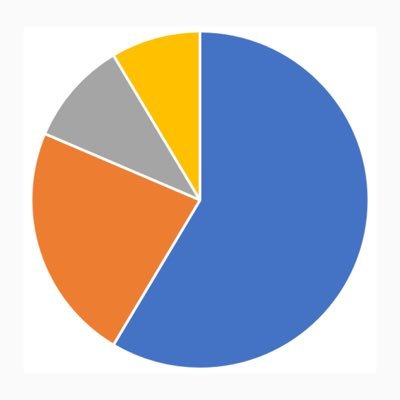
Number of years it took each product to gain 50 million users:
Airlines: 68 years
Cars: 62 years
Telephones: 50 years
Credit Card: 28 years
TV: 22 years
Computers: 14 years
Internet: 7 years
PayPal: 5 years
YouTube: 4 years
Facebook: 3 years
Twitter: 2 years
WeChat: 1 year
.
.
PornHub: 19 days


André huykman retweeted

Opvallend: de aftelklok van Lockbit voor de KNVB is gestopt. Normaal gesproken betekent dat dat een slachtoffer heeft betaald, of meer tijd heeft gekocht.


André huykman retweeted

Референдум о присоединении России к Нидерландам. Какая хорошая идея! Голосуйте ЗА, дорогие россияне. Пора!

André huykman retweeted

🎅🏼🎅🏼🎅🏼🎅🏼🎅🏼🎅🏼🎅🏼🎅🏼🎅🏼🎅🏼🎅🏼
2 5 W E E K S L E F T
🌟
🎄
🎄🎄
🎄🎄🎄
🎄🎄🎄🎄
🎄🎄🎄🎄🎄
🎄🎄🎄🎄🎄🎄
🎄🎄🎄🎄🎄🎄🎄
🎄🎄🎄🎄🎄🎄🎄🎄
🎁🎁🎁🎁
T I L C H R I S T M A S E V E !
🎅🏼🎅🏼🎅🏼🎅🏼🎅🏼🎅🏼🎅🏼🎅🏼🎅🏼🎅🏼🎅🏼
André huykman retweeted

Historisch draaiorgel verdwijnt na 75 jaar uit Gouda: ‘Veel mensen hebben alleen nog een bankpas bij zich’ ad.nl/gouda/historisch-draai…


André huykman retweeted

Zoetermeer is door de fietsers uitgeroepen tot ‘beste grote fietsgemeente’. Wethouders @iedema en @margreet_vdriel namen de prijs in ontvangst. Wij zijn super trots op de positieve inbreng van onze inwoners.
#fietsendoejevoorjeplezier #Fietsersbond

André huykman retweeted

Waarom valt de Russische president Putin Oekraïne binnen en waarom steunt de Russisch-Orthodoxe Kerk hem? Dat snap je pas als je de religieuze wortels van het conflict snapt. Zonder die in ogenschouw te nemen komt er namelijk ook geen oplossing. Een draadje om inzicht te geven:👇