

ज़िन्दगी तो सिर्फ अपने कन्धों पे जियी जाती है | दूसरों के कन्धों पर तो जनाज़े उठाये जाते हैं Shaheed Bhagat Singh (1907-1931)
Mumbai, India
Joined March 2010
- Tweets2K
- Following70
- Followers34
- Likes1.1K









Pradeep retweeted

Swami Vivekananda praised what he saw in Japan.
The social, political and cultural commitment of the Japanese to the National cause.
He was then asked a question and his response to that is perhaps the most critical insight for Hindutva to absorb. It holds the key to resolving anxiety around 'Indic Modernity'
"Is it your wish that India should become like Japan?"
"Decidedly not. India should continue to be what she is. How could India ever become like Japan, or any nation for the matter of that?
In each nation, as in music, there is a main note, a central theme, upon which all others turn.
Each nation has a theme: everything else is secondary. India's theme is religion. Social reform and everything else are secondary.
Therefore India cannot be like Japan. It is said that when 'the heart breaks', then the flow of thought comes. India's heart must break, and the flow of spirituality will come out.
India is India. We are not like the Japanese, we are Hindus. India's very atmosphere is soothing.
I have been working incessantly here, and amidst this work I am getting rest. It is only from spiritual work that we can get rest in India.
If your work is material here, you die of — diabetes!"
Pradeep retweeted
बॉर्डर-गावस्कर ट्रॉफी के चौथे मैच से पहले, एस जयशंकर जाएंगे भारत के ट्रैविस हेड से रिश्ते सुधारने ऑस्ट्रेलिया
Pradeep retweeted

Christmas giveaway!
We are giving away three signed copies of @brettgardner_10’s fantastic book, Buffett’s Early Investments. Perfect for holiday reading!
To participate:
📚Like & Retweet
📚Follow us (so we can contact you)
The winners will be announced on December 11.

Pradeep retweeted
रोहित शर्मा को रिप्लेस करने के लिए एक रन बनाकर आउट हुए सूर्या कुमार यादव
#SuryakumarYadav | #SAvsIND
Pradeep retweeted
टी20 की जर्सी पहन कर टेस्ट मैच खेलेगी भारतीय क्रिकेट टीम
#SAvsIND | #SanjuSamson
Pradeep retweeted

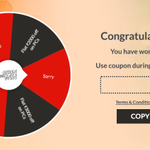
Sharan Hegde's course sign-up shows % sold out. It is hard-coded to start at 78.5%, rise randomly to 99% and reset back to 78.5%. Predatory services mostly preying on desperation of people.
Note: I know lot of websites do this for marketing -they're all predatory.
Lead: Reddit


Pradeep retweeted

LONG POST: ET Article:
Why SIP investing may not have a multiplier effect on your wealth ?
We have been loaded with the virtues of systematic investing via contemporary financial literature and industry experts. A cursory examination would indicate most of this associated literature is just about a decade old. The data, however, is quite compelling.
A modest investment of INR10,000 on SIP mode would make you INR1 crore in 20 years and a whopping INR7 crore in 35 years (CAGR assumed at 12%). That’s getting close to a dollar millionaire. The thought of creating INR7 crore from a mere INR21 lakh of your principle investment is very tempting. What could go wrong with this?
As we shall see, this analysis is flawed at many levels. Let’s unpack.
This is a two-part series to understand the pitfalls of newfound SIP (systematic investment plan) investing and its potential going forward.
Passive investing strategy
It appears so sensible and easy in theory. But a lot of good luck has to fall in place for this passive strategy to work. This article delves into the micro aspects that indicate why the wisdom that looks so obvious today was not so obvious in the earlier moment in time. Why could your predecessors not benefit from this so-called SIP formulae to make money? After all, making money this way wasn’t that hard. Or was it?
A prominent mutual fund still markets its popular scheme with these numbers. Had you invested just INR10,000 under SIP in XYZ mutual fund starting 1997, you would have garnered INR9 crore by 2022 (25 years span). However, the puzzling part of the story is this — very few, if any, actually benefit from this. Even if a few who did buy into the fund in 1997, they most certainly did not stay for 25 years to get INR9 crore. Else, the fund would have carried out their story on the front page. But such individuals probably don’t exist.
I wonder — if the said fund was multiplying money so fast, why didn’t the investors jump on the ship earlier, say after five years since launch? It should have sold out like hot cakes. Just like some of the small-cap funds stopped accepting money now.
If you are confused, then it is only fair. You are falling into a few psychological traps that financial companies play with. The first one of these is the nominal returns trap.
Nominal returns trap
You might see INR10,000 investment like a child’s play in today’s money. But in 1997, it was a lot.
Consider this reference from India today article in 1998 about salaries at top business schools. “Between 1994 and 1995, the average monthly pay-packet on campuses soared from INR8,583 to INR12,333, a rise of 49%.” Imagine compensation of INR 12,000 per month for a top MBA graduate. Since most of these jobs were in top metros, there was little left to save beyond INR2,000 per month. And that was a lot.
Talk of middle-management salaries for someone in mid-30s or 40s, you would find modest numbers again. India today article says, “Compared to the 1997-98 levels, the average annual salary of the middle managers is at INR6.4 lakh annually for the upper rung and INR4.67 lakh annually for the lower rung.” That comes to an average monthly salary of INR40,000. Take out the living expenses and there is hardly INR10,000 left. You think this executive would go ahead and initiate a small-cap fund SIP with this money?
And this is for the people earning at the top 1% of their respective age brackets. This is the crème of the cream. What about the rest? It is easy to arrive at a big number when you start with one. You can now see the nominal returns trap a bit more clearly.
Fancy some national-level numbers. The government budget was INR2 lakh crores in 1998. The GDP itself was INR13 lakh crore. So, the central government was then spending 15.3% of GDP, almost similar to what it is spending today. Compare that to the INR46 lakh crore spending at current times with a GDP of INR295 lakh crore, government spending comes to the same 15.5% of GDP. It is not that the government spending has risen significantly. But inflation has changed the numbers.
Nobody has gotten richer. The nominal value of money has changed. And you don’t get rich on the rise of nominal money. It is the real increase of wealth that counts.
Indexed to inflation, having an SIP of INR10,000 per month in 1995 (inception of Nifty) is like investing in SIP of INR70,000 today. Ah… really, that much? Suddenly, it doesn’t look that easy now.
Recency bias trap
Considering the facts above, you now know that an SIP of INR10,000 was not a child’s play in 1997. But still, a few savers could have tried that. At least INR5,000 SIPs in the said mutual fund. Why didn’t the savers not invest in SIPs in a big way earlier. What took them so long to realise the merits of such a powerful tool, you think?
Transport yourself to 1997 now. An investor would love to capitalise on markets. The mutual fund distributor pitches him the virtues of long-term investing and how the “India story” is shaping up. Yes, that’s true. Some of the current readers may be surprised to hear this but there was an India story even then. It has been there all the time.
You are about to sign the papers. But you ask for past returns CAGR for Nifty and the fund performance. The broker is not very keen to pull out that underwhelming chart hidden somewhere in the back of his files. You insist.
Here is how that looks like. The past three years Nifty returns (1994-97) are exactly zero. Nifty was launched in 1994 at 1000 and by 1998, it was back at 1000 after a few attempts to 1150 or so. The fund performance, even worse. Well, do you want to make that SIP now?
Remember – this is 1997. Fixed deposit rates were 12% or more depending on the bank. Who would be crazy enough to buy mutual funds! Markets are not for me, you say. Well, that explains why you don’t come across people who bought those funds in 1997 and even less who stayed. Conventional wisdom was not in favour of the markets then. Past performance didn’t support any optimism.
And that also explains why the conventional wisdom is against the FDs today and supports the markets. But have three years of negative market returns and then we can talk.
The final cut
Historical challenges seem easier if they’re viewed from today’s lens. And almost everyone from the past era appears foolish in light of what you know today. Recency bias and nominal return traps can distort your perception of future returns. Every generation has faced these issues. It is unlikely that this one does any better. In fact, all indications suggest otherwise.
Since inception, Nifty returns have been 30x in 30 years. It looks impressive. However, simply adjusting for inflation, the index would have been at 7000 on nominal basis today. So, the real returns are just 3x of the original level, a stark contrast from the nominal returns at 30x. Back of the envelope calculations show the real returns CAGR on Nifty since inception comes to 4.5%.
Believe it or not, this is very impressive. And unlikely to be repeated. I have discussed why in my first article in decadal returns in Indian markets. We’ll be very lucky if we can get even 4% real returns in the next 25 years.
Retrospective analysis can be helpful but has limitations. You can’t pick great investment ideas with retro analysis. If you do, you can’t be sure they will succeed. In most cases, they won’t. Else, investing becomes too easy like a math formulae. And everyone would be a great investor. If only.


#SIP investing for 20 years may not be the wealth multiplier you think! @anuragsingh_as discovers the pitfalls of passive investing and what it means for your wealth. bit.ly/3XFAR1S
Pradeep retweeted

Great news for the space sector! The Union Cabinet has approved the first step towards the Bharatiya Antariksh Station (BAS), expanding the Gaganyaan programme! This landmark decision brings us closer to a self-sustained space station by 2035 and a crewed lunar mission by 2040!
pib.gov.in/PressReleasePage.…
Pradeep retweeted

IC 814 - Breakdown
If you watch 5 hours of content, and at the end of it, you can't remember the four terrorists by their real names - then that's a creative choice that the storyteller is making. He wants you to remember Doctor, Burger, Shankar and Bhola. Sure, those were their code names but who they were for real is more important.
Osama Bin Laden was famous for being a gracious host who gave food and tea to foreign journalists who interviewed him. That's not the lasting memory you have about Osama Bin Laden, do you? He was a terrorist who sent planes into the Twin Towers - period.
Did you find out anything about the worldview of the characters in IC 814? What did the terrorists think of India? About Kashmir? About Hindus? About the West? About 9/11? About the war on terror? About Islam? That again is a creative choice of character development being made.
For casual viewers who don't follow current events closely (which is most people), the director wants to leave you with the memory of the hijackers being people who did hijack the plane but they also gave them food, let them go to the toilet, also let them play antakshari, and they were also "kind" in certain moments.
This is textbook humanising of villains - which is fine in fictional storytelling, but these were real life terrorists and there were 200 odd lives on the line. Both Pakistan and Taliban have been given the benefit of doubt in the narrative, as actors who wanted to 'solve' the issue, and not as blackmailers who had India by the balls.
Notice how the Indian officers were all short, fat, bumbling idiots who didn't have a grip on anything (fine if that's the POV - to show our failure) but notice how suave, young, dashing the Taliban leaders and hijackers were. Please go and look at what they looked like in real life. This, again, is a creative choice that the storyteller is making. Visually establish terrorists as 'cool' and officers as 'idiots'.
If films like Kabir Singh and Animal are irresponsible for their "point of view" and "storytelling choices" they are making, then IC 814 is the Animal of the crime-thriller genre.
Pradeep retweeted

This is pathetic, ugly and vile. And no honest, decent Indian, can see this and not be repulsed. Beating up an elderly man who is visibly shocked and frightened on 'suspicion' is a truly ugly thing, created by ugly minds. These young men are thugs. This is not sanskar

Pradeep retweeted

The new UPS is a throw back to the old defined benefit schemes of that past that hurt us even today. Guaranteeing a growing benefit just passes the pain down to future years, especially as government salaries increase to become closer to the private sector.
But let's analyze this in some detail, like Capitalmind will always do.
Govt employees pay 10%, the govt pays 18% of the salary into the program. So in some ways, it's funded every year unlike the old pension scheme, where the government didn't contribute anywhere at all (only employees did, and the govt just uses the money) and so the pain of paying pensions fell on subsequent governments when people actually retired.
Imagine if I told you I'll pay you 1 lakh a month and 10K per month was taken away for your pension. You say fine and work for 25 years. But I don't invest the 10K you pay me for you pension - i just spend it. What happens after 25 years? Who cares, I'm not in the government any more hahahahaha. This is the OPS.
In the UPS, the government actually pays in to a pool, I think, every year, so there is a corpus built up, but it's not by person, it's an overall pool. Let's look at what this pool will be for ONE person.
If a person works 25 years, earns Rs. 1 lakh per month today, and sees a DA increase of 8% every year. She'll pay Rs. 10,000 per month, and the govt about Rs. 18000 per month into the pool
Let's assume this pool is invested partly in equity and rest in gsec, totally earning 10% per year.
Year 1: the corpus ends up with about 29K (some growth because of monthly investments)
Year 10: Salary has doubled to 2L per month, corpus is now 78 lakhs.
Year 25: Salary is now 6.3L per month, corpus has become 7.4 crores.
Year 26 is a withdrawal - 50% of salary (about 3.4 lakh per month, after a DA hike of 8% from prev year) = Rs. 41 lakh (3.5L per month)
Assuming the corpus continues to return 10% - the return is 74 lakh, payout is 41 lakh, everyone's happy.
But remember, the payout grows every year. The corpus is stagnant.
Assuming retirement at 60, the person is likely to live another 20 years, so let's plan for this. Turns out that at the 8% annual increase in salary and a 10% return on corpus, the break-even age for the government to not lose money in the future is: 83 years.
Which is decent, you might think. Essentially, if the government fellow never gets an increment beyond DA, the future is fine.
If the salary increases because of promotions, by 12% per year, now the break even comes to age 71. Beyond that age, the future government loses money in some way.
But this seems that the risk is smaller than I first thought. It's better than the OPS, and has issues only if everyone lives seriously longer. And an inflation of 8% is possibly too high (but the breakeven is still beyond age 80 for inflation of 6%, returns of 8%) They must use equity to juice up returns.
Now much is actual inflation? CUrrently the CPI (IW) index is at 3.8% inflation, and returns are considerably higher, so it looks good. But if inflation rises and returns fall, then the pension problem will increase.
Note also that this is a pool, so even if some people live long, others will die earlier, and payouts may also be financed by new people coming in for the first decade or so, which means the real problem, if any, is only after 35-40 years. Still, that's no reason to kick the can that way.
I think the big gamechanger here is the presence of a corpus that's paid into every year. I hope they allow it to be managed by portfolio managers or AMCs, which will allow for higher growth in the long term. Equity, international and REIT/Invits, to get the biggest benefit (with perhaps 50% of the corpus?)
Verdict? My thoughts
- UPS is not as bad as OPS
- Defined benefit still a bad idea IMO
- The "one time payout" of an NPS won't come. Interesting behavioural point here.
- But it may not hurt us as much as we think, though we must have equity or higher long term returns using that corpus
- Btw, the government will end up earning a huge amount of tax in the long term on the pensions paid (versus only 12.5% capital gains if you did this yourself :)
(Note: biased, as the corpus might come to equity which is good for us asset managers)
Thanks for reading!

Pradeep retweeted
Modi is a Declining Brand
A brand is either in ascent or in decline.
Modi’s brand was in ascent post 2013. He had a lot of fresh ideas - Startup India, Skill India, Swachch Bharat. Everytime he spoke, people wanted to listen. Venues were packed, both in India and abroad. There was a lot of positive chatter around physical infrastructure, India’s Tech Stack, fiscal management, Article 370 and the building of the Ram Mandir in Ayodhya.
When Modi asked people to post selfies with daughters, they did it. When he asked people to put Tirangas in their balcony, they did it. When he asked people to cheer doctors in the middle of a pandemic, they did it. Modi was India’s biggest influencer who commanded mass appeal.
Modi’s popularity among the masses was soaring every quarter. Both Indian and foreign publications that measure such ratings attested to it. Modi was trusted - both in word and action. Modi ne bola hai toh hoga. Modi karega.
A brand has an ascent phase. It has a peak. Then it starts to decline. And just like there was a peak, there will be a low. It happens for every company, every product, every brand, every individual. It’s a natural part of the life cycle of a brand.
Modi’s brand is now on the decline.
Everyone has heard him speak for an hour plus at least two dozen times. There are only that many fresh ideas or new insights a human being can have. He no longer has the capacity to surprise or move his audience with a speech. After you listen to it enough times, it now starts to feel like a drag. Why does he keep going on and on?
Modi is also obviously a weakened Prime Minister with 240 seats. The room for radical reform and ‘masterstrokes’ has shrunk. A ‘strong leader’ who likes to project power through ‘bold decisions’ like surgical strikes and demonetisation doesn’t have the room for it anymore. Everyone sees it, they know he can be blackmailed.
When Modi asks people to participate in mass movements now, the responses are much thanda. Regular people no longer change their DPs to follow his lead, like they did earlier. ‘Har Ghar Tiranga’ was much more muted this time than previous years. The excitement, the exuberance has diluted significantly, or rather almost vanished.
Modi was once projected as a leader who doesn’t go back on his word. He saw through Article 370, he built the Ram Mandir, he executed the surgical strikes. But then, he did blink. With the Farm Laws, with CAA. When weakness is shown in politics, it is pounced upon. Everyone knows he is vulnerable. No one sees him as the guy who can’t be beaten politically. Like it once felt. Modi can be brought to his knees. Everyone knows it.
The erosion of his persona, aura and political capital is going to continue bit by bit. His brand will be weaker in 6 months than it is today. It will be worse in a year than it will be in 6 months. Everything he says will be contested. Everything he does will be contested. Protests will intensify over everything. He will be made to roll back many decisions. His limitations as a leader will be more visible for everyone to see. Modi is a declining brand, and such movements are rarely reversed.
When a company (BJP) has a declining brand (Modi), it’s time to either reinvent or introduce a new brand in the market. It is difficult to see how BJP can reinvent a political figure at 73 who has been in public life for so long. He has had a long career in politics, and it has taken a heavy toll on him. Everyone believes this is probably his last term in office.
Perhaps preparations are in order, for the introduction of a new brand. There’s still time for the 2029 election. If a declining brand is not arrested in time, it can bring the company down. Not everyone has the luxury of being Rahul Gandhi.
Pradeep retweeted

RG Kar Medical College is not responsible for just a single murder.
The case is just the tip of the iceberg.
THREAD: The complete story behind it.🧵
Pradeep retweeted

Honored to share my epic rendition of our National Anthem of India (Bharat). Featuring top legendary Indian musicians - a 100 piece British Orchestra and a choir of 14000 tribal children! We even won a Guinness World record :-)
Please share, watch, use, but with respect :-) It is yours now, my humble gift to every Indian everywhere. Jai Hind!
Happy #IndependenceDay2024
Featuring Pt Hariprasad Chaurasia, Rakesh Chaurasia, Amaan & Ayaan Ali Bangash, Rahul Sharma, Jayanthi Kumaresh, Sheik & Kaleeshabi Mahaboob, Giridhar Udupa, Royal Philharmonic Orchestra (UK), Kalinga Institute of Social Sciences.
#EpicNationalAnthem @GWR @narendramodi
Pradeep retweeted
People who pay Rs300 bribes after breaking signals, or use “contacts” to move files, obviously think “setting lagana” is a virtue. It is not.
It is what slimey people do. We have not been treated unfairly. We have broken rules. And there are costs to breaking rules in the world.

So why is #NitaAmbani on the international Olympic committee if she doesn’t push for this with all the global clout on display at the never ending wedding celebrations?? Waiting to hear from her. Will Ambani PR issue a press release on this please???