

Co-Founder & CEO, Fire-Boltt & Boltt. Forbes 30 Under 30 Asia. Building a global consumer tech platform from India.
India
Joined July 2016
- Tweets337
- Following459
- Followers1.5K
- Likes423









A founder saying “my door is always open” means very little if everyone is scared of what happens after they walk through it.
You find out whether your team is comfortable disagreeing with you when they disagree on something you actually care about.
That’s the test.
4
7
146
I don’t completely buy the idea that every business needs to move fast.
Some decisions should be slow.
Hiring a senior leader.
Entering a new category.
Choosing a long-term manufacturing partner.
Making a large capital commitment.
Speed matters when the cost of reversing a decision is low.
When the cost of being wrong lasts three years, taking another three weeks is not indecision.
Sometimes it’s just good judgment.
1
5
149
There have been meetings where I’ve walked in convinced I knew the answer.
Twenty minutes later, someone much younger than me has completely changed my mind.
Earlier in my career, I probably would have spent more time defending my original view.
You eventually realise how expensive that can become.
The founder having the final say does not mean the founder has to win every argument.
These days, if someone on the team can prove me wrong quickly, I’m quite happy about it.
We’ve probably just saved ourselves a few weeks.
1
7
159

I think founders are told to delegate too early sometimes.
Delegation is great when you understand the work well enough to know what good looks like.
Delegating something you’ve never understood yourself is different.
In the early days, I want to be uncomfortably close to the problem.
Customer calls. Product complaints. Supply issues. Sales conversations.
You don’t have to do everything forever.
But doing some things yourself once teaches you what questions to ask when someone else eventually owns them.
“Stay out of the weeds” is good advice.
Just not always on Day 1.
2
4
164
One thing I’ve stopped being impressed by is how busy someone looks.
A packed calendar can mean you’re important.
It can also mean you’re terrible at saying no.
I’d rather have three important things move properly than fifteen things move 10%.
1
3
129
Adding a feature is easy to defend.
Removing one takes more confidence.
Every extra feature adds cost, complexity and one more thing that has to work properly.
Product teams: which decision is harder?
3
127
Every new tech category goes through the “why do I need this?” phase.
Then a few use cases become useful enough that people stop explaining the product and just start using it.
Smart glasses are somewhere in that journey right now.
2
7
173
The real smart-glasses test comes after the novelty wears off.
If people are still reaching for them weeks later without thinking about it, the product has found a place in their routine.
That matters more than first-day curiosity.
1
6
258
Building in a difficult market exposes weak thinking very quickly.
Pricing, inventory, product choices, demand assumptions... everything gets questioned.
The upside is that you become much more disciplined because the market gives you less room to be lazy.
1
3
128
We still talk about “Bharat” like the customer outside metros is waiting to catch up.
They’re already comparing the same phones, watching the same reviews and checking the same offers.
The consumer is already there.
Brands need to catch up.
1
5
248
Some of the best business lessons are annoyingly expensive.
A process breaks at scale. Demand comes from somewhere unexpected. A customer catches something everyone internally missed.
Founders, what’s one lesson you had to learn the expensive way?
2
3
156
Smaller city does not mean simpler customer.
They compare, watch reviews, check offers and ask about service before spending.
Lower budget does not mean lower expectations.
And that’s good for brands. It forces us to earn the sale properly.
1
6
162
The first purchase is exciting.
The second one tells you much more.
A customer choosing you again usually means the first experience actually held up.
That’s the signal I’d watch more closely.
5
125
Conviction gets a lot of attention in startup conversations.
Curiosity deserves more.
Some of the most useful changes we’ve made came after customers challenged something we were very sure about internally.
1
4
152
A slow market forces better discipline.
When customers are spending more carefully, every feature has to justify its cost.
You can’t keep adding things just because they look good on a comparison chart.
2
4
167
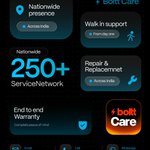
The product doesn’t end when the box opens.
A customer may love the device for months, but one bad service experience can change how they remember the brand.
Internally, those are different teams.
For the customer, it’s one experience.
4
5
249
Customers are very good at telling you what hurts.
They don’t always need to tell you the solution.
“My phone dies before I get home” is useful feedback.
“Give me a 7000mAh battery” is already a product decision.
3
7
390