




Von Ranke retweeted

Stop whitewashing retardation for clicks. I know sitting in that classroom was probably the most advanced education you've ever had, but Afghan girls deserve better than troglodyte laws that leave them in tents to learn only up till they're 12.
Von Ranke retweeted

History is unsentimental. There is power or lack of power, interest or lack of interest, and what is said at a summit are the lies that must be told as reality plays itself out. One of the most important things... is never listen to anybody's statement; inevitably they're not going to tell you what they're going to do.

Von Ranke retweeted
Umm Ḥarām (ra) reports that the Prophet ﷺ said:
'The first army from my Ummah to wage war by sea has be assured [Paradise]'. She asked: will I be among them? He ﷺ replied: 'You will be among them'.
Then the Prophet ﷺ said: 'The first army from my Ummah to wage war against Caesar's city are forgiven'.
The first naval expedition was led by Mu'āwiya ibn Abi Sufyan (ra), while his son Yazīd led the first campaign against Constantinople.
Von Ranke retweeted

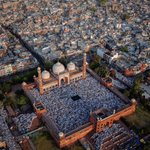
Grand mosque of Amarah
It’s a Sunni mosque in central Amarah, the original mosque was built in 1861
In 1961 after 100 years it collapsed in on itself
In 1964 it was reconstructed, but in 2022 it was demolished to be rebuilt in a nicer style closer to the original.


Von Ranke retweeted

لكل جاحد بنعمة التحرير والفتح، هذا مشهد أكثر من طبيعي قبل التحرير، من أمام جامع آمنة في حلب أثناء صلاة الجمعة.
أراذل شبيحة النظام البائد ينتظرون المصلّين أمام المسجد لاعتقالهم والاعتداء عليهم بالضرب، وبثّ الخوف في نفوس الناس.
#ما_تغير_شي
Von Ranke retweeted
A pleasure to chat with Heba to discuss the prospects of the US-Israel war on Iran turning into a "frozen conflict".
If Trump doesn't use the next 2 months to restart the war, or Netanyahu doesn't drag him in by the ear, expect "no war, no peace" to be the status quo.

Von Ranke retweeted

The Ḥijāzī Revolt Against Yazīd b. Muʿāwiyah
The Battle of al-Ḥarrah in 63 AH / 683 CE is often presented without the events that led to it. The Syrian army did not simply descend upon a peaceful Madīnah.
By the time Muslim b. ʿUqbah arrived, ʿAbd Allāh b. al-Zubayr رضي الله عنه had already established open opposition in Makkah, Yazīd had been formally deposed in Madīnah, his governor had been expelled, a rival administration had been established, and the Umayyad family residing in the city had been driven out.
Muslim’s expedition was therefore directed against the wider revolt in the Ḥijāz. He was to deal with Madīnah if it resisted and then proceed to Makkah against Ibn al-Zubayr. [1]
The confrontation with Ibn al-Zubayr preceded al-Ḥarrah. Ibn al-Zubayr refused Yazīd’s authority and increasingly established an independent position around the Sacred Precinct.
An earlier force was sent under Ibn al-Zubayr’s own brother, ʿAmr b. al-Zubayr, who remained aligned with the Umayyad government.
The purpose was to bring Ibn al-Zubayr back into obedience and prevent Makkah from becoming the center of armed rebellion. ʿAmr even appealed to his brother not to allow Muslims to fight one another within the sanctuary. [2]
ʿAmr was eventually captured. Reports preserved by Ibn Saʿd and Ibn ʿAsākir relate that Ibn al-Zubayr permitted men claiming grievances against him to administer retaliation until he died, after which his body was crucified. [2]
The wider Zubayrid movement also saw violence against Umayyad dependents. Al-Ṭaḥāwī preserves through a chain graded ṣaḥīḥ from ʿAṭāʾ that Saʿīd, the mawla of Muʿāwiyah, and his companions were captured and brought before Ibn al-Zubayr.
Ibn ʿAbbās رضي الله عنه objected and argued that, having been brought into the Ḥaram, they had acquired security and should be released. Ibn al-Zubayr nevertheless had them taken outside and killed and crucified. [3]
This wider context matters. The struggle in the Ḥijāz had already moved beyond rhetorical opposition into expulsion, armed confrontation, and the killing of Umayyad mawālī and supporters.
Before sending an army against Madīnah, Yazīd attempted to preserve the allegiance of its leading men through conciliation and generosity.
Among those who visited him was ʿAbd Allāh b. Ḥanẓalah رضي الله عنه with his eight sons. Khalīfah b. Khayyāṭ transmits that Yazīd gave Ibn Ḥanẓalah 100,000 dirhams and each of his eight sons another 10,000 dirhams, amounting to at least 180,000 dirhams for the household alone, besides other reported gifts. [4]
However, after returning to Madīnah, Ibn Ḥanẓalah became one of the leading figures in the revolt. When reminded of Yazīd’s generosity towards them, he acknowledged the gifts but stated that he had only accepted the money in order to further strengthen himself against Yazīd. [4]
Yazīd still did not immediately resort to war. He sent the Companion al-Nuʿmān b. Bashīr al-Anṣārī رضي الله عنه to Madīnah to persuade its inhabitants to abandon the deposition, preserve the jamāʿah, and avoid civil war.
Al-Nuʿmān warned them explicitly that they could not withstand the Syrian army and predicted to Ibn Muṭīʿ that he would eventually flee toward Makkah while the Anṣār he was encouraging would be left facing the consequences in Madīnah. [5]
His intervention sadly failed.
The rebels did not merely call for the deposition of Yazīd. They formally deposed him and established an alternative government in Madīnah.
They appointed ʿAbd Allāh b. Ḥanẓalah over the Anṣār, ʿAbd Allāh b. Muṭīʿ al-ʿAdawī over Quraysh, and Maʿqil b. Sinān al-Ashjaʿī over the remaining military groupings. [4]
They then expelled Yazīd’s governor. More seriously, they collectively targeted Banū Umayyah themselves.
This should not be softened into the language of removing a mere “political faction.”
Banū Umayyah were an actual family, one of the great clans of Quraysh. The rebels besieged the Umayyads residing in Madīnah together with their mawālī and supporters.
The sources place the gathered group at roughly one thousand people or more in the house of Marwān b. al-Ḥakam. They were then forced out of Madīnah. [6]
Thus an entire major Qurashī family was collectively expelled from the city because of its association with the reigning dynasty. Combined with the treatment of Umayyad mawālī elsewhere in the Ḥijāz, the confrontation had become far more than a dispute over Yazīd’s personal conduct.
It is strongly inaccurate to portray al-Ḥarrah as “Yazīd against the noble Ṣaḥābah.”
ʿAbd Allāh b. ʿUmar رضي الله عنهما explicitly opposed the deposition. Ṣaḥīḥ al-Bukhārī records that when the people of Madīnah removed Yazīd, Ibn ʿUmar assembled his family and reminded them that they had pledged him allegiance.
He described giving a ruler bayʿah and then raising war against him as a grave act of betrayal and warned that he would sever himself from any member of his household who joined the revolt. [7]
Other senior figures, including Ibn ʿAbbās, Jābir b. ʿAbd Allāh, Abū Saʿīd al-Khudrī, al-Nuʿmān b. Bashīr, and ʿAbd Allāh b. Jaʿfar رضي الله عنهم, either maintained the existing allegiance, refused the revolt, or worked to prevent the confrontation.
Among Ahl al-Bayt, ʿAlī b. al-Ḥusayn and Muḥammad b. al-Ḥanafiyyah likewise did not join the Medinan uprising. Muḥammad b. al-Ḥanafiyyah was particularly explicit when attempts were made to recruit him. He refused to depose Yazīd and disputed the allegations of alcoholism being advanced as justification for rebellion. [8]
The loyalist position was not restricted to Companions who merely remained home or verbally condemned rebellion. Men regarded as Companions according to the view adopted here actually fought with the Syrian army.
ʿAbd Allāh b. Masʿadah al-Fazārī رضي الله عنه commanded the Damascene contingent.
Ibn ʿAsākir states:
وبعثه يزيد بن معاوية على جند دمشق يوم الحرة
“Yazīd b. Muʿāwiyah sent him over the army of Damascus on the day of al-Ḥarrah.” [9]
Ḥuṣayn b. Numayr رضي الله عنه commanded the Ḥimṣ contingent. After Muslim b. ʿUqbah died on the road to Makkah, Ḥuṣayn succeeded him as commander and continued Yazīd’s campaign against Ibn al-Zubayr. [10]
Rawḥ b. Zinbāʿ رضي الله عنه commanded the Palestinian contingent. Imām Muslim explicitly classified him as having ṣuḥbah. [10]
Marwān b. al-Ḥakam رضي الله عنه, himself one of the Umayyads expelled from Madīnah, returned with Muslim’s army and actively aided him against the rebellion. [11]
Thus ʿAbd Allāh b. Masʿadah, Ḥuṣayn b. Numayr, Rawḥ b. Zinbāʿ, and Marwān b. al-Ḥakam رضي الله عنهم all stood on the loyalist military side.
The conflict therefore cannot be reduced to “Yazīd massacring the Companions.”
Companions were found on both sides, while several of the most senior surviving Companions opposed the revolt altogether.
When Muslim b. ʿUqbah arrived, he did not immediately begin the battle. The Medinans were called to return to obedience and given time to reconsider.
Yazīd’s instructions, as preserved in the historical accounts, distinguished between Madīnah allowing the army through toward Ibn al-Zubayr and Madīnah actively resisting it.
If the people returned to obedience, they were to be left alone. If they prevented the army and raised war, Muslim was to fight them. [12]
The Medinan forces unfortunately chose resistance.
The two armies consequently met at al-Ḥarrah, where the Syrian forces defeated the rebels. ʿAbd Allāh b. Ḥanẓalah and a number of his sons were killed, along with Maʿqil b. Sinān and many other participants.
Afterward Muslim expressed exactly how he understood the conflict:
اللهم إنه لم يكن قوم أحب إلي أن أقاتلهم من قوم خلعوا أمير المؤمنين، ونصبوا لنا الحرب
“O Allah, there were no people whom I desired more to fight than a people who deposed the Commander of the Faithful and raised war against us.” [13]
He then continued toward Makkah to confront Ibn al-Zubayr; however he passed away on the journey. The overall command then passed to Ḥuṣayn b. Numayr.
The later portrayal of al-Ḥarrah as an indiscriminate extermination of Madīnah should not be accepted merely because it became famous.
A major vehicle for the gruesome narrative is Abū Mikhnaf, Lūṭ b. Yaḥyā, whose reliability was rejected by the hadith critics. Yaḥyā b. Maʿīn declared him unreliable, Abū Ḥātim described him as matrūk al-ḥadīth, and the hadith-critical tradition did not treat his reports as proof. [14]
By contrast, the early historian Khalīfah b. Khayyāṭ provides an extensive name-by-name casualty register.
He records:
فجمع من أصيب من الأنصار مائة رجل وثلاثة وسبعون رجلاً، وجمع من أصيب من قريش والأنصار ثلاث مائة رجل وستة رجال
“The total of those struck down from the Anṣār was 173 men, and the total from Quraysh and the Anṣār was 306 men.” [15]
Thus Khalīfah records 306 identified casualties from Quraysh and the Anṣār, of whom 173 were Anṣār and 133 Qurashīs. He separately identifies only a small number as having been killed ṣabran after capture.
This is the record of a military defeat, not evidence for the mass execution of Madīnah’s civilian population.
Accordingly, Madīnah was not subjected to the legendary general sack attributed to the Syrian army, nor were its civilians subjected to mass execution.
The city was not generally plundered or looted. The gruesome portrayal associated with Abū Mikhnaf should therefore be rejected rather than treated as the default account of what occurred.
Al-Ḥarrah was certainly a tragedy, but it was fundamentally the military defeat of an organized rebellion after repeated attempts at conciliation had failed.
To tell the story without these facts is not to explain the reality of the Second Fitna at all.
This discussion is not intended to impugn the sincerity or religion of the Companions or other early Muslims involved in the fitnah. Ahl al-Sunnah love the Companions رضي الله عنهم, recognize their immense virtue, and assume the best of them.
Those who participated in these conflicts may have acted from sincere ijtihād, even where they were mistaken. The only reason to examine these events in detail is to dispel later exaggerations and clarify what the historical record actually establishes.
This should never become an excuse for insulting, belittling, or speaking recklessly about the Ṣaḥābah.
والله أعلم
Von Ranke retweeted

آية اللات والشيطان الوحيد الخراساني لعنه الله سقط اليوم، وإلى جهنم وبئس المصير. فقد كان يحرض الشيطة على نبش قبري أبي بكر وعمر رضي الله عنهما، المدفونين بجوار رسول الله صلى الله عليه وسلم.
فمن أبغض أصحاب رسول الله صلى الله عليه وسلم وطعن فيهم، فليُراجع حقيقة دعواه للإسلام؛ فما اجتمع حب الإسلام مع بغض خير القرون والطعن في أصحابه.
والله إن مجرد دفن الشيخين بجوار رسول الله صلى الله عليه وسلم لشرف عظيم وفضيلة لا ينالها كل أحد.
At 265 metres tall, the minaret of the Great Mosque of Algiers 🇩🇿 is the tallest in the world 🕌 ..


17
1,579
Von Ranke retweeted

- What changed after the liberation of Syria?
- I swear, nothing changed.
- Nothing changed?
- The regime changed, but the people stayed the same.
We can talk about the government's shortcomings, but people are also responsible for their own actions and for improving society.


