

Financial & Software Engineer Financial markets, central banks, liquidity plumbing, commodities, Bitcoin/crypto, agentic AI, law 📝 Articles: https://nitter.cf/t.co/TW4rnuyP5r
Joined May 2012
- Tweets4.4K
- Following87
- Followers995
- Likes1K






illya gerasymchuk 📈 retweeted
Borrowing against crypto is a 160 IQ move if you want to get margin called 😂
I'd stay far away from any advice directed at pledging crypto as collateral, unless you're carefully hedging, but that is challenging due to basis risk.
Bitcoin & Pepe are not USTs. What makes sense to do with highly liquid & high quality assets/collateral, does not make sense to do with a low quality collateral, which includes Bitcoin and most non-pegged crypto tokens.
Not only that, but you also get haircuts of ≈50%, so you're very limited on how much of your assets you can use. For comparison, UST haircuts are under 5%.
BTC, ETH, etc is garbage collateral by definition. Good collateral does not swing ≈30% in a few months. It's almost not a matter of if, but when you get liquidated.

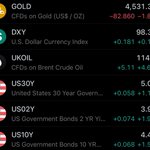
Just one more post on how the market reacts to escalations in Iran war, which continues to be consistent with a framework I presented earlier: gold down, oil up, US Treasury debt yields up
30Y Treasury bond yield is now above 5%, while the 2Y bill is approaching 4%
Federal government financing cost continue to raise


Iran war escalates once again, and the market moves consistently with the framework I outlined in a prior post:
(i) gold price down
(ii) crude oil price up
(iii) US Treasury debt yields up
As I've consistently pointed out, and in spite of contradicting claims by the U.S. Administration and mainstream media -- unfortunately, the Iran conflict is not yet over.
Keep watching the markets for developments -- they're much more accurate in their claims than third-parties.

2
367
Portugal Real Estate: Credit, Not Immigration Drives The Prices Up
I frequently come across articles that blame mainly immigration for the steep price increase of dwellings in Portugal. While emigration creates more demand for housing and drives the prices up, it’s far from the main factor responsible for appreciation of real estate in Portugal. Given this, it is also equally incorrect to claim that the Portuguese real estate markets relies mainly on immigrants to support the price.
A better way would be looking at interest rates and availability/liquidity of credit. Portugal has very accessible/low mortgage rates, and you can borrow close to EURIBOR as a business. The cost, availability of credit and real estate market liquidity/size (e.g. think of total transaction volume, market depth) have a steeper effect on prices much more than all immigration combined.
ECB kept deposit facility rate at zero or negative, for close to decade (main refinancing operation and marginal lending facility rates were also kept low during that period). It wasn't only the ECB -- Fed, BoJ, PBoC had similar policies. During that period, a lot of debt/credit flowed into the Eurozone, a lot of it seeking real estate investments. Portugal has a quite small market, small GDP, so it's easier to bid up the yield with the new credit. If you look across the EU, you'll see that real estate rose in price everywhere, not just in Lusitânia.
Also, it may be quite irrelevant if the real estate prices crash for some period of time. As long as the rents cover the debt service, real estate owners will continue in profit. This is the basis of many structured real estate investment vehicles.
A much bigger risk to real estate prices is not immigration cut, but The Hormuz Straight remaining closed for at least another ≈2 months, as that would dry up a lot of the liquidity (higher prices, etc) from real estate and many other asset classes. Still, the only way out of this would be more monetary easing policies, because the whole modern economy is dependent on its refinancing capacity (so house prices go back up eventually).


Portuguese people are all now talking about real estate investment, and ngl i get it, prices have been crazy past few years.
but before overleveraging your life, remember that there has been periods like 2001-2018 where you'd made €0 in house appreciation.
especially now that governments in the EU are tightening up immigration rules due to the pressure they're getting from population, you can expect one of the main drivers of this phenomenon to slow down, and supply/demand imbalances kinda matter innit?
im not saying it will crash, I am just saying that flipping and investing is not a PaSsIvE iNcOmE strategy that you see on tik tak. it takes a lot of effort , capital and risk. and if your cashflow situation is not sorted out, you can end up in a situation where others have ended up, and it aint good.
over them long haul, i do believe everyone should try to own a home. its one of the best places to park savings and secure a more comfortable retirement, even if all else fails, you still have your home (hopefully).
but trying to fomo into trends, especially this high in comparison to the avg Portuguese yearly income, and with an expected demand decline, seems to me a bit on the risky side.
in any case, i am a degen for a punt as much as the next guy.

If You Like Seatbelts, You'll Like ADDW
I came across this video where the author claims that starting from July 2026 all cars sold in the European Union are required to be equipped with Advanced Driver Distraction Warning (ADDW) system. This first part is true. Then, the author proceeds to conclude that the EU is mandating the installation of cameras and other sensors in the vehicles that would ensure that the driver is keeping both hands on the steering wheel and “not looking at the other stuff or phone” while driving. The author then takes a leap to connect this to electric vehicles and even central bank issued digital currencies! It's this second part that's problematic.
In short, the information shared in the video is highly misleading, and it doesn't look like the author is neither familiar with the legislation, nor with the technology underlying EVs. I'll go a couple of those points below.
First of all, there is no EU country whose laws provision for the driver to keep both of their hands on the steering wheel, or mandates the driver to keep their eyes on the road at all times. As such, the author+s claims and further conclusions taken on their basis lack substance.
Regarding the actual legal framework in the EU -- the law generally mandates for the driver to be as careful and attentful as possible at all times, which makes senes when you consider that an accident usually involves third-parties. There are many irresponsible drivers across Europe, and keeping a log in the vehicle of driving-related metadata is a very welcome addition. Such systems could be immensely useful in enforcing the law and the related court & insurance disputes, as well as incentivizing drivers to abide by the traffic law, thus safeguarding others.
Second, the government isn't pushing electric cars because "they're all connected to the internet". Most new cars are connected to the internet, it doesn't matter if it's gas, electric or horse-pulled. I'm not sure how this logic was further extended to mandated "digital wallets”, which are a Central Banking concept.
Third, public roads aren't for your entertainment, they quite literally have “public” in their name. The safety of others on the road cannot come at the cost of your personal driving habits or desires. If you go on a public road — you follow the law. There are plenty of designed places like race tracks and other private roads where you can lax the safety requirements at your own risk, without endangering others.


140
Iran To Require Rial For Hormuz Toll Payments
Unsurprisingly, it's been confirmed that Iran will not accept payments for its tolls in Bitcoin.
As I have explained a few weeks ago -- it would be counterproductive for Iran to do so. Now, it looks like Iran will require payments in their national currency - the Iranian Rial.
Unlike using Bitcoin, using Rial for settlements brings numerous advantages to Iran, which include flexible settlement (due to local central bank control); increasing demand for Rial whose value has recently collapsed due to sanctions/legal prohibitions aimed at Iran; and creating an incentive for re-integrating Iran into the global economy, thus effectively nulling at least a subset of sanctions
Bitcoin once again fails its test as an international reserve currency, but this isn't a surprise if read my numerous articles on this topic.

Iran Won't Accept Bitcoin For Hormuz Tolls
There is currently a wave of misinformation suggesting that Iran has chosen Bitcoin as their settlement medium for Hormuz Straight passage toll payments.
That’s complete nonsense. Iran would not gamble their Hormuz revenue on Bitcoin, or any other non-pegged crypto asset for that matter. If Iran would accept payments in cryptocurrencies (I don’t see why they wouldn’t), they would almost certainly effectively settle in a stablecoin.
Instead of investing Hormuz tolls into Bitcoin, Iran will most likely use them to buy gold, foreign exchange currencies (especially Yuan!) and budget deficits (which includes financing reconstruction efforts). This presents a type of an investment aimed at increasing the attractiveness of Iran government debt as collateral (in the longer-term), as well as the liquidity, value and use of Iranian Rial.
Moreover, Bitcoin is much easier to be sanctioned by Iran’s adversaries that the alternatives I presented, namely gold and Yuan. Unlike what many people may lead you to believe — you can certainly “blacklist” individual satoshis/coins, given that the transactional ledger is public by design. You can’t blacklist a gold atom (Au) 😁
I’m certainly not the only person that understands this, so I find it highly unlikely for Iran to choose Bitcoin over the prior alternative.

Are US Financial Policies Mirroring The 1720 Mississippi Bubble?
I came across this post that claims that the current US financial policies mirror the 1720 French Mississipi Bubble and suggests that Issac Newton saved Britain from major negative effects on the economy when the South Sea Bubble bust. It takes some strong conclusions based on arguments that are historically inaccurate.
While I understand the points regarding the Fed's balance sheet and I agree that it may be an issue. Generally speaking, I also equally oppose sovereign debt monetization by the central bank. However, I disagree that US/USD is in the same position as France/Livre in the 18th century. This is a good opportunity to go over some financial history of United States, France, Britain and even Isaac Newton:
1️⃣ France didn't have an international reserve currency in 1721, at that time the Spanish Dollar (the original “dollar”!) dominated international trade. So you cannot compare the United States Dollar in 2026 to French Livre in 1721 -- international reserve currencies are much more resilient to shocks. You cannot ignore the international status of a currency when reasoning about its demise. In several occasions, leading trade/reserve currencies outlived the sovereigns that created them (see example of Roman Denarius -- but again, it was commodity money, not paper FIAT). USD can survive a lot more "garbage on the balance sheet" than Ruble, and that's in big part due to the demand for USD-denominated instruments. US Treasury Debt instruments are the most desired financial collateral in the world -- it will take more than Bessent to destroy that privilege.
2️⃣ Newton was a master at the Royal Mint and he worked on coins, not the British economy. He also happened to miscalculate the market ratio between gold and silver (Britain was on a bimetallic standard), which had negative consequences on the British economy -- since gold was overvalued and silver undervalued, Gresham's Law kicked in and silver left Britain, with little silver coins remaining in the country. Arbitrage isn't free, so Britain would've been better off without an arbitrage opportunity on its money.
3️⃣ The South Sea Bubble of 1720 absolutely caused significant negative effects in the British economy. In fact, Isaac Newton lost an equivalent to several millions of USD when that bubble burst. The Pound did better than Livre because it was commodity money (gold/silver), while Livre was FIAT/paper, and consequently British economy recovered faster than French. It wasn't because Britain "had Newton".

This quoted post is unavailable.
220
illya gerasymchuk 📈 retweeted
I understand the point regarding the Fed's balance sheet and I agree that it may be an issue. I equally oppose sovereign debt monetization by the central bank. However, I disagree that US/USD is in the same position as France/Livre in the 18th century.
You cannot ignore an international status of currency when reasoning about its demise. In several occasions, reserve currencies outlived the sovereigns that created them (see example of Roman Denarius -- but again, it was commodity money, not paper FIAT). USD can survive a lot more "garbage on the balance sheet" than Ruble, and that's in big part due to the demand for USD-denominated instruments. US Treasury Debt instruments are the most desired financial collateral in the world -- it will take more than Bessent to destroy that privilege.
I'd like to point out again that it's not true that the pound did better "mainly due to Newton". Newton was hired a Master at Royal Mint. He didn't invent commodity money. Among others, Newton was tasked with computing the correct silver/gold ratio, which he miscalculated. This lead to an arbitrage opportunity with silver leaving Britain en masse, to the point of there being almost no silver coins. It's completely incorrect to say that Newton saved the pound or the British economy.

illya gerasymchuk 📈 retweeted
Your analysis is incorrect on several historical & regime points:
1. The French didn't have an international reserve currency in 1721, at that time the Spanish Dollar dominated international trade. So you cannot compare USD in 2026 to French Livre in 1721 -- international reserve currencies are much more resilient to shocks.
2. Newton was a master at the Royal Mint and he worked on coins, not the British economy. He also happened to miscalculate the market ratio between gold and silver (Britain was on a bimetallic standard), which had negative consequences on the British economy -- since gold was overvalued and silver undervalued, Gresham's Law kicked in and silver left Britain, with little silver coins remaining in the country. Arbitrage isn't free, so Britain would've been better off without an arbitrage opportunity on its money.
3. The South Sea Bubble of 1720 absolutely caused significant negative effects in the British economy. In fact, Isaac Newton lost an equivalent to several millions of USD when that bubble burst. The Pound did better than Livre because it was commodity money (gold/silver), while Livre was FIAT/paper, and consequently British economy recovered recovered faster than French. It wasn't because Britain "had Newton".
Physical/Spot/Dated Brent indeed surpassed $100 per barrel within 24 hours and it took just a few more hours for undated Brent futures contracts to reach that price too
Crude oil prices have now increased by more than 25% since the April 17th pullback lows


384
Iran war escalates once again, and the market moves consistently with the framework I outlined in a prior post:
(i) gold price down
(ii) crude oil price up
(iii) US Treasury debt yields up
As I've consistently pointed out, and in spite of contradicting claims by the U.S. Administration and mainstream media -- unfortunately, the Iran conflict is not yet over.
Keep watching the markets for developments -- they're much more accurate in their claims than third-parties.
Straight of Hormuz reopens partially and markets signal de-escalation in exactly the same manner I explained in my earlier post:
(i) US Treasury debt yields & term premia go down
(ii) Crude oil price falls significantly
(iii) Gold price continues upward towards re-testing $5000
While these market moves do not constitute a confirmation of an end to the Iran war, nor erase the potential for renewed escalations, the market is coherently signaling a material de-escalation event. However, as I have noted last week -- prepare for a lot of volatility. We'll need to wait at least until the end of Monday for a longer-term confirmation.

Although S&P 500 is unlikely to open green today, due to increased risks of energy supply shock, it wouldn't be "shocking" if it did
The U.S. stock index by itself will tell you little about the near-term direction of the economy and geopolitical developments


With Iran/US escalations again, people are going to absolutely lose their minds when the stock market opens green tomorrow.
154
Iran Is The Legal Owner Of Frozen Assets
Contrary to what some are suggesting -- returning frozen assets to Iran would neither constitute a gift, nor a new payment.
Under U.S. sanctions law, freezing/blocking an asset does not automatically transfer its ownership or cancel the underlying payment obligations. The blocked entity foregoes the rights to use, transfer or withdraw, but not ownership.
U.S.-sanctioned assets are a mixture of deposits, gold, US Treasury debt instruments.
Under the law governing these sanctions Iran remains the legal owner of those assets, while requiring authorization to exercise the usual ownership powers.


🚨 SCOOP: The U.S. and Iran are negotiating over a three-page plan to end the war, with one element under discussion being that the U.S. would release $20 billion in frozen Iranian funds in return for Iran giving up its stockpile of enriched uranium. axios.com/2026/04/17/iran-us…

122
illya gerasymchuk 📈 retweeted
No. It's neither a gift, nor a new payment
Under U.S. sanctions law, freezing an asset does not automatically transfer its ownership or cancel the underlying payment obligations
The blocked entity does forego the rights to use, transfer or withdraw, but not ownership.
So no, it's not gifting. Iran would remain the legal owner of those assets. Also, the assets appear to be a mixture of deposits, gold, US Treasury debt instruments, and those are not just "written off"

Straight of Hormuz reopens partially and markets signal de-escalation in exactly the same manner I explained in my earlier post:
(i) US Treasury debt yields & term premia go down
(ii) Crude oil price falls significantly
(iii) Gold price continues upward towards re-testing $5000
While these market moves do not constitute a confirmation of an end to the Iran war, nor erase the potential for renewed escalations, the market is coherently signaling a material de-escalation event. However, as I have noted last week -- prepare for a lot of volatility. We'll need to wait at least until the end of Monday for a longer-term confirmation.
Bond Markets Signal An Escalation In Iran War
While the majority of mainstream financial analysis seems to be pushing the idea of Iranian conflict coming to an end, using the new all-time highs in S&P 500 as a pretext, the U.S. bond market is communicating a different story.
Not only the yields on US Treasury issued debt securities continue to increase across all tenors, but so is the term premia on that government debt. This means that creditors to the U.S. government are not only requiring higher interest payments, but also a higher premium for longer-tenor instruments. Such moves in the bond market could be indicative of:
(i) increased future financing;
(ii) weakening U.S. dollar;
(iii) reduced demand for U.S. Treasury debt instruments / USD assets;
This is coherent with what would happen under the scenario where U.S. increases their involvement in the Iran war, thus escalating from the current point. Historically, expanding military commitments are almost unanimously associated with increased government/state/empire spending. 15th century Naples financed military campaigns of sovereigns at interest rates that at times reached ≈40%, expressing the high risk of such ventures.
Of course, I'm not suggesting that the mere increase in government debt yields and term premia is an indication of further military escalations between U.S. and Iran, but rather that their increase under the current regime is. Other corroborating factors include:
(i) crude oil still trading above $90/barrel;
(ii) USD weakening against other FX currencies, in spite of raising oil prices;
(iii) gold'd price not increasing significantly, as it likely would, had the war-induced energy crisis would indeed be headed towards a resolution;
These developments are happening while both Iran & U.S. are exercising a military control over the Straight of Hormuz, yielding it to become closed in part. In case this were a sure de-escalation stage, I would expect the bond yields and term premia to be relatively more suppressed, oil price trending down more decisively, and gold closer to/re-testing the $5000/oz price.
Regarding the new all time highs of S&P 500, upward price movements of the U.S. stock market index alone cannot be used as a strong signal against systemic crisis or large market downturns. History is very clear on this, and you don't need to look very far: S&P rallied in 2007, before taking a massive downturn during the 2007-2009 Global Financial Crisis in the U.S. Post-2008 financial regime is significantly more dependent on refinancing capacity, which amplifies volatility.
I am hoping for a fast and lasting peace, as millions are suffering both directly and indirectly. However, taking everything into consideration, in my view, the markets are neither signaling a significant and lasting near-term geopolitical de-escalation in the Iran war, nor an imminent resolution to the energy supply shock it induced.

Bond Markets Signal An Escalation In Iran War
While the majority of mainstream financial analysis seems to be pushing the idea of Iranian conflict coming to an end, using the new all-time highs in S&P 500 as a pretext, the U.S. bond market is communicating a different story.
Not only the yields on US Treasury issued debt securities continue to increase across all tenors, but so is the term premia on that government debt. This means that creditors to the U.S. government are not only requiring higher interest payments, but also a higher premium for longer-tenor instruments. Such moves in the bond market could be indicative of:
(i) increased future financing;
(ii) weakening U.S. dollar;
(iii) reduced demand for U.S. Treasury debt instruments / USD assets;
This is coherent with what would happen under the scenario where U.S. increases their involvement in the Iran war, thus escalating from the current point. Historically, expanding military commitments are almost unanimously associated with increased government/state/empire spending. 15th century Naples financed military campaigns of sovereigns at interest rates that at times reached ≈40%, expressing the high risk of such ventures.
Of course, I'm not suggesting that the mere increase in government debt yields and term premia is an indication of further military escalations between U.S. and Iran, but rather that their increase under the current regime is. Other corroborating factors include:
(i) crude oil still trading above $90/barrel;
(ii) USD weakening against other FX currencies, in spite of raising oil prices;
(iii) gold'd price not increasing significantly, as it likely would, had the war-induced energy crisis would indeed be headed towards a resolution;
These developments are happening while both Iran & U.S. are exercising a military control over the Straight of Hormuz, yielding it to become closed in part. In case this were a sure de-escalation stage, I would expect the bond yields and term premia to be relatively more suppressed, oil price trending down more decisively, and gold closer to/re-testing the $5000/oz price.
Regarding the new all time highs of S&P 500, upward price movements of the U.S. stock market index alone cannot be used as a strong signal against systemic crisis or large market downturns. History is very clear on this, and you don't need to look very far: S&P rallied in 2007, before taking a massive downturn during the 2007-2009 Global Financial Crisis in the U.S. Post-2008 financial regime is significantly more dependent on refinancing capacity, which amplifies volatility.
I am hoping for a fast and lasting peace, as millions are suffering both directly and indirectly. However, taking everything into consideration, in my view, the markets are neither signaling a significant and lasting near-term geopolitical de-escalation in the Iran war, nor an imminent resolution to the energy supply shock it induced.
Bitcoin Can't Become A Reserve Asset Without Protocol Changes
If you believe in a future where Bitcoin challenges existing international reserve currencies, it makes no sense to oppose changes to its core design. Bitcoin is here to serve a purpose, and given this, the protocol MUST evolve in response to the changes in the environment. History agrees.
First, if you commit to freezing an architectural implementation of the protocol you are erasing one of the core benefits of cryptocurrencies, which is the fact that they are programmable. The fact that Bitcoin is a computer program at its essence, you can change with little cost. This programmability is one of the most attractive points of algorithm-based currencies, as you can adapt to change/new environments at a smaller cost. It makes no sense to forego this benefit. The protocol MUST evolve.
Second, historically, every major international reserve currency was backed by an issuer with a strong legal and control system over all monetary aspects. An issuer whose currency/money provided for enough liquidity and resisted debasement over an extended period of time was seen as attractive to store and settle trades in. Given that geopolitical, social and economic regimes change over time, a successful reserve currency is one that is able to adapt to those changes, while still accommodating for its liquidity and store of value goals. As such, evolution/change of the Bitcoin protocol is strictly necessary for Bitcoin to even have a shot at becoming a significant portion of international settlement, as Bitcoin needs to accommodate for the technology risk in the same manner that government-like issuers historically did via their legal, tax and monetary policy systems.
Given that quantum risk jeopardizes the intended integrity of the existing ledger, it's crucial for the Bitcoin protocol to mitigate that risk an not "just let it happen". This is what a highly trusted issuer would have done.

