

I talk to machines, of course using natural language. Data Scientist | Tech Enthusiast
India 🇮🇳
Joined April 2013
- Tweets653
- Following71
- Followers671
- Likes1.8K





Pinned Tweet
Deep learning models really shine with large amounts of data.
Having enough labeled data is a constant challenge in the field, especially in NLP.
A successful approach that has yielded great results in the last couple of years is of 𝙩𝙧𝙖𝙣𝙨𝙛𝙚𝙧 𝙡𝙚𝙖𝙧𝙣𝙞𝙣𝙜.
Thread:👇

I just published Generating Important Video Clips from Lengthy Videos with AI link.medium.com/QuaL4zaPtHb

1
125


I just published Implementing a Custom Intent Classification (Transformers DistilBERT) in RASA 3.X link.medium.com/XmdUFdQCtub


Vishal Parashar retweeted

When you want to present your Machine Learning Solution in various hackathons or POCs in significantly less time, with fewer lines of code and nice looking UI.
Here is a better idea instead of setting your solution in a notebook, Streamlit helps in a pretty good way with python.

Vishal Parashar retweeted
What is a dead neuron?
Today’s thread is based on concepts, drawbacks, and rectification around the topic of the dead neuron.
Keywords of thread - Sigmoid, Vanishing Gradient, Relu, Leaky Relu, and much more
1/10
Vishal Parashar retweeted
‣ AUC-ROC curves are crucial in deciding the threshold part for binary classification problems.
‣ In most cases, we take a 0.5 score as the threshold
‣ But what if I told you that there is a mechanism that is used to select the best threshold
Concepts and Visualization🧵
Now, this is definitely the next level.

Introducing Imagen, a new text-to-image synthesis model that can generate high-fidelity, photorealistic images from a deep level of language understanding. Learn more and and check out some examples of #imagen at g.co/research/Imagen

1

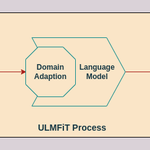
Universal Language Model Fine-tuning 📈
ULMFiT is a method to enable transfer learning for any NLP task, providing great results.
And all of this without having to train your models from scratch. Isn't it interesting?
Let's see how: 👇

1
3
3. Fine-tune (fine-tuning the classifier on the target task)
In this step, the language model is fine-tuned with a classification layer for the target task (e.g., classifying the product reviews given by the users).
1
1
