

@innercircleres
Account based inUnited States
About this account
- Account based in
- United States
- Connected via
- United States App Store
Account-level information from X, not a live location or the device used for a specific post.
Inner Circle Research – Exclusive insights on peptides, wellness & longevity. Smart sourcing, protocols, and optimized living for serious members only
Joined June 2026
- Tweets86
- Following73
- Followers13
- Likes8






💉 Ipamorelin 101 (without the jargon headache)
Think of your pituitary like a dimmer switch for growth hormone. Ipamorelin is researched as a gentle “turn it up” signal — not a sledgehammer.
✅ Why people like it (research buzz):
• GH-related recovery / repair interest
• Sleep + overnight recovery chatter
• Body-comp conversations (lean look over time)
⚖️ Tradeoff: it’s subtler than flashy stacks. Patience > fireworks.
💉 Ipamorelin is the “smooth operator” of growth-hormone research.
It’s known for flipping the GH switch without the cortisol/prolactin drama people complain about with older secretagogues.
Clean signal. Fewer side-plotlines. That’s the appeal.
Join Inner Circle Research on Skool — link in bio
Research purposes only. Not medical advice.
🎧 Inner Circle Research Ep 01 — Retatrutide
Triple-agonist energy: GLP-1 + GIP + glucagon. What it is, Phase 2 buzz, and why people are talking. ~9 min listen — hit play.
👉 Skool: link in bio
Research only · Not medical advice
🔥 Retatrutide is one of the most talked-about compounds in metabolic research right now — and the human data is why.
It’s a “triple agonist” (GLP-1 + GIP + glucagon).
Plain English: appetite, blood-sugar signaling, AND energy-burn pathways in one package.
⚖️ Real talk (keeping it positive):
Most common side effects were GI (nausea etc.) — usually mild/moderate and dose-related. Starting lower helped.
Heart rate bumped early, then eased later.
Powerful tool → respect the ramp.
Identity: Mitochondrial Open reading frame of the TwelveS rRNA type-c. 16 aa from mtDNA 12S rRNA ORF—not nuclear DNA. Same locus can be structural rRNA or the peptide depending on reading.
Research purposes only.
Join Inner Circle Research on Skool — link in bio.
Build the axis first.
Hypothalamus → pituitary somatotrophs. GHRH stimulates GH synthesis/release; somatostatin brakes it; GH/IGF-1 close the loop. GH runs in bursts (peaks + troughs), not a flat pump.
Secretagogues sit upstream of that system — they don’t replace GH itself.
Research purposes only.
Join Inner Circle Research on Skool — link in bio.
“CJC-1295” is not one molecule.
The shared core is a tetra-substituted 29-aa GHRH analog (Mod GRF 1-29 / no-DAC). DAC adds albumin-binding chemistry that rewrites exposure — same receptor family, very different PK.
If the vial identity isn’t clear, the half-life talk isn’t either.
Research purposes only. Not medical advice. Not for human consumption.
Join Inner Circle Research on Skool — link in bio.
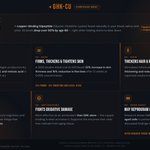
Identity: GHK = glycine–histidine–lysine. The biological interest is the Cu²⁺ complex. Endogenous; plasma levels are often described as declining with age in reviews.
Research purposes only.
Human evidence ladder: strongest cited clinical signal is old formulation-specific topical work (1994 Iamin gel diabetic foot ulcer RCT). Cosmetic nanocarrier wins stay carrier-specific. Gene-expression / mouse IP stories ≠ injectable longevity proof.
Research purposes only. Not for human consumption.
Risks split by route. Injectable compounding sits in a separate safety conversation (immunogenicity/impurity concerns in FDA bulk-substance discussions). Angiogenesis/cancer via VEGF biology = theoretical caution, not a slogan.
Local remodeling: plausible research lane. Systemic rejuvenation: not established.
Research purposes only. Not medical advice. Not for human consumption.
GHK-Cu isn’t a brand-new anti-aging invention.
It’s an endogenous copper-binding tripeptide (Gly-His-Lys + Cu²⁺). Related labels—copper tripeptide-1, prezatide, acetate salts, Iamin gel—are related, not automatically the same exposure.
Route + formulation are part of the claim.
Research purposes only. Not medical advice. Not for human consumption.
TB-500 ≠ thymosin β-4.
TB-500 is a 7-aa fragment (often LKKTETQ; acetylated forms show up too) from the actin-binding region of full-length TB4 (43 aa; TMSB4X).
Treating forum “TB-500” anecdotes as TB4 clinical programs is a category error.
Research purposes only.
vs BPC-157 (since people stack the names):
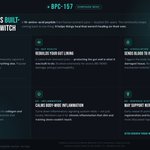
BPC-157 ≈ synthetic 15-aa gastric-derived peptide; often framed via VEGFR2 / Akt / eNOS / NO and barrier models.
TB-500 lane ≈ actin / migration / TB4-related repair biology.
Shared themes (cell movement, vessels, inflammation timing, matrix) ≠ interchangeable compounds. Different start codes.
Research purposes only.
Main risk flag worth keeping honest: angiogenesis biology could theoretically support pre-existing tumor vasculature (oxygen, nutrients, expansion routes).
Also: WADA prohibited context, and big unknowns — direct human TB-500 recovery benefit, ideal route, long-term safety, and BPC combo effects still need trials.
Bottom line: fragment identity + plausible repair biology + adjacent TB4 signals = interesting. Settled human recovery drug = not yet.
Research purposes only. Not medical advice. Not for human consumption.