

PhDing @sangerinstitute @Cambridge_Uni, im evolving every day
Cambridge, England
Joined February 2021
- Tweets340
- Following853
- Followers506
- Likes1.3K






Pinned Tweet
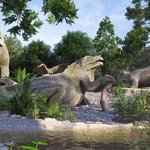
For years, dog scientists have known that food appears in bowls or rains from the sky, but the exact source and mechanism is unknown.
Buster et al observed that barking at an intermediate volume correlates with food appearance, but only at certain times of the day.
#sciart

Isabelle Zane retweeted

I’m actively looking to match ambitious scientists with funding.
Through some combination of my writing, podcasts, in-person events, scientific research and other activities that my friend @markwbudde would call “hypernetworking,” I’ve managed to meet a lot of wealthy individuals interested in funding ambitious scientists. I’ve had my own work funded this way, and though it’s not sustainable enough to replace the work of larger funding bodies of the NIH, for the right kind of person it is just what they need.
I am writing this post because I am helping one of these groups – Fulcrum Science – find projects worth giving money to.
While I’m pretty flexible, I’m particularly interested in hearing from people who are actively working on open sourced LLMs for frontier biology.
Plenty of groups have shown what is possible with frontier, closed-source LLMs. I’ve also seen it in my own work (which I hope to talk about soon). I also think that the absolute frontier of intelligence isn’t required to do interesting things in science.
I’d like to help match an existing lab – academic or industry – with a decent sum of funding to showcase what open sourced models can do in biology.
Pitch me what you’d do.
Please note, I am not looking to hear about any projects that involve Claude or ChatGPT for any reasoning, experimental analysis, or embodied automation stuff. Open source only!
I’m also open to hearing about other things within biology. If you have an idea you have struggled to get funded, and you have a good reason for me to believe you, please reach out.
My email is eryneym [at] gmail.com. You can also DM me on Twitter.
Isabelle Zane retweeted
It would be great if we could monitor anything in the body continuously. The continuous glucose monitor (CGM) was a great start, but there are so many interesting molecules to human health beyond glucose, but no one has successfully made monitors that work for other things. This is largely because display-based screening techniques for binders are detached from the ground truth physiologic data that matters. It would great to have a screening method that is coupled to a readout, like a GFP or nanopore, so that readout of a designed binder produces a number that is more meaningful.
In a preprint with @mu_anand and other folks at Caltech, we ask whether existing architectures around protein binders tied to a GFP reporter can serve as this screening vehicle to speed up ML-design of new monitoring proteins.
We took 18 OpuBC-cpGFP biosensors that our lab previously evolved toward nicotine, SSRIs, and other neural drugs, and screened them against 63 human health-relevant compounds, creating function data for 1134 sensor-ligand pairs.
124 pairs came back at a signal level we deemed suitable to begin directed evolution campaigns, with a little over half of those having readouts at a dynamic range that could make them immediately usable in application today. In total about a third of our compounds in our limited screen found a paired sensor worth evolving on.
We ultimately think that PBP-cpGFPs could be useful to increase the hit rate of initial screens of possible continuous monitors.
You can read it below.


Isabelle Zane retweeted

2/6 🔬 ΦX174 was the very first DNA genome ever sequenced back in 1977.
Fast forward to today: we have now systematically quantified EVERY single nucleotide & amino acid variant across its genome and proteome!
Isabelle Zane retweeted
1/6 🧬 Big news in genomics & synthetic biology!
We @huijin6418 @BenLehner present the complete mutagenesis of both the genome and proteome of the bacteriophage ΦX174!
📖 Read the full preprint on @bioRxiv here: doi.org/10.64898/2026.07.25.…
Isabelle Zane retweeted

How AI Impacts the Quest for Knowledge: Evidence from AlphaFold2
They show that AlphaFold 2 might be encouraging a focus on mechanistic experiments that complement AlphaFold over explorations of well-predicted proteins that compete with it.
pdf: conference.nber.org/conf_pap…

Isabelle Zane retweeted
How Artificial Intelligence Shapes Science: Evidence from AlphaFold
They show that AlphaFold 2 has massively accelerated research on proteins that previously lacked structural data, but evidence of translational outcomes is weak (for now).
pdf: conference.nber.org/conf_pap…

Isabelle Zane retweeted
The Economic Value of Science
They use changes in language to measure knowledge flows between scientific disciplines and tech fields. Their findings suggest that basic science is 4x more valuable than R&D although this might be overstated…
pdf: songma.org/files/chenliuma_v…

Isabelle Zane retweeted
The Decline in the Transmission of Scientific Ideas
As knowledge deepens, scientists favour specialised language that constrains diffusion to other disciplines. Perhaps AI could help here?
pdf: conference.nber.org/conf_pap…

Isabelle Zane retweeted

It's been such a joy running the first ever cohort of this with Eric and @RenPhilanthropy. We've seen huge successes in experimenting with what types of R&D orgs help ARIA and similar agencies succeed in moonshot R&D
excited to run a new cohort and build more FRCs!

Stoked to announce the second run of the Frontier Research Contractor Launchpad w/ @ARIA_research
I want to find modern JCR Lickliders and help them pursue their own technical visions in wildly ambitious, applied R&D orgs. Reach out if interested.
nitter.cf/RenPhilanthropy/status…
Isabelle Zane retweeted

Stoked to announce the second run of the Frontier Research Contractor Launchpad w/ @ARIA_research
I want to find modern JCR Lickliders and help them pursue their own technical visions in wildly ambitious, applied R&D orgs. Reach out if interested.
nitter.cf/RenPhilanthropy/status…

Today we’re announcing our second open call for @RenPhilanthropy's Frontier Research Contractors Launchpad.
Last year, we launched this programme with @ARIA_research to bring together elite researchers and engineers to accelerate breakthroughs and translation in ARIA’s opportunity spaces.
renaissancephilanthropy.org/…
1/5

Isabelle Zane retweeted

Today we’re announcing our second open call for @RenPhilanthropy's Frontier Research Contractors Launchpad.
Last year, we launched this programme with @ARIA_research to bring together elite researchers and engineers to accelerate breakthroughs and translation in ARIA’s opportunity spaces.
renaissancephilanthropy.org/…
1/5
Isabelle Zane retweeted

This vial contains a new drug called PAC-832, which I recently invented to treat Alzheimer’s disease. It is the world’s first selective GalR1 antagonist.
I designed and synthesized PAC-832 in a chemistry lab I built in my garage. (1/16)


Isabelle Zane retweeted

🚨Today we launch Reorganising Research – a @sci_works initiative to chart what mix of organisational forms British science needs & how to get there.
Lots to come, but we're kicking off with two open calls: a call for evidence with @wellcometrust, & a £3000 essay prize... 🧵


Isabelle Zane retweeted

Generating E. coli 0.5 controlled by a half-sized genome biorxiv.org/content/10.64898…

Isabelle Zane retweeted

How much of the human genome is essential?
Two pieces out today from our lab: 1) a method to map essential genomic intervals at gigabase scale, and 2) an argument that it's time to consider synthesizing a minimal human genome.
biorxiv.org/content/10.64898…
nature.com/articles/d41586-0…
Isabelle Zane retweeted

1/n What fraction of the human genome is essential for cellular viability?
Excited to share our preprint that explores this question by combining an unusual CRISPR system, phage promoters, and thousands of deletion launchpads.
@sudpinglay @JShendure
biorxiv.org/content/10.64898…


The Fourier transform was developed in Joseph Fourier’s spare time while he was a regional civil administrator, overseeing construction projects. Can more good science can be done at home, outside formal institutions?
this is a really great initiative by my friend Afiq

So last year i started the Independent Science Society. We are testing if you can do good science at home with limited resources. We meet up in Ldn
Thanks @ARIA_research for supporting us as an innovator circle. come join guys!
independentscience.org/

Isabelle Zane retweeted

Longer thread later, but if you are designing small proteins or want to building a stability predictor using 1.8 million highly diverse experimental measurements… credit to @ChoYehlin and @KotaroTsuboyama !
biorxiv.org/content/10.64898…
