

Adviser, Brainstormer and Creative Generalist. Tech Industry Analyst, Trend(W/C)atcher, Knowmad. Loves Zoom/Streamyard/Menti/Mural/Miro/Wonder.me/...
Europe, Belgium, Gent
Joined January 2008
- Tweets13.4K
- Following3.2K
- Followers3.6K
- Likes6.2K





Patrick (Researching trends before they take off) retweeted

Which frontier technologies matter most for companies in 2026?
@McKinsey's latest Tech Trends Outlook examines 14 technology trends, including two fast-emerging domains: agentic software development and AI for scientific discovery and engineering.
The report looks at the innovations, developments, and talent trends shaping technology – and what they could mean for business and society.
Here's what leaders should know ⬇️
mck.co/3TGycFZ

Patrick (Researching trends before they take off) retweeted
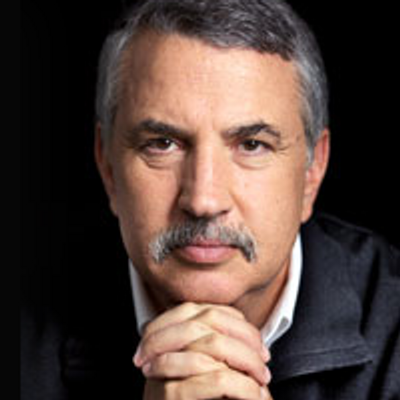
My column: Trump and Xi, This Is Your Nixon-Mao Moment. nytimes.com/2026/05/05/opini…

Patrick (Researching trends before they take off) retweeted

XPENG's next-gen IRON robot effectively crossed the uncanny valley, leading many to believe it was a human in a suit.
In a follow-up event to prove it was a robot, He Xiaopeng had its leg skin cut open in front of a live audience. The robot then walked off the stage.
Patrick (Researching trends before they take off) retweeted

A brief history of Quantum computers 👇
1905: Albert Einstein explains the photoelectric effect and suggests that light consists of quantum particles or photons
1924: Max Born uses the term quantum mechanics for the first time
1925: Werner Heisenberg, Max Born, and Pascual Jordan formulate matrix mechanics, the first formulation of quantum mechanics
1925-1927: Niels Bohr and Werner Heisenberg develop the Copenhagen interpretation, one of the earliest and most common interpretations of quantum mechanics
1930: Paul Dirac publishes The Principles of Quantum Mechanics, a standard textbook on quantum theory
1935: Albert Einstein, Boris Podolsky, and Nathan Rosen publish a paper highlighting the counterintuitive nature of quantum superposition and arguing that quantum mechanics is incomplete
1935: Erwin Schrödinger develops a thought experiment involving a cat that is simultaneously dead and alive, and coins the term “quantum entanglement”
1944: John von Neumann publishes Mathematical Foundations of Quantum Mechanics, a rigorous mathematical framework for quantum theory
1957: Hugh Everett proposes the many-worlds interpretation of quantum mechanics, which suggests that every possible outcome of a quantum measurement actually occurs in a parallel universe
1961: Rolf Landauer shows that erasing a bit of information dissipates a minimum amount of energy, known as Landauer’s principle
1965: John Bell proves that quantum entanglement cannot be explained by any local hidden variable theory, known as Bell’s theorem
1973: Alexander Holevo proves that n qubits cannot carry more than n classical bits of information, known as Holevo’s theorem or Holevo’s bound
1980: Paul Benioff proposes a model of a quantum Turing machine, a theoretical device that can perform any computation using quantum mechanical principles
1981: Richard Feynman suggests that simulating quantum systems would require a new type of computer based on quantum mechanics
1982: David Deutsch generalizes Benioff’s model and proposes the concept of a universal quantum computer
1984: Charles Bennett and Gilles Brassard develop a protocol for quantum key distribution, which allows two parties to securely exchange cryptographic keys using quantum states
1985: David Deutsch and Richard Jozsa devise an algorithm that can solve a specific problem faster than any classical algorithm, known as the Deutsch-Jozsa algorithm
1991: Artur Ekert proposes another protocol for quantum key distribution based on quantum entanglement, known as the E91 protocol
1992: David Deutsch and Richard Jozsa extend their algorithm to handle multiple inputs, known as the Deutsch-Jozsa algorithm
1994: Peter Shor discovers an algorithm that can factor large numbers in polynomial time using a quantum computer, known as Shor’s algorithm
1996: Lov Grover invents an algorithm that can search an unsorted database in square root time using a quantum computer, known as Grover’s algorithm
1997: Isaac Chuang, Neil Gershenfeld, and Mark Kubinec demonstrate the first implementation of Shor’s algorithm using nuclear magnetic resonance (NMR) techniques
2000: David DiVincenzo proposes five criteria for building a practical quantum computer, known as the DiVincenzo criteria
2001: IBM researchers implement Grover’s algorithm using NMR techniques and achieve a modest speedup over classical algorithms
2007: D-Wave Systems claims to have built the first commercial quantum computer, but its validity is disputed by many experts
2019: Google announces that it has achieved quantum supremacy by performing a calculation on a 53-qubit quantum processor that would take a classical supercomputer thousands of years to complete
2020: IBM demonstrates that its 65-qubit quantum processor can perform calculations beyond the reach of any classical computer
📷 An IBM QC photographed by James Estrin


Patrick (Researching trends before they take off) retweeted

We zijn stilaan maar zeker dicht bij het moment gekomen dat het voor de redactie van Belga makkelijker wordt om te melden wanneer er NIET gestaakt wordt bij de NMBS…

ACOD en ACV willen vier dinsdagen staken bij spoorwegen in april #Belga nieuwsblad.be/cnt/dmf2025032…
Patrick (Researching trends before they take off) retweeted

ChatGPT with canvas now works with OpenAI o1—and can render HTML and React.


Patrick (Researching trends before they take off) retweeted

Here’s a video produced by “Led by Donkeys” out of the U.K. that puts down the timeline of how Musk used X to get Donald Trump elected. I would save it because I don’t think it will be up for long.
Patrick (Researching trends before they take off) retweeted

🎯 Are you a Microsoft customer and don't know where to start on your Zero Trust journey?
Or maybe you have some Microsoft Security products and want to improve your standing and close any gaps.

Patrick (Researching trends before they take off) retweeted
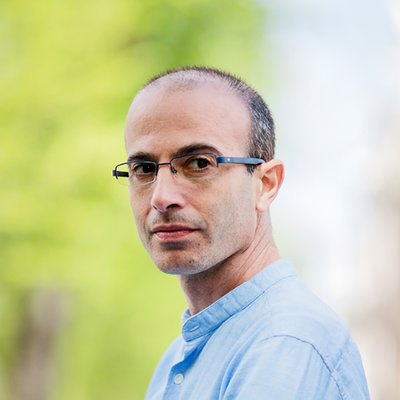
With the US elections just around the corner, some food for thought about #democracy, #dictatorship and #truth.
@billmaher


Patrick (Researching trends before they take off) retweeted

With the news that Three Mile Island is being reactivated purely to power a new datacenter, I feel like my post from Monday on the future of scaling AI seems pretty timely.
(Worth noting that this is non-CO2 producing energy from an already built reactor) oneusefulthing.org/p/scaling…


Patrick (Researching trends before they take off) retweeted

As the heartbreaking images from Jasper emerge, I want to thank the brave first responders who are in Alberta right now, fighting to save every home and every community they can.
Thank you for your courage, and for working non-stop to fight these wildfires.
Patrick (Researching trends before they take off) retweeted

BREAKING: The Kamala Harris campaign just released their first ad. Retweet to make sure every American knows who Kamala Harris is and what is at stake this November.
Patrick (Researching trends before they take off) retweeted

For anyone in Brussels during #EthCC join us for an in person meetup hosted by @howest on Wed, July 10 @ 5:30 PM that will highlight the latest developments and practical applications of Hyperledger Besu in the enterprise sector
hubs.la/Q02B_f-V0

Patrick (Researching trends before they take off) retweeted

I’m blown away by Devin.
Watch me use it for 27min.
It’s insane.
The era of AI agents has begun.
Patrick (Researching trends before they take off) retweeted

A guided tour of Apple's Vision Pro...
1) You'll notice the video is meant to prepare you contextually for an entirely new experience. It sets the stage for a "mindshift". Though, at parts, it goes a little overboard.
2) The shift from physical space into a spatial environment is breathtaking. That's by design. You can almost see and feel it through his eyes.
3) Note her composure and the simplicity of her instructions. This too is by design. It's meant to connect Spatial Computing to a new dimension, one that's relaxed and wondrous.
4) The link between how our host guides the user through the user interface and the apps that are demonstrated serve two functions: 1) elegance and intuitiveness.
5) "Peering into a moment of time" is a powerful way to describe spatial videos. It adds a new dimension to past experiences that bring it to life as an immersive memory. It's not unlike the movie Brainstorm with Christopher Walken and Natalie Wood. When these appear as reminders like today's photos on iPhones, many will cry as they relive important moments.
6) Entertainment is a killer app out of the box. @Om believes that Vision Pro (or Apple's face computer as he playfully calls it) is serving as a home entertainment reference system.
7) Productivity is also touted as a powerful experience allowing you to transform your open space into a virtual, customizable work environment. For example, when the user opens his MacBook, the screen shifts from the laptop to the VisionPro, creating a massive cinematic 4d display.
8) UI/UX is subtly, but powerfully demonstrated as a game changing way to interact. Spatial computing changes how we control of space and the virtual relationship between digital and physical worlds.
I have friends who were online at 5am pacific to pre-order. Honestly, I wish I were one of them.