






jack ᯅ retweeted

Reset everyone’s Gemini quota on Antigravity.
The caching improvements have increased the amount you can get done in quota by 22%. Enjoy building with Neon over the weekend!
jack ᯅ retweeted

Gemini 4 Neon: frontier-level intelligence with fast end-to-end task completion across complex software engineering, knowledge work, and science workflows.
Begins rolling out today in the Gemini API in @GoogleAIStudio, Gemini for business, for paid Google AI Pro and Ultra subscribers in Google @Antigravity, and for Google AI Pro and Ultra subscribers in the @GeminiApp.

jack ᯅ retweeted

Something is going on at Google
I think they might have hit RSI
They’ve released new frontier models FOUR TIMES in less than a month. And each is an actual MAJOR improvement
Carbon is the most intelligent model I’ve ever used
While everyone is talking about Anthropic and OpenAI, Google quickly caught up
What I absolutely love about these models too is they were clearly trained in a completely different way than Claude or ChatGPT. 0 distillation.
They talk, think, write, and code COMPLETELY differently than any other model
I can always count on Carbon to give me a novel insight no other model has given me
If you haven’t incorporated Gemini into your tool belt yet, you absolutely need to

Gemini 4 Neon: frontier-level intelligence with fast end-to-end task completion across complex software engineering, knowledge work, and science workflows.
Begins rolling out today in the Gemini API in @GoogleAIStudio, Gemini for business, for paid Google AI Pro and Ultra subscribers in Google @Antigravity, and for Google AI Pro and Ultra subscribers in the @GeminiApp.
jack ᯅ retweeted

introducing Gemini 4 Neon: frontier-level intelligence with fast end-to-end task completion across complex software engineering, knowledge work, and science workflows
priced at $3 per million input tokens and $15 per million output tokens, with a 1 million-token context window
try it today via the Gemini API and in AI Studio ai.studio/build
Disclaimer: I’m not an engineer or architect. I understand the questions in the original post, but I’ve never deployed something like this myself or certified to Multi-Cloud
I sketched a high-level multi-region approach and got A-, a feedback from Grok that it was directionally solid for a non-architect (roughly 7.5–8/10 on the specific points discussed). I just tend to default to dualism / redundancy whenever possible.
Here’s what I discussed:
I’m not an architect, but this is how I’d approach an e-commerce platform that needs to stay available during an Availability Zone (or even region) failure. The same ideas apply on Azure or GCP.
— Active-active multi-region design. At minimum two regions with identical configuration. Multi-AZ alone isn’t enough if a whole region can fail.
— Data should not be local by default. The database needs to be properly set up across regions (dual-region minimum) so that if one region goes down, the other can still serve traffic. Options could include Redis, PostgreSQL, Azure HorizonDB (new from Microsoft), or whatever fits the organization’s risk appetite and consistency needs.
— Leverage newer networking capabilities where available (e.g., AWS Multipath Resilience (new from AWS) for higher network-path resilience on cross-region traffic).
— Validate it with real failure testing, for example, simulate large-scale failures like Chaos Kong (or general chaos engineering) instead of assuming the cloud will just handle everything.
This is just a short preview. There are many ways to go deeper on data consistency, traffic routing, and dependency failures.

I once gave a Senior Cloud Architect candidate a fairly simple AWS architecture problem.
He had 12 years of experience and multiple AWS certifications.
His resume mentioned multi-region architecture, disaster recovery, Terraform, and enterprise migrations.
I expected a strong discussion.
Problem:
Design an AWS architecture for an e-commerce platform handling 1 million daily users.
The application must remain available during an Availability Zone failure.
Target availability: 99.99%.
Candidate's answer:
I'll use an Application Load Balancer, Auto Scaling, EC2 instances across multiple AZs, RDS Multi-AZ, CloudFront, and Route 53.
A reasonable starting point.
But then I asked:
Your primary Availability Zone goes down.
The application instances in the second AZ are healthy.
But customers still cannot complete orders.
What could be wrong?
He said:
"The load balancer should automatically redirect traffic. AWS handles high availability."
So I pushed further.
What if the application depends on an AZ-local service?
What happens to active database transactions during RDS failover?
How would you identify connection pool issues after failover?
What if your NAT Gateway exists in only one AZ?
How would you prove that your architecture actually meets 99.99% availability?
He kept returning to the same answer.
"AWS manages the failover."
That's when the gap became obvious.
He understood AWS services.
But he was treating managed infrastructure as a guarantee of application availability.
Multi-AZ doesn't automatically mean highly available.
You can deploy across three Availability Zones and still have a single point of failure.
A senior architect must understand dependencies, failure domains, recovery behavior, and how to validate resilience.
Would you approve his architecture for production?
35
jack ᯅ retweeted

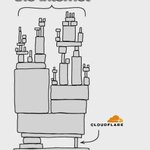
AWS is scared of @Cloudflare so they kicked us out of Re:Invent. No problem, we’ll just throw a more fun side event in Vegas. Register now: cloudflare.com/events/vegas/

jack ᯅ retweeted

We are deeply sorry for the disruption this incident has caused our customers and partners. We know the trust they place in our services and take that responsibility extremely seriously. We are seeing broad recovery and stability across our services.
This was a technical issue not related to cyber or AI / agents. The incident was introduced by an issue during an earlier network capacity upgrade that surfaced following a recent network change. We have addressed the underlying issue and continue to restore service to remaining customers and regions.
Given the scale of demand, we restored services gradually, validating stability at each stage. While this took longer, it helped ensure a stable restoration.
We will provide a full post-incident report once our review is complete.
jack ᯅ retweeted
Carbon made a pelican demo so you don't have to 😅
fun test of long-horizon coding and the new /swarm feature in Google @Antigravity.
Builder and critic subagents ran iterative loops across Blender and Three.js - checking their own renders to build a playable 3D game of a pelican biking around our Mountain View campus.




jack ᯅ retweeted

Roadster event livestream nitter.cf/i/broadcasts/1yKAPwNgg…

jack ᯅ retweeted

Cancelling a subscription shouldn't be this hard. If you can sign up with a click, you must be able to cancel with one.
Head to nyc.gov/click-to-cancel to file a complaint against any business that makes it hard to cancel a subscription.


jack ᯅ retweeted

Only President Trump could convene all the leaders of the top companies developing chips, data centers and frontier models for Super Intelligence. This new Industrial Revolution has already created a million new jobs and is spurring a bigger infrastructure build-out than the railroads, canals and grid combined. I was honored to witness history as the leaders of the frontier lab companies signed the White House Accord on Super Intelligence, accepting responsibility for the safe development of their products and imposing new internal controls and external audits. This is far better than waiting years for some international agreement that would probably never happen. President Trump continues to ensure that U.S. remains the technology leader while putting Americans first.


jack ᯅ retweeted

We’re building Copilot as a new OS for work that spans every model, every form factor, and every task. Today, we’re announcing our biggest update to Copilot to date, bringing four things together:
· Autopilot: proactive and long-running agent built for the enterprise
· Code: build apps with Copilot, hosted inside your company’s tenant
· Home: Chat + Cowork together
· Office: now fully embedded in Copilot (and Copilot embedded in Office, of course!)
Plus, you can invoke Copilot in Teams, and we’re introducing Today, a proactive experience that surfaces the most important information from across M365 without needing to ask for it.
The way we work is changing and so are our workflows. This update brings AI into that flow, from answering a question, to building an app, to getting work done on your behalf.

jack ᯅ retweeted

From New York to Mumbai, London to Malaysia, there’s nothing like seeing customers experience our newest products for the first time. Happy Availability Day! Hope you love them as much as we do.

ALT A crowd of people wait outside of Apple Fifth Avenue in New York.

ALT A person wearing AirPods and a green ombre blouse takes a photo of the AirPods display with iPhone 18 Pro in glacier.

ALT A person in a white shirt and brown sweater smiles while trying on AirPods 5.

ALT A retail team member takes a photo of a person holding up two iPhone 18 Pro boxes in burgundy.
jack ᯅ retweeted

MIT published a brutally honest report on what AI is doing to students.
A committee of professors and students spent five months studying how AI changed learning on campus, and the findings read like a warning to every university on the planet.
Study groups are disappearing. Office hours are emptying out. Problem sets and take-home exams no longer prove anything, because AI can produce credible solutions to almost any written assignment in the undergraduate curriculum. Students who lean on chatbots lose mastery and confidence, and some slip into what the report calls cognitive surrender, reaching for AI at the first hint of struggle.
The numbers are rough. 46 percent of surveyed MIT undergrads use LLMs daily. 90 percent worry about their own overreliance. Undergrads who feel AI makes them replaceable now outnumber those who feel it makes them capable.
The committee's answer surprised me. They refused to fight AI with surveillance. The report calls AI detectors unreliable, says lockdown browsers feel like spying, and warns that policing students builds a classroom atmosphere of mutual distrust.
Instead, MIT wants to rebuild education around the things AI can't replace. That means oral exams, semester portfolios, in-person project work, and a required social component in every subject. The report even floats the idea of rethinking grades entirely, since without a GPA to optimize, much of the incentive to cheat with AI evaporates.
The committee warns professors against replacing undergrad research assistants with AI agents just because they're cheaper, because a university exists to grow people, not output.
The most famous tech school on earth admitted the machines broke its way of teaching. Its answer is more humans, not more software.

jack ᯅ retweeted

⭐️⭐️ Las estrellas brillan juntas
#VamosEspaña | #ReyesDelMundo