

Prof: Public Affairs & Pop Health @UWMadison; Author: @thegenomefactor; From @CityofAthensPR; Education: @UTKnoxville. views my own
Madison, WI
Joined March 2010
- Tweets2.7K
- Following1.1K
- Followers2.1K
- Likes24.5K






Jason Fletcher retweeted

How different are different differences-in-differences? The answer may (or may not) surprise you
New working paper, building on a dumb tweet from earlier this month nitter.cf/instrumenthull/status/…
A short summary follow:


Bad equilibrium focal points in submitting academic job applications -Apply early!-jasonmfletcher.substack.com/…
🤖 Made with AI


Jason Fletcher retweeted

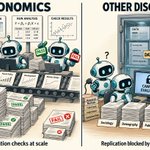
On the economics of economics: a 🧵
(tl;dr = Universities make money on superstars in, say, biomedical research. So any institution can afford to hire them. Superstar economists are money-losing investments and only wealthy institutions can afford them.)

Economics is the *only* scientific field in which the concentration of institutional affiliations of award-winning researchers (i.e., more winners at top universities) has increased over time.nber.org/papers/w35875

Jason Fletcher retweeted
"Superstar economics" is thus the domain of a select group of institutions with the endowment resources to cover what cannot be recouped through operating costs.
Without an endowment, pursuing superstar economists is a fool's game.
/end.

A new focus of college education--creating experienced managers (of AI agents) jasonmfletcher.substack.com/…
🤖 Made with AI

Jason Fletcher retweeted

🚨
Announcing OpenCensus, a new project with
@EzraKarger
We are transcribing the historical US censuses and releasing them as open data
2.6 million people so far in 1940, browse here:
opencensus.us

Jason Fletcher retweeted

I think the AIxMath discussion would benefit from distinguishing two questions:
1) What should a field do when prior indicators of effort and learning can now be easily gamed with AI. In other words, what is the take-home exam and the oral exam in the field and how/when do we shift from the former to the latter.
2) What to do when an AI company points the multi-million dollar agent swarm at key indicators of success in the field? In particular how to react to dubious behavior like "we heard you were close to a breakthrough so we worked in secret to scoop you and then offer the non-competitive parts of your team author credit"
Jason Fletcher retweeted

🔥 Excited to share that #paper2agent is published in @Nature today!
Papers have long been the primary format for communicating scientific knowledge, but they remain static. Putting that knowledge to work requires connecting findings to data, navigating supplementary materials, and adapting methods to new questions - effort repeated by each new reader.
We introduce Paper2Agent, a multi-agent framework that automatically turns research papers into virtual authors. Paper2Agent turns a paper’s manuscript, code, data, and supplements into an MCP server that any AI agent can access, with automated testing and iterative refinement in an agentic loop. The paper then becomes a virtual author you can talk to: trace claims to evidence, analyze your own data, and collaborate with other papers’ virtual authors
Agentifying a paper turns it from something people read into something people and AI agents can discover and build on - providing the context needed to interpret its findings and reuse its methods reliably. We tested how reliably these agents put papers to use. Across multiple benchmarks, agents created by Paper2Agent outperformed baselines such as Claude Code working directly with papers' PDFs and code repositories.
Once papers become virtual authors, they can collaborate - much like human researchers do. In one case study, agents built from AlphaGenome and two large-scale genetic perturbation studies worked together to propose a new computational approach for integrating evidence across different perturbation datasets. By connecting predictions from one paper with experimental data from others, they helped pinpoint a likely causal gene for psoriasis.
We hope Paper2Agent makes scientific knowledge easier to access, reuse, and build on - a first step toward a future where millions of paper agents proactively collaborate with human researchers and one another to advance discovery.
🤖Talk to the virtual author for Paper2Agent itself: paper2agent.ai
📎Paper: nature.com/articles/s41586-0…
💻Code: github.com/jmiao24/Paper2Age…
VERY grateful to work with this incredible team: @james_y_zou, @jkpritch, Yaohui, and Joe!

Jason Fletcher retweeted

A public-use version of the Open Research Unconditional income Study (ORUS) dataset is now posted! This RCT paid $1000/month to a treatment group for 3 years. Test your favorite hypotheses about the effects of guaranteed income!
data.openresearchlab.org/
Jason Fletcher retweeted

For example, I used Claude, ElevenLabs, and D-ID to make this budget simulation for my Politics of Public Policy course.
In it, the students make a federal budget that aligns with Trump's budget priorities (which they had researched before class).
All of the numbers in the simulation are real and are pulled from CBO estimates. Deficit projections update in real time based on students' choices.
Once they feel good about their budget, the draft budget leaks to the public. An AI generated attack ad from the opposition plays. The attack ad is tailored to their group's budget decisions.
They then have to make a choice of what to do next. Part of that is whipping on the fence members. AI made videos of conflicted members explaining their positions. Students then could try to persuade the on the fence members.
I could have done this without AI. But it would have taken weeks (if not more) focusing on this and only this.
I was able to put it together with AI's help in a few days. I had to do lots of prompt engineering. But Claude, ElevenLabs, and D-ID made it pretty seamless.
Link to the budget simulation: johnholbein.org/teaching-act…
Accompanying slides (human generated with AI feedback): github.com/johnholbein/presi…
Replication materials: github.com/johnholbein/presi…


There’s a lot of doom and gloom around how AI is affecting teaching and learning in higher education.
But I’ve found that AI has greatly enhanced my teaching and student learning.
It’s made activities possible that weren’t possible before.
It’s made my slide design better.
It’s allowed me to collect data for really cool visualizations.
It’s sparked discussion questions I never thought of before.
AI can help us fix science by attacking the worst evidence jasonmfletcher.substack.com/…

Substack: How to transition from dissertation chapter to journal article jasonmfletcher.substack.com/…
Here are the 16 papers in the newest issue of Economics and Human Biology--see if you can find the pattern
sciencedirect.com/journal/ec…
In related news, happy to have a paper on early life effects of county health departments on longevity with @HNoghani
🤖 Made with AI

Jason Fletcher retweeted

In March 2024, at the age of 35, I was diagnosed with stage IV rectal cancer with a metastasis in my liver. This was a shock: I had no family history, and none of the doctors suspected it. After two years of chemotherapy, radiation, and multiple surgeries, I'm still not cured. Now I'm asking for help to get a personalized cancer vaccine.
This is my story so far.
Following diagnosis, I was treated with total neoadjuvant therapy at UCLA. I had 6 weeks of radiation and chemotherapy (Xeloda). This was followed by 6 rounds of oxaliplatin infusions and Xeloda. I tolerated this unusually well. During this period, I managed to hike up to over 11,000ft multiple times in the Sierras, and I wrote the main text of a 72 author meta-analysis paper and submitted it to Nature where it is still in review.
I showed a good clinical response, and at the end of October I had surgery: I was under for 9 hours, and they cut out a bit of my rectum, 1/3rd of my liver, and gave me a temporary ileostomy. Waking up from this was probably the strangest experience of my life: I felt more machine than man, and I had wild hallucinations form such a large dose of anesthesia.
It took a while to feel OK after that surgery. However, I still had the ostomy. I had that reversed at the end of January in another surgery, which took a greater toll on me than I expected.
I only just started to feel OK again and I got bad news: I got a positive circulating tumor DNA test (ctDNA), the signatera test from natera. Unfortunately, the ctDNA carried on rising, and in July 2025 a new lesion appeared in a lymph node near my liver (periportal).
I was treated with irinotecan and panitumumab infusions, which showed a good response, followed by live MRI guided SBRT radiation treatment to the lesion. However, after finishing this treatment, the ctDNA remained positive and began rising again. I restarted irinotecan and panitumumab infusions, which brought ctDNA back to negative (signatera), although it remained positive on the more sensitive Personalis assay.
During this period I had begun to develop stomach pain and digestive symptoms. Then I collapsed vomiting blood while out in Santa Monica and was rushed to the ER. They found out I had a duodenal ulcer that had bled. I had some blood transfused, and I was sent home to complete an intensive course of antibiotics for H. Pylori infection.
However, after about a week, I started to get very weak. I collapsed again and went back to the ER in an ambulance. They found my hemoglobin was 5g/dL, a dangerously low level (normal is over 13.5). Multiple blood transfusions didn't bring it up and I collapsed again in the night after passing a large amount of blood. They took me to intensive care and performed an emergency endoscopy where they clipped and sprayed the ulcer. Thankfully this worked and I was discharged after another 3 nights in hospital.
Unsurprisingly, nearly bleeding to death wasn't good for me, and my ctDNA began to spike rapidly. I had a PET-CT and it revealed 3 new disease sites in abdominal lymph nodes. I restarted irinotecan and panitumumab infusions after barely recovering from the ulcer incident. This showed an excellent response, with the sites resolving on imaging, although ctDNA remained positive.
I've now started bot/bal immunotherapy, a not yet approved immunotherapy treatment that is the first of its kind to show strong results in my kind of cancer, micro-satellite stable colorectal cancer. This was possible thanks to a donation from an anonymous benefactor and supporter of free and open inquiry in science.
Hopefully this treatment will be effective, but it is unlikely to be enough on its own to prevent future disease recurrence.
I am asking for help to get a personalized neoantigen cancer vaccine, which could substantially increase my chances of surviving this deadly disease that is likely incurable under standard care.
While cancer vaccines have shown promising results, they are not yet approved, meaning one has to pay for the design, manufacture, and administration of the vaccine. The total cost of which is $104,133, beyond my means or those of my family.
Any help would be greatly appreciated! I've started a GoFundMe here: gofundme.com/f/cancer-vaccin…. Please donate and share with anyone who might be interested in helping.
I've carried on working throughout this period and I'm still running a research group in statistical genetics at UCLA. I'm hoping to continue making contributions to science for as long as I can, hopefully longer with your help.


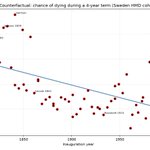
Placing bets: Statistical power is a key impediment to longevity research
open.substack.com/pub/jasonm…
Jason Fletcher retweeted

County health departments established in the early 1900s increased longevity for those exposed in utero or early childhood, with the largest gains among disadvantaged children, from @HNoghani and @jasonmfletcher nber.org/papers/w35533

Jason Fletcher retweeted

Why quantitative understanding of effect sizes matters, even if all you care about is the presence of the effect
statmodeling.stat.columbia.e…