


Jack Zhang retweeted

Inkling 2 Small is our first model trained partly in NVFP4, with a mixed-precision recipe that enables a great tradeoff between speed and accuracy. Check out our new post to see how we did it, and the lessons we learned along the way!

Training with fewer bits is faster, but quantization error can interfere with learning.
Today on Connectionism, we detail how we trained Inkling 2 Small with a native 4-bit forward pass from the first step of pretraining through the final RL rollout.
thinkingmachines.ai/blog/end…

Jack Zhang retweeted

Training with fewer bits is faster, but quantization error can interfere with learning.
Today on Connectionism, we detail how we trained Inkling 2 Small with a native 4-bit forward pass from the first step of pretraining through the final RL rollout.
thinkingmachines.ai/blog/end…
Jack Zhang retweeted
Introducing Inkling 2 Small. Scoring 31 on the AA Intelligence Index, it's a big jump over its predecessor.
Inkling 2 Small is available for fine-tuning and inference on Tinker today, with full weight release planned soon.
thinkingmachines.ai/news/ink…

Jack Zhang retweeted
Tinker lets customers turn their expertise into cutting-edge models that they own. One year after launch, we look back at what we’ve shipped and what our users are building.
thinkingmachines.ai/news/one…

Jack Zhang retweeted

Dimuon is a new optimizer we built for LoRA fine-tuning. In our SFT tests, it often reaches lower loss in fewer steps than AdamW. We're still experimenting with Dimuon; you can Tinker with it today and share your feedback!
See our optimizers guide at tinker-docs.thinkingmachines…
Jack Zhang retweeted

🎉 Thrilled to share that our paper, “Thought-Level Beam Search for Reasoning,” has been accepted to COLM 2026!
Different from Self-Consistency and Pruning-only approaches, Gambit actively reallocates test-time compute while generation is in flight — pruning low-scoring reasoning traces and branching from the strongest prefixes. See thread 🧵

Jack Zhang retweeted

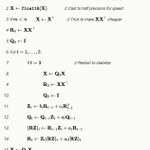
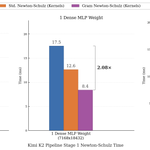
Newton-Schulz is what makes Muon work, but it's also a massive pain compared to Adam. *Dion3* makes it ~6x faster and more parallelizable too.
Combines our work on row-filtered gradients, Gram-NS alg, and GPU kernels in one package. Try pip install dion!
arxiv.org/abs/2608.11612

Jack Zhang retweeted
Today, we are releasing Inkling-Small.
Inkling-Small achieves comparable performance to Inkling at a quarter of its size. It features 276B total parameters, 12B active. We are making the full weights available.
thinkingmachines.ai/news/ink…
Fine-tune it on Tinker today, or chat with it in text, image, and audio on Tinker Playground.

Jack Zhang retweeted

Robot policies can move but can't think.
LLMs can think but can't move.
So we connected them.
Real robot: 16.7% → 97.3%
Sim (LIBERO-PRO): 12.8% → 53.3%

Jack Zhang retweeted
Today, we are introducing Inkling.
Inkling reasons efficiently across text, image, and audio modalities. We are making the full weights available.
thinkingmachines.ai/news/int…
Available today for fine-tuning on Tinker. Play with it in the Inkling Playground. 🧵

Jack Zhang retweeted

🔥 Coding agents have become one of the hottest LLM workloads. But serving them looks nothing like serving a chatbot: 294× more input than output, hundreds of thousands of tool calls, and extremely long-tailed latency.
🚀 We are releasing the SyFI Coding Trace: ~4,300 real-world coding-agent sessions from our daily use, plus TraceLab, an open-source pipeline to collect, sanitize, analyze, and replay your own traces.
More in the thread below 🧵👇 (1/n)

Jack Zhang retweeted

Why do we store the SSM state at all?
More and more models are hybrids (Nemotron-3, Qwen3.5), so SSM decode speed matters.
We only write it back every step so the next step can read it.
ReplaySSM caches the recent inputs instead and rebuilds the state on the fly.
Same outputs, half the memory traffic
→ ~2x on spec decode at large batch sizes, which barely even helped SSMs before
→ up to 1.43x standard decode on large hybrids (up to Nemotron-Ultra-550B)
Work with @tri_dao
Blog + Code👇

Jack Zhang retweeted

Had such a blast working with @erictang000 , @charlie_ruan, @sumanthhegde, and @pcmoritz on enabling multi-LoRA RL training in SkyRL! We observed ~3x higher experiments throughput in comparison to running experiments in the traditional single-tenant fashion. One of my favorite parts of this collaboration is that all this code is open source so you can play with it yourself :)
Here's the technical deep dive 🧵

🏹5 Days of Trajectory.
Day 3 - An Open Source Training Stack for Continual Learning
Building the platform for continual learning requires both partnering with pioneering AI companies, as we showed on Day 2 with Harvey, and working toward frontier research, which we are highlighting today.
Continual learning means models that improve hourly from real production use. But with the size of frontier models, this becomes quite difficult. A Qwen-397b would need to spin up and tear down repeatedly across six GPU nodes, and that's valuable time gone.
Our contribution is Continual LoRA (C-LoRA): many lightweight adapters running at once on one shared base model. Our insight centers on where the parallelism lives: instead of splitting one giant job across nodes, we load-balance many small jobs over a single base.
The result: 2.81x experiment throughput over single-tenant training, with no regression on rewards.
We built this together, with @anyscalecompute, @NovaSkyAI, and generous support from @GoogleCloud and @GoogleStartups. We've open-sourced on SkyRL as one of the first multi-LoRA, RL training platforms, so that every team can get to continual learning faster.
We’re very excited to see what you build, please reach out!

Jack Zhang retweeted

🏹5 Days of Trajectory.
Day 3 - An Open Source Training Stack for Continual Learning
Building the platform for continual learning requires both partnering with pioneering AI companies, as we showed on Day 2 with Harvey, and working toward frontier research, which we are highlighting today.
Continual learning means models that improve hourly from real production use. But with the size of frontier models, this becomes quite difficult. A Qwen-397b would need to spin up and tear down repeatedly across six GPU nodes, and that's valuable time gone.
Our contribution is Continual LoRA (C-LoRA): many lightweight adapters running at once on one shared base model. Our insight centers on where the parallelism lives: instead of splitting one giant job across nodes, we load-balance many small jobs over a single base.
The result: 2.81x experiment throughput over single-tenant training, with no regression on rewards.
We built this together, with @anyscalecompute, @NovaSkyAI, and generous support from @GoogleCloud and @GoogleStartups. We've open-sourced on SkyRL as one of the first multi-LoRA, RL training platforms, so that every team can get to continual learning faster.
We’re very excited to see what you build, please reach out!

We built a kernel abstraction to rewrite the entire transformer stack as GEMM + Epilogue kernels!
Neural net architectures such as transformers consist entirely of matrix multiplications and elementwise nonlinearities such as RMSNorm, log sum exp, and gated activations. Fusing these elementwise nonlinearities into GEMMs in both the forward and backward passes allows us to make training and prefill as compute-bound as possible!
Our kernel abstraction CODA is implemented in CuTeDSL, and by abstracting away the fixed prologue and main loop of the GEMM kernel, we expose an epilogue function where LLMs like Claude can easily implement elementwise nonlinearities in fusions approaching speed-of-light!


Jack Zhang retweeted
Excited to share that LessIsMore has been accepted to ICML 2026! 🚀
LessIsMore is a training-free sparse attention for efficient long-horizon reasoning. By enforcing cross-head unified token selection, it brings up to 1.6x E2E speedup while preserving reasoning accuracy under practical workloads.
Huge thanks to my amazing co-authors and mentors @Jackfram2, @JiaZhihao, Ravi!
Paper: arxiv.org/abs/2508.07101
Code: github.com/DerrickYLJ/LessIs…
#ICML2026 #LLM #EfficientAI

Congrats @noahamsel!


Jack Zhang retweeted

🚀SonicMoE🚀now runs at peak throughput on NVIDIA Blackwell GPUs 😃
54% & 35% higher fwd/bwd TFLOPS than the DeepGEMM baseline and 21% higher fwd TFLOPS than the triton official example. SonicMoE still maintains its minimum activation memory footprint: the same as a dense model with equal activated parameters and independent of expert granularity. We wrote a blogpost on how we leveraged Blackwell features and the software abstraction on QuACK:
Work with @MayankMish98, @XinleC295, @istoica05, @tri_dao
