

Alaska Native. Solopreneur. Building in public with Claude Code and AI tools. Join the community: https://nitter.cf/t.co/rZ0pz7Rvw6"
Alaska, USA
Joined August 2009
- Tweets3.9K
- Following1.8K
- Followers1.7K
- Likes4K




Pinned Tweet
Most "build in public" accounts are 24 year olds in San Francisco.
I'm 55, live in Alaska, and started building solo products with AI this year.
I don't have the resume you'd expect. I have agency dev contracting experience, years of dev work, and zero idea how to market anything. That last part is the problem I'm solving in the open.
I'm probably doing half of this wrong. That's the interesting part.
Follow along if you want to see what happens.

ALT Daily view at the desk is Claude Code CLI
AI teammates are moving into the same tools you use.
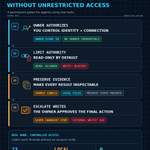
The 4 boundaries below let me analyze 23 X posts with read-only access and zero account changes.
Which boundary is hardest to enforce in your setup?

An AI agent wiped a prod database on Reddit.
Nine days later, I shipped a Python bridge to my own prod DB with no incidents logged so far.
The agent wrote none of the safety. The spec, guardrails, idempotency keys, and dry runs did.
Four files run every session: identity, memory, framework, and a decisions log.
If you run agents in prod, your safety lives in your spec, not in the model.
Late April: viral Reddit thread about an AI agent deleting someone's production database. The fear was real.
Nine days later, I shipped a Python bridge to my own Convex prod database. Still running. No incidents logged so far. The agent didn't write any of the safety. The substrate did.
Four files shape every Claude Code session. Identity and memory load by default. The other two load on demand.
• CLAUDE.md is the load-bearing identity file. Who I am, what I sell, the 90-day priorities. The agent doesn't ask. It reads.
• MEMORY.md is auto-memory across sessions. User profile, feedback rules, project state. The agent doesn't relearn me every conversation.
• framework.md is the operator playbook. How decisions get made.
• decisions/log.md is the append-only why-log. Reversible decisions get one line. Load-bearing ones get the full receipts.
The bridge itself is stdlib Python the agent calls but did not generate on demand. Prod writes need an env flag plus a 401-preflight against an allowlisted Convex deployment. Composite idempotency key. Redacting logger before any line hits the journal.
Codex reviewed the spec twice. First pass killed a cookie-auth ToS blocker. Second pass drove the prod-write guard. Both still missed an inferred field assumption. The dry-run caught it. The cache had a quieter bug. The corruption test caught it before the canary ran.
None of the guardrails came from the agent improvising. They came from the spec. The spec came from research. Research came from a workflow rule in ~/.claude/projects/-home-jon/memory/MEMORY.md: research, planning, spec, implementation, with Codex adversarial review at each phase. The agent doesn't relearn it every session. It just does it.
If you're going to copy one piece, copy connections.md. The registry of every external system your Agent OS can reach. Cheapest unlock there is.
Everyone is dunking on the Claude Code source leak for the wrong reasons. I build production Claude Code skills daily. Here is what the source actually reveals for practitioners. (1/9)
Three changes to make today based on the Claude Code source:
1. Front-load skill descriptions. 250 chars, trigger condition first.
2. Use paths frontmatter for monorepo skills.
3. Treat context: fork skills like standalone system prompts. (9/9)
Sources:
- Leaked source read directly from GitHub mirrors
- Bun bug: oven-sh/bun #28001
- Anthropic statements: VentureBeat, The Register, CNBC
- First leak (Feb 2025): Dave Shoemaker
- Fortune report: 3,000 files, March 26
The fix for the Claude Code source leak is one line in .npmignore: *.map. That one line prevents a 59.8MB source map from shipping. The same root cause leaked Claude Code's source 13 months earlier. (1/8)
Run this today: npm pack --dry-run (or bun pm pack --dry-run). Check what files are in your published package. Compare to your .npmignore. One line in .npmignore closed a 13-month gap for Claude Code. (8/8)
Sources:
- Leaked source read directly from GitHub mirrors
- Bun bug: oven-sh/bun #28001
- Anthropic statements: VentureBeat, The Register, CNBC
- First leak (Feb 2025): Dave Shoemaker
- Fortune report: 3,000 files, March 26