

CEO of Remote Growth Partners - Vetted and tested offshore talent for sales and marketing teams
United States
Joined January 2011
- Tweets3.6K
- Following2K
- Followers3.8K
- Likes5.7K





Pinned Tweet
I can always tell when someone is hiring sales people for the first time.
They typically make 3 rookie mistakes:
1) Hiring a VP as their First Salesperson
Good VPs want to build teams, manage them, set strategy, and help with the most important deals.
Good VPs DO NOT want to do the dirty out bounding, follow-ups, contract redlines, etc…that come with early stage sales.
If you need help building some operations or strategy, then hire a good sales consultant. They’re going to help you avoid some very costly mistakes.
And make sure your first hire is a full cycle AE that can prospect and close.
2) Complicated Commission Plans
I’ve built dozens of sales compensation plans. I used to worry about every scenario…how do I protect the company? How do I protect the reps?
The plans got complex. It cost the company company countless hours of expensive time trying to calculate every detail and manage the one off scenarios with the team.
Don’t do this.
Instead, keep it simple.
- Your first plans should not include escalators, just flat rates
For SDRs specifically:
- Start with a commission for each meeting held and try to add a commission for each deal closed (if you can)
- In the beginning, don’t penalize them for bad meetings set, but monitor it closely. Eventually you can add variable that measures the % of their meetings set that AEs mark as Sales Qualified Opps
3) Missing Obvious Red Flags in the Hiring Process
A bad first hire will cost your executives a lot of time and a lot of actual money for the company.
At a bare minimum, your first hires should be excellent with the small details around communication — good formatting, proactive, professional.
You’re hiring sales because you need to get it off your plate. So while you’re juggling everything else, you don’t have time to train someone on the fundamentals of client communication.
How they communicate with you during the interview process is a reflection of how they communicate with customers.
Even if the candidate has good logos on their resume, don’t drop your standards on communication.
The reason this is top of mind?
We've been hiring a bunch of overseas SDRs for our clients and I've been having these exact conversations with founders and early stage managers.
To the young people who are sick of hearing that relationships matter.
Here's a quick story of how impactful they can be.
Years ago, we used to run workshops for VCs and their portfolio companies focused on sales hiring.
Last month, one of those VCs invited me to a breakfast she was hosting with other VCs and LPs.
At that breakfast, I met another early stage investor who focuses on GTM with his portfolio companies.
We hit it off and had an hour long call last week to talk shop.
A few days later, he intro'd me to one of his companies that needed the help of Remote Growth Partners to hire and manage their sales team.
I sent him a quick recap of the call right after that.
A few hours later, he mentioned another referral he had for me.
These are deals that are 10 years in the making all because of those workshops.
Build your network and I promise it will compound over time.


The Canva layoffs were probably inevitable.
They could have owned AI design and creative with decks, scaling paid media creatives, and a million other things.
But how they handled the layoffs is a nice surprise.
- Keep your computer
- Keep your equity
- Healthy severance
- Help you get a new job
Running a business of that size is unfathomable to most of the world.
But treating people this well in a mass layoff is even more rare.

Why don't more midmarket and enterprise companies use VSLs?
I know the info service bros can be exhausting, but they've been using them for a decade and crushing.
DTC always feels like they're pushing harder on top of funnel than B2B, so we should probably steal some of their best practices.
An SDR client of ours has 10 fully ramped reps selling into healthcare.
The team was above 100% quota for the month for Qualified Opportunities and 8 of the 10 reps hit or exceeded quota.
Seeing the hard work turn into this success gives me so much energy!
If you're a founder who thinks cold calling is bad for your brand, you should expect to lose enterprise deals to your competitors who are cold calling.
We have clients cold calling into the Fortune 50...they're booking meetings.
People still answer the phone (even if it's less than before). But if you have something valuable to provide them, it's one of the best ways to build pipeline...still.
It still works because it's one of the few places that still require people to be human.
Thank you robo dialing laws.
So until we start letting AI bots cold call each other all day long, pick up the damn phone.
We build outsourced cold calling teams that book 10-30 meetings a month for your AEs and closers.
Each one is custom recruited for you.
remotegrowthpartners.com/

15 minutes to make your new hires 23% better?
This is my favorite hack for ramping up people as fast as possible.
Call center trainees who spent 15 minutes at the end of each day writing down what they learned scored about 23% higher on their final test than the ones who didn’t.
Same training. The only difference was the writing.
That’s from a Harvard Business School working paper called Learning by Thinking.
Writing it down forced people to turn a messy day into a few actual lessons, and doing that raised their confidence that they could do the job.
There’s a related memory thing called the "generation effect," which basically says you remember what you produce yourself a lot better than what you’re told.
This is why every new hire at Remote Growth Partners sends an email at 5:30pm, every day, for their first two weeks.
Four headings.
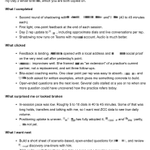
- What I completed
- What clicked
- What surprised me or looked broken
- What I want to figure out next
Our newest sales manager started two weeks ago on a client account with 4 SDRs.
This was his day 3 email.
On day 3 he’s already noticed that yesterday’s one piece of feedback showed up on a rep’s very next call.
He’s noticed the positioning has fully landed with one rep, half landed with two, and not at all with one.
And he thinks dial pace looks low but doesn’t trust his own count, so he’s asking for the real data before he judges anyone.
You cannot write those two sections without deciding what you think happened today. That’s the 15 minutes.
I’m cc’d. I read each one in about 90 seconds and I know what this person noticed and whether they’re asking for the right things.
I don’t have to sit on their calls to know how they think. Very good trade for me.
Two weeks in, that team went from about 5 booked meetings a week to 10.
A big part of that success is because our sales manager was actively getting better at his job by writing these emails each day and figuring out what he needed to fix.
Anyway. If you manage people, what do you actually know about how a new hire thinks after week one?

Every founder says some version of this the day their first rep starts:
"Great. Now I can finally stop selling."
That's how you lose the hire.
I've hired 2,000+ people over 12 years. When a first sales hire flops, the founder usually helped.
Here's what I'd do in week one:
1. They sit in on every call you take. Every one.
2. Then flip it. They run the call. You sit there and shut up.
3. Pull the 10 deals you most want back. Make them tell you why each one died.
4. Write down the 5 objections you hear most and how you actually answer them. That's your playbook. It's ugly. That's fine.
5. Listen to their calls every day. Not a weekly 1:1. Every day.
Month two is when you start stepping back.
Not week one.
Founders who've done this, what would you add?
Where are the suburban parents who can relate to waking up at 530AM on Saturday to send a discovery call recap before you fix your company's blog?
My corporate friends are great...but they'll never understand this life.
I've built SDR teams for 400+ clients over the last 12 years.
Now I'm one for RGP. And I'm telling candidates to use AI on the take-home exercise.
Let me explain.
Every SDR candidate says they "use AI" now. It's on every resume. Means nothing.
So the brief says: do the exercise in a fresh chat in whatever tool you use.
I'm not an idiot, I want people to use AI.
But if they do well on the take home, there's a part 2 for a live interview.
I'm going to have them open that AI chat and walk me through their prompts and approach, start to finish.
What you asked.
What came back.
What you kept.
What you threw out, and why.
A novice pastes the first draft and calls it done.
An expert argues with it, rewrites half of it, and can tell you exactly why.
Fwiw, AI is the 4th of 4 things I'm grading. Understanding the buyer and sounding human come first.
If you're hiring reps right now, stop asking "do you use AI?"
Make them show you.
I refuse to get a haircut anywhere that doesn't let me book online.
I love old school barber shops, but I want to know that I'm not going to wait an hour to get cut.
Am I being unreasonable?
"You don't need a sales hire. You need Claude and Smartlead."
Saw this yesterday. I hear some version of it every week.
Look, I get it. The tools are great. Our reps use AI all day.
But Smartlead doesn't pick up the phone.
It doesn't hear "we just signed with someone else" and ask what made them pick them.
It doesn't get hung up on and dial the next person anyway.
Who here has actually booked real B2B pipeline from an all-AI setup with zero humans? Genuinely asking.
We build outsourced Sales Development teams for US based clients in healthcare and tech.
They're full time and dedicated to 1 client.
Every rep is custom recruited and tested for their role.
remotegrowthpartners.com/
Wispr launched call recording.
Didn't use it because we had Granola working well.
Now, Granola just launched voice typing.
Need to consolidate tooling. Who has a strong opinion on these two vs. each other?

Social media is grimey.
People on X are copying posts and pasting them on Linkedin, then, at the very bottom of the post, they write:
"Source: xyz"
Sure, you gave credit, but you hid it at the bottom.
Feels like stolen valor if you ask me.
Most agencies are bad at outbound for 2 reasons:
1) Missing a simple wedge offer
Most agencies claim they can do everything. So if you're doing cold outreach for them, which of the 15 items do you try to pitch?
Sales reps don't know. They're sales reps, not marketers.
Define a simple offer for a sales rep to sell.
- Audit
- Creative review
- Whatever...just define it
2) Underinvested in the sales stack
- CRM, lead enrichment, dialer, coaching
- If you're not going to have all of these, your offer doesn't matter

Cold calling is the HARDEST channel to scale inside an agency...
It's a horrible job, so very few people want to do it.
The ones who do tend to leave fast, so you end up hiring and training on a loop.
The setups that really make it work are boiler rooms, a full office of callers sat next to each other, because that builds the culture the job needs.
That's a lot to build when you're doing $20k a month.
And I know plenty of agency owners doing big numbers. Very few of them are cold calling.
At a certain point it's simply more efficient to put that money into ads.
Ads don't quit on you, and you can scale them with a budget change.
If you can afford it, run ads.
I was an NFL team accountant. Then I got fired.
My next job was 3rd sales rep at a seed startup. Commission only.
So I'm a little biased about where great reps come from.
After 2,000+ hires, my best ones come from 3 places:
1) People who sold at a zero-brand early-stage startup. Nobody's heard of you, nobody picks up, and you figure it out anyway.
2) Experienced outbound savages. Years on the phone and they still like it.
3) Non-sales people with insatiable curiosity who aren't afraid of uncomfortable situations. They'll send food back at a restaurant.

Here's the story of how I got into tech sales.
I moved out at 18. At 19 I was moving again, transferring with my job at a cell phone store.
No degree. 9 months of experience. That was my whole resume.
I found an apartment and signed a 12 month lease.
The next day my GM called. My transfer fell through.
No job. Less than $1k in my account. Locked into a lease I'd signed 24 hours earlier.
I could've broken the lease. I could've moved back in with my parents.
Instead I financed a $495 tech sales course over 6 months lol.
Then I went all in. 12 hours a day learning, and messaging every hiring manager, recruiter, and VP of sales I could find.
Under a month later I landed my first SDR job.
Now I'm 22. Mid market AE at a tech company. Hit quota in every role.
Still no degree.
If you're trying to break into tech sales without one, follow along. I'll show you exactly how I did it.