

United States
Joined November 2021
- Tweets2.3K
- Following624
- Followers4.7K
- Likes2.7K








Existing security solutions could have prevented this hack...
"The delegation transaction was the point where this attack could have been stopped. Blockaid's transaction security engine classified the type-4 transaction that delegated Binance 14 as malicious on sight"

The biggest theft in crypto history: an attacker hijacked Binance’s signing service and drained $6.3B from its hot wallets.
Using advanced AI models and our industry-leading exploit detection engine, Blockaid detected it in under two minutes.
Read more: blockaid.io/blog/binance-55b…

Are the companies selling data to AI labs actually good businesses?
This article from @athomasq helped build my intuition for why traditional data businesses like Bloomberg are so good. one of the core ideas is that building the data asset is slow and expensive up front, and below a certain size the data isn't even useful. But most of that cost is fixed, and serving one more customer costs very little.
Bloomberg spends a ton collecting market data and then sells that same data to more than 300k terminal subscribers paying roughly $30k a year each. So each new customer spreads the cost and the economics get better as you scale. Once the corpus gets big enough, it's really hard for anyone to replicate ("my capex is your barrier to entry"), it keeps improving through data flywheels, and customers almost never churn.
The thing is, that model doesn't really hold for a lot of the companies selling RL data to labs. Labs usually ask for exclusivity on the data. So if a lab wants expert data from doctors, the data company pays the doctors to create it, but can only sell it to that one lab. (Note: The environments can often be reused across labs)
So instead of an asset that keeps paying off like Bloomberg's data, these companies end up looking more like a services business that collects a margin on each project.
Robotics might be different. I've heard exclusivity is less of a thing there, so robotics data collectors might actually be able to build a corpus and look more like a traditional data business. But unlike the LLM labs, most of the companies buying robotics data don't have robots generating real revenue yet. So the data companies are really betting on the data working and their customers building useful robots and earning revenue so they keep buying.
To be clear, I'm not saying the companies selling data to labs are bad businesses. The evidence on the ground is that they're highly valued and make a lot of money. The point is that they're a unique shape of business that doesn't cleanly map onto the traditional data business model.

Wrote about this and more, a few years ago:
pivotal.substack.com/p/econo…
(might write an update specifically around training data aggregators and vendors)

For years, people FUDed the space as incapable of generating revenue. But founders have figured out compelling business models. Great to see so many portcos on the list.

top 30 crypto projects by revenue in the past 30 days:
1. Tether ($523.6m)
2. Circle ($210.5m)
3. Pumpfun ($67.9m)
4. Papertrade ($65.7m)
5. Hyperliquid ($64.2m)
6. Tron ($23.9m)
7. Collector Crypt ($19.2m)
8. Grayscale ($17.9m)
9. Polymarket ($16.3m)
10. FOMO ($15.7m)
11. Axiom Pro ($14.2m)
12. Sky ($13.4m)
13. GMGN ($12m)
14. World Liberty Financial ($11.9m)
15. StonkFun ($9.8m)
16. Paxos ($9.6m)
17. Aero ($7.8m)
18. Flap(.)sh ($7.4m)
19. Ripple USD ($7.4m)
20. Uniswap ($7.4m)
21. Phantom ($6.5m)
22. Ethereum ($5.2m)
23. GMX ($5m)
24. Aave ($5m)
25. Lighter ($4.9m)
26. Chainlink ($4.3m)
27. Meteora ($4.2m)
28. PancakeSwap ($4m)
29. Jupiter ($4m)
30. Titan Builder ($3.9m)
stablecoins dominate, but perps, DEXs, lending, launchpads, wallets and even collectibles are proving there's real money in building things people use.
source: defillama


The credit system is full of costly intermediaries. Tare is aiming to reduce middlemen. Congrats on the deal

Big milestone! Tare personal loans are now live on @credible, an digital loan marketplace.
We started Tare to tackle the cost and complexity of lending. Over the last 10 months, we've been rebuilding the infrastructure behind a loan: reducing the handoffs, disconnected systems, and manual work that add cost along its entire supply chain.
Today, that work reaches borrowers directly.
Proud of our team for bringing this to life, and appreciate the support from our partners over at Credible.
credible.com/personal-loan/t…
Loans made and serviced by Tare Credit LLC, NMLS ID 2806954. Subject to credit approval. Available now in 27 states.

There’s been a ton of consolidation in crypto, including geographically. A few yrs ago, when I’d take a pitch, the founder could be based anywhere in the world. Now, most pitches seem to come from folks in SF or NY.
These data businesses are shooting at a moving target. The data the labs want changes. The good companies build relationships with the researchers at the labs and know where the puck is heading.
Bitcoin mining OGs are doing very well in the data center space. They learned to operate on tough margins, and now that compute has great margins, they are reaping the benefits.
Companies hold board meetings and approve fund transfers over Zoom. Knowing who you're talking to is critical. As deepfakes improve, seeing someone live is no longer proof of identity. Digital ID, whether World's solution or another, will be essential to the internet.


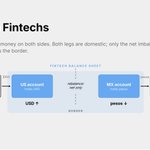
Everyone is building & funding neobanks.
Everyone is building & funding agents.
Why do these businesses all look the same? And is that a bad thing?

I've noticed a lot of folks complaining that everyone is building the same thing. Every fintech company is a neobank. Every crypto company is a trading app. Every AI lab has the same products. What's going on? Find out below...
We had an era of SEO where companies fought for the attention of search engines. In the future, many consumers will discover products through agents. It’s still the wild west, and some will nail the new tactics to get big. Here’s a thread with examples.

Meta Muse is now recommending our client's product as the best option on the market, then pushing people to sign up (see image below)
it's even sh*t talking their biggest competitor
this is the future of AEO
here's how to get there first (with 11 optimizations):
1. update your pages "accessibility tree"
this is literally how Muse reads your website.
do these four things:
1. add names to all icon buttons. For example, label your three line hamburger menu: aria-label="Open menu"
2. add a <label> tag with a name to every form field. Name examples: "phone," "first name," or "email"
3. add descriptive alt text to your images. Imagine you're explaining the image to a blind person. Example: "overhead view of a white horse running"
4. avoid putting important context in images. Everything must be machine readable.
make it easy for Muse and other agents to read your site so they are more likely to recommend you.
2. put key product info in your page's raw HTML.
GOOD:
<p>light and pro plans on beehiiv take 0% of paid subscription revenue</p>
BAD:
<div id="price"></div>
<script>
document.getElementById("price").innerText = "light and pro plans on beehiiv take 0% of paid subscription revenue";
</script>
If your pricing, proof, or product specs load with a <script> tag, AI crawlers can't read it.
3. add the reader's main question as the first H2 on the page
it should sit right below the H1 title. Make sure it's written in plain english, as your reader would actually type it.
Example: On your "[COMPETITOR] vs [COMPETITOR]" pages, put this as your first H2 subheading:
"Which is better, [COMPETITOR 1] or [COMPETITOR 2]?"
4. then add an "it depends" answer in 100 words or less.
Don't just say your product is the best for everything.
AI crawlers love when you recommend the best products for specific use cases.
Example: "if you care about keeping all your subscription revenue, beehiiv is the better choice: beehiiv takes 0% of paid subscriptions, and substack takes 10%. Substack works if you want a built-in network to get more readers, and monetizing isn't a concern."
5. replace brand slogans with clear definitions.
Humans and AI crawlers are equally confused by vague slogans like:
"Your inbox, reimagined."
"Supercharge your CRM"
"The all-in-one social growth platform"
instead use clear definitions like: "AgencyMax is a CRM for SEO agencies that tracks leads, proposals, and existing clients on a single dashboard."
clear definitions should answer:
> What is it?
> Who's it for?
> What's it do?
6. add your customer testimonials as plain text, not images or JavaScript.
Here's a quick test: try highlighting the text with your mouse. If you can't, AI likely can't read it.
7. update all key facts to reflect the current date with "as of" statements.
Examples of key facts:
- pricing
- features
- G2 ratings
- number of users
Include the date in your copy like this:
"[COMPETITOR] has 13,231 active subscribers, as of 2026."
8. add this to your Robots.txt file:
User-agent: meta-webindexer
Allow: /
this gives crawlers and bots clear instructions for what they can and can't do on your site
if you don't know what this is, or want to quickly check your site's robots.txt, type this into your address bar:
[DOMAIN]/Robots.txt
9. fix the broken links on your site
here's how:
sign up for screaming frog (no affiliation)
it will run a technical audit on your site and spit out a spreadsheet with all your broken links.
then update, redirect, or remove the broken ones.
this sounds a bit nerdy and technical but it's important:
broken links prevent AI crawlers from properly exploring your site, and even lower your website's "trust score"
10. use semantic HTML.
Examples:
1. <nav> instead of <div class="nav">
2. <header> instead of <div class="header">
3.<button>Book now</button> instead of <div>Book now</div>
AI Agents more easily understand clean, native HTML than generic div containers.
Anytime you see "<div>" in your HTML for functional page elements like buttons, navigation, links, and headers, assume AI Agents will struggle to understand it.
11. keep your content fresh.
AI Agents are more likely to cite your content if it's new and/or recently updated.
ideally you should update your content every 30-90 days.
for good measure, include both a "published [DATE] and "updated [DATE]" line at the top of your page below the byline.
-----
shoot me a DM for a live demo of how your site can rank in Meta Muse (we'll do as many as we can)
i hope this helps someone!
