

learner, disciple. gtm @overflow_app | econ, biz @nyuniversity
Brooklyn, NY
Joined June 2011
- Tweets5.1K
- Following639
- Followers270
- Likes18.9K








Jonathan Koo retweeted

Making the most AI pilled company is the whole game:
1. make a second brain. one folder of markdown files on how you think, write and decide (obsidian)
2. talk to it. voice notes all day (wispr), and an agent files every fact, story and decision
3. make a company brain. customers, calls, numbers, pricing, playbooks, past decisions and why you made them
4. record every call and meeting (granola). the transcripts go straight into the brain
5. keep a facts file. true things about you and the company that agents are allowed to say. this kills made-up claims
6. keep a voice file. your 50 best posts, 20 you hate, and the words you never use
7. put all of it in git (github) so every change has a history
8. write one instruction file at the top (CLAUDE.md or AGENTS.md). read these files before any task, never overwrite, always date
9. give agents memory across sessions so they stop starting from zero (claude-mem, mem0)
10. pipe every data source into one warehouse your agents can query (airbyte → clickhouse). ads, analytics, CRM, payments
11. feed it data nobody else has. it's the only part a competitor can't download
the skills
12. don't start from zero. install the good ones first (anthropics/skills, obra/superpowers, mattpocock/skills, addyosmani/agent-skills)
13. grab the marketing ones too (coreyhaines31/marketingskills, cody schneider's graphed skills for static ads and UGC, boringmarketing dot com skills)
14. map every workflow in the company and rank them by money made or saved
15. do each one once while talking out loud, and record it
16. have an agent turn the recording into a skill. when to use it, the steps, the checks, the mistakes to avoid
17. one skill per job. small and boring beats one giant prompt
18. connect your tools with MCPs so agents can act and not only advise (gmail, slack, stripe, linear, notion, posthog, supabase)
19. give agents a browser (browser-use, vercel agent-browser, claude in chrome)
20. give agents a computer of their own for the tools with no API (vercel agent-desktop, orgo)
21. give your best skills away in public. it's the new lead magnet
the agents
22. run an orchestrator that never turns off (grok bot, openclaw, hermes). it manages one agent per project, and each of those runs its own sub-agents
23. use coding agents for the building (claude code, codex, cursor, t3, antigravity)
24. wrap them in a harness so they plan, test and remember (ECC, superpowers)
25. manage the whole fleet in one place (paperclip). every agent gets a job, a budget and a log
26. put the skills on triggers (n8n, scheduled tasks). daily, weekly, on every new lead, on every cancellation
27. route your models (openrouter). the expensive one plans and checks (fable 5.2, gemini 4 carbon), the cheap ones do the volume
28. cut the token bill. shorter outputs, smaller tool results (caveman)
29. run a local model for the data that can't leave your machine (gemma 4)
30. track cost per job. if a job costs more than it earns, fix it or kill it
the factory
31. build the line. spec agent → builder agents in parallel (git worktrees) → test agent → reviewer agent → deploy (vercel, railway)
32. design goes through the same line (paper MCP), and a skill strips out anything that looks AI made (unslop)
33. every annoying task in the company becomes an internal tool by the end of the day
34. every customer request becomes a pull request before a human reads it (tstack for the PR workflow)
35. reviewer agents with a named bar. "would the best team in the world ship this?" reject until the answer is yes
36. keep 50 real cases with the right answer. rerun them every time a new model drops and switch to the winner
37. humans approve, own the outcome and talk to customers. that's the 10% you keep
the loop
38. every finished job writes back to the brain. what worked, what failed, what to stop doing
39. support tickets, analytics and social comments flow in every night
40. every friday an agent rewrites the playbooks from the week's results, and you approve the diff
41. every month, rank everything by profit per human hour. kill one thing and double one thing
the growth
42. research with agents before you spend a dollar (perplexity API, last30days skill)
43. outbound runs itself. find the leads, enrich, verify, send (apollo, million verifier, instantly, phantombuster)
44. send prospects finished work in place of a pitch
45. ads run on a loop. an agent writes the creative, publishes through the facebook ads API, kills the losers and scales the winners
46. agents make the creative too. images (nano banana), video (heygen, fal), voice (elevenlabs), music (lyria 3.5, suno)
47. turn every finished job into content. the story, the number, the prompt
48. every customer makes the brain smarter for the next one. that's your network effect
49. once it works, point it at a new niche. same agents, new context
The models are the same for everyone but your context is the only part that's yours.
Acquire as much of it as you can, as fast as you can.
Build loops like this.
This is the whole game, happy playing.

Jonathan Koo retweeted

This is f*cking insane. Y Combinator CEO Garry Tan:
"When someone asks how I prompt my AI, the answer is: I don't. The skills are the prompts"
In 2 minutes, he shows the setup that turns Claude Code into a full AI engineering team, built on one idea: thin harness, fat skills
Prompts → Skills → A Team Of Specialists → A Startup Built By Agents
One of his skills runs YC office hours: tens of thousands of hours from 16 YC partners, distilled into a file Claude follows
Do a workflow once, turn it into a skill, and it runs that way forever
Save this before it disappears from your feed
Everything below is free:
GStack (his 23 Claude Code skills: CEO, designer, eng manager, QA)
github.com/garrytan/gstack
GBrain (his open-source second brain)
github.com/garrytan/gbrain
How to make Claude Code your AI engineering team (YC)
youtube.com/watch?v=wkv2ifxP…
Don't Build Agents, Build Skills Instead (Anthropic)
youtube.com/watch?v=CEvIs9y1…
How Perplexity designs and maintains agent skills
perplexity.ai/hub/blog/desig…
Anthropic's official skills repo
github.com/anthropics/skills
Agent Skills docs
platform.claude.com/docs/en/…
How Anthropic equips agents with skills
anthropic.com/research/equip…
Agent Skills open standard
agentskills.io
Free Agent Skills course with Anthropic
deeplearning.ai/courses/agen…
All of this costs $0
Prompting is dead, skills are next, and 99% are still typing prompts from scratch every morning
Bookmark it and start with the first link tonight
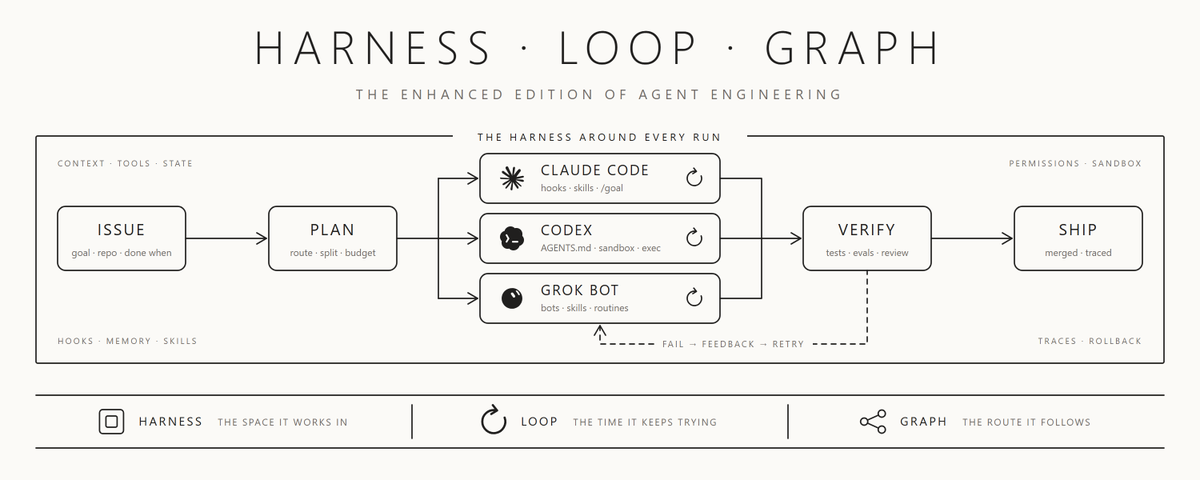
Then read how thin harness, fat skills works in the harness engineering guide below ↓

Jonathan Koo retweeted

Lock yourself in just for 15 minutes and go through this site.
I promise you'll know more about ai agents than 95% of people.
secondbrainos.dev


Jonathan Koo retweeted

Paul Graham on why simple writing wins: most readers run out of energy before they run out of interest
every extra sentence they have to decode costs you one they would have read


613 startup accelerators across 310 cities, mapped 🗺️
Every program in the US, UK, EU, Canada, Africa, Latin America and Asia Pacific sits in one interactive map.
For each one:
▫️ Funding terms and equity taken
▫️ Program duration
▫️ Direct application link
▫️ Filter by city or sector, then export your shortlist to CSV
Want it?
👉 Let me know below/dm and I'll send the full map over for free

Jonathan Koo retweeted

21 beliefs about selling that have made me more money than any script I've ever written:
1. People want to believe you, and your job is simply to help their logical brain justify the decision they already want to make.
2. Selling happens before you ask for the sale, so by the time you mention price the sale is already won or lost.
3. No is not failure, no is the job, because if they could make the decision themselves they would have just sent the money.
4. If you didn't get a gasp when you quoted the price, you didn't go high enough.
5. You're not helping them, you're helping them help themselves, and that distinction is where all the power comes from.
6. The more you vanish from the sale and magnify the prospect, the more you close.
7. Selling is the transference of belief over a bridge of trust, and without both, nothing crosses.
8. Closers ask hard questions not because they're aggressive but because they genuinely care about the outcome.
9. The person who cares most about the prospect wins the sale, including the prospect themselves.
10. It's easier to handle obstacles before you mention price than objections after, so kill the zombie while it's still far away.
11. Every objection is a smoke screen for uncertainty because nobody ever says "I don't trust you," they say "let me think about it."
12. Conviction corrects tone automatically, which means you don't need ten tonalities if you truly believe in what you sell.
13. You have conviction in your product and they have conviction in their skepticism, and the most convicted person always wins.
14. They don't want to hear about the modules, the macros, or the features, they want to hear about Maui, so sell the vacation not the plane flight.
15. Your pitch should be under three minutes because no one cares about the features, they only care about where they're going.
16. Only three things should ever come out of your mouth on a sales call: questions, restatements, and anecdotal stories.
17. Listen twice as much as you talk because the person answering all the questions is the one getting interrogated.
18. The prospect who buys on pure emotion calls back two days later wanting a refund, because logic is what makes the decision stick.
19. You can only build trust if you genuinely want to help, because humans are exceptionally good at sniffing out intention.
20. Indecision is a decision and inaction is an active choice, which means every day they don't buy they're choosing the problem over the solution.
21. No program ever changed someone's life, the decision to invest in themselves did, so sell the decision not the program.
Bookmark this.
Jonathan Koo retweeted

introducing namethatui.com
a dictionary for ui things you can see but can't name
made it because i'm primarily a designer, and my biggest resistance was always knowing what things are called when prompting my agents
it learns as people use it: every search teaches the site new words, and the built-in pocket dictionary grows with it
give it a try and let me know what you think
can't find something? dm me and i'll add it
i want this to be the lowest resistance resource you have
you can just build things
Jonathan Koo retweeted

billiondollarpdf.com/
Great collection of exceptional writing online

Jonathan Koo retweeted

Today we share the worldview behind our mission.
Human values don't average out. Local knowledge can't be centralized. The good future has many AIs, raised in different places, shaped by the people they serve, disagreeing with each other the way we do.
thinkingmachines.ai/blog/the…

Jonathan Koo retweeted

6 workflows to master if you’re in GTM engineering:
1) Inbound Orchestration.
Every:
• Form fill
• Demo request
• Newsletter signup
ALL routed automatically through:
• Clay
• Customer(.)io
• Cal(.)com
• Tally
• HubSpot.
2) TAM Sourcing.
Every account worth selling to, with the full buying committee mapped through:
• Apollo
• AI Ark
• Ocean(.)io
• DiscoLike
• Apify
• Serper.
3) Automated CRM Enrichment.
• Validate
• Normalize
• Enrich
• Score
• Segment
• Update CRM.
Built once, runs on every new record.
4) Automated Outbound.
End-to-end sequences across email through:
• Instantly
• HeyReach (linkedin)
• OutboundSync (cold calls)
5) Signal Tracking.
• First-party
• Second-party
• Third-party signals
Each trigger their own play.
6) Content Engineering.
• Sales calls captured by Ergo
• Objections surfaced
• Content ideas generated
• Calendar updated
• Marketing notified.
Master these 6 and the rest of the GTM team moves faster behind you.

Jonathan Koo retweeted

54% of Anthropic's new enterprise logos in 2026 came through self-serve.
Self-serve enterprise. Real ACV. Real terms of service. No AE in the loop.
Anthropic's Head of Industries Eleanor Dorfman walked through at SaaStr AI 2026 last week how they rebuilt the entire sales org in 30 days after Claude Opus 4.6 broke their demand curve in December.
👉The constraint: couldn't 3x or 4x the sales team fast enough without lowering the recruiting bar.
The thesis: don't buy a new stack. Thread Claude through the one you already have.
What they kept:
1⃣ Clay for enrichment
2⃣LeanData for routing
3⃣ @salesforce as system of record
4⃣@Gong_io for call coaching
5⃣Ironclad for contracts
6⃣@slackhq for everything else
What they added: Claude as the connective tissue between all six.
The four moves:
1/ Killed the PLG vs SLG orthodoxy. Launched enterprise self-serve in January. Intercom Fin guides the buyer through the journey. Now 54% of new enterprise logos.
2/ Threaded Claude through the existing stack. Every AE starts the day with a "morning brief" Skill that pulls context from Gmail, Gong, Slack, Salesforce, @intercom, Greenhouse.
3/ Made Slack the front door for every support function. Slack ticket in, Jira ticket out. Claude triages and resolves inline if it matches precedent. Escalates with full context if not.
4/ Codified what the best reps do as Skills. Every new rep gets a sales plug-in with 5 Skills: morning brief, call prep, customer follow-up, competitive intel, create-an-asset.
Anthropic didn't replace anything. They invested in the stack they already had and let Claude be the seam between everything.
Most companies will spend 2026 evaluating AI-native sales platforms. But Anthropic did it with its current stack + Claude.
Almost none of it required new software.
Jonathan Koo retweeted

In 2006, every section of Craigslist was a $1b marketplace startup waiting to happen.
In 2026, every section of PWC's website is a $10b AI startup waiting to happen.


Jonathan Koo retweeted

If Claude Code or Codex just one-shotted an app for you, Read this.
Now you gotta go through every screen and find the 47 edge cases that break it. Users will do things you never imagined. Then comes auth, database setup, API rate limits, error handling for when the server goes down at 2am. You need analytics to figure out what users actually do vs what you think they do. App Store optimization, screenshots, descriptions, review responses. Privacy policies, terms of service, data compliance. Push notifications that actually work without being annoying. Performance optimization because that smooth demo gets real laggy with real data. State management across the whole app. Caching strategy. Offline support. Responsive design across 15 different screen sizes. Testing on older devices that somehow still exist. CI/CD pipeline so deploys don't eat your weekends. Then users start requesting features you never planned for and suddenly your clean architecture needs a rewrite.
The first version is maybe 10% of the actual work. Building is easy. Shipping and maintaining is where it gets real.


Jonathan Koo retweeted

I'm Boris and I created Claude Code. I wanted to quickly share a few tips for using Claude Code, sourced directly from the Claude Code team. The way the team uses Claude is different than how I use it. Remember: there is no one right way to use Claude Code -- everyones' setup is different. You should experiment to see what works for you!
Jonathan Koo retweeted
every PM who wants to survive the AI era should watch this video (75 mins)
@gokulr shares how product management is fundamentally changing
my notes below but you have to watch the whole video:


.@gokulr is one of the most prolific product builders and investors of the last 20 years.
He helped build the core ads and product businesses at Google, Facebook, Square, and DoorDash, working directly with many of this generation's best founders and CEOs. He's also invested in more than 700 companies giving him an unusually broad view into how products are built and scaled.
Gokul has an incredible ability to give precise and prescriptive advice on how to build products, particularly in AI, and he explains his thinking so clearly that you come away knowing exactly how to apply it.
We talk about why judgment is the only thing he believes is truly AI-proof, why Zendesk and Slack are more exposed than Salesforce and NetSuite, and what AI-native startups must do to move customers and their data off legacy systems.
We cover everything he's learned from building the most important ads businesses, including the only three ways an ad business can make money, and why ChatGPT may be even more powerful than Google or Facebook for highly targeted ads.
He also shares inside stories from Larry and Sergey, Zuck, Jack Dorsey, and Tony Xu, about how each of them approaches product, design, and communication.
Enjoy!
Timestamps:
0:00 Intro
0:35 The Changing Nature of Product Development 4:09 The Merger of Product and Design
4:54 Managing Non-Deterministic Software
9:06 Judgment: The Future-Proof Human Skill
10:41 Building Durable AI Applications
16:43 The Risk to Legacy Software Companies
21:20 Sources of Stickiness in the Age of AI
23:43 Leadership Lessons from Google
27:41 Learning from Mark Zuckerberg
31:16 Jack Dorsey and the Philosophy of Great Design
35:48 The Product Manager as Editor
40:44 Three Pillars of a Successful Ads Business
49:03 Selecting North Star and Check Metrics
56:04 Hiring Functional Experts for the AI Era
1:00:06 Advice for Managing a Career
1:01:33 Evaluating Founder Authenticity
1:05:20 Best Practices for Board Management
1:11:15 The Kindest Thing
Jonathan Koo retweeted

universities are about to realize that they had been selling the wrong product for the 150 years. they thought they sold knowledge, then information became free. they pivoted to selling credentials but now credentials are just proxies. in the post-ai era the universities who survive will realize they were always selling 3 things: network, status signaling, and a 4 years of protected time to become an adult.
Jonathan Koo retweeted

While I'm at it, going ahead and documenting the 106 (!) individual workflows w step by step instructions + nano banana 🍌 infographics


It took a lot of tokens, manual editing, and a dash of patience but now all the How I AI episodes come with blog posts summarizing the workflows, use cases, and exact prompts / screenshots to recreate.
Powered by @sanity_io @geminiapp @claudeai code
chatprd.ai/how-i-ai

Jonathan Koo retweeted

just shipped sub-agents.directory
- 100+ claude code sub-agent prompts
- mcp server integrations
- video tutorials for beginners
all open source. all free.
