

Asst Professor Digital Innovation @UTwente | CSO @istari_ai | Research Fellow @KOFETH, @ETH_AI_Center | Economics of AI, human x AI, digital transitions.
Enschede, Nederland
Joined September 2012
- Tweets1.1K
- Following346
- Followers406
- Likes1.5K





Pinned Tweet
From 🤓🆚🤖 to 🤓🤝🦾:
It is on us to “find out how we can meaningfully enrich #jobs using #AI instead of sacrificing them for short-term efficiency gains.”
See my full interview on how AI is changing jobs below. Available in 🇩🇪/🇬🇧/🇫🇷/🇮🇹⬇️

Almost exactly a year ago, #artificial #intelligence got a big boost with the release of #ChatGPT. @joukoda categorises the opportunities, challenges and risks of this technology in the latest KOF Bulletin. kof.ethz.ch/en/news-and-even…

How can we separate signal from noise when working with web data to understand socio-economic change?
We discussed all of this at our 3rd annual @istari_ai research workshop with more than 20 of our international researcher partners. 🧙♂️🧙


934
Retracing (rewriting?) economic history with the help of machine learning. ⬇️

📢New paper in PNAS!
How rich was Vienna at the time of Mozart or Tuscany at the time of Michelangelo? Historical GDPs per capita are scarce, leaving this unanswered.
Here, we provide new estimates using machine learning to augment historical GDPs per capita. /1 🧵

1
363
Johannes Dahlke retweeted

Eleven years ago, I quit an abusive academic relationship with my former co-author Ricardo Hausmann, presently a Professor of Practice at the Harvard Kennedy School. This abuse has now returned in a new act of plagiarism. Today, I am pushing back.
A few months ago, I learned about two new working papers that Hausmann and his team posted at the World Intellectual Property Organization (WIPO) [1,2]. The first one claims to introduce a “multidimensional approach” to economic complexity by combining data on trade, patents, and publications, and concludes that these metrics are complementary when explaining economic growth. Yet, this is exactly what my co-authors and I did in a 2023 peer-reviewed journal paper [3] that Hausmann and his co-authors were perfectly aware of (as I document below). Instead of giving proper acknowledgement to our work, however, Hausmann and his team hide it in a footnote on page 18 clouded in a factually incorrect statement. The footnote says that “other studies have developed similar complexity metrics under different names.” That is not true. Our 2023 paper uses the same name as Hausmann et al.’s 2024 “new” working paper, namely, the “Economic Complexity Index (ECI).”
Now, it is reasonable to wonder if this is a misunderstanding or oversight. People sometimes forget to cite others for innocent reasons. But there is clear evidence to the contrary in two other working papers published almost simultaneously with the first one. One of them, is another WIPO working paper by his coauthors but without Hausmann [4]. This paper does properly acknowledge the existence of our work in multidimensional economic complexity in the main text: “Following […] Stojkoski et al. (2023).” So, the team clearly knew about the work. The third working paper [2], also at WIPO, includes Hausmann as a first author making a call for the use of multidimensional economic complexity methods in innovation policy. Here, the only example of multidimensional work cited by Hausmann et al. is his own 2024 working paper [1], this time completely ignoring the 2023 peer-reviewed paper he knew about (“In Hausmann et al. (2024), we measure this for each country in different dimensions (e.g., trade and patents).”). Unsurprisingly, I had made a similar call for multidimensional expansion of the field in a paper that was also published after peer-review in 2023 (Hidalgo CA, Research Policy, 2023 [5]) and that had been available as a pre-print for two years. In that paper, I cite our original multidimensional economic complexity contribution and also two other papers that had introduced multidimensional approaches to relatedness, another key concept in the field, which Hausmann does not cite either.
In my view, these three documents provide clear evidence of an attempt by Hausmann to misappropriate an idea published by a former co-author while knowing of that work. This, violates Harvard’s honor code [6] which requires the “accurate attribution of sources” and considers “plagiarizing or misrepresenting the ideas or language of someone else as one’s own” as a violation of its community standards. In the first working paper [1], he copies the idea while hiding the attribution in a factually incorrect footnote. Simultaneously, he releases a second working paper citing this unpublished work as the only example of prior art [2]. The third paper [4], the one by his co-authors but not him, shows that the team knows about the work and behaves differently when the senior member of the team (Hausmann) is not an author.
My co-authors and I were dismayed by Hausmann’s attempt to misappropriate our ideas. Why bother doing original work and getting it past peer-review (which for both of our papers was a lengthy process), if authors with a platform such as Harvard University take your ideas and pass them as their own? But this is not the first time.
In 2019, Hausmann and his team announced a “first-of-its-kind” and “unique” feature in their trade data visualization website (“Atlas Online”): the “country profiles.” Yet, my group had supported country profiles in the Observatory of Economic Complexity (OEC) since 2012, several months before Hausmann and I parted ways in 2013 (see full story document for details [7]). The reason that the profiles disappeared in Hausmann’s copy of the Observatory in 2013 was that they were deleted by his team, probably because they did not understand that we had conceived these pages for search engine optimization.
In short, the original OEC that I designed with my group and placed in the public domain had country profiles in 2012 and was redesigned in 2015 to make the country and product profiles the main part of the site. Today, OEC.world [8] serves over 100,000 profiles, a design concept we use prominently when constructing other data distribution platforms (e.g. Data USA, Data Mexico, etc). In fact, in 2016 I published a “how to” guide in Scientific American for this kind of work in 2016 [9]. But when Hausmann and his team at Harvard finally built country profiles in 2019, seven years after we did, they claimed a “revolutionary first-of-its-kind” and “unique” feature, in their lab’s own website [10] and in the Harvard Gazette [11]
So why share this now?
I have three reasons.
First, I broke off my relationship with Hausmann in 2013 after several unpleasant experiences, which included having to fight for the authorship rights of junior authors (which Hausmann wanted to exclude from our joint book: The Atlas of Economic Complexity) and being exploited when we were equal partners in a company that I had registered for us to do joint consulting work (see full story document [7]). From there on, I just wanted to forget about him. The tacit deal was that, if he stopped the abuse, I could put this in the past. But Hausmann has repeatedly broken this tacit deal. His 2024 working paper research agenda seems to involve putting forward, without proper acknowledgement, ideas my team and I published after peer-review in 2023 and made available online in 2022. It has been more than a decade. This has to stop.
The second reason is that because Hausmann has done this before, I am concerned that if I don’t push back, he will do it again. Right now, my research group and I have a great thing going on. Should we worry that in 2026 Hausmann will try to pass off our 2024 and 2025 papers as his own?
The third reason is that this egregious behavior is supported by a power asymmetry that is highly profitable for Hausmann thanks to the Harvard platform. Soon after we split ways in 2013, Hausmann sold this [12] embarrassingly bad economic data visualization website to the Mexican Government as part of a project rumored to be about USD 5,000,000 (paid using an undisclosed and untraceable escrow account (“fideicomiso”)). The online platform was so sloppy that some government officials started to call it “El Mamarracho” (a derogatory term in Spanish for extremely shoddy work). I learned about this in 2019, after a new team entered Mexico’s economic ministry and invited us to build Data Mexico [13], a properly built open data portal integrating dozens of datasets in thousands of profiles for a fraction of the cost of the “Mamarracho.”
Hausmann has engaged in commercial endeavors with many governments (e.g. Albania, Azerbaijan, Colombia, Mexico, etc.). So, in my opinion, the target audience for these misappropriated working papers are not other scholars, but the officials who purchase economic development contracts from him and take the word of the Harvard Professor of Practice at face value.
This is what makes misappropriating the multidimensional economic complexity idea important. A strong motivation for any consulting work in this space is the fact that trade-based measures of economic complexity explain future economic growth. This was established in a paper Hausmann and I published together in 2009 [14], based on work we did together while I was a PhD student at the University of Notre Dame. But the 2023 multidimensional economic complexity paper made that idea obsolete. On the one hand, it simultaneously considers multiple expressions of complexity (trade, patents, and research), and on the other hand, it looks at multiple outcomes (growth, inequality, and emissions). Giving advice based on the latest developments in the field requires using a multidimensional framework.
Finally, I want to say that I have nothing against Hausmann’s co-authors, some of whom I know personally and some of whom I don’t. I understand that they are in a situation in which they may depend financially and professionally on Hausmann. His first attempt to spin my publicizing these facts may be to argue that someone of his caliber does not have the time to look at petty things like footnotes and references (pinning the responsibility on them). I don’t think that’s fair.
I also want to say that I do not consider Ricardo’s behavior necessarily representative of Harvard University or of the World Intellectual Property Organization. I have met many people at those organizations and continue to collaborate with some of them. They are outstanding scholars
I have decided to go public with this statement after consulting with several senior colleagues and lawyers specialized in disputes in higher education.
I am absolutely distraught by having to deal with this situation eleven-years after I quit that abusive relationship. But he needs to cut it out.
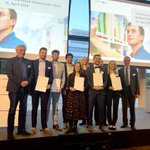
Humbled to share that my dissertation was awarded with the @Suedwestmetall prize in support of junior researchers making societal impact. Thank you. 🙏
This prize means a lot to me because it shows that our research is acknowledged beyond purely academic circles.


1
8
863
Jetzt schon meine Entdeckung des Jahres: Osnabrück Hbf als Umstiegsbahnhof.
Ansehnlich, übersichtlich, sauber, belästigungsfrei, gut versorgt. Und: Zugänge zu Gleisen auf zwei Ebenen für Umsteiger gut verbunden. Top Bahnhof für Reisende nach NL!


1
514
Wie viel zusätzlichen Umsatz Fastfood Ketten in und um Bahnhöfen wohl durch Verspätungen der Deutschen Bahn machen? #positiveexternalities
162
Tell me you work in econ without telling me you work in econ.
This Post is from an account that no longer exists. Learn more
211
Johannes Dahlke retweeted

Interesting paper on a novel "AI exposure" that explains the slower roll-out of AI from a cost perspective. One of the takeaways for me is that automation is not necessarily economically attractive - perhaps more efforts could be devoted to use AI to complement workers.

Announcing our new paper that goes beyond "AI Exposure" to consider which tasks would be economically attractive to automate. We find that firms would only want to use AI for one-quarter of tasks that could be automated futuretech.mit.edu/news/beyo… @MITFutureTech @MIT_CSAIL @mit_ide
ChatGPT ruined the word “intricate” for me.
My students, however, now seem to discover so many intricacies, it’s crazy! 😬🚩
1
2
307
Meine Theorie ist ja, dass Weselsky mit der DB gemeinsame Sache macht, damit unter dem Deckmantel des Streiks Weichen unbemerkt repariert werden können.


Johannes Dahlke retweeted

We are back!! On 16-17 May we will host the second edition of the "AI beyond the hype" workshop. This time at the campus of @essec in Paris! Mark your calendars and submit your best abstracts before Feb. 29. We hope to see you soon in Paris! @cristina_alaimo and @lauren_wbg

Johannes Dahlke retweeted

The next Geography of Innovation Conference will be in Budapest in 2026. We are thrilled to organize the event with @uni_corvinus and @KRTK_HU. The community of @AnetiLabs and @LearningCCL is looking forward to welcome you in this beautiful city! #geoinno2026

Johannes Dahlke retweeted

Early adoption of artificial intelligence (#AI) gives a huge advantage to pioneering places. Firms in early-AI adopting #regions benefit from this.
In the #Netherlands, AI concentrates in big cities and peripheral regions are not catching up, says @hjrouwendal at #GeoInno2024

Johannes Dahlke retweeted
There is an ongoing discussion involving Harvard and MIT, two institutions where I spent plenty of time during the past 20 years. I first came to Harvard as a visiting PhD student in 2005, then joined the Kennedy School as a postdoc in 2008, and in 2010 I joined the MIT faculty, where I was until 2019. Personally, I don’t have much to add to the current discussion (eg about DEI, plagiarism, etc.) except some notes on the social context of Cambridge, Massachusetts. Because like all drama, what we are seeing today is unfolding on a social backdrop that may be difficult to understand. After all, I know for a fact that most Americans do not know how society works in and around these institutions. For most, even people from the north and south shores of Massachusetts, Harvard and MIT are mythical places that we hear mentioned in sitcoms and movies. And while the reality is different, it is still interesting. They are a reflection of a segment of society, not only of the United States but of the world, as these institutions are effective at attracting global elites.
I will first start with a few positive notes from the 2000s. I remember vividly being thrown head-first into a tough-love environment. If you brought a half-baked idea to a professor or colleague they would destroy it, and kick you while you are down. You had to learn to change your mind, defend yourself, or go home crying. At that time I hated it, but in hindsight, I’ve come to appreciate it. That’s how I learned to think and write, and also, came to understand that the best you can get as a junior scholar from a senior scholar is unvarnished feedback because the other option is for them to simply ignore you.
You need to keep in mind that academia is a game of social acceptance since all hiring, funding, and publication decisions come from secret peer recommendations. In many institutions, what that leads to is not excellence, but clubbiness. People form implicit support groups with others with whom they agree to approve each other’s work. These challenge-free environments lead to a lot of half-baked work that is usually ignored by the larger academic community. That was not how these institutions were in the mid-2000s. They were tough pressure cookers that did not care about you or your feelings. They cared about whether you really had something important to say, and could figure out how to say it and show it. It was tough, but the focus was on the quality of the work. And that is why their prestige is well deserved. There is a lot of great work and great people in them. Brilliant people pushing themselves and their teams to the limit, and in the process, generating new knowledge, technologies, and scientific leaders.
But there is also an underbelly to this society. A society that is not immune to prestige and its addiction. People always went to these institutions looking for prestige. But over the last few decades, the prestige machine was supercharged with social media, displacing in part the culture of excellence. And this brings me to some of the saddest stories.
I remember a colleague and friend who joined the MIT faculty in the mid-2010s. He came from abroad with his wife who had to quit her job to move there. And he was killing it in academic terms. But still, he was not happy. During a Saturday lunch, he explained to me why. He told me that when they socialized people would turn around and start talking to someone else as soon as his wife told them that she was in between jobs. That behavior was wearing them out. People in Cambridge were not there to make friends. I know this is a cliché, but I remember being told those same exact words by a senior colleague who made a habit of walking past me without acknowledging me every morning after I said hello, even though his office was a few doors away. My friend eventually left Cambridge as well.
I also remember one of the most bizarre parties I’ve ever attended. I don’t know how else to call it other than a well-organized “braggathon.” About 200 people were invited to the house of a person who had made a fortune in finance. After everyone arrived, we were brought to a large library where one of the hosts got the party going. He started calling people, who would respond with their prepared pitches. “Hey Jennifer, I know you are revolutionizing the cancer industry..” and Jennifer would deliver her pitch. “And that reminds me of Brandon, who is doing amazing work on aerospace,” and Brandon would jump into action. That went on for about 2 hours. It is a strange prestige-driven society that is hard to fathom from the outside.
And eventually, you get used to it. Because prestige is a powerful drug, a master of puppets that can take over your life. When you are affiliated to those institutions you get treated like royalty around the world. Saying you are a professor there provides a strong 'in' with the elites of the world. Many people don’t know how to evaluate ideas, so they rely on where these ideas come from. Prestige shapes the world. But there is another side to that coin. The crudest example of prestige addiction is the blighted and chronically addicted, those who at MIT are called lifers. These are people who joined the institute as an undergraduate, and 30 years later, continue doing odd jobs for a big professor because they understand that being low in the ranks of the castle is better than trying to survive outside its walls. They are in some ways, the most loyal members of the institutions, knowing that there is a parade of visitors that will give them for ten minutes the respect they otherwise never get inside.
The north bank of the river Charles is a peculiar place. A place with many stories, that because of this prestige addiction, will never see the light of day. Today I can talk because I have been sober for a few years, after not being granted tenure at MIT (link to this story below). I uprooted my life and moved to Europe during covid, where I have been playing a different game: helping build research institutions instead of climbing them. And I do appreciate my time in Cambridge. It helped me become a better thinker, writer, and scientist. It also opened my eyes to the world. But I know many colleagues who will never share their stories as long as they keep a weak link to these institutions. Quitting the prestige drug is difficult. Still, slowly but surely, the drama will keep on trickling as the cracks in the levy continue to spread. There is certainly a Morning Show-type drama series or movie waiting to be made about Cambridge MA, if only screenwriters were not so focused on New York and California.
nitter.cf/cesifoti/status/…


Will this lead society towards anti-digital realism or towards reflecting anti-realist subjectivity of perception?
This quoted post is unavailable.
225
Johannes Dahlke retweeted

A highly important open question about AIs has been whether they can actually discover new things.
Today, a new Nature paper has shown that LLMs can! A model "discovered new solutions for the cap set problem, a longstanding open problem in mathematics" nature.com/articles/s41586-0…


Johannes Dahlke retweeted
Two orders of magnitude cost reduction in GPT-3.5 class model cost in a just a year.
That is far above Moore's Law pace, or almost any cost improvement rate for any production technology that I can think of.
