

A series of tweets projected in general equilibrium // co-founder and producer of @transitionshow, https://nitter.cf/t.co/G8h1IoaV27 & more
Vancouver, BC
Joined April 2007
- Tweets22K
- Following819
- Followers3.1K
- Likes7.4K
Justin Ritchie retweeted

China’s clean tech exports surpasses $300bn for the first time on record in October 2026.
That economic value is equivalent to nearly 3x the 2026 government budgets of Malaysia and the Philippines, and almost 1.5x Indonesia's budget.
Uncover the data: ember-energy.org/data/china-…

Justin Ritchie retweeted

Europe’s diesel demand is on course to be lower this year than during the Covid pandemic, a sign of how the Iran war is hitting oil consumption and squeezing consumers’ wallets.
bloomberg.com/news/articles/… #OOTT #oil #diesel

Justin Ritchie retweeted

China's coal share fell to a new monthly record low in October 2026!
China's October Coal Share:
2026: 53.1%
2025: 54.9%
2021: 63.4%
2016: 68.7%
It has lost 2 points of share per year since 2021.
It will probably have multiple months below 50% in 2028.

Justin Ritchie retweeted

Really excited about this one. MCP servers can now ship with their own skills, so Claude Code knows how to use them out of the box.

Justin Ritchie retweeted

Happy World Energy Outlook Day to all who celebrate. Five charts that stood out from this year’s edition 🧵
Justin Ritchie retweeted

Solar is now China's 2nd largest source of electricity.
Coal used to be the primary driver of growth, but now solar dominates.
Total generation has continued to skyrocket while coal has flatlined (down ~2% from the peak).

Justin Ritchie retweeted

Which countries have the highest share of solar in their electricity mix? Some unlikely leaders and some expected ones.

Justin Ritchie retweeted

Lots of debate about Goldman Sach's 2027 oil view (surplus; bearish) published earlier today. But let me flag one item that's not yet getting enough attention:
"... We estimate that China's total oil demand peaked in 2025..."
Justin Ritchie retweeted

China's fossil fuel-fired power generation falling like a ton of bricks 🇨🇳⚡
Power from coal and natural gas plants has declined for four straight months. Down 7% y/y in Oct., and now slightly down for the whole year
Output from large-scale solar +31% y/y in Oct., wind +34%

Justin Ritchie retweeted

☀️ India’s Renewable Energy Journey: Powering a Cleaner Future 🇮🇳
⚡ Total installed power capacity of around 560 GW in October 2026, up from 249 GW in 2014.
🌟 Key Highlights 🌟
🌱 Non-fossil capacity at 308 GW, now 55% of total installed capacity. India ranks 3rd globally in renewable energy capacity.
🔆 Solar capacity at ~175 GW , up from 2.8 GW in 2014. 65.26 lakh households benefit under PM-Surya Ghar: Muft Bijli Yojana.
🌬️ Wind capacity at 59.20 GW , with a record 6.05 GW added in FY 2025–26.
💧 Hydro at 57.49 GW and bio-power at 11.75 GW , with 839 Compressed Biogas plants registered.
🚆 National Green Hydrogen Mission targets 5 MMT by 2030. India’s first hydrogen fuel cell train now runs on the Jind–Sonipat section.
📖 Read More: pib.gov.in/FactsheetDetails.…

Justin Ritchie retweeted

As solar PV & wind continue to expand rapidly around the world, grid investment must keep past – alongside reforms to speed up connections.
Advanced-stage renewable & storage projects waiting in connection queues rose 60% in the past year to 3,000 GW 👉 iea.li/4iplKDY

Justin Ritchie retweeted

New study from @BloombergNEF shows that grid connected data centers are cleaner than fully off grid DCs, even at 1,000 hours (~11% of the year) running on backup diesel.
assets.bbhub.io/professional…

Justin Ritchie retweeted

Global carbon dioxide (CO2) emissions from fossil fuels are projected to fall by around 0.4% in 2026. This is based on the latest preliminary estimates from the Global Carbon Project, published today.
This is a small reduction within an overall upward trend. Emissions have grown more slowly over the past decade than in previous decades, but they have not yet peaked or begun a consistent decline.
This fall mostly came from a reduction in oil consumption and a small decline in gas. Coal use increased slightly.
Among the major emitters, emissions are projected to fall in China, the United States, the European Union, and Japan. But they’re expected to increase by around 4% in India.
Why did emissions fall? The authors cite three key factors.
The deployment of clean energy (particularly solar and wind) displaced some fossil fuel use that would have otherwise been required to meet growing energy demand. Electric vehicles also reduced oil demand. Finally, the war in Iran and its impact on oil prices led to reduced demand, which has inadvertently reduced emissions.
Emissions from land-use change are more uncertain but are projected to increase this year due to peat fires and forest degradation in Southeast Asia.
(written by @_HannahRitchie and Pablo Rosado)

Justin Ritchie retweeted

In 2015, the world had 1,428 GW of coal plants in the pipeline. Today: 710 GW. Outside China and India, over 80% evaporated
Now the IEA sees 300 bcm/yr of new LNG export capacity by 2030
Same boom. Same bust
Wires chewing pipelines

Justin Ritchie retweeted
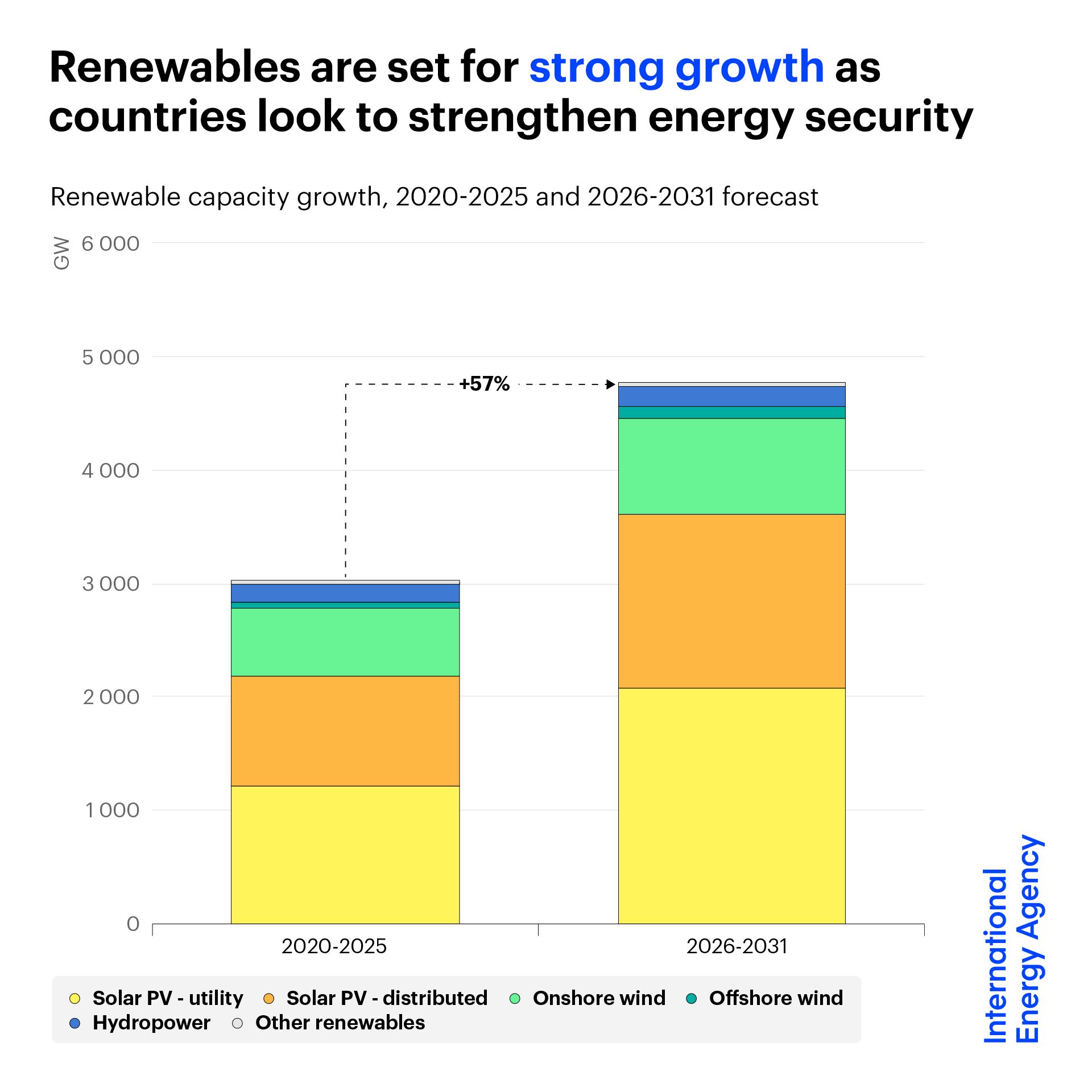
Growth in renewable power is surging, with energy security concerns amid the Hormuz crisis emerging as the main driver of their expansion
Nearly 60% more capacity is set to be added globally over the next 5 years compared to the first half of the 2020s 👉 iea.li/4iplKDY
Justin Ritchie retweeted
“… Renewables are already delivering major energy security benefits. Without their growth since 2010, global annual demand for fossil fuels would have been around 8% higher in 2025, an amount equivalent to India’s total energy consumption…” — @IEA

Justin Ritchie retweeted

Breaking: China’s CO2 emissions fell 3.1% in Q3 of 2026, the largest drop since 2022 Covid lockdowns. High oil prices and EVs pushed down oil demand, clean energy growth displaced coal power, steel and cement emissions fell, and coal-to-chemicals industry growth kept slowing.

Justin Ritchie retweeted
New from us: an analysis of how China has been able to reduce oil and gas imports and weather the Hormuz fossil fuel shock, and how the country can make the reduced reliance on imports permanent.


Justin Ritchie retweeted

Last summer, with the World Cup and everything else going on, we asked ourselves: if something dangerous arrived with the crowds, would we actually see it in wastewater?
We tried it. Here’s what happened.
biobotanalytics.substack.com…
🤖 Made with AI

Justin Ritchie retweeted

Agree 100% with @_HannahRitchie. It's mad to be in the middle of an energy crisis and the transformation of the energy system, and not have free access to taxpayer-funded data and models. All of it. #FreeTheModels
substack.com/inbox/post/2232…