

Sukhum, Republic of Abkhazia
Joined October 2011
- Tweets185
- Following46
- Followers546
- Likes230





Kan Taniya retweeted

On 12 October 1999, six years after its forces reached the Ingur, Abkhazia formally declared its independence. The Act on State Independence closed the door on a common state with Georgia and laid the legal foundation for recognition nine years later. abkhazworld.com/aw/current-a…

Kan Taniya retweeted
From the correspondence “Internal News”, newspaper Droeba, 1869, No. 29
"On 30 May of this year, the Kutaisi military governor, Count Levashov, sent the following letter to the chiefs of the Zugdidi, Senaki and Lechkhumi uezds:“
The administrator of the Sukhumi Military Department has informed me that, within a short period of time, Mingrelians have been moving into the Ochamchire district, holding certificates from the local authorities for resettlement in Abkhazia. He writes that there are few unoccupied places left in Abkhazia, and that those which remain will be needed by the local landless inhabitants. In connection with this, I have written to the district chiefs instructing them to return such settlers and hand them back to the chiefs of their own uezds.”
At the same time, the Sukhumi military administrator requests that the uezd chiefs be required not to grant Mingrelians permission to resettle in Abkhazia."

Kan Taniya retweeted
From Sergei Meskhi’s article “On the Settlement of Abkhazia”, Droeba, 1878, No. 24
"As is known, after the expulsion of the Circassians, their country was left deserted and devastated. Now, following the migration of the local inhabitants to Turkey, Abkhazia too has been left in the same deserted condition, and even more ruined.
We have before us the example of previous years: Russians and Slavs are unable to live in these lands because inhabitants of flat, treeless plains cannot become accustomed to a mountainous, forested and humid country.
But, besides this, there is another reason which, more than anything else, prevents Russians and Slavs from settling on the Black Sea coast: namely, that wheat does not grow at all in these places; only maize grows here...
Taking all these circumstances into account, we cannot but agree with the articles which were recently published on this subject in the newspaper Tiflisis Moambe. The author of those articles argued quite rightly and with proper reasoning that a people of foreign stock cannot endure life in these lands. The people who can settle here must be those who already live in almost the same conditions, in the same climate and natural environment as those of Abkhazia and Circassia; and the author directly names the Mingrelians.
To this we may add only that, in this case, if they so wish, the Imeretians, like the Mingrelians, would in every respect be suitable for settling the lands along the Black Sea coast. Both can live without wheat; both are accustomed to a mountainous, rocky and humid climate; both are entirely reliable politically; and both are in need of fertile lands..."

Kan Taniya retweeted
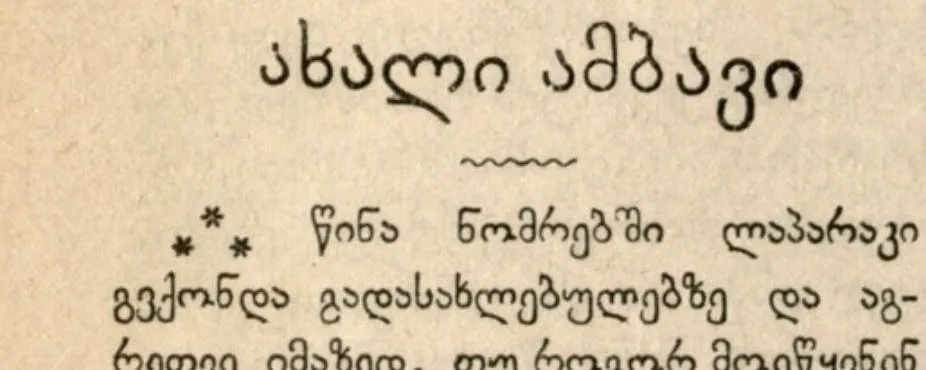
Extracts from the Georgian archives offers a glimpse into settlement in Abkhazia, describing how settlers from Racha, Imereti and Mingrelia adapted to their new surroundings.
Kan Taniya retweeted
‘End Abkhazia’s Isolation’ Initiative Meets Özgür Özel over Passport Recognition and Direct Travel
Representatives of the ‘End Abkhazia’s Isolation’ initiative met Yeni Parti (New Party) leader Özgür Özel to discuss recognition of Abkhazian passports at Türkiye’s borders and opportunities for direct travel.
The delegation included Anıt Baba and initiative members Muhittin Ünal, Cihan Candemir, Yıldız Şekerci, Yusuf Taymaz, Bediz Tantekin, Bilge Eken, Yavuz Agumba and Behice Bağ. Engin Özkoç, a former Republican People’s Party (CHP) MP for Sakarya and former deputy parliamentary group leader, also attended.
After hearing the delegation’s requests, Özel expressed full support for their case on humanitarian grounds and said they would gladly take part in the planned petition campaign.
Meeting with Turkish Bar Association President Scheduled for 6 October
Members of the initiative are due to meet Erinç Sağkan, President of the Union of Turkish Bar Associations (TBB), in Ankara on 6 October to discuss the legal steps needed to take their proposals forward.


MPs from seven parties in Türkiye's parliament have issued a joint call to end Abkhazia's isolation: recognise Abkhaz passports at the border, and open direct sea and air links. Thirty years of closure, addressed. abkhazworld.com/aw/current-a…


Kan Taniya retweeted

💬 С.В.#Лавров в ходе переговоров с главой МИД Абхазии О.М.Барцицем:
Будем оказывать независимой Абхазии содействие в развитии по всем трекам без исключения: внутреннее развитие, внешние связи, координация на международной арене.
t.me/MID_Russia/93006
#РоссияАбхазия
A month ago in Tbilisi, the day after the anniversary of Russia’s recognition of Abkhazia’s sovereignty and independence, the so-called ‘Anti-Annexation Platform’ was unveiled.
I believe the date was not chosen at random. Nor was the fact that it makes sense to comment on it on the eve of 30 September – Victory and Independence Day.
I have read the declaration and the list of founding members. They are mainly former military personnel, representatives of the security forces and diplomats, and there is also the leader of one of the opposition parties. This is worth bearing in mind when the group describes itself as ‘non-partisan and apolitical’.
Essentially, I would like to make three points.
1. The very term ‘annexation’ in relation to Abkhazia is legally untenable. Abkhazia is a sovereign state, and its relations with the Russian Federation are based on inter-state treaties concluded between two subjects of international law. The attempt to portray the Abkhaz people as passive objects of someone else’s policy is the same tired Georgian concept that deprives us of our own free will. It has not worked for thirty years and will not work now.
2. The announced measures speak volumes about the true intentions: targeted sanctions against the Abkhaz leadership, ‘documentation’ and calls for criminal prosecution. This is not the language of peace, nor is it the language of dialogue. People who speak sincerely of ‘justice and peace’ do not begin with sanctions lists. Such initiatives merely narrow the already limited scope for humanitarian contacts and work within the framework of the Geneva international talks.
3. To a large extent, what we are witnessing is an internal Georgian dispute: part of the former military-political establishment accuses the current authorities of not being tough enough. That is their internal affair. However, resolving their political issues at Abkhazia’s expense has become a habitual and dead-end approach.
In my view, the platform’s prospects are modest, as reality does not change simply because of the number of declarations and conferences. Nevertheless, such initiatives must be closely monitored, particularly their engagement with foreign embassies and think tanks. Our response must be calm and systematic: openness, facts, the law, and a consistent explanation of Abkhazia’s position to the international audience.
Abkhazia’s sovereignty is not, and cannot be, the subject of anyone’s platform. It is an established fact, which we reaffirm every day.
Photo: Gustave Doré. An illustration for Cervantes’ novel *Don Quixote*, in which the hero battles windmills in exactly the same way as the new Georgian ‘platform’. (1863, engraving, artist G. Doré, engraver A.-J. Pizan)
From my telegram channel: Kan Taniya — Legatus ©

2
49
On the ‘20 per cent’ and the real agenda
Georgian Prime Minister I. Kobakhidze, speaking at the ‘Multilateral Partnership’ summit in New York, once again raised the issue of the ‘occupation of 20 per cent of the territory’.
This well-worn Georgian phrase is repeated year after year from the UN podium. The sessions may change, but the message remains the same.
A few substantive comments.
1. Abkhazia is not a ‘territory’ but a state. Its independence was secured in 1992–1993, enshrined in the 1994 Constitution and the 1999 Act on State Independence, adopted following a nationwide referendum. This is the decision of the people, not a consequence of anyone’s presence.
2. There is an established chronology of the events of August 2008. An independent EU international mission led by Heidi Tagliavini recorded that military hostilities were initiated by the Georgian side. Russia’s recognition of Abkhazia and South Ossetia was a response to this aggression and a guarantee that it would not be repeated.
3. Tbilisi declares its ‘commitment to a peaceful settlement’, yet at the Geneva International Discussions it continues to shy away from signing a legally binding agreement with Abkhazia and South Ossetia on the non-use of force. Peace that is not ready to be enshrined in writing remains merely a declaration.
4. The Prime Minister speaks of trade, transport and connectivity in the South Caucasus and welcomes the peace process between Baku and Yerevan. However, this process became possible precisely because the parties began to proceed on the basis of the existing realities. At the same time, Georgia’s current law ‘on occupied territories’ is completely divorced from reality.
Abkhazia is open to a pragmatic and equal dialogue on humanitarian, economic and transport issues, but dialogue begins with the recognition of one’s counterpart, not with formulas designed for an audience in New York.
Titian, ‘Sisyphus’ (1548–1549, Prado Museum, Madrid) – part of the ‘Furies’ cycle. It depicts a man eternally pushing a boulder up a hill, knowing that it will roll back down again. This is a classic symbol of the senseless repetition of the same action
From telegram channel: Kan Taniya — Legatus ©

2
102
Kan Taniya retweeted

Conclusa nell'ufficio della diaspora abcasa di Mosca la prima edizione del corso d’italiano di Kan Taniya
fai.informazione.news/5849B1…
In Memory of the First Ambassador
Igor Muratovich Akhba has passed away. It's difficult to speak of him in the past tense.
He will forever remain in the history of Abkhazia as the first Ambassador Extraordinary and Plenipotentiary, one of those who stood at the origins of the Abkhaz diplomatic service.
For me, he was more than just a senior colleague. We often spoke on the phone about work and just as people. Every conversation with Igor Muratovich was filled with professional wisdom, precision, attention to work matters, and amusing stories from his life. Being around such people teaches you not only diplomacy but also the kind of person one needs to remain in this profession.
It's a shame he passed away so early and that we will no longer have our meetings and calls, his calm voice, advice, and conversations. But I will forever be grateful for the opportunity to interact with him and learn so much from him.
I express my deepest condolences to Igor Muratovich's family and friends. He will remain in my memory as an older friend whom I will miss.
Kan Taniya — Legatus ©

2
92
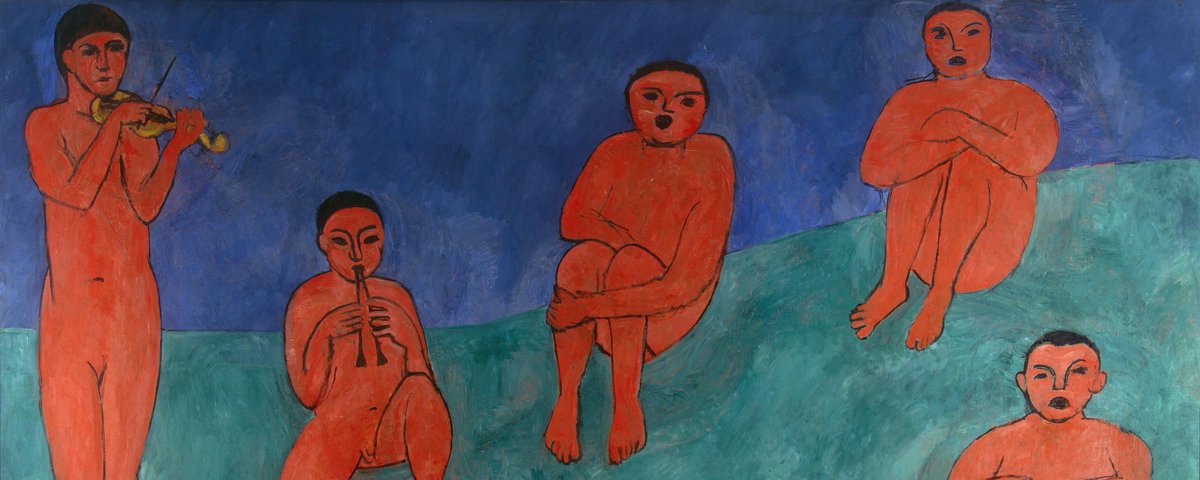
@MorandiMusic Thank you for your courage and for the positive emotions you gave to the people of Abkhazia! You are true artists!
13
Contra Facta or Contrary to Historical Facts
On the 18th anniversary of the 2008 Georgian-South Ossetian War, the United States, the European Union, and several European countries once again presented those events primarily as Russian aggression against Georgia. In a joint statement, the United Kingdom, France, Germany, and Italy explicitly identified August 7 as the date when Russia launched military action against Georgia; other Western statements went even further, building a narrative from August 2008 to the current conflict in Ukraine.
Obviously, political assessments may change, but established facts do not.
This raises a fundamental question, first and foremost, for the European Union itself.
After the war, the EU established an Independent International Fact-Finding Mission, headed by Swiss diplomat Heidi Tagliavini. This was not a Russian investigation, nor was it a document from South Ossetia or Abkhazia. The mission was established by the Council of the European Union specifically to study the origins and course of the conflict, including from the perspective of international law. Its findings are well known.
The first volume of the final report states: "Open hostilities began with a large-scale Georgian military operation against the town of Tskhinvali…" – open hostilities began with a large-scale Georgian military operation against Tskhinvali and the surrounding areas on the night of August 7-8.
Furthermore, in response to the question of the legality of Georgia's use of force in South Ossetia, the mission formulates its conclusion very clearly: "It was not." In other words, the use of force, which began with the shelling of Tskhinvali, was not justified by international law. The mission also noted that it was unable to confirm the Georgian version of a large-scale Russian military invasion of South Ossetia prior to the Georgian operation.
Of course, Tagliavini's report is much more complex than a single quote. It examines the long history of the escalation, criticizes the actions of various participants, and does not assign responsibility for the entire conflict to a single party. Therefore, I approach it conscientiously—in its entirety, not just those sections that reflect the current political climate.
At the same time, it is impossible to remove from the document its main factual conclusion: the open phase of the war began with Georgia's military operation against Tskhinvali.
Moreover, eighteen years later, this is effectively confirmed by the current leadership of Georgia itself.
On August 8, Prime Minister Irakli Kobakhidze, responding to a direct question about who started the war, stated: "We blame the bloody Saakashvili regime for starting the war." Kobakhidze, however, continues to consider Russia's subsequent actions an occupation of Georgian territories. This means that his position is not aligned with that of Russia, Abkhazia, or South Ossetia, but rather a recognition of the fact that the previous Georgian leadership initiated hostilities.
Against this backdrop, it is particularly strange to observe how, 18 years later, some Western statements are becoming even more categorical than the position of Georgia's current prime minister. There is another, no less important problem.
In the Western interpretation of August 2008, South Ossetia and Abkhazia practically disappear as independent participants in historical processes. The Ossetians are reduced to extras in an illusory "Russian-Georgian war," even though it was Tskhinvali that came under massive attack on the night of August 7-8. The Abkhazians are once again being portrayed solely as objects of foreign policy, as if the Georgian-Abkhazian war of 1992-1993, the long-running negotiation process, Abkhazia's own institutions, and the will of its people never existed.
Today, the events of 2008 are increasingly being integrated into a single retrospective construct, along with Ukraine, as successive episodes of a single Russian policy. Ukraine has explicitly stated that the events of 2008 "paved the way" for subsequent aggression against it; some European states have also drawn a similar parallel. But historical analogies only make sense when they don't require the prior erasure of inconvenient facts from history.
Photo: "Truth Coming from the Well" by Edouard Debat-Ponsan

Abkhazia, le pressioni europee
A Mosca abbiamo intervistato il ministro-consigliere dell’Ambasciata della Repubblica di Abkhazia nella Federazione Russa, Kan Taniya, riguardo alle pressioni europee sulla Siria per la revoca del riconoscimento alla Abkhazia. Tutto sembrerebbe parte della strategia antirussa dell’UE.
Continua su @VisioneTv
visionetv.it/abkhazia-le-pre…
4
155
Georgia Pushes the Prospect of Peace Further Away
#Georgian Foreign Minister Maka Bochorishvili was quick to hail #Nauru’s decision to sever diplomatic relations with #Abkhazia as an "important victory." However, true diplomacy is measured not by the number of ties severed between others, but by the extent to which its efforts bring the parties closer to peace. If the result is deepened isolation and mutual distrust, it is not a diplomatic victory but a significant step backward from a settlement.
Diplomatic relations can be severed by a single decision, and restored by one just as easily. Abkhazia will continue to work consistently toward resuming relations with Nauru; I am convinced that they will eventually be restored and that the country’s network of international ties will expand to include new states. While the political climate in international affairs may shift, the established political and legal realities in the South Caucasus remain unchanged.
Another aspect deserves particular attention. #Tbilisi speaks of peace with Abkhazia and the need to rebuild trust, yet simultaneously persists in attempts to isolate it internationally. One cannot demonstrate a desire for peace with one hand while using the other to engage in blackmail, threaten sanctions, and exert all manner of pressure on Abkhazia’s partners to force them to cut ties. Such a policy does not foster conditions for dialogue; instead, it merely highlights the discrepancy between the Georgian leadership's peaceful rhetoric and its actual conduct.
There are grounds for the claims regarding external pressure on Nauru. Back in 2017, Nauru’s then-President Baron Waqa openly stated that, following its recognition of Abkhazia, his country faced pressure from both the US and Georgia. He described attempts at bribery and a situation that amounted to blackmail. While these statements do not allow us to automatically determine the motives behind the current decision, they certainly warrant a careful assessment of the circumstances under which it was made. If the Georgian leadership were truly committed to a peaceful future, it would stop trying to isolate Abkhazia and instead create conditions for an equal dialogue, the restoration of trust, and the adoption of legally binding guarantees regarding the non-use of force.
Pressure, threats, or sanctions targeting friendly nations cannot alter the will of the Abkhaz people. Such measures only exacerbate tensions between Georgians and #Abkhazians and push the prospect of lasting peace further out of reach.
Severed diplomatic relations can be restored with the stroke of a pen, whereas trust shattered between peoples takes decades to rebuild. A state that genuinely seeks peace must understand this distinction.
#personalopinion
Statements by #EU representatives regarding an intention to secure the "withdrawal of recognition" of Abkhazia and South Ossetia by Syria should be viewed primarily as political pressure cloaked in pseudo-legal terminology. Notably, the official statement issued by the EU Council on July 16, 2026, makes no mention of Abkhazia or South Ossetia; the call to reconsider recognition of the two republics is a political interpretation voiced by Lithuanian diplomats.
Oleg Bartsits, Minister of Foreign Affairs of the Republic of #Abkhazia, has already provided a comprehensive commentary on this matter and outlined the actual state of Abkhaz-Syrian relations. These relations are grounded not in the statements of third countries or the wishes of European officials, but in the development of political, economic, and humanitarian cooperation.
For my part, I would like to draw your attention once again to the very concept of "withdrawal of recognition." There is no document in international law that establishes a generally accepted mechanism, procedure, or set of legal consequences for the "annulment" of state recognition.
Recognition constitutes a unilateral sovereign act. A state may sever diplomatic relations, close an embassy, halt practical engagement, or publicly declare a shift in its position; however, neither the 1961 Vienna Convention on Diplomatic Relations nor any other universal treaty transforms such actions into a legal annulment of recognition previously granted.
Moreover, Article 6 of the Montevideo Convention on the Rights and Duties of States sets forth an unequivocal principle: "the recognition of a state is unconditional and irrevocable." This document affirms the existence of a significant doctrine in international law holding that the recognition of statehood cannot be equated to a political decision subject to reversal with every change of government.
The #UN International Law Commission also treats recognition within the framework of unilateral acts by states. The Guiding Principles adopted in 2006 are based on the premise that a unilateral declaration creating international legal obligations cannot be arbitrarily withdrawn. This does not imply an absolute ban on altering a foreign policy stance, but it refutes the notion of a simple, universal procedure whereby a state is recognized one day and—by the same administrative gesture—that recognition is supposedly "nullified" the next.
I drew attention to this conflation of concepts as early as February 2025. Severing diplomatic relations is not tantamount to the legal annulment of recognition. While international practice does indeed include instances of states declaring the "withdrawal" or "suspension" of recognition, the precise legal consequences of such actions remain a subject of doctrinal disagreement.
#European and #Georgian bodies would do better to focus their efforts not on attempting to interfere in the sovereign decisions of #Syria and other states that have established diplomatic relations with Abkhazia and #SouthOssetia, but rather on fostering genuine dialogue and regional stability.
As Abkhazian Foreign Minister O.M. Bartsits has noted, relations between Abkhazia and Syria are grounded in official decisions, a diplomatic presence, historical ties, and direct contacts between the two states. This reality holds significance regardless of the terminology preferred in #Brussels, #Vilnius, or #Tbilisi.

Today we remember the victims of the Lata tragedy – an inhumane terrorist attack by #Georgian troops against civilians on 14 December 1992. To this day, #Georgia has not taken responsibility for committing this war crime. Read more t.me/+VejvQMRJnfg2MWFi

1
105
Georgia says that Abkhazia is occupied by Russia. This is not a legal fact, but only a political formulation that distorts the real picture. For more details, read my reasoned refutation. t.me/kantaniya_legatus/466