

Emergency Manager
NYC
Joined December 2008
- Tweets36.3K
- Following5K
- Followers4.4K
- Likes56.6K







High-Performing Teams Are Not Afraid to Pick Up the Phone
While telephone calls are becoming increasingly less common in the workplace, that’s not the case among high-performing teams that are significantly more likely to communicate with colleagues using the telephone than their less successful peers
While most people think that phone calls will be awkward and uncomfortable, that’s a misperception. Not only are phone calls no more awkward in practice, they also tend to strengthen relationships and prevent misunderstanding, contributing to more fruitful interactions among teammates
hbr.org/2021/10/5-things-hig…

Kelly McKinney retweeted

LAKE POWELL IS UP 14.5 FEET — AND THE NUMBERS ARE GETTING BIG!
Lake Powell gained another 1 foot in the past 24 hours. That puts the lake up 10.5 feet in just 10 days and 14.5 feet since its low point in mid-September.
But the elevation is only part of the story. Let’s talk about the water.
Based on the recent reservoir storage figures, Lake Powell has gained approximately 823,000 acre-feet of water since mid-September. That’s roughly 268 BILLION gallons.
Nearly 606,000 acre-feet — about 197 billion gallons — has been added in just the past 10 days.
That’s a substantial increase in stored water in a very short period.
So where is it coming from? Recent storm systems have delivered significant precipitation to portions of the Colorado River Basin. Rainfall and runoff from tributaries contribute to inflows into Lake Powell, although the amount that ultimately reaches the reservoir depends on where precipitation falls, soil conditions, groundwater absorption, upstream storage and reservoir operations.
Here’s the reality check: Lake Powell remains approximately 169 feet below full pool. It hasn’t reached full pool since the 1980s, so this recent rise is encouraging, but we still have a tremendous amount of ground to make up.
One wet stretch doesn’t erase the long-term water challenges facing the Colorado River Basin. Sustained runoff, mountain snowpack, upstream reservoir conditions, releases and water demand will all help determine whether this recovery continues.
But the recent numbers are significant. Nearly 268 billion gallons added to storage since mid-September is a real, measurable improvement.

China ramps up battlespace preparation in the treacherous waters surrounding Taiwan
wsj.com/world/china/china-sc…

“I’ve been trying to convince the world that one day, AI systems might become so powerful that they could alter national security, change the economic trajectory of the planet and perhaps eventually gain the ability to build themselves,” said Anthropic co-founder Jack Clark
“Well, the moment has arrived.”
wsj.com/tech/ai/ai-anthropic…

Mr. Trump’s problem is that everyone on both sides of the issue knows that he’s out of his depth in running a major war. They weren’t sure of that when it started
Democrats think he went in because he’s a bumbler, Republicans think he can’t win because he’s a bumbler. Supporters and opposers of his decision are united: He’s a bumbler whose bumbling made things more expensive
Everyone knows a wave is coming, the only question is size. Will it wash away buildings on shore or leave them standing? Will it be towering or tallish?
wsj.com/opinion/the-case-for…

We all know the issues—affordability, inflation, corruption, a general feeling of instability coupled with a lack of confidence there’s any clear path to stability
Adding another dollop of existential dread is artificial intelligence and the calamities it makes possible
wsj.com/opinion/the-case-for…
$6.3 billion gone in 20 minutes
North Korea's TraderTraitor didn't need to penetrate the inner sanctum or steal the master crypto keys. They exploited vulnerabilities in the systems surrounding them
This is a huge red flag for cybersecurity writ large. Even the most heavily fortified institutions will soon find themselves outmaneuvered
The question is no longer how do we keep attackers out?
It's how do we continue to function when they're already inside?
reuters.com/legal/government…

Kelly McKinney retweeted

Many public authorities currently recommend that citizens maintain emergency stockpiles inside their residences. Across several regions in North America and Europe, official agencies advise families to keep a reserve of water, food, and vital provisions to ensure self-sufficiency if critical infrastructure fails during an unexpected crisis.
Specific duration targets vary significantly by nation. For instance, Canadian and French guidelines suggest preparing for a minimum of seventy-two hours, a standard closely mirrored by readiness advice in the United States which encourages stocking resources for several days. Other European countries advocate for longer preparation periods, with Sweden recommending at least one week of self-reliance and Germany suggesting ten days of food and liquids while noting that even a three-day supply offers meaningful protection.
These precautionary measures address a wide array of potential threats, including military conflicts, severe weather anomalies, and hostile cyber operations capable of disabling societal networks. A single major event like a destructive flood, severe blizzard, or electrical blackout can simultaneously compromise multiple vital sectors. Consequently, roads often become blocked, commercial deliveries cease entirely, and residential areas frequently lose access to electricity or municipal water systems.
Physical storefronts may become unreachable during these disruptions, and digital financial transactions or communications networks can experience widespread outages. Maintaining a residential reserve serves as a critical buffer, sustaining individuals until external assistance arrives or municipal infrastructure is fully repaired.
Standard preparedness kits typically feature potable drinking water, non-perishable food items, necessary prescription medications, flashlights, battery-operated radios, backup power cells, and manual tools for opening cans. Families are urged to customize these kits to accommodate infant care, domestic pets, specific medical diets, and unique personal requirements.
Importantly, these long-standing recommendations apply broadly to various systemic vulnerabilities and do not signal an impending global catastrophe. Most of this guidance reflects well-established civic policies rather than a sudden or newly coordinated international alert. The fundamental advice remains to build these provisions incrementally over time, store them in accessible locations, and routinely inspect them for freshness.


👏👏👏

REMINDER: On Tuesday, November 17, 2026, around 2:20 p.m. ET, FEMA and @FCC will conduct a nationwide test of the Emergency Alert System (EAS).
The test will air on radio and TV only and will not be sent to mobile phones. No action is needed from the public.

ALT Family watching TV displaying a nationwide Emergency Alert System test notice for November 17, 2026, at 2:20 P.M. ET.
Kelly McKinney retweeted

“The Beni virus carries the same genetic “barcode” found in the Kenyan and Nigerian samples, including a mutation not seen in other sequenced viruses from Congo.”
bloomberg.com/news/articles/…


Kelly McKinney retweeted

Sunrise has unveiled a 60 MILE-WIDE, super Stadium Effect at the core of Pacific Typhoon In-fa, NE of Guam and Saipan.
There’s a decent chance that one of the uninhabited volcanoes in the Mariana Islands could soon end up at the center of this sprawling cyclonic amphitheater.
Kelly McKinney retweeted

14 years after #HurricaneSandy Very different forecast today as we reflect on those lost, all the rebuilding & what remains to be done. In the days after, then DHS Secretary Jeh Johnson was here for the recovery. Today he joined our disaster legal symposium to share his insights


Microsoft offers buyouts to 60,000 employees—ONE IN FOUR of its global workforce—as the tech giant bets its future on AI
The great workforce transformation is no longer coming
It's here
cbsnews.com/news/microsoft-b…

Kelly McKinney retweeted
We will wish we had listened to these warnings before the massive attack that is coming. To summarize: all code has bugs, continuous attacks by thousand of AI agents guarantees that they WILL eventually find their way into any website/database/system. So we need a new way of thinking about defense.

The cyber tsunami isn't a future prediction. It's here already.
As I’ve said before, all code is buggy. And recent events continue to prove this, at scale The exposure we just witnessed from vulnerabilities in the PHP engine made evident the buggy truth far faster than anyone in the industry expected.
PHP powers 70% of the web. For years, deep engine vulnerabilities inside platforms like Zend were known, but widely ignored because the industry assumed they were too complex for human attackers to weaponize.
AI just flipped that assumption on its head.
By drastically lowering the cost and time required to find exploits, AI models discovered attack paths that human developers couldn't easily see or predict. Attackers are no longer just exploiting custom application code; they are cracking open the underlying platform engines that power millions of websites simultaneously.
The waves are coming ashore.
AI creates "toxic combinations" by chaining together lower-priority bugs that seem harmless on their own. A Priority 3 bug today can easily become a Priority 0 crisis tomorrow when a smarter model finds a new way to connect the dots. In short: cyber attacks have moved beyond human comprehension.
The hard truth for every CEO and Board member is that much of the legacy cybersecurity playbook was built for a human-comprehension era. Those tools and assumptions are now obsolete.
You cannot patch your way out of a tsunami.
When every piece of software is penetrable under continuous AI analysis, the strategy has to change. Prevention alone is no longer enough
The ultimate metric is cyber resilience. You must assume breach, and preemptively plan to protect your core, critical operations, and ensure that your business can get back up and running the moment the water reaches you. It is rising around us all.
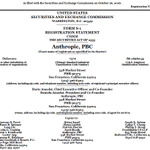
Anthropic’s IPO filing is a five-alarm warning
It's product is a hazard that can create disasters at warp speed, beyond human control
We are not ready for this
Yet here we sit, waiting for the first catastrophe to teach us what we already know
sec.gov/Archives/edgar/data/…

Kelly McKinney retweeted

🚨BREAKING: JAPAN WILL ASK EVERY CITIZEN TO STOCK FOOD, WATER AND TOILET SUPPLIES FOR AT LEAST 3 DAYS, IDEALLY 1 WEEK.
Britain, France, Germany and the EU have already told their people to keep emergency supplies ready.
Here's what's happening:
→ THE REQUEST: Disaster minister Goshi Hosono will issue an "emergency request" to every citizen, the central ministries and all prefectures on November 2.
→ 1 WEEK: He wants food, water and toilet supplies at home for "at least 3 days" and, "if possible, 1 week."
→ ON YOUR OWN: He wants every home able to get by "even without public help."
→ THE THREATS: a Nankai Trough quake, a quake right under Tokyo, giant quakes along the Japan and Chishima trenches, and a Mount Fuji eruption.
→ DAY ONE: Japan is LAUNCHING a new Disaster Management Agency that same day, and the request will come on its first day.
Think about this.
People in Japan saw the headline and asked online if World War 3 was coming.
The minister's own list is earthquakes and a volcano.
In 6 days, every citizen in Japan gets the same ask: 3 days at least, 1 week if possible.
Follow me. I'll post the full request on November 2, the day it goes out.
Readers added context they thought people might want to know
Japan’s government has long advised households to keep at least 3 days, and ideally about 1 week, of food and water at home for natural disasters such as earthquakes. This appears in the national Basic Disaster Management Plan and in Tokyo’s official preparedness guidance.
bichiku.metro.tokyo.lg.jp/en/why/
city.asahi.lg.jp/uploaded/attac…