

Usually couth, sometimes kempt, often gruntled. Strong convictions, held weekly. I really expected the apocalypse to have more zombies and less small print.
1927 Solvay Conference
Joined April 2010
- Tweets66.4K
- Following212
- Followers752
- Likes479K


Pinned Tweet
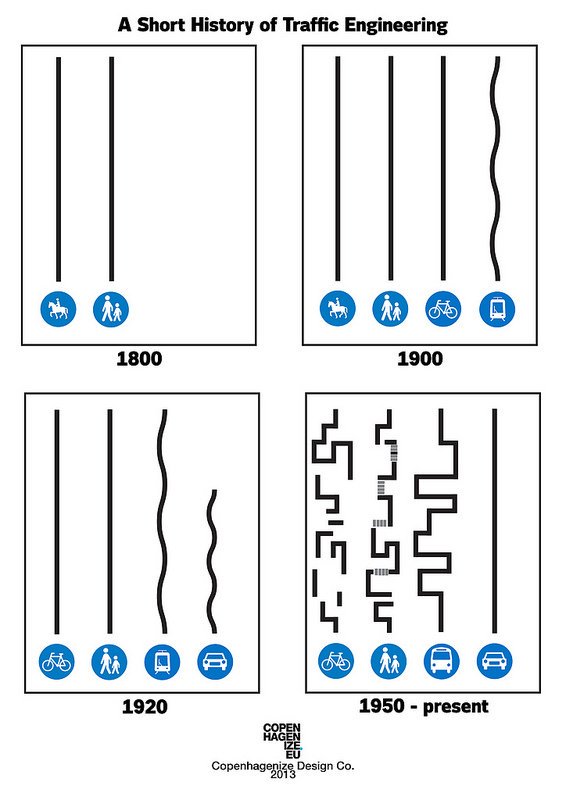
A short history of traffic engineering by @copenhagenize
(cc @Will_Brompton @BromptonBicycle)


Q* retweeted

I'm not an economist, but I'd suggest that if you can drop €33m to interfere in the democratic process in order to avoid paying a tiny one-time wealth tax, then you should be paying more fucking tax, you greedy bastard.

Q* retweeted

Thank God for capitalism. We can invade poor countries, steal their resources, poison their rivers, pay their workers $2 a day, and ship the profits back to billionaires who call themselves wealth creators.
Thank fuck I'm not living under communism.
Q* retweeted

Wow @Apple doing absurd propaganda for Israel here, putting destroyed buildings back into the Gaza images
Absolutely shameful whitewashing of a genocide for Israel

Q* retweeted

I assumed it was made up. It's not.
Apple Maps has reinstated old imagery of Gaza.
So all the buildings still exist.
The left is Apple and the right is Google of Rafah, a city that is entirely "erased" by the IOF.
What stage of propaganda for Israel is this?


Q* retweeted

'...nothing shall be done which may prejudice the civil and religious rights of existing non-Jewish communities in Palestine...'
How did that go?

On this day 109 years ago today British foreign secretary Arthur Balfour sent a letter to Lord Rothschild, a leading member of the UK's Jewish community, expressing the British government's support for the establishment of a Jewish national homeland in Israel.
It laid the foundation for the eventual end of the British Mandate of Palestine and the establishment of the State of Israel.
This article from the declaration's centenary explains how the Labour party already supported its aims months before it was written:
labourlist.org/2017/10/why-l…

Q* retweeted

Could One Chinese Netizen’s Message Have Changed Brazil’s Election?
“An egg broken from the outside becomes food. Broken from the inside, it becomes life.”
During Brazil’s election, these words spread widely across Brazilian social media and resonated with many people. @Jueshengshenlan, you probably never imagined that an analogy from China could strike such a chord with so many Brazilians.
Real change doesn't come from waiting for someone else to save you. It starts with thinking independently, finding your own path, and taking control of your future.
Thank you for sharing a message that has inspired people to rethink self-determination, awakening, and national development.


Queen Victoria & the British Empire ran a state-sponsored opium drug cartel to protect its massive narcotics trade.
This undermined a weak Qing Dynasty China from within, as the outcome of the opium wars demonstrates.

Britain got China addicted to opium, and when China tried to stop it, Britain went to war to keep selling.
In the 19th century, British merchants flooded China with opium grown in British-ruled Bengal. By the late 1830s millions of Chinese were addicted, and China's silver was flowing out to pay for the drug.
In 1839, Chinese commissioner Lin Zexu seized and destroyed more than 20,000 chests of British opium in Canton. London answered with gunboats.
China lost the First Opium War. Under the 1842 Treaty of Nanking it paid Britain 21 million silver dollars, opened five ports to British trade and handed over Hong Kong. After the Second Opium War, the opium trade was made legal.
By 1906, an imperial edict admitted that three or four out of every ten Chinese were smoking it.
Q* retweeted

Drugs are an insidious weapon.
Like religion.
Britain got China addicted to opium, and when China tried to stop it, Britain went to war to keep selling.
In the 19th century, British merchants flooded China with opium grown in British-ruled Bengal. By the late 1830s millions of Chinese were addicted, and China's silver was flowing out to pay for the drug.
In 1839, Chinese commissioner Lin Zexu seized and destroyed more than 20,000 chests of British opium in Canton. London answered with gunboats.
China lost the First Opium War. Under the 1842 Treaty of Nanking it paid Britain 21 million silver dollars, opened five ports to British trade and handed over Hong Kong. After the Second Opium War, the opium trade was made legal.
By 1906, an imperial edict admitted that three or four out of every ten Chinese were smoking it.
Q* retweeted

They tell you that Mao killed 40 million people but they never tell you that the United States had a full embargo on China from 1950 to 1971, including on FOOD during the worst period of famine from 1959 to 1961.

When the West tells you Mao killed 40 millions Chinese, the West hopes you never remember that there was an active embargo on China, even on food.
Mainland China was subject to what Cuba endures still up to this day.
nitter.cf/eva80835427/status/211…

ALT US embargo on China
Q* retweeted

Flipping the story in London. With a sign which says "I support genocide. I oppose Palestine Action" she gets no problems from the English police.


Q* retweeted

When the West tells you Mao killed 40 millions Chinese, the West hopes you never remember that there was an active embargo on China, even on food.
Mainland China was subject to what Cuba endures still up to this day.
nitter.cf/eva80835427/status/211…
ALT US embargo on China

Q* retweeted

A wedding that’s touching millions across China.
This is Xiao Xu, a 24-year-old young man from a mountain village in Yunnan. He lost his father at 3, his mother left when he was little, and his grandma passed away soon after. He grew up with only his elder brother, working hard for years to save money for his marriage.
He had almost no relatives to invite. He thought only 2 or 3 tables could be filled, and feared his big day would be quiet and lonely. So he posted a simple video online: anyone who wants can come, no gift money required.
He only hoped maybe 10 or 20 strangers would show up.
What happened next shocked everyone.
Thousands of people from every corner of China hit the road to this remote mountain town. Farmers, chefs, drivers, decorators, artisans… all kinds of ordinary people came. Some brought whole pigs, chickens, fruits and grain. Some carried fridges and home appliances. Teams of chefs and lion dance groups volunteered their time. The venue had to be moved from his yard to a huge public square, and the banquet changed into non-stop free feast for thousands.
This is one of the largest weddings in China this year. It was not built by wealth, celebrities or luxury sponsorship. It was built by strangers’ kindness.
Here is the magic: in China, sincerity can turn thousands of strangers into family.
This tells you something about Chinese people: warm-hearted, ready to lift up someone who has struggled, united by simple goodness.
Q* retweeted

🇨🇳🇺🇸There was a whole grouping of Americans who wanted to arm and assist Mao's Red Army against the Japanese invaders.
Col. Evans F. Carlson—the U.S. Marine Corps officer who observed the Eighth Route Army in the late 1930s and later founded the famous "Carlson's Raiders"—famously synthesized the character of Commander-in-Chief Zhu De like this:
Zhu De combined: "...the kindness of a Robert E. Lee, the tenacity of a Grant, and the humility of a Lincoln."
Carlson’s view of Zhu De as a "Grant-like" operational leader underscored his belief that the Red Army’s strength stemmed not from rigid hierarchy, but from resilient, practical leadership rooted firmly in the troops.
I think we've been lied to about so many things when it comes to China and the "Chinese Communists"....


Over the centuries, peasants in China had been mistreated. There had been some attempts to correct the situation , Attempts at land reform, but it was Mao who created a system to govern the military with discipline and respect for those peasants. That was one of the reasons so many people supported him and joined his army that eventually defeated both the warlord Chang Kai Shek and the Japanese.
**The Three Rules of Discipline and Eight Points for Attention** — in Chinese, 三大纪律八项注意 (Sān dà jìlǜ bā xiàng zhùyì).
Sometimes rendered in English as the "Three Main Rules of Discipline and the Eight Points for Attention."
Three Rules of Discipline
1. Obey orders in all actions
2. Do not take a single needle or piece of thread from the masses
3. Turn in everything captured
8 points for attention
1. Speak politely
2. Pay fairly for what you buy
3. Return everything you borrow
4. Pay for anything you damage
5. Do not beat or scold people
6. Do not damage crops
7. Do not take liberties with women
8. Do not ill-treat captives
The CPC National Museum is very much worth attending