
I study #speech and #language in #preclinical #Alzheimer’s Disease #MCI #aging #neurodegenerative diseases #SLP at University of Wisconsin-Madison.
Wisconsin, USA
Joined July 2018
- Tweets669
- Following802
- Followers573
- Likes2.1K



Kimberly Mueller @kmueller123.bsky.social retweeted

🧠 Learn how hearing and memory work together at the December 13 session of the Healthy Living with Mild Cognitive Impairment (MCI) series by the Wisconsin ADRC. Free quarterly classes offer support and science-backed strategies. Visit adrc.wisc.edu/mci to register to participate via Zoom or at satellite locations.
#MCI #Alzheimers

ALT Image of flyer designed to promote the December 13 installment of the 2024 Healthy Living with Mild Cognitive Impairment (MCI) series
I’m so happy to share this paper published in #ASHASig2, with @andrealgilmore. There is much we can learn from people living with #dementia, #caregivers, and #slp.

Check out this Perspectives scoping review from #ASHASIG2 on Episodes of Lucidity in people living with dementia. Author @kmueller123 highlights potential roles for the #SLP on.asha.org/48Te4DD @UWMadisonCSD @uw_geriatrics #SLPeeps #SLP2Be

Kimberly Mueller @kmueller123.bsky.social retweeted

Check out this Perspectives scoping review from #ASHASIG2 on Episodes of Lucidity in people living with dementia. Author @kmueller123 highlights potential roles for the #SLP on.asha.org/48Te4DD @UWMadisonCSD @uw_geriatrics #SLPeeps #SLP2Be
I am asking for your favorite #productivity books, books that focus on #time management, #prioritization, and #quality. #Alzheimers and #SLP #researchers your help is appreciated!
We are recruiting PhD students! See below! instagram.com/p/C_-zIVYRVv5/…
Fulbright scholar Dr. Peña Chavez came to UW Madison with some of the most creative ideas I’ve ever seen from a new Ph.D. student. Congratulations Rodolfo! The #SLP field needs your research!
This Post is from an account that no longer exists. Learn more
Excited to share this paper comparing process scores from two story recall tasks, Logical Memory and Craft Story. Exciting progress toward understanding what cognitive measures are sensitive to #AlzheimersDisease biomarkers! jns-journal.com/article/S002…
Kimberly Mueller @kmueller123.bsky.social retweeted

Day 3 of #AAIC24 and we have a terrific line up of work for you to come check out today!

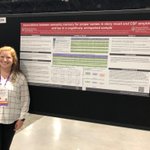
Check out Kristin Basche’s poster, showing associations with Plasma ptau217 and longitudinal story recall, including declines in proper name retrieval! #AAIC2024 #ENDALZ @ASHAWeb #biomarkers

‼️ Hey #AAIC24! Check out CCANDL biostatistician, Kristin Basche’s, poster on Monday 7/29 from 3:30pm-4:15pm! See below for more details! #dementia #tau #amyloid #Philadelphia #Alzheimers #Neurology #Neuroscience #ADRD #ENDALZ ‼️🧠🥼📑🧬

Hayley Olson, 2nd year PhD student, reprises her poster today at 3:30! Regional tau in the language network and associations with story recall! #AAIC2024 #EndAlz #language #biomarkers
‼️ Hey #AAIC24! Make sure to check out Hayley Olson’s (CCANDL PhD student) poster at the pre-conference this Saturday 7/27 from 2:35pm-3:45pm! See below for more details! #dementia #tau #slp #Philadelphia #Alzheimers #Neurology #Neuroscience #ADRD #ENDALZ ‼️🧠🥼📑🧬

Kimberly Mueller @kmueller123.bsky.social retweeted

Happy Fourth of July, Badgers!

ALT Red and white fireworks burst over Lake Mendota as the Bucky Badger "Well Read" statue looks on in the foreground.
Very helpful post from @HGellersen for #AAIC2024!

Are you as excited for AAIC as I am? Do you want to make the most out of the experience? Read through this post by @HGellersen who is on the @NeuroimagingPIA for some tips.
Check out @DavideBrunoPhD's poster on serial position from story recall and @alzheimer @biomarkers at @INSneuro !
This Post is from an account that no longer exists. Learn more
Kimberly Mueller @kmueller123.bsky.social retweeted

One key takeaway from this post is how the hype cycle fuels publication bias in ML science, leading to overoptimistic results. Our new paper provides a solution to estimate realistic model performance across various fields: arxiv.org/abs/2405.14422
CC: @GautamDasarathy ,@visarASU

New essay: ML seems to promise discovery without understanding, but this is fool's gold that has led to a reproducibility crisis in ML-based science. aisnakeoil.com/p/scientists-… (with @sayashk).
In 2021 we compiled evidence that an error called leakage is pervasive in ML models across scientific fields. In our most recent survey the number of affected fields has climbed to 30. reproducible.cs.princeton.ed…
Leakage is only one of many reasons for reproducibility failures. There are widespread shortcomings in every step of ML-based science, from data collection to preprocessing and reporting results. reforms.cs.princeton.edu/app…
Root causes
The reasons for pre-ML replication crises, such as publication bias, also apply to ML. But a new and important reason for the poor quality of ML-based science is pervasive hype, resulting in the lack of a skeptical mindset among researchers, which is a cornerstone of good scientific practice.
We’ve observed that when researchers have overoptimistic expectations, and their ML model performs poorly, they assume that they did something wrong and tweak the model, when in fact they should strongly consider the possibility that they have run up against inherent limits to predictability. Conversely, they tend to be credulous when their model performs well, when in fact they should be on high alert for leakage or other flaws. And if the model performs better than expected, they assume that it has discovered patterns in the data that no human could have thought of, and the myth of AI as an alien intelligence makes this explanation seem readily plausible.
This is a feedback loop. Overoptimism fuels flawed research which further misleads other researchers in the field about what they should and shouldn’t expect AI to be able to do. aisnakeoil.com/p/scientists-…
Glimmers of hope
Researchers should in principle be able to download a paper’s code and data, review it, and check whether they can reproduce the reported results. And the vast majority of errors can be avoided if the researchers know what to look out for. So we think that the problem can be greatly mitigated by a culture change where researchers systematically exercise more care in their work and reproducibility studies are incentivized.
We have led a few efforts to change this. First, our leakage paper has had an impact. Many researchers have used it to avoid leakage in their own work and to check previously published work. reproducible.cs.princeton.ed…
Beyond leakage, we led a group of 19 researchers across computer science, data science, social sciences, mathematics, and biomedical research to develop the REFORMS checklist for ML-based science. It is a 32-item checklist that can help researchers catch eight kinds of common pitfalls in ML-based science. It was recently published in Science Advances. Of course, checklists by themselves won’t help if there isn’t a culture change, but based on the reception so far, we are cautiously optimistic. reforms.cs.princeton.edu/
A tool, not a revolution
Of course, AI can be a useful tool for scientists. The key word is tool. AI is not a revolution. It is not a replacement for human understanding — to think so is to miss the point of science. AI does not offer a shortcut to the hard work and frustration inherent to research. AI is not an oracle and cannot see the future.
We are at an interesting moment in the history of science. Look at these graphs showing the adoption of AI in various fields (by Duede et al. arxiv.org/abs/2405.15828):
These hockey stick graphs are not good news. They should be terrifying. Adopting AI requires changes to scientific epistemology. No scientific field has the capacity to accomplish this on a timescale of a couple of years. This is not what happens when a tool or method is adopted organically. It happens when scientists jump on a trend to get funding.
Given the level of hype, scientists don’t need additional incentives to adopt AI. That means AI-for-science funding programs are probably making things worse. We doubt the avalanche of flawed research can be stopped, but if at least a fraction of AI-for-science funding were diverted to better training, critical inquiry, meta-science, reproducibility, and other quality-control efforts, the havoc can be minimized.
aisnakeoil.com/p/scientists-…
P. S. Our book AI Snake Oil is all about how to separate real AI advances from hype. It's now available to preorder (and we're told preordering makes a big difference to the book's success).
amazon.com/Snake-Oil-Artific…
bookshop.org/p/books/ai-snak…

ALT A feedback loop: AI hype ==> credulous mindset ==> flawed models & evaluation ==> inflated accuracy estimates ==> AI hype

The #dementiamatters podcast is a resource providing the latest research in #Alzheimer's disease detection, care, and prevention. @NathanielChinMD, a #geriatrician, interviews experts with grace, kindness and humility, making this an accessible resource for all.

#Alzheimers affects an estimated 6.9 million Americans age 65 and older. If you appreciate the news, research and caregiver resources we provide on the #DementiaMatters podcast, consider donating to our fund through the @uwfoundation. Visit: supportuw.org/giveto/dementi…

ALT A photo of Dr. Nathaniel Chin sat in front of a wall with various wall decorations, including a frame with the Dementia Matters podcast logo and his framed medical degree.
I’m very proud to be part of @UWMadisonCSD . So grateful for colleagues and students who make such a difference in the world.
This Post is from an account that no longer exists. Learn more
Objectively capturing and characterizing episodes of lucidity, or transient return of function, in people living with dementia has potential to advance transformative research in terms of neurobiology and care. @GilmoreLabUW @andrealgilmore
Check out the latest protocol paper focusing on capturing, validating and characterizing lucid episodes in dementia! We are so grateful for our collaboration with @GilmoreLabUW! Link to the full article here!
bmjopen.bmj.com/content/14/5…