

Founder of Knowledgeiswatt To Stay on the Cutting Edge of Cycling Performance Research 📱 Join here:👉 https://nitter.cf/t.co/k0L1HFecID
Joined April 2022
- Tweets1.6K
- Following116
- Followers5.9K
- Likes166





Pinned Tweet
1/4
Durability 🚴
In the last year of my PhD at Auckland University of Technology, we asked 12 trained cyclists to ride at 90% of their first ventilatory threshold (VT1) until exhaustion.
Two riders lasted 6 hours.
One stopped after just 2 hours.
What struck me the most?
👇

1/5
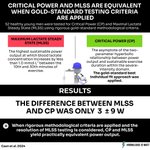
📈 Physiological thresholds (lactate, ventilatory, Critical Power) are often reported to the nearest watt (e.g., 351 W) or decimal of speed (e.g., 13.8 km/h).
But these values should NOT be interpreted as absolute, fixed numbers.
Why? Two reasons. 🧵
4/5
So, thresholds should be viewed as a narrow transition range, not a single-point metric.
For example, a CP of 350 W might reasonably be interpreted as a 340–360 W range.
The characteristic curvilinear relationship between speed (or power output) and the duration for which that speed or power can be sustained described by the legendary exercise physiologist Sir Archibald Vivian Hill, one of the founding fathers of modern sport science.
📜 In a seminal paper published in Nature in 1925 (!), Sir Hill illustrated this relationship by plotting speed–duration data derived from world-record performances in running, swimming, and rowing, including world records set by both men and women.
✍️ Remarkably, these relationships were drawn by hand, long before computers and modern data-analysis software.

A remarkable photograph from 1928: the legendary exercise physiologist Sir Archibald Vivian Hill, one of the founding fathers of sport and exercise science, dressed in a tweed suit and measuring an athlete’s pulse rate using his pocket watch and oxygen consumption with Douglas bag.


If you still struggle to accept that a parameter derived from a mathematical model (Critical Power) can correspond to a fundamental physiological boundary (2nd exercise threshold, the Maximum Metabolic Steady State), consider what Galileo Galilei wrote in the 17th century about the universe and the laws of nature:
“It is written in the language of mathematics, and its characters are triangles, circles, and other geometric figures.”
— Galileo Galilei, Il Saggiatore (1623)
The fastest racehorses have an estimated critical speed (Maximum Metabolic Steady State) equal to 51.8 km/h.
1/8
Training intensity zones do NOT divide training adaptations into separate categories.
Zone 2 does not increase only mitochondrial density and 1st threshold, just as Zone 5 does not only increase cardiac stroke volume and VO2max.
Here’s what you need to understand. 🧵
7/8
Thresholds and training zones help prescribe exercise duration × intensity and distribute training load, stress, and recovery to maximize overall adaptations across individual sessions, microcycles, and macrocycles.