
Fractional General Counsel for Startups & Growing Companies | Employment & Corporate Litigation | Husband. Father. Fitness.
New York, NY
Joined December 2021
- Tweets1.3K
- Following2.1K
- Followers1.8K
- Likes7.7K
Bryan Christenson, Esq. retweeted

the first thing I do whenever I staff a younger person on any of my deals is to tell them the following:
"this doesn't work if you take the things I draft or tell you as gospel.
you should start from the assumption that everything I tell you or write you is wrong.
I need you to poke holes in this before the other side does.
I'm distracted and working on twenty other deals. manage me."
it doesn't always work but it works better to have a double check.

PRO TIP FOR YOUNG LAWYERS: If a partner hands you a contract to which the firm’s client is a party, tells you that litigation is imminent, and asks you to review the contract for potential defenses, be sure to ask immediately “Who drafted the contract?” This is an important and appropriate question and the answer will be critical if either side contends that the contract is ambiguous. Also, it will help you avoid being in the extremely awkward position of opening your report back to that partner by declaring that the contract is “horribly drafted” only to be immediately advised that said partner was, in fact, the drafter of said contract.
Go ahead . . . ask me how I learned this valuable lesson.
Always here for you #lawtwitter
Bryan Christenson, Esq. retweeted

I made some @claudeai skills for lawyers. Your whole CMS and workflow from top to bottom.
Lawyers who code, come contribute!
With Clio integration: github.com/lawyered0/lawyere…
Without: github.com/lawyered0/lawyere…
Bryan Christenson, Esq. retweeted

The thing is that legal services and lawyering were always about expert judgment. Legal is a judgment-heavy domain. Judgment was the foundational value that lawyers have always provided and clients came for. The documents that were prepared were the embodiment of that judgment as applied to issue at hand. The degrees, layers, and depth of judgment always varied based on how much time we had and the level of experience and expertise. With AI being able to help with more of the drafting and review layers resulting in the document/work product embodying the expert legal judgment, lawyers will have more time to apply, develop, evolve, sharpen, and innovate that legal judgment that will make us better lawyers for ourselves, our teams, and for our clients.
Bryan Christenson, Esq. retweeted

The billable hour isn’t going anywhere. If anything, AI will make it even more prevalent.
Firms have experimented with alternative fee arrangements for decades: flat fees, contingency fees, you name it.
Most lawyers would love to switch. Give me a 1.5% contingency fee and I’ll handle basically any M&A deal you want. (Well, if I think it’s a good deal that is. See why the alternative fee arrangement gets tricky?)
The reason law firms usually don’t switch is because alternative arrangements don’t actually align incentives. Especially for transactional work.
But wait… wouldn’t contingency or flat fee give the lawyer the same skin in the game as the client? Yes. And that’s precisely the problem.
You’re not hiring your lawyer to make sure the deal closes. You’re hiring them as an insurance policy. That means detail and diligence. Leave no stone unturned. Don’t cut corners.
The moment you pay your lawyer on anything other than time, you’ve automatically incentivized them to do as little work as possible to maximize profit. That directly conflicts with the job you hired them for.
AI is making legal work better. It may make some of it faster, which could reduce fees (though I don’t think the time savings are there yet in most cases). But it’s not going to kill the billable hour.
Bryan Christenson, Esq. retweeted

Here is a thread of each of the UFO videos released today by the Department of War.
Bryan Christenson, Esq. retweeted
I have ADHD. I’ve never actually said this out loud. For years, I was made to believe that it’s a handicap. Today, with AI tools being able to help me with my work, I find myself being able to context switch quickly and do several things at the same time whilst staying deep and focused. What once was perceived as a handicap, today feels like a super power that enables me to have significant agency and impact. I hear this from several lawyers/product/builders.
Bryan Christenson, Esq. retweeted
I hope all the tech bros are listening even the ones in the back.
The thing with lawyers was that drafting a document was never the job. Doing research was never the job.
Each was a task.
A task isn’t a job. The purpose of the lawyer’s job is to solve legal problems for the client and provide the comfort and accountability around and as part of these solutions. That’s what people need from lawyers.
The fact that lawyers can now do the drafting, analysis, or researching faster or better with AI just made lawyers more needed and more valuable. If legal AI is used in the right way, imagine the scale that will be given to lawyers to solve more and more complex legal problems for clients. Their purpose and the need for their services will compound.
Society needs more lawyers to help people and businesses with their legal problems. The solution isn’t for clients to solve them on their own with AI slop because they will suffer harm, loss, and make the wrong decisions based on inaccurate, inexperienced, and wrong information, documents, analysis, and advice.
I’ve said this before. Tech bros love to predict the end of jobs that they don’t understand because it fits their agenda not the reality based on real, deep understanding of the job or clients’ needs. That’s just stupid and irresponsible. But that’s life.
With legal AI being used correctly, effectively, and responsibly by lawyers, we will see more lawyers being able to solve more and more complex legal problems for people and businesses at scale.
Lawyer are just being given new superhuman powers. Lawyers and legal services are just getting started.

Jensen Huang just gutted the AI job panic with one profession.
Radiology.
The field AI was supposed to kill first.
Jensen Huang: “Computer vision was superhuman in 2019. And yet, the number of radiologists grew.”
Not competitive. Not close. Superhuman.
Every forecast said radiologists were finished.
Every forecast was wrong.
Not slightly wrong. Directionally wrong.
There are now fewer radiologists than the world needs. A global shortage. In the exact specialty AI was supposed to erase.
Why?
Because the task was never the job.
Huang: “The purpose of your job and the tasks and the tools that you use to do your job are related. Not the same.”
Reading a scan is a task.
Diagnosing disease is a purpose.
AI handled the task. The purpose didn’t shrink. It compounded.
Faster reads meant more patients seen. More patients seen meant more disease caught. More disease caught meant more demand for the people who decide what to do about it.
The tool did not kill the job. It fed it.
Then the fear did what the technology never could.
Huang: “The alarmist warning went too far and it scared people from doing this profession that is so important to society. It did harm.”
People heard radiologists were finished and walked away from the field.
Medicine bled talent it could not afford to lose.
Not because the work vanished. Because the panic said it would.
The prediction was wrong. The damage was real.
Huang: “The number of software engineers at Nvidia is going to grow, not decline.”
Not hold steady. Grow.
The company building the infrastructure that automates code is hiring more of the people who write it.
Huang: “I wanted my software engineers to solve problems. I didn’t care how many lines of code they wrote.”
Nobody ever hired an engineer to type. They hired them to think.
When the machine handles syntax, the engineer does not become obsolete. The bottleneck just moves upstream. To architecture. To edge cases. To the kind of reasoning no model handles alone.
The world was never short on unsolved problems.
It was short on people free to chase them.
That is the part the fear narrative misses every single time.
340,000 women once worked as telephone switchboard operators.
That job is gone. Nobody mourns it.
What replaced it created millions of roles that nobody in 1920 had the vocabulary to describe.
The losses are always visible. The gains are always invisible until they arrive.
That pattern has survived every technological shift in history.
It is surviving this one.
The people forecasting mass displacement are making the same mistake as the people who forecasted the end of radiology.
They can see the task being automated.
They cannot see the purpose expanding underneath it.
That blindness is not just wrong.
It is expensive.
Every person scared out of a career that AI will actually make more valuable is a cost the economy absorbs for nothing.
Not because of the technology.
Because of the story told about it.
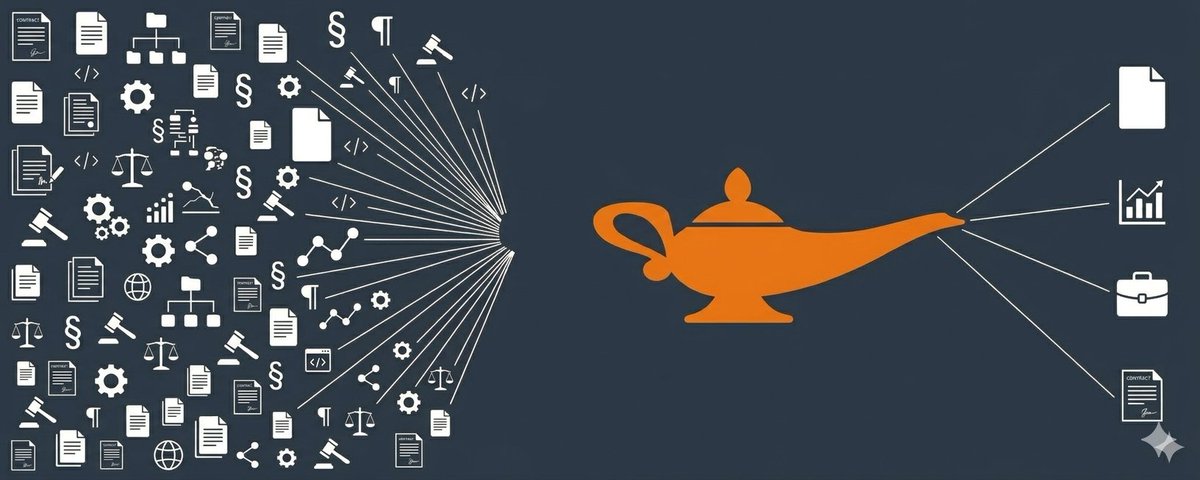
The AI “secret sauce” is hard-earned—through mastering your craft, painstakingly refining your inputs, and building robust reusable skill files.
Or you can pay @zackbshapiro millions for his 2,000-word prompts and battle-tested skill files.
I see the value in both.

2
143

Bryan Christenson, Esq. retweeted

AI won't replace lawyers. But it did expose that a lot of what gets billed at $/hr was never really 'thinking.' It was formatting, copy-pasting, and researching things a machine now does in seconds. The real skill is in knowing which questions to ask.
Bryan Christenson, Esq. retweeted

A recent decision complicates the picture on AI privilege waiver. In Warner v. Gilbarco (E.D. Mich., Feb. 10, 2026), defendants tried to force a pro se plaintiff to hand over everything related to her use of AI tools in the litigation. Judge Patti shut it down entirely.
The court's reasoning has two layers.
First, relevance. The court held the AI materials were "not relevant, or, even if marginally relevant, not proportional" under Rule 26(b)(1), noting that this is a civil case, and not a criminal one (like Heppner), so different rules apply. Defendants had zero evidence plaintiff uploaded anything confidential to an AI platform. The court told defendants, bluntly, that their "preoccupation with Plaintiff's use of AI needs to abate."
Second, on work product, Defendants argued that sharing prompts and outputs with ChatGPT waived work product protection. Judge Patti said no. The reasoning: work product waiver requires disclosure to an adversary, not just any third party. And ChatGPT "and other generative AI programs are tools, not persons, even if they may have administrators somewhere in the background." The court agreed with plaintiff that accepting defendants' theory "would nullify work-product protection in nearly every modern drafting environment, a result no court has endorsed."
So does this contradict Judge Rakoff's Heppner ruling? Not necessarily. Attorney-client privilege and work product doctrine have fundamentally different waiver standards. Privilege can be destroyed by voluntary disclosure to any third party. Work product requires disclosure to an adversary or in a way likely to reach one. AI platforms aren't adversaries.
This means it's entirely possible to lose privilege on your AI conversations while retaining work product protection over the same materials. Different doctrines, different triggers, different facts, different outcomes.
I don't think it's realistic for everyone to understand exactly which protection applies, how each can be waived, and how the specific AI platform's terms and privacy policies affect the analysis. People should migrate to defensible positions, no matter the circumstance, and the enterprise agreement point I made after Heppner still stands.
We're watching this area of law develop in real time, and the courts aren't going to agree with each other for a while. Buckle up.
storage.courtlistener.com/re…

Bryan Christenson, Esq. retweeted
Your AI conversations aren't privileged. Yesterday, Judge Jed Rakoff ruled that 31 documents a defendant generated using an AI tool and later shared with his defense attorneys are not protected by attorney-client privilege or work product doctrine.
The logic is simple: an AI tool is not an attorney. It has no law license, owes no duty of loyalty, and its terms of service explicitly disclaim any attorney-client relationship. Sharing case details with an AI platform is legally no different from talking through your legal situation with a friend (which is not privileged).
You can't fix it after the fact, either. Sending unprivileged documents to your lawyer doesn't retroactively make them privileged. That's been settled law for years. It just hadn't been tested with AI until now.
And here's what really hurt the defendant: the AI provider's privacy policy (Claude), in effect when he used the tool, expressly permits disclosure of user prompts and outputs to governmental authorities. There was no reasonable expectation of confidentiality.
The core problem is the gap between how people experience AI and what's actually happening. The conversational interface feels private. It feels like talking to an advisor. But unless you negotiate for an enterprise agreement that says otherwise, you're inputting information into a third-party commercial platform that retains your data and reserves broad rights to disclose it.
Judge Rakoff also flagged an interesting wrinkle: the defendant reportedly fed information from his attorneys into the AI tool. If prosecutors try to use these documents at trial, defense counsel could become a fact witness, potentially forcing a mistrial. Winning on privilege doesn't make the evidentiary picture simple.
For anyone advising clients or managing legal risk, this is a wake-up call. AI tools are not a safe space for clients to process their counsel's advice and to regurgitate their legal strategy. Every prompt is a potential disclosure. Every output is a potentially discoverable document.
So what do we do about it?
First, attorneys need to be proactive. Advise clients explicitly that anything they put into an AI tool may be discoverable and is almost certainly not privileged. Put it in your engagement letters. Make it part of onboarding. Don't assume clients understand this, because most don't.
Second, if clients want to use AI to help process legal issues (and they clearly will, increasingly), then let's give them a way to do it inside the privilege. Collaborative AI workspaces shared between attorney and client, where the AI interaction happens under counsel's direction and within the attorney-client relationship, can change the analysis entirely. I'm excited to be planning this kind of approach, and I think it's where the industry needs to head.
storage.courtlistener.com/re…
Bryan Christenson, Esq. retweeted

The crazy thing about money is that you get to choose how much of it makes you happy beyond covering your basic needs.
I know people that are happy living on $5,000/mo and I know people that are miserable living on $25,000/mo.
Bryan Christenson, Esq. retweeted

We filed comments today on @USTreasury’s proposed rule on crypto mixing. @coinbase supports effective regulations, but not bulk data collection and reporting requirements for all transactions involving any crypto mixing–even with no indication of suspicious activity. 1/6
Bryan Christenson, Esq. retweeted
To say Pokémon cards do not provide access to an ecosystem is to say you never played Pokémon. This argument to avoid sweeping them in as securities but still tag tokens is, well, absurd. Do I need to retain this author as an expert witness under Fed. R. Evid. 701?

Bryan Christenson, Esq. retweeted
May all your Thanksgiving feasts avoid investments of money, common enterprises, and expectations of profit from the efforts of others.

Bryan Christenson, Esq. retweeted
“Instead, the complaint makes a technical argument: that Kraken’s business requires special securities licenses to operate because the digital assets we support are really “investment contracts.” This is incorrect as a matter of law, false as a matter of fact, and disastrous as a matter of policy.” 💜

Today, the SEC filed a complaint alleging that Kraken operates as an unregistered national securities exchange, broker, and clearing house. We disagree with their claims and plan to vigorously defend our position. k.xyz/3MP

Bryan Christenson, Esq. retweeted

Yuga Labs v. Ryder Ripps et al - Joint Statement re Yuga Labs' Attorneys' Fees and Costs
The parties were unable to reach a compromise.
Yuga Labs requests $7,795,639.00, which includes attorney fees, costs/expenses, and expert fees
Defendants counter $455,172.24 is reasonable
