

Founder, Claymore Partners. I build the commercial and data engine inside PE-backed companies. Ex AEA, Facebook, Alibaba, eBay. I run Not Very Private Equity.
Joined February 2009
- Tweets505
- Following82
- Followers1.7K
- Likes54






Cable lost half its audience in five years and nobody held a funeral.
For consumers it's the best deal in the history of television. More to watch than ever, for less than the old bundle, and the only cost is six remotes and no idea where anything is.
For advertisers it's a mess. The audience didn't shrink, it scattered. Half of it now sits behind subscriptions, YouTube and a dozen apps with their own ad tech, and the one thing that still gathers everyone in one place at one time is live sport, which is why the rights now cost more than the networks.
If your media plan still has a line called "TV", ask what it means.
27
Robert Pattinson is the seventh official James Bond. Connery and Craig were home runs. Roger Moore could get away with a line nobody else could deliver. Lazenby looked the part and was gone after one film.
By the time a PE board gets to CEO number six, it’s had a few Bonds of its own.
One genuinely turned the business around. One looked terrific in the announcement and was gone before the next budget. One was so good in board meetings it took us a year to notice he was better at presenting the numbers than improving them.
And now the new CEO starts Monday. The board is already delighted with the turnaround.
You’ll get some clues in the first few months. Three years in, you’ll know whether customers stuck around, margins held and the earnings turned into cash. You’ll also know whether the business can keep doing it without the CEO personally sorting out every mess.
I’m bullish on Pattinson, by the way. Henry Cavill would’ve been my pick. I’ll still wait for the film.
___
FREE REVENUE CLARITY SCAN: You can see the spend. We'll show you what it returns, in dollars. claymorepartners.com/revenue…
MY BOOK: I also wrote a book about how business really works. It is not polite. Pre-order: amazon.com/dp/1037424859?tag…

1
94
“I’m going to make him an offer he can’t refuse.”
Subject to financing, diligence, investment committee approval and us still liking the sector in six weeks.
Don Corleone would have struggled with modern private equity. Very difficult to project authority while waiting for comments from legal.
An indicative offer needs conditions. Fair enough. Nobody should buy a business because the management presentation had excellent catering.
But an impressive number is easy to submit when half the difficult decisions are scheduled for after exclusivity.
So the seller signs. The other bidders go home. Management spends six weeks answering questions instead of running the company.
Then the call arrives. It opens with “we remain very excited about the business”, which is how you know the price is about to change.
The bidder has discovered that the business requires working capital. A devastating revelation for everyone who thought it ran on enthusiasm.
Nobody calls it a retrade. It is “reflecting what we learned in diligence”. Most of what was learned in diligence was available in the CIM, for anyone who read past the number.
The founder takes it. There is nobody else to call.
Then everyone works together for five years, alongside a management team that remembers every promise you made before signing.

1
40
The AI-enabled portco looks boring until EBITDA starts moving.
The conference version of an AI-enabled company is always faintly ridiculous.
Big claims.
Glossy demo.
A chatbot with a name.
Someone saying "agentic workflows" with the confidence of a person who has not yet met the operations team.
The real AI-enabled portco looks much duller.
Thank God.
It looks like a company that got dramatically faster.
Sales uses lead scoring that actually improves conversion, not a CRM field someone ignores. The system knows which prospects are likely to buy, which salesperson should handle them, what offer should be tested, and when follow-up should happen. A few hundred basis points of conversion improvement can be worth millions without hiring another sales manager to shout at a pipeline report.
Operations uses demand forecasting that reduces panic. Route optimisation that cuts windshield time. Scheduling that balances labour, capacity, and customer promise without relying on someone named Debbie who has been doing it manually since 2008 and is now a single point of organisational failure.
Finance closes the books in three days instead of fifteen. Anomaly detection flags margin leakage, duplicate payments, weird expenses, billing errors, and all the little leaks that somehow become normal when nobody has time to look properly.
Supply chain uses inventory optimisation to reduce stock-outs and working capital. Not theoretically. In cash. On the balance sheet. In fewer emergency orders and less dead stock sitting in a warehouse like a museum of bad forecasting.
This is not sci-fi.
It is operating discipline with better tools.
In a mid-market portco, the difference can be meaningful. A margin point here. A sales conversion lift there. Lower churn. Faster close. Better pricing. Fewer people doing manual work that software should have murdered years ago.
Across a decent-sized business, that can become $10M to $30M of EBITDA impact.
Not because the company became a tech company.
Because boring processes stopped being slow, manual, and weirdly dependent on tribal knowledge.
The best AI work in PE will not look impressive on stage.
It will look obvious in the P&L.
#ClaymorePartners #notveryprivateequity.com #PrivateEquity #ValueCreation
1
61
I asked a value creation team what they shipped last quarter.
They showed me a dashboard.
I asked what it changed.
Silence.
That silence is becoming expensive.
Value creation headcount has grown across private equity because LPs asked for it, deal underwriting needed it, and the old model of leverage plus multiple expansion started looking rather less heroic once money stopped being free.
So firms built teams.
Operating model assessments.
Digital maturity frameworks.
Commercial excellence reviews.
Procurement diagnostics.
Talent scorecards.
Quarterly dashboards.
Transformation offices.
A 200-page commercial diligence report sitting in SharePoint like a Victorian sideboard. Heavy. Expensive. Probably admired by someone. Rarely moved.
Some of the work is useful.
Too much of it dies at the point where diagnosis should become execution.
I have seen value creation teams produce beautiful analysis on pricing leakage, then nobody changed the price book. I have seen sales process redesigns that identified every funnel defect, then no one changed incentives, routing, scripts, follow-up discipline, or management cadence. I have seen procurement consolidation opportunities sit untouched because the CFO agreed in principle and resisted in practice.
The portco did not need another framework.
It needed someone to help make the uncomfortable decision.
Raise prices.
Fire the bad agency.
Change the comp plan.
Consolidate vendors.
Replace the underperforming sales leader.
Stop reporting blended averages that hide where margin is actually leaking.
The work that moves EBITDA is often not elegant.
It is specific, repetitive, political, and annoying.
It requires owners. Deadlines. Budget. Authority. Weekly decisions. Someone willing to chase the same operational issue until it either gets fixed or exposes who is blocking it.
Most value creation teams are staffed with smart people.
That is not the issue.
The issue is the firm rewards insight more visibly than execution.
A good dashboard tells you where value might be hiding.
Then somebody has to go and drag it out of the business.
Wearing a suit does not make that less manual.
#ClaymorePartners #notveryprivateequity.com #PrivateEquity #ValueCreation
57
Excel is the only place you can transform a company without involving anyone who works there.
Raise prices. Improve productivity. Cross sell. Integrate the acquisitions.
Drag right. Lovely business.
Then you arrive.
The customer data sits in three systems and a spreadsheet called FINAL_v7. The acquired businesses still compete for the same accounts. Nobody can agree which products make money.
The entire operation depends on a woman called Sue, who has been refused an additional member of staff twice.
Sue is considering her options.
Meanwhile, the investment case assumes margin improvement starts in April.
This is where private equity can underestimate what it has bought. A company can be profitable and still be held together by workarounds, personal favours and people quietly compensating for processes that stopped working years ago.
The model assumes you can pull a lever. Inside the business, someone first needs to find it, repair it and establish whether pulling it will break something else.
Pricing needs reliable customer and product data.
Cross selling needs compatible products and sales incentives.
Productivity needs systems people can actually use.
Each assumption comes with work, cost and disruption. Management has to fit that around serving customers and keeping cash coming in.
Then the board asks whether it can all happen faster.
Some of the most valuable work in the first year looks embarrassingly basic. Fix the billing. Establish who owns the customer. Hire the missing controller. Stop making Sue personally responsible for business continuity.
None of it sounds particularly impressive in a fundraising presentation. Try calling it “fixing the bloody plumbing” and see how marketing responds.
But that work determines whether the growth plan is executable.
Before underwriting the improvement, understand what the organisation can absorb. Spend time with the people doing the work. Price the repairs. Sequence the changes. Give management permission to stop something.
Otherwise, the first year becomes an expensive discovery of everything the model assumed already worked.
The spreadsheet has unlimited capacity.
Sue does not.
#PrivateEquity #ValueCreation #ClaymorePartners #notveryprivateequity

1
36
If you need a bongo session to improve culture, your culture is already f*cked.
I have now sat through at least four team building sessions involving bongo drums.
Four.
Each one lasted roughly long enough to make me reconsider every career decision that led me into the room.
There is something especially bleak about watching 30 adults being encouraged to “find their rhythm” by a man called Steve who describes himself as a corporate percussion facilitator.
Nobody became more collaborative.
Nobody trusted each other more.
Nobody left with a deeper sense of purpose.
They left with sore hands and a quiet resentment towards HR.
The worst cultures are often the ones that spend the most money pretending to fix culture.
They book the offsite.
They hire the motivational speaker.
They force everyone into trust exercises.
They produce a new set of values involving words like courage, curiosity and belonging.
Then everyone goes back to an office where poor performance is tolerated, good people are ignored and difficult conversations are avoided.
Culture is built through what leaders reward, what they tolerate and how they behave when things go wrong.
It comes from clarity.
Fairness.
Accountability.
Good management.
Keeping your word.
Promoting the right people.
Removing the wrong ones.
None of that requires percussion.
Team bonding can be useful. Dinner, drinks, sport, volunteering, even just giving people time to talk without an agenda.
But forcing a finance team to spend four hours playing bongos is not culture building.
It is hostage taking with instruments.
#ClaymorePartners #notveryprivateequity #PrivateEquity #Leadership #Culture
3
3
119
When AI rallies and PE stalls, maths fires your GP.
The denominator effect is back.
This time it has an AI logo on it.
Public markets have been carried by Nvidia, Alphabet, hyperscalers, semiconductors, data centres, and anything that can say AI without giggling. The public side of the LP portfolio has moved. The private side is still asking everyone to be patient while distributions arrive with the urgency of a British train replacement bus.
That creates a very simple problem.
Allocations are percentages.
If public markets rally and private equity distributions stall, LPs do not need to dislike you for the allocation to compress.
The maths does the firing.
I have sat in LP conversations where the GP assumes the re-up is about relationship, track record, and whether everyone still likes the strategy.
Then the allocator opens the pacing model.
That is when romance dies.
Private equity still has roughly $1.3T of dry powder floating around, which sounds reassuring until you remember dry powder is not the same as returned capital. Buyout hold periods have stretched towards seven years. Bain has also pointed to tens of thousands of unsold companies sitting inside portfolios.
LPs are staring at fewer exits, slower DPI, longer holds, and public AI valuations that have expanded the denominator.
That is a fairly unpleasant cocktail.
It means even good managers can get squeezed. Average managers get exposed. Vague managers get moved into the "let's stay close" bucket, which is allocator language for "please stop emailing me quite so often."
The AI rally does not just reprice technology stocks.
It reprices LP capacity.
If your fund cannot return capital, explain differentiation, and prove forward capability, your problem is no longer just performance.
It is portfolio construction.
And the allocation model has no emotional attachment to your fundraising deck.
#ClaymorePartners #notveryprivateequity.com #PrivateEquity #ValueCreation
1
1
73
The operating partner says, “I’m here to help.”
The CEO hears, “Anything you say may be used against you at the next board meeting.”
A promising start.
Operating partners aren’t spies. I’ve worked with plenty who make a substantial difference. But you can understand why a CEO might be a touch suspicious.
Someone appointed by your majority shareholder turns up wanting access to your team, your numbers and everything currently going wrong.
They also have a weekly call with the people who can sack you.
Do be candid.
We spend hours in private equity debating the operating partner’s remit. Rather less time considering whether the CEO feels safe telling them anything useful.
So the CEO manages the conversation. The team tidies up the numbers. An initiative that’s going nowhere is “making good progress”, which apparently means someone has booked another meeting.
The operating partner reports that management is engaged.
Management reports nothing of consequence.
Six months later, everyone is disappointed with the value creation plan.
Some of this is entirely avoidable. Tell the CEO what you share with the investment team. Explain how you handle bad news. And if you agree to give them time to fix something, don’t brief the deal partner over dinner that evening.
It’s a small industry. Your discretion will be reviewed.
Then earn your place. Help sort out a pricing problem. Find the person they’ve been trying to hire for four months. Take something off the CEO’s plate before adding seventeen reporting requirements to it.
And occasionally tell the investment team that they’re contributing to the problem. “Challenging management” is a wonderfully comfortable mandate when management doesn’t pay your bonus.
Of course the operating partner has obligations to the fund. Nobody expects them to conceal a collapsing business out of loyalty to a new golf partner.
But a CEO needs to be able to say “I’m struggling with this” without wondering whether they’ve just triggered a succession discussion.
Otherwise, you’ll get the same polished nonsense that’s already in the board pack.
A very expensive way to be told everything’s fine.

3
2
111
Twelve value creation panels, none on why portfolio companies missed plan.
Conference season is a wonderful time in private equity.
Everyone becomes thoughtful.
Everyone becomes long-term.
Everyone becomes operationally focused.
Everyone is suddenly very comfortable discussing AI, value creation, resilience, democratisation, secondaries, private credit, and whatever else is currently doing the rounds on panel agendas written by committee.
What nobody seems desperate to put on stage is the useful stuff.
Why half the portfolio missed plan.
How to tell an LP the fund is unlikely to return cost.
Why the continuation vehicle exists because the original underwriting was too optimistic, not because the asset is uniquely exceptional.
Why the operating partner left after eighteen months.
Why the CEO replacement was described as planned despite surprising almost everyone inside the company.
Instead, we get fireside chats where nobody catches fire.
A moderator asks a polite question.
A GP gives a polished answer.
An LP says selection matters.
Someone mentions discipline.
Everyone nods as if the industry has just discovered gravity.
Then the real conversations happen later, usually over drinks, in corridors, or in a corner where people speak at a lower volume and finally say something worth hearing.
The conference circuit is not useless.
Relationships matter. Capital finds capital. Good conversations happen.
But the public content is often a $50M exercise in saying as little as possible with very good lighting.
SuperReturn alone advertises thousands of attendees, thousands of GPs and LPs, and hundreds of speakers. The scale is impressive. The honesty is more variable.
The same thirty people appear on different stages explaining the same four themes in slightly different jackets.
Value creation.
AI.
Liquidity.
Operational excellence.
The future of the asset class.
Fine.
I would pay more attention to a panel called "The Deal We Should Not Have Done."
Or "How We Burned $40M of LP Capital and What Changed."
Or "Why Our Operating Model Failed."
Standing room only, I suspect.
Possibly fewer sponsors.
Much better industry.
#ClaymorePartners #notveryprivateequity.com #PrivateEquity #ValueCreation
2
3
107
PE says digital readiness matters. Most companies still cannot run a clean week.
BCG's January 2026 survey of 100 senior PE investors found that nearly 30% now integrate digital levers into diligence, and another 57% say digital levers are core to value creation planning. In other words, digital is no longer a side conversation. It is supposed to be central.
Fine.
Now ask the average portfolio company for a clean weekly flash report.
Not the board pack.
Not the month end version after finance has had time to sand off the rough edges.
The real weekly view.
Revenue.
Pipeline.
Conversion.
Lead flow.
Gross margin.
Labour efficiency.
Cash.
One version of the truth.
This is where the digital ambition usually runs into the operational reality.
Because most portfolio companies still cannot produce that cleanly.
The data is late.
The CRM is half fiction.
Ops has its own spreadsheet religion.
Finance has a different number.
Management has learned to live with the mismatch.
And somehow the board is asking about AI.
That is the gap.
Private equity wants digital transformation.
Most businesses still need basic information hygiene.
The issue is rarely that the tools do not exist.
It is that the operating discipline does not.
You cannot build serious digital capability on top of messy reporting, broken process, and numbers nobody trusts.
You just get faster confusion with a better interface.
This is one of the things we see at Claymore all the time.
The conversation starts with platforms, systems, dashboards, automation, AI.
It usually ends up somewhere much less glamorous:
Can the business produce a clean weekly read on what is actually happening.
Until that answer is yes, a lot of digital readiness is just expensive aspiration.
#ClaymorePartners #notveryprivateequity.com #PrivateEquity #ValueCreation
1
44
By the fourth missed budget, the investment thesis should be on probation. Somehow, it’s always the CFO.
The first miss was timing.
The second was macro.
The third was a difficult comparator.
The fourth requires a new finance director with a more constructive attitude.
Throughout, the investment committee remains “confident in the underlying thesis”.
A touching commitment to a spreadsheet written by someone who has since been promoted.
There’s a point where resilience becomes refusal to update your assumptions.
If customers repeatedly take longer to sign, change the sales cycle in the forecast. If price increases keep driving customers away, revisit the pricing thesis. If growth depends on people you haven’t hired, stop booking their contribution as though they’re already at their desks.
Instead, the missing earnings get pushed into the second half. December quietly becomes responsible for saving the investment.
Quite a workload for a month with about twelve working days.
The damage goes beyond another red number in the board pack.
An implausible budget can authorise hiring the business cannot support, delay necessary cost decisions and leave too little time to address a cash shortfall.
It also teaches management that bringing an honest forecast to the board is more dangerous than bringing an optimistic one.
Then everyone complains about a lack of transparency.
After repeated misses, put the original underwriting assumptions beside the actual results. Identify what the evidence still supports, what needs fixing and what was simply wrong.
Build the forecast from current trading. Keep the ambition in the targets. Give management specific actions, resources and dates to close the gap.
And let the deal team explain its assumptions with the same level of scrutiny applied to the CEO’s performance.
A board needs a forecast it can make decisions with, even when that forecast makes the acquisition memo look rather silly.
The Black Knight’s confidence was exemplary.
His capacity to execute had deteriorated somewhat.
#PrivateEquity #ValueCreation #ClaymorePartners #notveryprivateequity

1
1
73
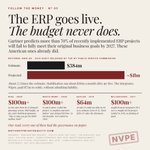
An ERP can turn “we need better systems” into a standing order for consultants.
Few business investments offer quite so many opportunities to pay again.
First the licences. Then implementation, data migration, integrations, customisation and training. Then the change requests for things everyone assumed were included.
By the time you discover how optimistic the original budget was, abandoning the project has become another expensive option.
So the board approves more money. Too much has been spent to stop. Apparently, spending even more will improve the situation.
The failures can be spectacular. But a system can also go live and quietly disappoint for years: expensive to maintain, difficult to change and surrounded by spreadsheets doing the work it was supposed to absorb.
The business case promised efficiency. The business acquires a permanent support requirement.
Successful implementations exist. “They all fail” would be nonsense. Equally, getting the software switched on is a remarkably generous definition of success for an investment of this size.
Business owners should demand a budget that includes running and changing the system, realistic allowances for disruption, and measurable operating improvements after launch.
Suppliers should explain their assumptions, exclusions and responsibility when delivery slips. Management should challenge every customisation that preserves a process nobody can justify.
ERP spending deserves the same commercial scrutiny as an acquisition.
“Too far in to stop” is how a project becomes a money pit with a steering committee.

1
1
81
The PE career path looks simple from the outside.
Analyst.
Associate.
VP.
Principal.
Partner.
Nice clean ladder.
Very reassuring to the kind of person who enjoys hierarchy, Excel, delayed gratification, and pretending not to be tired.
The recruiting deck version is elegant.
As an analyst, you learn the fundamentals.
As an associate, you own the model.
As a VP, you manage execution.
As a principal, you originate and lead.
As a partner, you drive the firm.
Lovely.
The lived version is less brochure-friendly.
The associate does most of the modelling, catches most of the errors, understands half the business better than the people presenting it, then watches someone senior get the credit because they asked one decent question in IC and used the phrase "risk-adjusted" with confidence.
The VP is managing up, down, sideways, and occasionally through walls. They keep the associate alive, keep the partner informed, keep management moving, keep the banker honest, and keep their own personality in a locked drawer until after signing.
The principal is in the most awkward theatre of all.
Auditioning for partnership while pretending not to audition.
Originating without appearing desperate.
Building internal support without looking political.
Developing a point of view while making sure it does not annoy someone with more carry and less patience.
The ladder looks linear.
The actual path is full of invisible gates.
Who trusts you.
Who sponsors you.
Who lets you lead.
Who gives you room to be wrong without turning it into folklore.
Who lets you sit in the real conversation after the meeting, where the decision actually gets made.
This is why so many talented investors leave.
They can handle the work.
They can handle the hours.
What wears people down is the gap between contribution and control.
You feed the machine for years, then realise the machine may not have a seat waiting for you.
The firms that keep talent do not just pay well.
They show people where power lives, then let them practise using it.
#ClaymorePartners #notveryprivateequity.com #PrivateEquity #ValueCreation
1
54
First he was told to drive change aggressively.
Then a new managing partner arrived and told him to support the CEO.
Then the third one told him to stay out of the way.
Same firm.
Same operating partner.
Same portfolio.
Three completely different mandates, none of them written down with enough clarity to survive a difficult Tuesday.
He outlasted all three.
That is the part people miss about the operating partner role.
The job is not only operations. It is politics with an EBITDA target.
You have to read who has power today, who thinks they will have power tomorrow, which partner is carrying a bad deal emotionally, which CEO has real support, and which value creation initiative is quietly doomed because nobody important wants it to work.
The first managing partner wanted movement.
Big initiatives.
Visible change.
Weekly pressure.
The second had a more delicate view of management relationships and wanted the OP to be supportive, collaborative, and less likely to make the CEO feel like the adult supervision had arrived.
The third cared about exits and did not want anything noisy near the asset unless it improved the data room.
A bad operating partner complains about mixed signals.
A surviving one translates them.
They pick battles.
They build allies in finance, sales, HR, and the boardroom.
They know when to push management and when to let the deal partner discover the problem as if it were his own idea, which is one of the oldest and most useful tricks in private equity.
They avoid becoming the official owner of every unsolved problem.
They also know that being right too early can be indistinguishable from being irritating.
The operating partner who survives leadership transitions is not necessarily the loudest.
Usually, they are the best reader of the room.
They know which fights create value and which fights merely create enemies with distribution rights.
That skill does not appear in most job descriptions.
It probably should.
#ClaymorePartners #notveryprivateequity.com #PrivateEquity #ValueCreation
2
83
Before increasing the marketing budget, try answering the bloody phone.
You can buy perfectly good demand and lose it inside the business. An unanswered call. A slow response. An enquiry passed between departments until the customer finds someone less complicated to buy from.
Then the next board meeting concludes that marketing needs to generate more leads.
A generous solution for everyone selling you leads.
Business owners should follow a customer all the way from the advert to the cash received. Include the awkward bits between departments, where everyone’s dashboard is green and the sale has quietly died.
Marketing can celebrate an enquiry. Sales can reject it as unqualified. Operations can have no capacity to fulfil it. Each explanation may be reasonable. The money has still gone.
That makes this a management problem shared across the business. The marketing director cannot personally answer every call, fix the CRM and make sales follow up.
Agree what counts as a qualified opportunity. Give someone responsibility for responding. Track conversion, margin and the reasons customers disappear.
Perfect attribution will remain difficult, particularly over longer buying cycles. That is no excuse for leaving the obvious leaks unattended.
Cutting marketing because you cannot measure it can destroy useful demand. Increasing it before fixing the handoffs can make the waste more expensive.
A bigger budget is a lovely way to postpone an operational conversation.

1
48
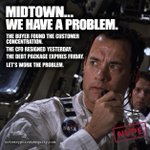
Nothing brings a private equity board together like a problem it has spent three years agreeing to address next quarter.
Then the sale process starts.
The buyer notices the customer concentration.
The CFO resigns.
The financing deadline develops a personality.
Suddenly everyone is available at 6am. Remarkable capacity in the diary when the carry is involved.
“Let’s work the problem.”
Absolutely. Though it would have been cheaper to work it before the buyer had exclusivity.
A big customer becomes a much bigger negotiating issue when the seller is running out of time. A departing CFO makes every unanswered financial question harder to resolve. An expiring debt package gives the whole discussion a rather expensive clock.
These risks compound. The buyer needs more time to get comfortable precisely when the seller has less time to give.
And every unresolved issue creates another opportunity to revisit price, demand protection or walk away.
This is why exit preparation belongs in the ownership plan from the beginning.
Build revenue outside the largest account while you still have years to do it. Develop relationships beyond the one executive who controls the renewal.
Give the finance team enough depth that a resignation doesn’t take the forecast, the data room and the explanation of working capital out of the building.
Understand financing deadlines and alternatives before the preferred route becomes the only route.
None of this makes a particularly thrilling board presentation. You may have to sacrifice twenty minutes currently allocated to discussing the font on the acquisition pipeline.
But it protects your ability to negotiate.
You can still sell a business with customer concentration. You can manage a leadership change. You can work through a financing problem.
Trying to explain all three under a deadline is how a seller starts paying for the buyer’s uncertainty.
By all means celebrate the team that rescues the deal at midnight.
Then check how many of the emergencies were in last year’s board minutes.
#PrivateEquity #ValueCreation #ClaymorePartners #notveryprivateequity

1
42
Your easiest cost saving might be on the company credit card, renewing quietly.
Someone bought a tool to solve a problem. Another department bought something similar. The free trial became an annual subscription. The person who understood why you needed it has since left.
Their account remains impressively committed to the business.
This happens quite easily. Each purchase is small enough to escape scrutiny. Collectively, they become a substantial operating expense with no obvious owner.
And the subscription bill understates the cost. People administer the tools, connect them, transfer information between them and attend meetings to explain why the information doesn’t match.
A surprising amount of work can be created by software purchased to reduce work.
For any business owner, a useful starting point is one list: every application, its full cost, renewal date, actual users and an accountable owner.
Then make the owner explain what earns its place.
Some specialist tools will justify every penny. Others will survive entirely because cancelling requires a conversation nobody particularly wants to have.
Review them before the renewal deadline. Recover unused seats. Challenge duplication. Check whether the shiny new feature is already included in something you own.
There is probably a perfectly good business case for much of your software.
It would be reassuring to find it before the next direct debit.

3
2
84
The associate leaves and everyone pretends to be surprised.
A firm spends $300K training someone for three years.
They learn the sectors.
They build the models.
They sit in management meetings.
They know which portco CFO is excellent, which one is mostly vibes, and which partner says "quick question" before ruining an entire weekend.
Then they leave.
Everyone sighs.
Someone says it is just the market.
Nobody asks the useful question.
Why did they stop seeing a future?
It is not always the hours. It is not always the money. PE has never been mistaken for a wellness retreat, and most associates realised that before signing up.
The bigger problem is the visibility gap.
Too many people spend years feeding the machine without getting close enough to the decisions that matter. They see the sausage being made, but never get told why the sausage is being made, who priced the sausage, or why the investment committee suddenly hates sausage despite loving sausage three weeks ago.
The old up-or-out model made more sense when there were fewer firms, more deals per partner, and a cleaner path from execution to judgement.
Now the maths is uglier.
More funds. More specialisation. More portfolio work. More internal politics. Fewer obvious seats at the table. Longer timelines. Associates and VPs get better at the job, then realise the next step may be a decade of waiting, networking, and pretending to be fascinated by another add-on acquisition at 11pm.
When they leave, the cost is not just recruiting.
Institutional knowledge leaves.
LP relationship context leaves.
Portco memory leaves.
Sector judgement leaves.
The firm loses the person who actually remembered why that customer cohort mattered, why the integration failed, and why management quietly hated the original incentive plan.
The firms that retain talent do something unfashionable.
They give real responsibility earlier.
They explain the path without lying.
They let younger investors see decisions, not just prepare materials for them.
If someone is good enough to underwrite the deal, they are probably good enough to understand how the firm works.
#ClaymorePartners #notveryprivateequity.com #PrivateEquity #ValueCreation
1
50
If I were building LP reporting that actually meant something.
I would start with a horrible admission.
Your LP report has 40 pages and your LP reads about 3 of them.
The other 37 are mostly there to prove the fund has been busy. Portfolio highlights. ESG updates. Market commentary. A few charts that look important enough to survive committee review. Some vanity metrics with just enough upward movement to imply progress, but not enough context to imply usefulness.
I've sat in allocation committee meetings where the report lands like a Victorian novel. Everyone nods respectfully. Nobody reads it front to back. The real conversation starts when someone flips straight to performance, distributions, and anything that smells like a problem.
That is the report.
The three things LPs actually stop on are painfully simple.
Net IRR versus benchmark.
DPI versus vintage peers.
Unexpected write-downs.
Everything else is supporting evidence, reputation management, or decorative plumbing.
The problem is that most GP reporting is built to defend the GP, not inform the LP. It explains activity. It explains progress. It explains why the EBITDA bridge starts at “management adjusted”, which is always a cracking place to begin if you enjoy fiction with spreadsheets.
LPs do not need more pages.
They need sharper signalling.
Show what changed. Show what is underperforming. Show what was promised at underwriting and what has survived contact with the portfolio company. Show where value creation is actually showing up in cash, not just in adjusted EBITDA, uplifted exit multiples, or that magical phrase “strategic investment”.
A useful LP report should help an allocator make a decision.
Recommit.
Pause.
Press harder.
Ask better questions.
If your reporting framework cannot do that, it is just quarterly theatre with a watermark.
Most firms are not short of data.
They are short of honesty, hierarchy, and the courage to put the three pages that matter at the front.
#ClaymorePartners #notveryprivateequity.com #PrivateEquity #ValueCreation
57