







If your laws need debugging like this, we can help.
felixringe.com/legal-exploit…


Legalese.com retweeted

Want to learn Alloy? Know Alloy but occasionally forget stuff? I wrote a full online reference! alloy.readthedocs.io/
You can read the announcement here: hillelwayne.com/post/alloydo…
🎤Full-time positions for CS / Complaw research engineers in Singapore
✅ healthcare & benefits
✅ opensource
✅ use-inspired research / no academic silo
✅ well-resourced research programme
✅ @legalese’s @mengwong @wabisabiyo and @SgSMUSOL
Details: docs.google.com/document/d/1…

Legalese.com retweeted

If anyone has been curious about what exactly #RulesAsCode is, here's an explainer. Featuring work by @nardwebster @mengwong @piacandrews @OpenFisca govinsider.asia/inclusive-go…
Legalese.com retweeted

"We’ve barely entered 2020 and it looks like The Purge has begun."
@TheTimeBlawg conclusion to a comprehensive round-up of the Atrium ballyhoo.
thetimeblawg.com/2020/01/20/…
Legalese.com retweeted
Some thoughts on "a core vocab"…
Andrew S. Tanenbaum once said: "The nice thing about standards is that there are so many of them to choose from."
Legalese.com retweeted

So I’m planning a tutorial on formal verification involving temporal, epistemic, and deontic/alethic modals based on this card game. amazon.com/Love-Letter-Cards…
If you want to follow along, pick it up soon—and play it with friends! Should be fun
@barnabemonnot
Legalese.com retweeted

Reports say @atrium letting go most of its legal staff. Silicon Valley-backed startup had vowed to 'revolutionize legal services' lawsitesblog.com/2020/01/rep…

Legalese.com retweeted
We encoded the relevant regulatory rules and business process state machine into TLA+. TLA+ automatically found a scenario which violated the rules. It is possible that in the real world many such violations occur routinely, unbeknownst to companies. We found the bug!
Legalese.com retweeted
Here’s an old deck from 2017 showing legal applications of formal verification generally. docs.google.com/presentation…

Legalese.com retweeted

I wrote about this last year here: thetimeblawg.com/2018/02/11/…
Legalese.com retweeted
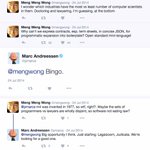
We have been summoned! Yes, your intuition (and @balajis’s) is spot on. The technical term for what you described is a Controlled Natural Language. Attempto (and AceRules) are a good example: en.wikipedia.org/wiki/Attemp…

Legalese.com retweeted
Now, what underlying logics inform the language? Just as languages like Lisp and Haskell trace their power to the lambda calculus λ, a language for law can exploit the properties of the modal calculus μ – which gives a way to talk about deontic, temporal, and epistemic relations.
Legalese.com retweeted
Deontics: I must, you may, he mustn’t… Basically RFC2119.
Temporals: …pay within 30 days of invoice… Basically LTL/CTL.
Epistemics: …and I know you know I know you got the invoice, because registered mail. Or blockchain.
These are the building blocks of computational law.
Legalese.com retweeted

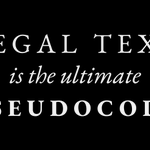
Corporate law firms are essentially coding in legalese, an obfuscated programming language without a REPL to simulate outcomes.
Moving all that to smart contracts over the next few decades will save billions and transform the way we create, fund, manage, and exit companies.
