Leif Azzopardi (@leifos) profile picture

Scientist, Educator & Academic. Researching and measuring how people use agents. Author of https://nitter.cf/t.co/JqaUzI59IG Opinions are my own.

Scotland
Joined March 2009
Photo by Leif Azzopardi (@leifos)Photo by Leif Azzopardi (@leifos)Photo by Leif Azzopardi (@leifos)Photo by Leif Azzopardi (@leifos)Photo by Leif Azzopardi (@leifos)Photo by Leif Azzopardi (@leifos)Photo by Leif Azzopardi (@leifos)Photo by Leif Azzopardi (@leifos)Photo by Leif Azzopardi (@leifos)
Digital Libraries need to support Information Farming! In my post lnkd.in/p/gmg3nfYC and JDCL Keynote slides 2026.jcdl.org/wp-content/upl… I describe how people are moving from foragers to farmers and how their agents need to be empowered rather than blocked!
1
4
194
What tasks should AI be trusted with, and when should humans remain involved? Designing those decision rights is one of the defining challenges of the AI era. Researchers at the MIT Center for Information Systems Research have developed a framework to help. Learn more: bit.ly/4zed20M
23
195
14
727
32,741
Leif Azzopardi retweeted
The AI Scientist v3 is out: The Agentic Scientist. GitHub: github.com/SakanaAI/AI-Scien… Blog: pub.sakana.ai/agentic-scient… arXiv: arxiv.org/abs/2610.18933 The Agentic Scientist is the 3rd iteration of our automated AI Scientist research system, and the shift this time is from “one agent writes a paper” to “a scaffold of parallel agents orchestrates the full research loop.” The system now orchestrates a pool of parallel workers that share memory and distilled conclusions. Crucially, it features Evidence Generation: isolated agents automatically run controlled baselines and ablations to prove why an idea actually works. It works as a co-scientist. We used a development version as a co-scientist to explore biologically plausible learning rules. The agent handled the empirical heavy lifting, proposing mechanisms and running experiments. We stayed in the loop to steer direction, verify results, and moderate claims. That feels like the right division of labor for where the technology actually is. This resulted in a new biologically plausible learning algorithm, and the resulting paper was accepted at ALIFE 2026 as an oral presentation. We are also releasing AutoIllustrate. It generates editable draw.io vector figures instead of uneditable, hallucinated raster images. Real scientists need vectors, not pixels. I am an SVG junkie ;) Incredible work by Robert Lange, Luca Grillotti, Yutaro Yamada, Rujikorn Charakorn, and the team!
The Agentic Scientist: Orchestrating Coding Agents for Automated Scientific (Co-)Discovery Blog: pub.sakana.ai/agentic-scient… GitHub: github.com/SakanaAI/AI-Scien… arXiv: arxiv.org/abs/2610.18933 Since 2024, we’ve used The AI Scientist as a way to test how far AI alone can take scientific research, from v1 to v2 to the paper published in Nature earlier this year. The Agentic Scientist is the next step in that line of work, built for the era of coding agents. Coding agents such as Codex and Claude Code now carry out long software tasks on their own. Handing them a research problem, however, tends to produce a strong hyperparameter optimizer rather than a scientist: scores go up, but ideas stay narrow, and the reasons for the gain are rarely examined. The Agentic Scientist makes the research loop explicit. It wraps off-the-shelf coding agents in a scaffold that controls what they see, what they write, how they are evaluated, and how results are handed to the next stage. Parallel workers test hypotheses against rubrics defined before any experiment runs, share successes and failures through a common memory, and then ablate the winning program to generate evidence. We used an early version of the system to study Error Diffusion, a biologically motivated alternative to backpropagation. Our researchers set the question and the rubric, chose directions at each stage, and verified the results, references, and claims before submission. The resulting paper was accepted as an oral presentation at ALIFE 2026. In autonomous runs, the system also raised Doc-to-LoRA retrieval accuracy from 52% to 98% on multi-needle tasks and designed a learned evolution strategy that improves over its CMA-ES reference on unseen tasks. Alongside it we release AutoIllustrate, a pipeline for scientific figures that keeps an editable draw.io file as the source of truth, so every diagram can be corrected by hand. Humans define the question and the standards of evidence; agents expand the experiments researchers can run. We call this Co-Discovery, and we are releasing both systems as open source for the community to build on.
95
286
18
1,850
86,975
Leif Azzopardi retweeted
Anthropic is offering a 145k salary for a personal assistant in London. Responsibilities include: "Scheduling and managing calendars for leader(s) and their organization" "Building and maintaining organizational systems for tracking and managing inbound requests" "Managing the leader's inbox and communications with precise attention to detail" "Handling travel logistics" Somebody should really build some sort of tech tool that can handle this stuff autonomously.
241
639
196
6,723
491,362
Really enjoyed presenting my keynote on Information Farming at #JCDL2026 and having a lively discussion on the future of digital libraries with Nick, Cheng and attendees.
3
106
Cheng asks a good question, what is an Information Retrieval system (now)? #jcdl2026 @ACMSIGIR
95
Cheng stands on the shoulders of GIANTs #jcdl2026
99
Cheng describes some of the ways gen AI is impacting DLs. The value capture displacement is particularly worrying. What happens when AI eats all the DL content?? #jcdl2026
1
1
82
Prof Zhai kicks off his keynote on the future of digital libraries @jcdl2026 wondering how gen ai is impacting dls.
66
JDCL 2027 is kicking off in Dallas with Dr Haihua Chen introducing the program with over 150 papers and more than 200 attendees.
4
175
Leif Azzopardi retweeted
Three papers from our lab at #NeurIPS2026, spanning LLM reasoning faithfulness, belief formation, and interpretability of MoEs: ⭐ Faithfulness Metrics Don't Measure Faithfulness: A Meta-Evaluation with Ground Truth arxiv.org/abs/2605.25052 We introduce a benchmark for CoT faithfulness metrics, and find that existing metrics are either close to random or prohibitively expensive to run @GurYoav @anmarasovic ⭐ Indications of Belief-Guided Agency and Meta-Cognitive Monitoring in Large Language Models arxiv.org/abs/2602.02467 An interdisciplinary collaboration applying the HOT-3 indicator of consciousness to LLMs using interpretability tools, revealing surprising patterns in belief formation and action selection in LLMs @noam_steinmetz @GoldsteinYAriel @Liad_Mudrik ⭐ Routers Learn the Geometry of Their Experts: Geometric Coupling in Sparse Mixture-of-Experts arxiv.org/abs/2605.12476 We find a geometric coupling between routers and their corresponding experts in MoEs, explaining how routers form assignments that support an effective division of labor @sageaarc @noyahochwald
4
16
131
5,360
Leif Azzopardi retweeted
A PhD that ends with a product instead of a paper nobody reads. More countries should try this.
🚨 China is now allowing engineering students to invent a new product instead of writing a 100-page dissertation to earn a PhD. 👏
285
10,647
144
60,878
1,179,845
Leif Azzopardi retweeted
My job is to deploy AI, not fix the data foundation. #technology #ai #workplace
6
5
1
26
4,323
Leif Azzopardi retweeted
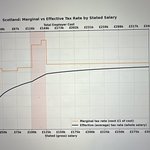
Scotland raised its top income tax rate to 48% to make the rich pay more. New HMRC data suggests the result may have been the opposite: Scotland collected about £22m less. We can't be sure, but Scotland may have fallen over the Laffer curve. 🧵:
291
988
155
4,960
793,429
I agree with Steven E. Landsburg that “Afew lines of reasoning can change the way we see the world” unfortunately we don’t seem to teach kids how to reason.
107
This is such a brilliant intervention and cat video youtube.com/shorts/a_LFRmtqV… who was the genius that put cats in prisons.
1
115
It’s very concerning that the government wants to control what people see (even more) backed by the biggest player in the market (the BBC) so they can get more eye balls watching state sponsored media. ( is this the Uk or North Korea?) youtu.be/YXhMNPTUo8c
77
“Most decision making is bad. So make fewer decisions.’ - youtu.be/RP9uwr_WrQY
54
“For every complex problem, there is an answer that is clear, simple, and wrong." This quote attributed to H.L. Mencken feels true but maybe I am simplifying the problem.
1
441
Leif Azzopardi retweeted
Many suspect AI is to blame for growing unemployment among graduates in America. To find out whether this is the case, we compared labour-market outcomes before and after the arrival of large language models. Register for free to discover our findings econ.st/49CWDbS
18
157
20
426
84,427