

San Francisco
Joined September 2021
- Tweets35
- Following303
- Followers163
- Likes2.9K



Pinned Tweet
This project was a lot of fun! There is so much structure in these models, waiting to be understood and used.
Many thanks to my amazing collaborators @cutterdawes, @AlxSp_, @kamesh_ai, and to @TomFigliolia, @BerenMillidge, and @ZyphraAI for their support.
ZHA is growing up!

We’ve scaled @ZyphraAI’s subquadratic attention method - ZHA - to leading open source multi-trillion parameter models across Nemotron, Qwen, Mimo, and GPT-OSS!
ZHA preserves reasoning and agentic performance while delivering 9-60x long-context speedups at 10M tokens.

We’ve received a lot of attention and questions about our ZHA release yesterday and how this compares to other sparse attention methods. Some thoughts below. 🧵

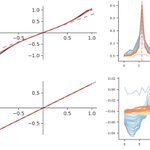
We’re excited to share our paper analyzing how data drives the emergence of localized receptive fields in neural networks! w/ @SaxeLab @ermgrant
Come see our #NeurIPS2024 spotlight poster today at 4:30–7:30 in the East Hall!
Paper: openreview.net/forum?id=nw9J…
