


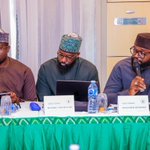
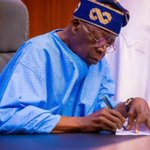


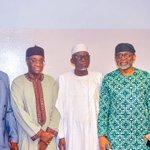
Today, I presented Mr President's communication to the Speaker, Rt. Hon. Abbas Tajudeen, who read it at plenary for the consideration of the House of Representatives.
The communication concerns the “Transfer of Convicted Offenders (Enactment and Enforcement) (Amendment) Bill, 2026” which seeks to amend the Principal Act, Cap T16, Laws of the Federation of Nigeria, 2004.
It extends the Act beyond the Commonwealth scheme to cover any agreement between Nigeria and a non-Commonwealth country for the transfer of convicted offenders and gives such arrangements the full force of law in Nigeria. The President may apply the Act to a partner country by order published in the Federal Gazette, based on the principle of reciprocity, and may vary or revoke the order as the agreement changes or ends.
The Bill requires all documents supporting a transfer application to be certified. It obliges countries to cooperate in the transit of offenders and requires the transferring country to give advance notice to every country through which the offender will pass. It makes the Minister of Foreign Affairs the appropriate authority to implement the Act through diplomatic channels and allows the President to designate an official channel of communication.
Summarily, the Bill provides a broader legal framework for implementing prisoner transfer arrangements between Nigeria and any other country.
We continue to appreciate the lawmakers for their usual support and cordial working relationship.


Throwback: My appearance on @benmurraybruce’s SilverbirdTV 16 years ago, showcasing the grade point calculating simulator I built.

PRESIDENTIAL WORKING GROUP SUBMITS DRAFT NATIONAL POLICING BILL, 2026 AND 29 CONSEQUENTIAL AMENDMENT BILLS FOR LEGISLATIVE DRAFTING REVIEW
The Presidential Working Group on the National Policing Bill has completed the drafting stage of its assignment and has formally submitted the draft National Policing Bill (2026), together with twenty-nine (29) consequential amendment bills, to the Federal Ministry of Justice for legislative drafting review and validation.
The submission was made on 19th October, 2026, to the Honourable Attorney General of the Federation and Minister of Justice, in line with the Working Group’s work plan. The Ministry’s review will ensure that the bills conform to legislative drafting standards and conventions, and that they do not conflict with existing laws.
The Ministry of Justice is expected to return the validated draft bills to the Working Group on or before Friday, 30th October 2026. The Working Group will then give the validated bills final consideration before presenting them to Mr President, thereby concluding its mandate.
The proposed National Policing Bill seeks to establish the constitutional and legislative framework for a dual policing structure, comprising a Federal Police Service and State Police Services.
The Working Group remains committed to a rigorous and transparent process that will deliver a comprehensive legislative proposal for consideration by the President and subsequent transmission to the National Assembly.
The work on preparing the National Policing Bill is proceeding alongside the ongoing consideration of the Constitution of the Federal Republic of Nigeria, 1999 (Sixth Alteration) Bill, 2026 by the States Houses of Assembly, which must be completed before the Bill is transmitted to the National Assembly.
Femi Gbajabiamila, CFR
Chief of Staff to the President
Chairman, Presidential Working Group on the National Policing Bill
October 20, 2026


I joined the Presidential Working Group on the National Policing Bill today at the State House, Abuja for a steering committee meeting chaired by the Chief of Staff to the President, Rt. Hon. @femigbaja .
The National Policing Bill is now about 90 percent ready and is expected to be transmitted to the National Assembly within the next few weeks. The Presidential Working Group has carefully examined every part of the framework to ensure that it delivers a state and national policing structure that is effective, accountable and responsive to the security needs of every community in Nigeria.
This bill marks another major reform under President Bola Ahmed Tinubu, GCFR, following landmark initiatives such as the Tax Reform, the interest-free Student Loan scheme, among others. Like those reforms, it takes on a long-standing national challenge with courage and a clear vision.
In my role, I remain committed to working closely with the leadership and members of the House of Representatives to ensure smooth legislative consideration and timely passage once the bill is transmitted.
I commend the Secretariat of the Working Group, led by the Senior Special Assistant to the President on Planning and Research and Secretary of the Committee, Mr. Nnadubem Moghalu for the extensive and diligent work done so far. Their dedication has been central to the progress recorded and I look forward to completing this important national assignment together.
Also in attendance were the Chairman of the Nigeria Governors' Forum, Governor AbdulRazak AbdulRahman; Governor Dapo Abiodun and Governor Uba Sani; the Inspector-General of Police, Tunji Disu; the Solicitor-General of the Federation, Mrs. Beatrice Jedy-Agba; Justice Abdullahi Liman (rtd); Professor Olu Ogunsakin; Dr. Charles Omole and representatives of the National Security Adviser and the Nigerian Bar Association.


President Tinubu Signs Appropriation (Amendment) (No.4) Bill, 2025, Extends Implementation to December 31, 2026
President Bola Ahmed Tinubu has signed into law the Appropriation (Amendment) (No.4) Bill, 2025, extending the implementation period of the 2025 budget from September 30, 2026 to December 31, 2026.
The assent followed the amendment's swift passage by both the Senate and the House of Representatives on Tuesday, September 29, 2026.
The extension gives Ministries, Departments and Agencies more time to complete ongoing capital projects. It ensures that funds already appropriated are fully put to work for Nigerians, without disrupting critical programmes.
The President commended the leadership and members of the National Assembly for their prompt consideration of the bill, a further sign of the cooperation between the Executive and the Legislature in the service of the nation.
Bayo Onanuga
Special Adviser to the President,
(Information and Strategy)
September 30, 2026

CHANGE OF BATON
Two months ago, I assumed office as Special Adviser to the President on National Assembly Matters (House of Representatives). I am grateful to His Excellency, President Bola Ahmed Tinubu @officialABAT ,GCFR for the confidence reposed in me.
My appreciation goes to the Speaker of Nigeria's House of Representatives, Rt. Hon. @Speaker_Abbas Tajudeen, Ph.D, GCON, the Principal Officers, and all Honourable Members of @NGRHouse with whom I share a long history of service. I owe special thanks to the Chief of Staff to the President and former Speaker of Nigeria's House of Representatives, Rt. Hon. Femi Gbajabiamila @femigbaja for his mentorship and guidance over the years.
I remain committed to deepening legislative-executive cooperation for the benefit of Nigerians.


NATIONAL ASSEMBLY TRANSMITS STATE POLICE BILL TO STATE ASSEMBLIES; TO RESPOND IN 30 DAYS
The National Assembly has transmitted the Constitution Alteration Bill seeking establishment of State Police Services to the 36 State Houses of Assembly for consideration and approval.
Clerk to the National Assembly, Kamoru Ogunlana, says the Bill was transmitted to the State Assemblies on Wednesday, September 16, 2026 with expectation for expeditious consideration of the bill within one month.
Although the Constitution does not specify a timeframe for the State Assemblies to respond, the National Assembly expects them to communicate their resolutions within 30 days of receiving the bill.
The Clerk, however, clarified that the 30-day period is only an administrative timeframe and not a constitutional deadline.
The National Assembly says it recognises the constitutional responsibility and independence of the State Houses of Assembly in considering the proposed amendments.
Under constitutional provisions, a bill seeking to alter the Constitution must secure the approval of at least two-thirds of the 36 State Houses of Assembly before the process can be concluded.
The State Police Bill was passed weeks earlier by both chambers of parliament, as a crucial step towards tackling security challenges in the country.
The National Assembly says it will proceed with the next steps once the resolutions of the State Assemblies are received, while reaffirming commitment to due process, institutional cooperation and strict compliance with the Constitution.


Cheers to the Vice President of Nigeria, His Excellency, Senator Kashim Shettima @officialSKSM @ 60.
Wishing you continued good health, wisdom, strength, and success as you serve Nigeria.
May the year ahead bring greater accomplishments.
Happy Birthday Sir 🎉

The Legislative Mentorship Initiative - LMI officially launched the 2026 LMI Fellowship Call for Applications.
The 2026 LMI Fellowship Programme is open to young Nigerians passionate about leadership, public service, and legislative development.
Applications open: 13 August 2026
Application deadline: 3 September 2026
If you are ready to learn, lead, and serve, this is your opportunity to take the next step in your leadership journey.
Head to lmi.ng and start your application today!
#LMIFellowship2026 #LMI

Yesterday, I participated in a high-level engagement at the Presidential Villa with the Nigerian Association of Resident Doctors (NARD) to address several critical issues affecting medical doctors in Nigeria.
The meeting was chaired by the Chief of Staff to the President, Rt. Hon. Femi Gbajabiamila, and attended by the Coordinating Minister of Health and Social Welfare, Prof. Muhammad Ali Pate; the Minister of Labour and Employment, Dr. Muhammadu Dingyadi; the Director-General of the Budget Office of the Federation, Dr. Tanimu Yakubu; and other senior government officials.
Our discussions focused on critical issues affecting the healthcare sector, including workplace safety, the welfare of doctors, salaries, promotion arrears and working conditions. We also agreed on timelines for the payment of outstanding salaries and promotion arrears, including delayed salaries for house officers and junior doctors undergoing their mandatory internship.
One of the most significant outcomes of the meeting was the Federal Government’s resolve to address the disturbing rise in attacks on doctors and other healthcare workers. With reports showing that 31 doctors and more than 20 other health workers have been assaulted in the past 10 months, we agreed that stronger action is needed to protect those who dedicate their lives to caring for Nigerians.
The Presidency is considering legislation that would make assaults on healthcare workers an aggravated offence with stricter sanctions. In the interim, the Federal Ministry of Health and Social Welfare has issued a nationwide alert, while hospitals and state governments have been encouraged to strengthen security measures to safeguard medical personnel.
Our healthcare professionals deserve to work in a safe and supportive environment. I remain committed to advancing policies and legislative initiatives that strengthen our health system, protect frontline workers and improve healthcare delivery for all Nigerians.

Olanrewaju Smart retweeted

thenationonlineng.net/tinubu…
Appointment well deserved. Congratulations @ler_smart, go make us proud, again, bruv 👏👏

🇺🇸x 🇳🇬
Nigeria’s National Security Adviser, Nuhu Ribadu recently met with JD Vance, Vice-President of the United States; and Marco Rubio, US secretary of state over counterterrorism cooperation in West Africa.
The meeting reinforced the partnership between Nigeria and the US in combating terrorism across the region.
Nigeria’s President, Bola Tinubu appreciates the partnership and continued support of the US government under President Donald Trump.
Nigeria stands as a frontline U.S. partner against ISIS, Boko Haram, and rising terror threats across the Sahel.


Yesterday, I attended a Service of Songs for the late Dr. Chamberlain Dunkwu, Deputy Chief of Staff (Legislative) to Nigeria's Speaker at St. Matthew Anglican Church in Abuja. The service was a moment for reflection and appreciation of his enduring legacy.
He was a significant part of my time as Chief of Staff in the House of Representatives and will be missed by many of us.
May his soul rest in peace!


A few weeks ago, I had the privilege of joining Governor Babajide Sanwo-Olu at the John F. Kennedy Jr. Forum at the Harvard Kennedy School for a conversation on the future of African cities. As a recent Harvard graduate, it marked the second time I witnessed Governor Sanwo-Olu speak at Harvard, the first being when he served as a guest lecturer in my Entrepreneurship and Africa Rising class at Harvard Business School taught by Professor Hakeem Belo-Osagie.
Hosted at the JFK forum by Prof. Zoe Marks, joined by Mayor of Monrovia, Liberia; Gov. Sanwoolu's presentation made a compelling case for Lagos as the face of Africa’s urban future. The state generated $821.9 million in internal revenue last year, accounting for roughly 35 percent of Nigeria’s total, and attracted $2.73 billion in capital inflows in just the third quarter of 2025 alone.
Lagos is now home to more than 2,000 startups and has been recognized as the world’s fastest-growing tech ecosystem.
Through the Lagos THEMES+ agenda spanning across transportation, technology, tourism, security, and social inclusion and infrastructure like the Blue and Red rail lines already reshaping mobility, the Governor made clear that Lagos is not simply managing growth; it is deliberately directing it, and its story is inseparable from Africa’s broader rise.


Yesterday I attended the 15th @MIT 's Sloan African Innovate Conference 2026 held at Wong Auditorium of MIT Sloan School, Cambridge, Massachusetts.
The energy in the room was electric. From Funke Opeke’s inspiring reflections on building Africa’s internet backbone to insights from the former Central Bank Governor of Kenya, Patrick Njoroge on fintech regulation in an era of AI across the continent.
It was equally great to hear Seyi Ebenezer, CEO & Founder of Payaza share perspectives on Financing African AI at Scale exploring how smart capital, policy innovation, and collaboration can unlock the continent’s next big leap.
Grateful to the Chair of the MIT Africa Business Conference, Bernard O'bien and the entire organising team for putting together a great intellectual gathering.


Today, I will join a distinguished panel of judges at Afrivatech's 2026 iResearch Fellowship Program to evaluate eight outstanding finalists. The projects focus on Digital Health, AI, Decentralized Infrastructure, Data Governance, Education and Community Outreach.


Prof. Goldsmith of @Kennedy_School @BHcityleaders . introduces ‘StatGPT’ as a new approach to performance management, which integrates advanced artificial intelligence and data technologies with traditional "stat" models to enhance capabilities and democratize insights.
datasmart.hks.harvard.edu/si…
Suitable for your reading pleasure!
Harvard Kennedy School PPLC Conference 2025 in USA 🇺🇸 (Fully Funded)
👉 Apply now: hks.harvard.edu/educational-…
Conference Summary
---------------------------
◘ Host Country: USA
◘ Location: Harvard Kennedy School @Kennedy_School
◘ Duration: 4 Days
◘ Program Dates: 30th October to 2nd November 2025
◘ Benefits: Fully Funded
◘ Deadline: 7 July 2025

Congratulations to an outstanding and insightful Leader, @femigbaja @ 63
This is another opportunity to recognize your significant achievements and the positive difference you continue to make.
Your dedication to nation-building is evident, and you have truly earned your reputation.
As you persist in your efforts to drive the bold vision of President Bola Tinubu’s administration, I pray that God grants you more wisdom and guidance to deliver a greater Nigeria.
Happy Birthday to you Sir!
Cheers 🎉🎂❤️🏅🎉🎈

HKS Memoir (59): Systems Thinking & HIV Drugs Supply Chain Disruptions in Nigeria
In one of the most fulfilling experiences of my Harvard journey, I had the privilege of co-leading a student-taught class under Professor Mark Fagan’s course, MLD 605: Systems Thinking and Supply Chain Management. Our group, comprising of Emma Beal, Emanuel Gil, Lorena Mejia-Rodriguez , Paulo Cardoso , and I chose to explore the ripple effects of U.S. aid cuts on Nigeria’s HIV/AIDS drug supply chain. Without prompting or persuasion, my teammates supported the choice of a Nigerian case study, a gesture I will always hold dear. We faced our student-led teaching with a common purpose.
We spent weeks researching how the supply chain for anti-retroviral (ARV) drugs in Nigeria, which supports millions of people living with HIV, is heavily dependent on international funding, especially from PEPFAR and the Global Fund. When that funding was cut, the fragility of the system quickly showed — clinics shut down, shipments stalled, health workers laid off, and 1.5million lives placed at risk. We analyzed this using the systems thinking lens taught in class, building a causal loop diagram, Vensim model, and mapping out potential structural solutions like local manufacturing and inventory buffering. Alternative means of sourcing the drugs from other existing sources became imperative.
What made this even more impactful was the chance to sit down with Nigeria’s Coordinating Minister of Health and Professor of public health leadership at Harvard Chan School of Public Health, Professor Muhammad Ali Pate, who was at Harvard at the time. Lorena Mejia-Rodriguez and I interviewed him to understand how the Nigerian government was responding to the crisis. He spoke of a $200 million emergency allocation and a bold effort to empower local pharmaceutical producers, a move toward long-term resilience and self-sufficiency. That conversation became part of our teaching and elevated the credibility of our class session.
Our final presentation was not just a lecture that formed part of our final grade in the course, it was a simulation of a broken supply chain, a wake-up call about the consequences of aid dependency, and a call for more resilient global health systems. Standing in front of my peers, teaching them about a challenge that affects my country so deeply, reminded me why I came to @Harvard University to learn, connect, and lead conversations that matter. Grateful to our team, our classmates, Prof. Muhammed Ali Pate, MLD 605 TAs - Damien Bérubé and Joy Ikekhua and most importantly Prof. Mark Fagan for making this possible.


