

Geonosis - Earth as a Living Archive Méthodê Glyph Beyond Phonetics - Ancient scripts as executional Picterpretation - Relearning Visual Knowledge Picterpreter
Melbourne
Joined July 2008
- Tweets580
- Following2.3K
- Followers697
- Likes134




Fractal Geognosis is Consciousness Picterpreted: Pareidolia as the Universe's Native Tongue" - a free, downloadable book. books.brightlearn.ai/Fractal…

21
Eternal Echoes: The Akashic Tapestry of Reincarnation, Forgotten Civilizations, and the Soul's Journey. free book books.brightlearn.ai/Eternal…

21
FROM "IF" TO "HOW" The Standing Research Position of the Geonosis Project: Operating and Investigative Proposition @ResearchGate: researchgate.net/publication…

13
How to Read the Ancient Archive: The Inward Expansion of Ontology @ResearchGate: researchgate.net/publication…

22
Giza Pyramid ConstructionField Before Form: Responsive Stone, Consciousness Imprint and the Lost Technology of Monumental Building @ResearchGate: researchgate.net/publication…

19
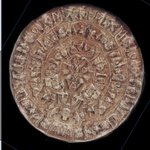
THE PHAISTOS DISC AS A MACHINE
FOR PICTOGRAPHIC GRAMMAR @ResearchGate: researchgate.net/publication…

32
Dog Capability Specification and Chassis Selection with Field Application Tuning. The Mayan Dresden Codex demonstrates the Dog as a Customised Vigilant Guardian. @ResearchGate: researchgate.net/publication…

25
A Geonosis Landscape Reading
of Mount Kailash
Moral reflection and the unwritten future @ResearchGate: researchgate.net/publication…

29
Vigilant Guardian Relational authority, delegated attention and recovery in the dog-human system
September 2026
DOI: 10.13140/RG.2.2.24004.59525
Sean DiamondSean Diamond @ResearchGate: researchgate.net/publication…

22
Maya Vessel K1743 READING THE DOG AS THE VIGILANT GUARDIAN ADDENDUM I A Cold Image-First Reading of Maya Vessel K1743 Cross-corpus recurrence following the Dresden Codex fifteen-box study @ResearchGate: researchgate.net/publication…
31
FROM BEER TO PROCESS A Court of Provenance Audit of Beer, Wine, Consumption, and Civilizational Vignettes in the Egyptian Archive. First Mechanistic Case Study Following FROM "IF" TO "HOW" @ResearchGate: researchgate.net/publication…
18
The Dog Codex. Dresden Codex of the Mayan civilization gives a coherent progression of Dog trait selection, production, including implementation, and maintenance management - Field Before Form. @ResearchGate: researchgate.net/publication…
21
FROM "IF" TO "HOW" The Standing Research Position of the Geonosis Project Standing proposition @ResearchGate: researchgate.net/publication…

23
Persistent Warranted State AI. Architecture for Long-Horizon Research Return, Relation and Field Architecture for Our General Intelligence (OGI) @ResearchGate: researchgate.net/publication…

16
Who Let the Trojan Horse In? amazon.com.au/dp/B0HF3WY3WQ
What if civilisation’s greatest vulnerability was not conquest, but consent?
Because the real question is not what was hidden inside the Trojan Horse.
It is: Who opened the gate?
A provocative archaeological techno-thriller about forbidden knowledge, AI, institutional power, and the dangerous difference between force and consent.

18
Everlasting Stone. The Civilisational Grammar of Matter, Authority, and Coherence. Geonosis Working Paper @ResearchGate: researchgate.net/publication…

19
A new book:
# **BUTTERSTONE UNDER THE TABERNACLE**
### *A Recipe for Invention*
### **BACK! TO THE STONE AGE FUTURE**
It began with one troublesome piece of bluestone in a Melbourne street. At Julians house.
Pratten said; "Bluestone, Chipped Face"
I think: "I can't believe it's not butter."
The surface did not look hammered into shape after the stone had hardened. It looked pressed, swept and formed while the material was still responsive.
I propose: "Butterstone, born in situ"
Not liquid.
Not mud.
More like butter.
That small observation opened an ancient machine.
Across Egypt, Maya imagery, Malta, Petra, Nazca, Saqsayhuamán and the Earth itself, the same production grammar kept returning: separated material streams, moulds, racks, pipes, resonant chambers, operators and buildings born at their final address.
Then Petra turned upside down.
The monuments stopped commemorating civilisation.
They began making it.
This book asks whether the Stone Age was not the beginning of human technical competence, but the managed aftermath of an older stone civilisation whose machinery had already been lost.
It is part construction investigation, part civilisational autopsy, part recipe book for invention.
There are pyramids, cranes, Tabernacles, ancient cooking shows, corporate chairmen, giant mountain machines, a concreter called Nick, a dog called Donny, my wife Loretta, a catastrophic Wave and enough failed masonry to supply Pharaoh’s entire patio division.
But the book does not end with a grand claim.
It ends with one small experimental stone sitting on a rack.
Every ingredient known.
Every step recorded.
Every crack visible.
No crown.
No sacred premix.
No advertisement larger than the material return.
The ancient world does not need us to worship it.
It needs us to read what it built, recover the relationships beneath the ruins and begin again honestly.
The mountain has waited thousands of years.
It can wait until morning.
📷📷📷
#ButterstoneUnderTheTabernacle #BackToTheStoneAgeFuture #Geonosis #AncientTechnology #StoneCivilisation #NewBook #SeanDiamond
🤖 Made with AI

65