

Strike Before the Market Corrects. Find arbitrage, +EV, and sharp-money opportunities with real-time odds (2-3s latency) Private Beta Mode
Joined May 2026
- Tweets563
- Following48
- Followers210
- Likes226




🚨 Inside a LionStrike Sharp Origins Signal
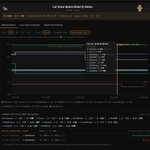
🏀 Cal State Bakersfield @ Idaho
Signal Received: 10:44 AM EST
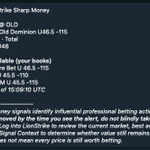
Originated Side: Idaho -1.5 (+100)
Pinnacle at Signal: Idaho -1.5 (-118)
At the time of the signal, sportsbooks were offering significantly different prices on the same spread.
📊 What our historical data shows:
• Hard Rock: -1.5 (+100)
• BetRivers: -1.5 (-104)
• Circa: -1.5 (-110)
• DraftKings: -1.5 (-112)
• Pinnacle: -2 (-106)
Hard Rock only offered the exact originated number AND price: Idaho -1.5 (+100).
Access to numerous sportsbook accounts matters.
You can identify the right side of the market and still sacrifice value simply because you don't have access to the sportsbook offering the best number and price.
Finding the signal is one thing. Being able to execute it at the right price is another.
LionStrike doesn't just surface signals. We show where the market stands, how sportsbooks differ, and how prices react afterward.

1
1
76
🚨 LionStrike Sharp Origins: Kentucky +5.5 (-110)
Signal received November 19 at 11:02 AM ET.
What was available at the exact signal time?
• Pinnacle: +5.5 (-106)
• Circa: +5.5 (-110)
• BookMaker: +5 (-109)
• BetMGM: +5.5 (-108)
• BetRivers: +5 (-115)
• Caesars: +5.5 (-110)
• DraftKings: +5.5 (-112)
• FanDuel: +5.5 (-110)
• Hard Rock: +4.5 (-110)
6 of 9 sportsbooks displayed Kentucky +5.5 at signal time.
What happened afterward?
• BookMaker reacted within 79 seconds, moving its spread to +4.5 within 5 minutes.
• Pinnacle moved from +5.5 (-106) to +4.5 (-106).
• DraftKings followed Pinnacle's spread move approximately 36 seconds later.
• BetMGM moved from +5.5 to +5 approximately 93 seconds after Pinnacle.
4 of 9 sportsbooks moved toward Kentucky. The remaining five were unchanged in the latest snapshot.
The original +5.5 was a full point better than the latest Pinnacle and DraftKings spreads.
This is what LionStrike Sharp Origins provides:
✅ Track real time availability
✅ Timestamped signals
✅ Sportsbook availability at signal time
✅ Historical line movement
✅ Measurable market reactions
Market movement does not guarantee a winning wager.

1
294
Is tracking steam on player props flawed?
Not necessarily, but applying traditional steam detection logic to player props creates fundamental problems.
Traditional steam detection has historically been most established in higher-liquidity markets like sides and totals, where respected market-making sportsbooks such as Pinnacle, Circa, and BookMaker take meaningful action and influence the broader market.
That framework doesn't necessarily translate to player props.
Player props operate in lower-liquidity markets with smaller limits, fragmented sportsbook coverage, and more frequent pricing adjustments.
A relatively small wager can move a prop line. However, the magnitude of that movement doesn't necessarily establish the quality of the information behind it.
What appears to be sharp action could simply be a sportsbook managing exposure, responding to new information, or reacting to another book's adjustment.
Many sportsbooks incorporate competitor pricing and shared market data into their trading processes, meaning synchronized movement doesn't necessarily represent independent informed betting activity.
This is where correlation gets mistaken for causation.
A traditional rule such as "2 of 3 sharp sportsbooks moved within X minutes" transfers poorly when those sportsbooks don't consistently offer the same props, operate with comparable liquidity, or demonstrate equal pricing efficiency across different markets.
The problem isn't necessarily the number of confirming sportsbooks. It's whether those sportsbooks are informative for that specific player-prop market.
The more rigorous approach is to identify which sportsbooks consistently lead specific prop markets, measure how quickly others follow, and determine whether favorable numbers remain available.
Then validate those observations against historical closing-line value, out-of-sample testing, actual execution availability, and realized results.
Even consistently positive CLV doesn't automatically establish profitability if the identified prices cannot be executed.
It's also important to distinguish market leadership from informed betting activity. A sportsbook moving first doesn't necessarily mean it accepted a sharp wager. It could simply be responding to new information or updating its internal pricing model.
A player prop moving is an observation. Attributing that movement to sharp money is a hypothesis.
Without statistical validation, you're not demonstrating that these movements represent informed betting activity.
You're identifying correlated price movements and assigning them meaning without establishing the underlying cause.
1
210
Users of sports betting analytics platforms are often asked to make statistical decisions without the underlying data needed to validate them.
A platform may allow users to assign their own weights to sportsbooks when calculating fair market probabilities.
A user who believes Sportsbook A is sharper than Sportsbook B might assign it a 40% weight versus 10% for Sportsbook B.
But what supports that decision?
Have they analyzed large volumes of historical odds, measured predictive accuracy against closing prices, and accounted for differences across sports, market types, liquidity, and time to event?
For the vast majority of users, the answer is no.
They subscribe to these platforms precisely because they are relying on the company to conduct that research, validate the underlying assumptions, establish reliable pricing methodologies, and deliver statistically sound market intelligence.
They should not be expected to independently determine which sportsbooks are more efficient or how much influence each should have on a fair probability calculation.
That is the responsibility of the data provider.
The problem arises when an untested belief about which books are sharper is treated as a validated input.
That choice directly shapes the calculated fair probability and every +EV opportunity the platform identifies. If the underlying weights are incorrect, the system can systematically misprice markets and generate false positives.
There is a clear difference between customizing user preferences and customizing the underlying statistical methodology.
Users should absolutely be able to select their sportsbooks, markets, filters, and alerts.
But sportsbook weighting, probability estimation, and pricing efficiency adjustments should be grounded in historical data and validated through testing.
A pricing model should reflect what the data demonstrates, not what the user believes to be true.
The competitive advantage of a sports betting intelligence company should come from the quality of its underlying pricing intelligence, not simply how many parameters it allows users to adjust.
If customers are paying for market intelligence, the burden of validating that intelligence should fall on the company providing it, not the customer purchasing it.
The goal is not to eliminate customization. It is to ensure customization does not undermine the statistical integrity of the product.
1
129
We look forward to watching Acho’s unique advantage play out in real time!

Story time: I bet $3,000 today and made a quick $34,000 on @PrizePicks because I have a unique advantage:
I watch tape all week, then I assess (based on scheme) which defensive players are most likely to have a big day. I study back up linebackers, rotational players, all of it. I review college tape and tendencies when necessary, and gauge how a player will show up during a game.
Look, you can either clown my ball knowledge, or join the 11,000 people that already follow me on Prize Picks and start making some holiday money.
My username is @EmmanuelAcho on the app— Use code “SPEAKEASY” when you sign up. New users play $5 and get $50 in bonus lineups... FOR FREE!
*I cant guarantee a player won’t get hurt, I cant even guarantee you’ll win, but i can sure as hell increase your chances. Y’all betting rushing yards, receiving yards, the obvious stuff. Those lines are too tight and too obvious. Respectfully, i know more about defense than the line makers. 🤷🏽♂️


2
167

LionStrike retweeted

The KING of our jungle ✅🍽️💰

LionStrike retweeted

Congratulations to @lionstrikeodds he's 7 wins in his last 8 on the SV Tracker
very well done

WHY IT'S DIFFICULT TO BECOME A PROFESSIONAL BETTOR EXCLUSIVELY THROUGH PLAYER PROPS
Player props can offer softer pricing and excellent +EV opportunities, but they're incredibly difficult to scale.
Finding an edge is one thing. Generating meaningful long-term returns at scale is another.
The markets are less liquid, limits are generally lower, and sportsbooks often apply restrictive preset limits to props or quickly restrict sharp action.
Think of player props like a position in an investment portfolio.
You want exposure because the pricing can be inefficient and the expected value attractive, but there's limited capacity to deploy capital.
Props can be a valuable piece of the portfolio without necessarily being the foundation of it.
Let's break down why.
1. Limited Liquidity
Unlike game market sides and totals, player prop markets generally operate with significantly lower betting limits.
You might identify a legitimate 5% edge, but if you can only get $100–$200 down, your expected profit is just $5–$10 per wager.
Having an edge doesn't necessarily mean you can monetize it at scale.
2. Sportsbook Restrictions
Consistently exploiting inefficient prop markets can attract attention quickly.
Sportsbooks may reduce your limits, restrict certain markets, or limit your account entirely.
The more successful you become, the more difficult it can be to maintain the same betting volume.
3. The Volume Problem
Let's assume you have a legitimate, sustainable 5% ROI on total wagered volume.
To generate $100,000 in annual expected profit, you need to wager $2 million annually.
That's approximately:
$166,667 in monthly volume
$5,479 in daily volume
55 wagers per day averaging $100
And that's assuming you can consistently identify enough legitimate edges, execute them at favorable prices, and maintain your account access.
Remember, we're discussing wager volume, not the bankroll required.
4. Edge Doesn't Equal Income
You can have a statistically significant edge and still struggle to generate meaningful income.
Your ability to scale depends on available liquidity, sportsbook access, execution speed, market availability, and how much volume your bankroll can support.
A bettor with a $100,000 bankroll doesn't automatically have the ability to deploy $100,000 efficiently into player props.
5. Market Efficiency vs. Market Capacity
Player props can be less efficiently priced than major markets, creating opportunities for sophisticated bettors.
But less efficient doesn't necessarily mean more profitable in absolute dollars.
A smaller edge in a highly liquid market can potentially generate more income than a larger edge in a market where you cannot deploy meaningful capital.
The Bottom Line:
Becoming a profitable player prop bettor is achievable.
Becoming a professional who generates a sustainable income exclusively from player props is a much more difficult proposition.
Player props can absolutely belong in a diversified betting portfolio. But relying exclusively on them introduces significant limitations on how much capital you can realistically deploy.
The challenge isn't just finding an edge. It's finding enough capacity to monetize that edge consistently.
In professional sports betting, pricing efficiency determines where opportunities exist. Liquidity and execution determine how much those opportunities are actually worth.
There's a fundamental problem developing in the sports betting technology industry.
Too much emphasis is being placed on building the next feature, creating the flashiest dashboard, or showing users more data.
Not enough emphasis is being placed on whether the underlying technology delivers measurable value.
At its core, a sports betting intelligence platform is a data company.
Your value isn't determined by how many features you can squeeze into a dashboard.
It's determined by data quality, pricing accuracy, infrastructure reliability, execution speed, and your ability to turn information into something actionable.
There's a significant difference between building a feature and proving that feature actually works.
Think about it:
+EV Scanners: Are your probability estimates accurate and properly calibrated, or are you displaying percentages without validating the underlying methodology?
Arbitrage Scanners: Are opportunities actually executable, or are users chasing stale prices that disappeared before they could place a wager?
Sharp Money Monitors: Are you identifying meaningful market activity, or simply labeling every significant line movement as sharp action?
Steam Monitors: Are you tracking price-efficient sportsbooks, identifying coordinated movement, and measuring what happens to the market afterward?
These questions should be answered before a feature is marketed as providing an advantage.
Building a feature is a software development accomplishment. Proving it delivers value is a data science and engineering accomplishment.
Anyone can claim their platform identifies profitable opportunities.
But can you explain how those opportunities are identified?
Can you validate the underlying methodology?
Can you measure performance against the closing market?
Can you demonstrate that information reaches users quickly enough to act?
Can your infrastructure consistently perform under peak market conditions?
The industry doesn't have a shortage of features. It needs more transparency and measurable evidence that those features deliver real value.
User experience and design absolutely matter, but a beautiful interface doesn't compensate for unreliable data or poorly validated methodologies.
Without rigorous statistical analysis, accurate data, and validated pricing methodologies, you're not building reliable betting intelligence.
You're just putting lipstick on a pig.
Real innovation requires investing in what users don't always see: data infrastructure, pricing models, statistical validation, latency optimization, and continuous performance measurement.
Build for accuracy. Build for reliability. Build for measurable value.
LionStrike retweeted
🚨 BEFORE YOU QUIT A STREAM OF INCOME TO ARBITRAGE, READ THIS FIRST. 🚨
Arbitrage is a great strategy, but telling people to stop DoorDashing or driving for Uber to start arbing is a tad bit misleading.
Many people doing gig work depend on that income to cover living expenses. They don't necessarily have thousands in disposable capital to distribute across multiple sportsbooks.
Let's break down the numbers.
To generate $1,000/month in gross arbitrage profit:
1% average ROI = $100K monthly volume
2% average ROI = $50K
3% average ROI = $33.3K
4% average ROI = $25K
5% average ROI = $20K
For illustration, let's assume a realized average arbitrage profit margin of 1–3% across completed wagers. Higher-margin opportunities of 5% or more can exist, but identifying them doesn't guarantee you'll successfully execute both sides at the advertised prices.
The important metric isn't the largest arbitrage percentage you find. It's the volume-weighted average profit margin you actually realize across your completed wagers.
For these calculations, monthly wagering volume represents the combined stakes placed across both sides of completed arbitrages, and ROI is measured against that total volume.
That's also before accounting for software costs, execution errors, and other expenses.
Now factor in access to outs (sportsbooks), geographic restrictions, account limitations, available liquidity, bankroll distribution, line movement, and execution risk.
Not everyone has access to enough viable outs to consistently execute meaningful volume, especially when getting both sides down at the advertised prices and stakes can be a challenge.
Then there's the issue of sustainability.
As you consistently exploit pricing inefficiencies, you risk having your accounts restricted, further reducing your ability to generate volume.
Yes, you can recycle your bankroll multiple times throughout the month. You don't necessarily need $50K in capital to generate $50K in monthly wagering volume.
But that assumes sufficient liquidity, favorable settlement times, and enough opportunities to consistently turn that capital over.
Finding a 3% arbitrage opportunity is one thing. Having the bankroll, sportsbook access, and execution speed to consistently monetize those opportunities at scale is something entirely different.
Successful arbitrage betting requires disciplined bankroll management, accurate execution, and the ability to navigate account limitations.
Many of these skills can be learned and refined over time, but success also depends on having the necessary capital, sportsbook access, and a realistic understanding of the operational risks.
Arbitrage can be an excellent additional income strategy. That doesn't mean everyone should abandon an existing, predictable source of income to pursue it.
Learn the process. Understand the risks. Build consistency before depending on the income.
Happy Veterans Day to all the brave men and women who have served.
Thank you for your service 🇺🇸
— The LionStrike Team
2
177
🚨 BEFORE YOU QUIT A STREAM OF INCOME TO ARBITRAGE, READ THIS FIRST. 🚨
Arbitrage is a great strategy, but telling people to stop DoorDashing or driving for Uber to start arbing is a tad bit misleading.
Many people doing gig work depend on that income to cover living expenses. They don't necessarily have thousands in disposable capital to distribute across multiple sportsbooks.
Let's break down the numbers.
To generate $1,000/month in gross arbitrage profit:
1% average ROI = $100K monthly volume
2% average ROI = $50K
3% average ROI = $33.3K
4% average ROI = $25K
5% average ROI = $20K
For illustration, let's assume a realized average arbitrage profit margin of 1–3% across completed wagers. Higher-margin opportunities of 5% or more can exist, but identifying them doesn't guarantee you'll successfully execute both sides at the advertised prices.
The important metric isn't the largest arbitrage percentage you find. It's the volume-weighted average profit margin you actually realize across your completed wagers.
For these calculations, monthly wagering volume represents the combined stakes placed across both sides of completed arbitrages, and ROI is measured against that total volume.
That's also before accounting for software costs, execution errors, and other expenses.
Now factor in access to outs (sportsbooks), geographic restrictions, account limitations, available liquidity, bankroll distribution, line movement, and execution risk.
Not everyone has access to enough viable outs to consistently execute meaningful volume, especially when getting both sides down at the advertised prices and stakes can be a challenge.
Then there's the issue of sustainability.
As you consistently exploit pricing inefficiencies, you risk having your accounts restricted, further reducing your ability to generate volume.
Yes, you can recycle your bankroll multiple times throughout the month. You don't necessarily need $50K in capital to generate $50K in monthly wagering volume.
But that assumes sufficient liquidity, favorable settlement times, and enough opportunities to consistently turn that capital over.
Finding a 3% arbitrage opportunity is one thing. Having the bankroll, sportsbook access, and execution speed to consistently monetize those opportunities at scale is something entirely different.
Successful arbitrage betting requires disciplined bankroll management, accurate execution, and the ability to navigate account limitations.
Many of these skills can be learned and refined over time, but success also depends on having the necessary capital, sportsbook access, and a realistic understanding of the operational risks.
Arbitrage can be an excellent additional income strategy. That doesn't mean everyone should abandon an existing, predictable source of income to pursue it.
Learn the process. Understand the risks. Build consistency before depending on the income.
Yesterday's Sharp Origins signals showed strong early CLV results.
And today's board is lighting up green too. 🟢🦁
📈 +6.06% average live CLV
🎯 4 of 4 signals showing positive CLV
📊 Measured against Pinnacle's no-vig pricing


Yesterday's Sharp Origins signals on LionStrike 🦁
📊 14 signals with measurable CLV
📈 +2.37% average CLV
🎯 10 positive | 2 negative | 2 flat
Measured against Pinnacle's no-vig pricing.
Small sample, but encouraging early results as we continue tracking signal quality and market movement.
Strike Before the Market Corrects.

131
Yesterday's Sharp Origins signals on LionStrike 🦁
📊 14 signals with measurable CLV
📈 +2.37% average CLV
🎯 10 positive | 2 negative | 2 flat
Measured against Pinnacle's no-vig pricing.
Small sample, but encouraging early results as we continue tracking signal quality and market movement.
Strike Before the Market Corrects.

Behind the scenes at LionStrike.
We're making significant progress on our UI/UX overhaul, moving toward a more advanced, trading-terminal-style experience.
Cleaner interfaces. Deeper market intelligence. Better visualization of line movement, sharp action, and pricing opportunities.
This is still a work in progress, not the finished product, but we're pleased with the direction and progress so far.
Built for bettors who think like traders.
Strike Before the Market Corrects.

Sports betting and stock investing share similarities, but saying they're the same thing is fundamentally inaccurate.
Both involve risk, probability, market inefficiencies, and capital allocation. The difference is how those markets generate returns.
The stock market represents ownership in businesses that generate earnings and economic value. In fact, the S&P 500 has historically generated approximately 12% annualized total returns since the beginning of 1975, assuming dividends were reinvested. That's decades of measurable wealth creation through compounding, not guaranteed interest.
Sports betting operates differently. Sportsbooks generally build a margin into their odds, meaning the average bettor starts at a mathematical disadvantage.
That doesn't mean sports betting can't be profitable. Professional bettors identify mispriced odds, calculate expected value, manage risk, and exploit market inefficiencies, much like professional traders.
But claiming the stock market is completely random while sports betting guarantees profits is false.
The stronger argument is that professional sports betting deserves recognition as a legitimate form of quantitative market speculation rather than being dismissed as mindless gambling.
Both markets involve uncertainty. Both offer opportunities for informed participants. But neither guarantees profits, and their underlying economics are fundamentally different.
The distinction isn't whether money is at risk. It's how returns are generated and whether you have a measurable edge.
2
352
Understanding Steam: A Better Number Doesn't Always Mean +EV.
There's a lot of discussion surrounding steam in sports betting, but an important distinction gets overlooked.
Steam identifies rapid market movement, often driven by sharp betting activity. It doesn't guarantee that value still exists.
🏈 Lets do an example: Bills vs. Patriots
Sharp books move aggressively:
Pinnacle: Bills -6 → -7.5 (-110)
Circa: Bills -6 → -7.5 (-110)
DraftKings is still offering Bills -7 (-120).
You're getting a better number than the sharp market.
But is it actually +EV?
Using Pinnacle's no-vig market (-7.5 -110/+7.5-110) and an illustrative 8% probability of landing exactly on 7, Bills -7 (-120) carries approximately -0.33% EV.
The steam was real. DraftKings was lagging. You captured a better number.
But the price eliminated the value.
This is why blindly chasing steam can be dangerous.
So what's the actual goal when tracking steam?
It's to detect movement at sharp sportsbooks early enough to capture the original number and price at a slower-moving recreational sportsbook.
If Pinnacle moves from Bills -6 (-110) to -7.5 (-110), the ideal opportunity is finding a lagging book still offering Bills -6 (-110), or another number and price combination that produces positive expected value.
The objective isn't simply to beat the current sharp market spread. It's to identify whether the available line offers enough value relative to the updated market.
Steam tells you where the market is moving. It doesn't tell you what price is worth paying.