

Living the green life style. Doing my part to save our planet. Member of American Law Institute. Visiting Professor at the University of Texas School of Law.
Madison,Wisconsin
Joined February 2013
- Tweets10K
- Following441
- Followers506
- Likes1
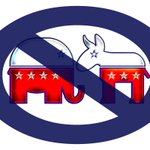






40% of Americans identify as independents — now a larger chunk of voters than any single political party, according to a recent Gallup survey.
An independent voter will vote for candidates on issues rather than on the basis of a political ideology or partisanship. Independent voters do not have long-standing loyalty to, or identification with, a political party.
This desire among independents for someone who is offering something different from the partisan status quo, continues to be the most under-appreciated factor in understanding why they vote the way they do (or don't vote).
2
People shouldn't be afraid of their government. Governments should be afraid of their people. Retweet if you agree!
Democracy functions best when the most people participate and representatives should be accountable to their entire community, not just their party.
It's estimated that 26 million Americans were barred in 2016 from voting in the presidential primaries simply because the Democratic and Republican parties chose to exclude independent voters.
Issues that animate independents across the political spectrum aren’t really issues in the traditional sense. They are about process, the way things work.
An independent voter is a person who does not want to be affiliated with any particular political party. In the United States, this means independent voters do not consider themselves to be part of either the Republican or Democratic parties. This is the wave of the future!
Independents have been, and continue to be, a restless engine for political and economic renewal. Retweet if you agree!
People who vote for independent candidates are unhappy with the two parties and have educated themselves on the merits of the candidates for whom they vote. The two party system is structured to keep the status quo while maintaining the illusion that our choice matters.
1
2
Among millennials and Latinos, 50% identify as independent and 35% of African American between the ages of 18 - 34 are independent.
Independents become independents because we are repelled by the current political system—by the self-dealing and arrogance of politicians and political parties. We are 43% of the country today. Please retweet.
Four in ten voters don’t want to be in a political party. Why? Because parties have become special interests — perhaps the biggest special interests of all.
1
2
Republicans-Democrats-they are all the same! It's time for a real change. If you are tired of party politics vote as an independent. Support independent candidates and make your vote and voice be heard. Please retweet!
3
If in your mind this upcoming election is a choice between the lesser of two evils, think again. Send a message to those in high places by casting your vote for a minor party candidate, and eventually maybe they will have a real chance at winning.
Voters must demand the opportunity to judge all candidates on their merits first & on their party labels a distant second. It’s time to break down the walls to ballot access for independent candidates & give America what it desperately needs: Competition in its politics.
1
Political independents believe a wide variety of things. Their beliefs do not fit a particular system, party, or thought pattern. Usually independents vote for a person based on policy rather than party.
1
The cornerstone of our democracy -- elections -- are becoming so utterly predictable that the House of Representatives does not represent the majority of Americans, who are increasingly choosing not to register with either major party.
The right to vote is the right that secures all others. Elections should serve all voters equally, regardless of their political party. Retweet if you agree!
1