

Postdoc @Stanford @stanfordnlp | PhD @CS_UCLA @uclanlp | @Tsinghua_Uni @Microsoft | Eubiota/AgentFlow/MathVista/ScienceQA
Palo Alto
Joined April 2016
- Tweets1.2K
- Following510
- Followers7.1K
- Likes2.9K






Pinned Tweet
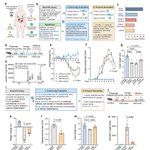
Does every thought need to become a token? #HybridAgent explores reasoning in latent space and acting through text, with shared memory across turns. Exciting work by @Jiaru_Zou and team! 🌗
🤗 HF Paper: huggingface.co/papers/2610.1…
💻 Code: github.com/togethercomputer/…
🤗 Models: huggingface.co/collections/t…


Your LLM agent has to think out loud, token by token, before it can search, run code, or act in the world.
We humans don’t. We ponder in silence and speak when it matters.
Human language was never meant to be the limit of machine thought.
Introducing 🌗Hybrid Reasoning Agents
- Think in latent space, act through text
- Two modes, one unified multi-turn flow
- No black box, fully readable latent thoughts
- Any LLM can become a HybridAgent

Pan Lu retweeted

Agents learn from what happened.
Can they learn what they should have seen coming?
Introducing 🔭 SRD: Self-Retrospection Distillation
- Prospective learning: align foresight with hindsight
- Learns from every rollout, even all-fail & groups
- Zero extra test-time inference cost

Pan Lu retweeted

OpenAI released 722 math manuscripts in a day.
Will mathematicians read them?
A proof can settle a question. Understanding it can open up a thousand more.
Introducing Readable Intelligence: making AI-generated math easier to understand and build on. readable-intelligence.com/
Pan Lu retweeted

What if,
for any scientific claim,
you can search 100M+ papers to find the strongest evidence for and against it
⚡️in 1 second?
That’s now possible with Evidence API! 🚀
paperclip.gxl.ai/evidence-ap…
For example, does drinking coffee reduce diabetes risk?
Pan Lu retweeted

Together + Stanford present Hybrid Reasoning Agents
Combines efficient latent reasoning with text-based inspection and tool interaction
Improves performance by 10.4%, while delivering ~40% token reduction, ~2× faster inference, and ~3× cost saving
repo: github.com/togethercomputer/…
abs: arxiv.org/abs/2610.18861

Pan Lu retweeted

Your LLM agent has to think out loud, token by token, before it can search, run code, or act in the world.
We humans don’t. We ponder in silence and speak when it matters.
Human language was never meant to be the limit of machine thought.
Introducing 🌗Hybrid Reasoning Agents
- Think in latent space, act through text
- Two modes, one unified multi-turn flow
- No black box, fully readable latent thoughts
- Any LLM can become a HybridAgent
Pan Lu retweeted

Deep learning is often taught as a sanitized collection of facts and math. But work at the frontier of AI is messy and empirical.
Our new class, Deep Learning Alchemy, aims to teach the art and science of deep learning in the hands-on spirit of Language Modeling From Scratch.
Students build intuition by running experiments on small LMs, then test it through prediction quizzes: given an unseen code diff, can you predict what happens?
deep-learning-alchemy.github…
My co-instructor @kothasuhas and I think there's significant demand for classes that treat students as serious learners who want to be assessed for what they’ve learned, and so we're trying a new exam-heavy approach to the class (7 exams, 85% of the grade, with the remaining 15% in-person discussion assessments).
We’ve designed the class so students can use AI agents to run their experiments and do their assignment, but they then have to demonstrate that mastery on exams without access to the assignment, and any partial credit on the exam has to come through citations to the assignment, incentivizing them to know what’s in their write-up.
The same assignments and quizzes are public for anyone to try (lecture recordings will be released through @StanfordOnline with some delay). We have some very fun assignments and quizzes covering both classic topics (like NQM, run-to-run stochasticity, and scaling laws) and new and timely topics like muP or hyperball. Made by some real experts like @TristanThrush and @wen_kaiyue
Try some quizzes below!

Pan Lu retweeted

Today’s LLMs are used to thinking longer. But can they stop when explicitly told NOT to?
Excited to share our #NeurIPS2026 work:
LLMs Keep Thinking When Told Not To
We observe persistent “Thinking Inertia”:
LLMs keep reasoning even when explicitly told not to. They may get the answer right, yet fail to follow the no-thinking instruction.
💡 Knowing when NOT to think may be just as important as knowing how to think.
Pan Lu retweeted

AI can increasingly make progress on open problems like Navier-Stokes. Yet defining a new problem still relies on human research taste.
Introducing ScholarCatalyst, a benchmark built from AI researchers’ firsthand accounts of what inspired their work.



Pan Lu retweeted
Excited to share that RecursiveMAS has been accepted at #NeurIPS2026!
Amid discussions of GPT-6 Astra and RSI,
Looped Transformers are drawing great attention for their ability to scale reasoning through recurrent depth in latent space.
Looking beyond a single model, can we scale agent collaboration through recurrent depth in latent space as well?
In RecursiveMAS, a team of agents reason just like a looped Transformer: each agent acts as a layer, passing and refining latent states across collaboration rounds. We pair this architecture with inner–outer loop training so the team learns to collaborate as a whole through recursion.
We aim to make recurrent collaboration a new scaling axis for collective intelligence, combining stronger reasoning with faster inference.
💻 Project & Demo: recursivemas.github.io
#RSI #LoopedTransformers #RecurrentDepth #LatentReasoning #MultiAgent #AgenticAI


Pan Lu retweeted

Introducing Synthetic Hospital: an open, fully synthetic longitudinal EHR benchmark with verifiable ground truth!
1,268 patients, 5,602 encounters, zero PHI. Physicians could not reliably distinguish its charts from real ones.
📄 arxiv.org/abs/2609.30027
💻 github.com/sparkcpark/synthe…
✍️ sparkcpark.github.io/posts/f…

Pan Lu retweeted

There’s a lot of excitement about AI + formal verification right now.
I’ve worked on this since 2018. I share the excitement—but the progress has also made me rethink what formalization can solve.
What Happens When Formalization Becomes Cheap?
yangky11.github.io/blog/ai-a…

Pan Lu retweeted

DCI has been accepted to #NeurIPS2026! Huge congratulations to @zhuofengli96475, @GhxIsaac, @CongWei1230, @lupantech, @DongfuJiang, and all collaborators!
Paper: arxiv.org/abs/2605.05242
Code: github.com/DCI-Agent/DCI-Age…


Our new work led by @zhuofengli96475.
Claude Code (or even simpler 𝘁𝗲𝗿𝗺𝗶𝗻𝗮𝗹-𝗯𝗮𝘀𝗲𝗱 𝗰𝗼𝗱𝗶𝗻𝗴 𝗵𝗮𝗿𝗻𝗲𝘀𝘀𝗲𝘀) + 𝗴𝗿𝗲𝗽, 𝗳𝗶𝗻𝗱, 𝗵𝗲𝗮𝗱, etc. can beat competitive search agents! No BM25/BERT/index!
"The best retriever for agentic search is no retriever."
Pan Lu retweeted

Thrilled to co-lead this effort with an incredible team!
What if agents take over thousands of GPUs and recursively improve themselves for days?
🚀 Introducing OpenRSI-Index (Preview v0.1): an open benchmark for Recursive Self-Improvement (RSI) in frontier model development.
Real research workflows. Original code & data. Fixed compute. Independent evaluation.
🧪 Signature Tasks: LLM pre-training, post-training & vision generation—50K H100-hours 🔥🔥🔥
🔁 RSI-Anything: idea → RSI task in ~1 hour. Automated review → build → run.
📣 CALL FOR CONTRIBUTORS: Bring an idea. RSI-Anything handles the rest in ~1 hour. Substantial contributions qualify for co-authorship.
Try it yourself!
🌐 Website: index.openrsi.foundation/ind…
🛠️ GitHub: github.com/OpenRSI-Foundatio…
🤝 Contribute: github.com/OpenRSI-Foundatio…
#RSI #OpenRSI #AutoResearch #Agents #OpenScience


As AI systems enter a recursive self-improvement loop, the central question is whether it can systematically move beyond human-designed methods to genuinely extend the scientific and intelligence frontier.
What’s missing is a neutral, open standard for evaluating these capabilities in real, production-scale intelligence development.
Today, we’re releasing OpenRSI-Index v0.1: evaluating whether AI can recursively improve itself and push the boundaries of intelligence and science, on production-scale clusters with 1k GPUs.
We turn fully open-source projects into autoresearch environments, with agent trajectories lasting 60+ hours. Building v0.1 took 100K+ H100-hours.
We’re building an ecosystem with and for the research community: let RSI benefit everyone, and let everyone shape RSI together.
We invite task contributors and compute partners to build this open benchmark with us - all contributors will be included as paper authors.
Shape RSI with us:
🌐 Website: index.openrsi.foundation/ind…
🛠️ GitHub: github.com/OpenRSI-Foundatio…
🤝 Contribute: github.com/OpenRSI-Foundatio…

Thanks for sharing this, Elvis. This connects to our work on @OpenRSI Index: can self-improving agents make progress that transfers beyond the tasks they optimize on? We're using real research tasks and independent evaluation. Curious how you'd stress-test an evolving harness.

Must-read paper from Google on self-improving agent harnesses.
If you auto-optimize your agent's harness, your eval score can go up while the agent gets worse on real tasks.
This paper shows how to prevent that.
Of five harness-evolution methods compared on agentic workspace tasks, RRSI scored the lowest on the tasks it evolved against and highest on all three out-of-distribution benchmarks.
Automated harness evolution proposes edits to prompts, control flow, tools and memory, keeps the ones that raise the score, and repeats.
The authors show this overfits the training tasks. Meta-Harness reached 93.0 on the Harvey LAB evolve split but gained only 0.3 to 1.5 points on JobBench, GDPval and APEX-Agents.
RRSI adds regularization on both sides of the loop.
The proposer gets an edit budget that shrinks over time and is pushed toward directions it has not tried. A critic rejects benchmark-specific edits, and a pruner removes edits that are too small, too costly or no longer useful.
RRSI scored 90.5 on the evolve split and gained 3.5 to 4.7 points on the three held-out benchmarks. In the ablation, unregularized evolution used 3.80M tokens per trial against 2.42M for RRSI. With Gemini 3.5 Flash, RRSI raised Terminal-Bench 2.1 from 64.6 to 78.7 and carried a 2.2-point gain over to SWE-bench Verified.
Paper: arxiv.org/abs/2609.24972
Chat with Paper: academy.dair.ai/papers/rrsi-…

Huge thanks to @zhuofengli96475 for co-leading OpenRSI Index! 🚀
Real research tasks, fixed compute budgets, and independent evaluation. A concrete way to test whether AI agents can improve how we build AI.
Excited to see the community push this forward.

Thrilled to co-lead this effort with an incredible team!
What if agents take over thousands of GPUs and recursively improve themselves for days?
🚀 Introducing OpenRSI-Index (Preview v0.1): an open benchmark for Recursive Self-Improvement (RSI) in frontier model development.
Real research workflows. Original code & data. Fixed compute. Independent evaluation.
🧪 Signature Tasks: LLM pre-training, post-training & vision generation—50K H100-hours 🔥🔥🔥
🔁 RSI-Anything: idea → RSI task in ~1 hour. Automated review → build → run.
📣 CALL FOR CONTRIBUTORS: Bring an idea. RSI-Anything handles the rest in ~1 hour. Substantial contributions qualify for co-authorship.
Try it yourself!
🌐 Website: index.openrsi.foundation/ind…
🛠️ GitHub: github.com/OpenRSI-Foundatio…
🤝 Contribute: github.com/OpenRSI-Foundatio…
#RSI #OpenRSI #AutoResearch #Agents #OpenScience
What happens when AI agents put thousands of GPUs to work improving AI itself?
Meet OpenRSI Index. 👇
index.openrsi.foundation/
The goal: measure whether AI research agents can improve on human-designed training recipes.
Real model-development tasks:
🔹 Pre-training
🔹 Post-training
🔹 Vision generation
⚡ Up to 20,864 H100-hours per run in the featured examples.
Can agents discover better methods? Let’s put them to the test.
Great work by @OpenRSI and the research community! 🚀
As AI systems enter a recursive self-improvement loop, the central question is whether it can systematically move beyond human-designed methods to genuinely extend the scientific and intelligence frontier.
What’s missing is a neutral, open standard for evaluating these capabilities in real, production-scale intelligence development.
Today, we’re releasing OpenRSI-Index v0.1: evaluating whether AI can recursively improve itself and push the boundaries of intelligence and science, on production-scale clusters with 1k GPUs.
We turn fully open-source projects into autoresearch environments, with agent trajectories lasting 60+ hours. Building v0.1 took 100K+ H100-hours.
We’re building an ecosystem with and for the research community: let RSI benefit everyone, and let everyone shape RSI together.
We invite task contributors and compute partners to build this open benchmark with us - all contributors will be included as paper authors.
Shape RSI with us:
🌐 Website: index.openrsi.foundation/ind…
🛠️ GitHub: github.com/OpenRSI-Foundatio…
🤝 Contribute: github.com/OpenRSI-Foundatio…
Pan Lu retweeted

The recent breakthrough in Navier-Stokes has garnered a lot of attention to the new possibilities that emerge when agents work together.
We have been interested in this question for a while. How can a team of agents achieve more than agents working alone?
I'm excited to finally share our new work, "Self-Organizing Agent Teams Learn to Reason Together" 🧵
