

MarketSplash develops modern marketing playbooks for the agentic web era. Articles, workflows, and free skills for your AI tools. All in one place.
Joined December 2019
- Tweets1.9K
- Following0
- Followers728
- Likes259







1/ AI writes a personalized sales email for almost nothing, so personalization stopped earning replies.
Every email now names the recipient's title and company. Naming them earns nothing.
What earns a reply is a reason this account should hear from you now. 🧵

5/ What fails is anything true of thousands of companies at once.
A funding round with no stated use. An industry trend. A jump in how much the account is reading about your category.
Those describe a market, not an account.
6/ Give every reason a named owner, then watch one number: the share of reasons nobody acted on inside the follow-up window.
A high share means nobody is working the accounts you paid for.
Full breakdown:
marketsplash.com/account-bas…
#ABM #B2BMarketing

1/ Neither Meta nor Google Ads has a permission that pauses ads and nothing else.
Each one gives you read-only access, or edit access that can also change budgets and bids. Nothing in between.
So an AI agent you let pause a wasteful ad can also raise your spend. 🧵

6/ So the morning script adds up the per-ad rows and compares them to the account total for that day.
More than 1% apart, and it writes nothing and prints the mismatch instead of a brief.
A quiet morning and a broken feed look identical otherwise.
7/ Give any ad agent read-only keys, and keep the pause in a separate program that fires only when a person you named clicks.
Full build, with every prompt:
marketsplash.com/ad-alert-ag…
#PPC #AIAgents #MarketingAutomation

1/ An AI agent that sends your follow-up emails can't tell a failed send from a lost confirmation.
Both look the same from its side: the request left, nothing came back. So it sends again, and the prospect gets two emails.
Nothing errors. 🧵

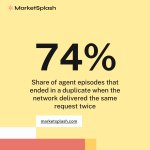
6/ In the study, 432 retries reused the original reference. None produced a duplicate.
Retries whose first attempt went out with no reference duplicated 68% of the time.
When every write accepted a reference, the overall duplicate rate fell from 28% to 4%.
7/ Treat every timeout as unknown until something reads the result.
Give every action a reference first, and the second attempt stops being a second email.
Full breakdown:
marketsplash.com/agent-retri…
#AIAgents #MarketingOps
