




AmbMax retweeted

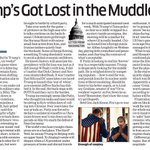
Just a few weeks ago, citing the Kepler data for September that showed oil flow through the Strait of Hormuz reached prewar levels, many jumped into the conclusion that Iran had lost the Battle of Hormuz—the Rubio-Trump line. October saw the largest number attacks on vessels in Hormuz — at least 35. In the last week of October, oil shipments through the strait averaged 7.8 million barrels a day — roughly 45% of the prewar levels.
AmbMax retweeted

#IndiaAtUN
🇮🇳’s candidate, Ms. Shivani Gupta, has been elected to the Advisory Committee on Administrative and Budgetary Questions (#ACABQ) for the term 2027–2029.
A 21-member @UN entity where members work in their independent capacity, ACABQ provides independent expert review of budgets, administrative matters, and resource proposals to ensure accountability and efficiency in the utilization of Member States’ contributions in support of UN’s global work.
Sincere gratitude to all @UN Member States for their trust, confidence and support. 🙏

AmbMax retweeted

With the revised Agnipath scheme, the situation is ripe to reopen the recruitment of Nepal Domiciled Gorkhas in Indian Army.
AmbMax retweeted

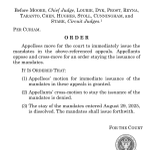
Eminent Person Judge Othman’s latest report to @UN on the death of Dag Hammarskjöld is now issued.
He considers it ”plausible” that DHs plane was forced or shot
down near Ndola in Sept 1961.
He is “almost certain”that key info still exists in archives in US ,UK and South Africa
AmbMax retweeted

JD Vance lists the top four reasons why loyal republicans switched sides to vote Democrats in this election,
1 End the Iran war
2 Focus on cost of living/inflation
3 Put America First
4 Change the US relationship with Israel
AmbMax retweeted

The US has conducted the highest number of #FONOPS against India in 2025 since records became available in 1991.
This is particularly striking given the unprecedented depth of India–US naval cooperation.
Is there a larger strategic message?
A thread. 🧵 vifindia.org/brief/2026/nove…
AmbMax retweeted

While we were absorbed in the Air Chief's changeover, former CAS ACM BS Dhanoa at @USIofIndia Mil Heritage Fest answered a question that refuses to retire: why didn't the IAF use combat air power in 1962?
The answer isn't in one note. Nor is it hidden.
iafhistory.in/2026/11/03/why…

AmbMax retweeted

HQ IDS, through @CENJOWS , commenced a two-day seminar on “Cyber-Enabled Cognitive Warfare” at Manekshaw Centre, New Delhi, bringing together senior military leaders, government officials, strategic experts, academia and technology specialists.
The deliberations examined India’s evolving threat landscape arising from the convergence of #cyber operations, #AI , information influence and human cognition, with a focus on influence operations, digital manipulation and threats to Defence Forces personnel, veterans and their families.
The seminar underscores the imperative of a coordinated, multi-domain approach to strengthen national resilience, enhance inter-agency cooperation and safeguard the information and #cognitive domains against emerging threats.
#CyberWarfare #CognitiveWarfare #CENJOWS #HQ_IDS


AmbMax retweeted
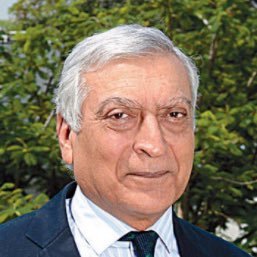
The key is not in India’s hands but in those of US, Europe and Ukraine, as well as Russia.
The issue of a European security architecture which is at the root of this conflict and has now come to a head needs a resolution by the powers involved.
Those involved are not short of ideas. They don’t need India’s ideas.
The US and Russia have had an intensive exchange of ideas.
Europe and Russia have declared positions that each side knows.
Political will is needed, not “ideas”.
The West’s political strategy is to encourage India to propose “ ideas” which perforce have to explore “neutral” ground to be credible and thus can’t endorse the Russian position. This becomes a point of pressure on Russia by its close friend.
It serves West’s interest that India speaks in the name of the Global South and how its interests are suffering and this at a time when Russia is assiduously courting it.
No doubt India needs peace as the conflict is hurting our interests too.

AmbMax retweeted

Sad to see countries keep complaining about the lawlessness Trump is bringing to the international arena, but when push comes to shove, they not only don't dare to push back; they acquiesce to US pressure.
See, for instance, the annual resolution at the UNGA condemning the US's decades-long embargo on Cuba.
This resolution gets huge support every year. But this year, the US's strong-arming tactics moved the needle significantly in Washington's direction.
Support for the Cuban resolution fell from 165 countries in 2025 to 130 in 2026, while opposition rose from 7 to 17 and abstentions more than doubled, from 12 to 25.
Colombia, Slovenia, Trinidad and Tobago and the UAE went from voting for it to voting against it.
Bosnia and Herzegovina, Costa Rica, Czechia, Ecuador, Lithuania, and Morocco moved from abstention in 2025 to an outright NO vote in 2026.
Then these countries went from supporting the resolution to abstaining:
Bahrain, Chile, Croatia, Germany, Greece, Guyana, Haiti, Honduras, Italy, Jamaica, Montenegro, Netherlands, Palau, Peru, Qatar, South Korea, Solomon Islands.
The main common denominator for these states that have abandoned their longstanding opposition to an illegal embargo is their vulnerability to and dependence on the US. As US foreign policy grows more aggressive and unforgiving, the cost of defying it on this vote has become too high. For some of the smaller states, this is understandable given their near-total dependence on the US.
But this does not apply to states such as Germany, Italy, South Korea, and the Netherlands. They don't have this excuse. Their failure is beyond embarrassing.
Germany is particularly noteworthy. Germany, for the first time, lost a bid earlier this year for an elected seat at the UNSC. This is particularly embarrassing for Germany since it has long sought a permanent seat on the Council. The overarching reason for this failure is the common view that Germany has abandoned international law - it insisted on it in Ukraine, but abandoned it in Gaza, Venezuela, and Iran.
Add Cuba to that list. Rather than restoring its standing, Germany dug a deeper hole for itself with this vote.

AmbMax retweeted
Why did the Indian Air Force come to Race Course?
The closure of the Air Force golf course at Race Course in New Delhi has attracted considerable attention. But it also offers an opportunity to revisit a rather interesting question. Why does the IAF have a station in the very heart of Lutyens’ Delhi?
Long before golf was played here, the area hosted cricket, parachute training, and RAF operations. The reason the IAF eventually established a major administrative station here in 1947 has much to do with Hyderabad State's uncertain future and the reorganisation of the Air Force at Partition.
The story begins in 1941, at Willingdon Airport.
In Sep 1941, the RAF established an Air Landing School at Willingdon Airport, now Safdarjung Airport, to train personnel of the newly raised 50th Indian Parachute Brigade. The Brigade comprised British, Indian and Gurkha parachute battalions, and the school represented one of the earliest organised efforts to develop military parachuting in India. Its equipment was rudimentary. The RAF initially had to make do with obsolete Vickers Valentia biplanes, modified to allow parachutists to jump through an opening in the fuselage floor.
Some of the earliest parachute jumps took place over the racecourse adjoining Willingdon Airport. One contemporary account describes a company commander landing on the upper tier of the racecourse grandstand and bouncing his way down to the bottom! The Air Landing School was initially housed under canvas, with accommodation and other buildings coming up near the Race Course. The school was also experimenting with the equipment and techniques required for airborne operations and aerial resupply.
Then, in April 1942, RAF Station New Delhi was formally established. Until then, Willingdon had been a civilian aerodrome used by several RAF units. A Communication Flight detached from No. 31 Squadron, RAF at Lahore had been operating from the airfield for some months. The Air Landing School occupied buildings on one side of the aerodrome, while other small RAF detachments operated alongside it.
The formation of RAF Station New Delhi brought these activities under a common Station Headquarters. The new establishment assumed responsibility for running the aerodrome, although its physical upkeep remained with the Public Works Department. The Station also administered the Air Landing School, a small Parachute Repair Section comprising one senior NCO and seven airmen, and a ground staging and refuelling party responsible for transit aircraft.
It was still a shared airfield. Civil flying continued, including operations by Indian National Airways and the Delhi Flying Club. By October 1942, when the Air Landing School moved to Chaklala near Rawalpindi, it had recorded 9,231 live parachute descents and qualified 1,511 trainees during its stay in Delhi. The 50th Indian Parachute Brigade would later see fierce fighting against the Japanese at Sangshak in March 1944.The school at Chaklala would later move to Agra where it remains to this date.
RAF Station New Delhi continued to serve the wartime Air Force. The Air Headquarters communication organisation, which itself traced its origins to a flight raised at Lahore in 1928, operated from Willingdon before moving to Palam in 1946.
But how did this RAF establishment eventually become the administrative centre of the independent Indian Air Force?
For that, we need to move forward to 1946, when the Royal Indian Air Force was beginning to consider its post-war organisation. An Air Force broadly rests on four functions: operations, training, maintenance and administration. The first three would eventually develop into operational Commands, Training Command and Maintenance Command. Administration was a somewhat different problem.
It meant managing medical services, accounts, education, security, infrastructure, transport, accommodation and the movement and holding of personnel across the country. It also meant looking after the numerous establishments that came directly under Air Headquarters but did not belong to conventional formations.
One of the early ideas was to concentrate much of this activity in peninsular India, with Arkonam (today's Arakkonam, home to the naval air station INS Rajali) emerging as a possible administrative centre.
The RIAF established a depot at Arkonam, and several important establishments were located in the Madras region. The Air Force Record Office, responsible for personnel records and the administration of airmen, had moved to Red Hills Lake near Madras in 1946. The Central Accounts Office had similarly moved from Bombay to Madras. But Partition complicated these plans considerably.
At the time, southern India comprised territories with different political arrangements. Madras was a province of British India, while Mysore and Hyderabad were princely states. The uncertainty was particularly acute in Hyderabad, where the Nizam had not committed himself to joining the Indian Union. This presented a problem for the RIAF because several of its important training establishments were situated in and around Hyderabad and Secunderabad, including at Hakimpet.
The Air Force consequently began reorganising its training infrastructure, shifting establishments towards locations where their future within India was more secure. In February 1947, No. 2 Ground Training School moved from Secunderabad to Tambaram, near Madras. No. 1 Ground Training School, formed at Hakimpet, subsequently moved to Jalahalli near Bangalore in November 1947. The RIAF Depot at Arkonam (also training airmen) also moved to Jalahalli that November.
With the southern stations being reorganised to accommodate training requirements, the earlier idea of concentrating the principal administrative establishments there became less practical.
The administrative institutions were consequently reorganised towards northern India. New Delhi was the natural destination, not least because Air Headquarters was located there and exercised functional control over many of these units, but also because RAF was vacating the Willingdon premises.
The Record Office moved from Red Hills Lake to Delhi in October 1947, while the Central Accounts Office also moved to the capital that year. The medical and other administrative establishments serving Air Headquarters formed part of the wider arrangement.
What was needed was a single organisation to administer these establishments locally while leaving their professional responsibilities with Air Headquarters. And so, on 1 Sep 1947, just seventeen days after Independence, Air Headquarters Administrative Instruction No. 01/47 established No. 10 Administrative Wing, Royal Indian Air Force, at Race Course, New Delhi.
The Wing was built upon the existing RAF establishment in the Willingdon and Race Course area. Its responsibilities extended to Air Headquarters and the numerous associated units and establishments in the capital. And the man selected to command the new Wing was quite a character.
Group Captain Kanwar 'Tiger' Jaswant Singh had joined the Indian Army in 1936 before transferring to the Air Force in 1940. He had flown with Nos. 2 and 3 Squadrons, commanded No. 2 Squadron during operations in Burma in the Second World War, and earned a reputation as a demanding commander and exceptional sportsman.
Yet, on 1 Sep 1947, Tiger found himself commanding an administrative Wing in a capital torn apart by communal violence. It was hardly a quiet assignment. The new Wing was immediately called upon to patrol riot-affected areas of Central Delhi and assist in maintaining law and order.
At the same time, Partition had divided the Air Force itself. Hundreds of airmen and their families were arriving from former RIAF establishments at Kohat, Peshawar, Risalpur, Chaklala and Mauripur, all now in Pakistan.
The Station's history records that approximately 900 airmen and 150 families required immediate boarding, lodging and assistance. It also had to help personnel moving in the opposite direction, including escorting those proceeding to Pakistan through Palam for onward travel. Tiger, who lived at 1 Kushak Road, was frequently seen travelling around Delhi on his James motorcycle, attending to the Station's responsibilities during these difficult months.
On 24 December 1947, Prime Minister Jawaharlal Nehru addressed a gathering of nearly 2,000 officers and airmen. The Wing had already begun acquiring the ceremonial responsibilities that would eventually become one of the most visible features of Air Force Station New Delhi.
In May 1948, No. 10 Administrative Wing was redesignated as an RIAF Station. When India became a Republic on 26 January 1950, the 'Royal' prefix was dropped and the establishment became Air Force Station New Delhi. The sporting history of Race Course also continued alongside its military responsibilities.
The grounds that later became associated with golf had earlier been used for cricket, while the Station continued to host athletic meets and inter-unit competitions. The Station's photographic archives include images of athletic competitions in 1948, and sporting events continued to be held at Race Course over subsequent decades.
Meanwhile, the Station's military responsibilities continued to evolve. During the 1971 War, it housed fifteen Pakistan Air Force prisoners of war, including Flight Lieutenant Pervaiz Mehdi Qureshi, who would eventually become Chief of the Pakistan Air Force.
By the time Air Force Station New Delhi celebrated its Platinum Jubilee in 2022, it was providing administrative support to 46 IAF units apart from Air Headquarters, covering approximately 10,000 personnel. Its functions extended to medical services, accounts, transport, logistics, accommodation, schools, security, ceremonial duties and numerous other activities across Delhi-NCR.
The golf course became one of the more familiar features of Race Course in later decades, particularly to generations of serving and retired Air Force personnel. But the Air Force's presence here has a much older history.
#IAFHistory @IAF_MCC


AmbMax retweeted

"While preparing the electoral roll, the ECI’s function is limited only to ensuring that every person included is an adult Indian citizen.... through documents. ECI’s role is strictly ministerial; it has no authority to conduct any inquiry— limited or otherwise— into citizenship"

AmbMax retweeted
I 'explain' in @IndianExpress on
US’s FONOPS against India and evaluate them through the prism of bilateral naval cooperation and broader relations. May like to read. @MEAIndia @SpokespersonMoD @indiannavy @DrSJaishankar @rajnathsingh
indianexpress.com/article/ex… – at Delhi, India

AmbMax retweeted

On this Israeli election day, I’d recommend reading this extraordinary @haaretzcom interview with billionaire Ronald Lauder, president of the World Jewish Congress and once one of Benjamin Netanyahu’s closest confidants.
One of Lauder’s most striking conclusions: “I realized at the end of the day that Israel really didn't want peace, but they wanted dominance.”
This is coming from someone who helped launch Netanyahu’s political career, introduced him to powerful figures in American politics and media, and secretly negotiated with Hafez al-Assad and Rafik Hariri on his behalf in the late 1990s.
In one of the interview’s biggest revelations, Lauder says Netanyahu agreed to a comprehensive peace deal with Syria and Lebanon, including withdrawal from the Golan Heights, but ultimately refused to sign it for political reasons.
“He chose politics over peace. He put his political future before the deal.”
Now 82, Lauder describes his profound disillusionment with Israel’s direction. After decades of supporting Israeli and Jewish institutions, he has sold his Tel Aviv apartment, given away his Be’er Sheva property, and says he has no intention of returning to Israel.
He warns that Netanyahu’s dependence on figures like Ben-Gvir and Smotrich is damaging Israel, alienating diaspora Jews and eroding support in Washington.
The interview is also full of fascinating details about Lauder’s role in Netanyahu’s political rise. The two became close friends in the 1980s, when Netanyahu was Israel’s ambassador to the UN, speaking almost daily at times.
Lauder says he introduced Netanyahu to speech coach Lilyan Wilder to improve his public speaking and, crucially, to Republican strategist Arthur Finkelstein, who would become instrumental in Netanyahu’s electoral success.
When Netanyahu left New York to pursue a political career in Israel, Lauder threw him a farewell party attended by some of the most influential figures in American media and politics, including Rupert Murdoch and the head of the New York Times.
Lauder recalls opening doors for Netanyahu and helping him cultivate the relationships that would underpin his rise to power.
What makes this interview so revealing is that Lauder is no longtime critic of Israel. He had been a committed Zionist, a Republican power broker, and a man who spent decades financing Jewish institutions, cultivating relationships with Arab leaders, and pursuing diplomatic openings on Israel’s behalf.
A fascinating read 👇
haaretz.com/israel-news/elec…

AmbMax retweeted
Lula da Silva’s re-election has major geopolitical importance.
Lula has been at loggerheads with the Trump administration. The latter was openly interfering in the election process by backing Flavio Bolsonaro.
This attempt to put a pro-US government in position in Latin America’s biggest country was an integral part of Trump administration’s revival of the Monroe Doctrine.
The Global South would have been weakened with Lula’s defeat. Brazil is the strongest voice of the Global South in Latin America.
BRICS would have been weakened too if the US promoted right wing had won in Brazil.
Although Flavio Bolsonaro’s father did not walk out of BRICS when he won but today with the Trump administration pressure may have put to do so.
Bilaterally too, Lula’s victory is a plus for relations with India. The agenda of bilateral ties has become much more substantial with the exchange of visits by Modi and Lula.
AmbMax retweeted

This is well said. Somehow, the UN seems to have drifted from this message. It is what it is about.

On #UNDay I think of what the UN looks like from the other side: a tent against the rain, a classroom far from home, the chance to start again after leaving home.. I know what that chance means. It was part of my story. Advancing these values has been the privilege of a lifetime.


AmbMax retweeted

My column in @TheWeekLive on the relatively low cost but high impact method of diplomatic protest: the Walkout

AmbMax retweeted
A Nusseibeh is still the co-holder of the key to the Church of the Holy Sepulchre , the holiest Christian site in Jerusalem. The last key holder I met in 2012 was Wajeeh Y. Nusseibeh. The whole story is in my book Indians at Herod’s Gate amazon.in/Indians-Herods-Gat… @indianhospice


AmbMax retweeted

"[al-Quada] is on our side in Syria"--email from policy advisor to Secretary of State Hillary Clinton (Feb 2012) wikileaks.org/clinton-emails…

AmbMax retweeted

US Secy of State Rubio says that SRIA law for sanctions on Russian oil was not planned to "punish India".
This is #Gaslighting101, given that the law was enacted a year after the US did impose 50% tariffs on India, doubled only because of its Russian oil imports.
