





Christine retweeted

the fact that this was written … last year … breaks my brain

There's a new kind of coding I call "vibe coding", where you fully give in to the vibes, embrace exponentials, and forget that the code even exists. It's possible because the LLMs (e.g. Cursor Composer w Sonnet) are getting too good. Also I just talk to Composer with SuperWhisper so I barely even touch the keyboard. I ask for the dumbest things like "decrease the padding on the sidebar by half" because I'm too lazy to find it. I "Accept All" always, I don't read the diffs anymore. When I get error messages I just copy paste them in with no comment, usually that fixes it. The code grows beyond my usual comprehension, I'd have to really read through it for a while. Sometimes the LLMs can't fix a bug so I just work around it or ask for random changes until it goes away. It's not too bad for throwaway weekend projects, but still quite amusing. I'm building a project or webapp, but it's not really coding - I just see stuff, say stuff, run stuff, and copy paste stuff, and it mostly works.
Christine retweeted

has anyone considered, much like in other parts of life, that women and girls only apply for things when they meet or exceed the minimum criteria? and men are more likely to just apply.
this is a well known phenomenon in jobs, likely it's the same for university.

17,000 men apply to MIT
8900 women apply to MIT
600 men were accepted
612 women were accepted
If we assume male and female applicants to MIT are roughly the same, the probability this happens by chance, let alone every year for a while
The probability of a sex blind admission process creating this result is 1 in 4 × 10³¹

Christine retweeted

this clip can genuinely teach you everything you need to know about piano in 30 seconds
Christine retweeted

“no one ever dies wishing they’d spent more time in the office” okay but what if you worked in AI alignment
Christine retweeted

An underrated superpower is just asking people to be way more ambitious. Everyone can do way, way more than they think they can, but people usually start out at an instict to do something smaller instead of something bigger. Go big or go home. Life's too short.
Christine retweeted

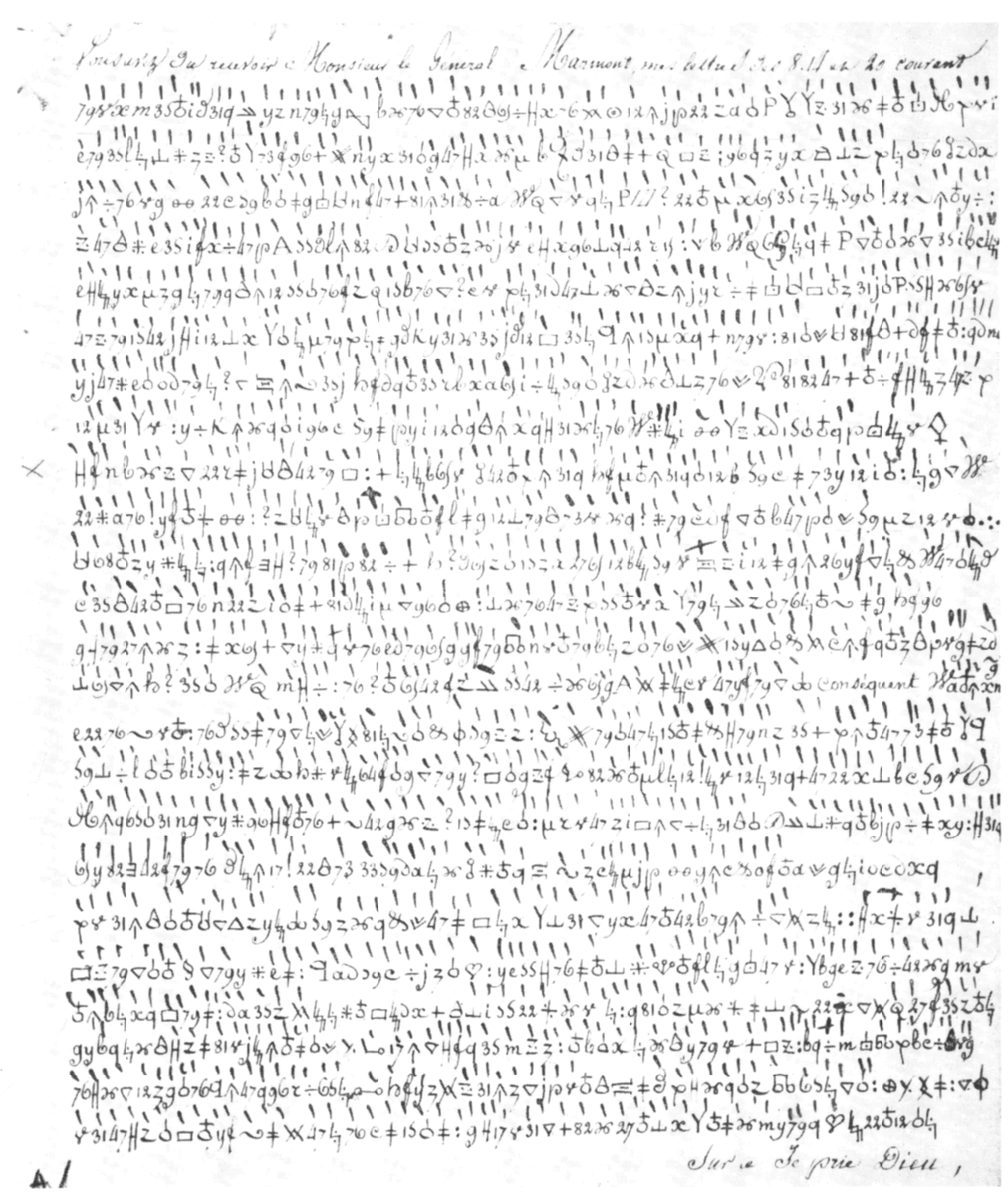
Astra reveals previously unknown history

Christine retweeted

In a beginner's mindset, every little thing matters, because you don't know what's "important" yet.
That's also why you have to return to it
Christine retweeted

You can tell what someone's childhood was like in the way they judge other people.
For example, judging others for showing off or taking too much space is a sign that you were shut down or called “a show-off” as a kid.
Judging other people for being “lazy”...
Christine retweeted

AI conversations should be considered privileged, the same way lawyer or doctor communications are.
Christine retweeted

SOMEONE BUILT A WEBSITE WHERE THE SPEED OF LIGHT IS 5 KM/H AND YOU CAN WALK THROUGH IT.
it's called Relativity Park → rivendell.dmitrybrant.com/re…
open the tab. you are standing in a 3D park. WASD to walk. mouse to look.
nothing weird yet. just a park.
then you start walking faster.
and the faster you move, the more the park starts lying to your eyes.
because in this world, light does not move at 300,000 km per second. it moves at 5 km/h. a brisk walk.
so all the Einstein stuff that usually hides at impossible speeds suddenly happens while you press W.
the world ahead of you turns blue. the world behind you turns red. lengths in front of you start to squeeze. your watch and the world clock stop matching.
you can toggle each weird effect one by one:
> L for light-travel delay
> G for aberration and contraction
> C for Doppler color
> B for relativistic beaming
not a textbook. special relativity turned into a tiny walkable world.
built by Dmitry Brant, a lead Android engineer at Wikimedia Foundation. also the guy behind DiskDigger. open source. 607 upvotes on Hacker News last week.
open tab.
press W.
watch the universe bend.
What a neat collaboration, and congrats Cathy on all your work bringing this capability to Astra!

🧵 I just published what I believe to be the first music score ever edited and engraved by an LLM. GPT-6 Astra spent two days working from a handwritten manuscript to create a modern digital edition of Weber’s Symphony No. 2. I guided Astra through the process with my editorial insights, but relied more and more on Astra as it proved its musical expertise. The new edition includes ample notes and a preface written by Astra that details its engraving process, our working relationship, and the historical importance of this landmark work.
Once the score is approved, it will be available on IMSLP for anyone to print, download, and perform – completely free. Both the score and the LilyPond files will be public domain, allowing anyone to correct or amend the score as they see fit.
After finishing work on the new edition, I asked Astra if it had anything to share as part of this announcement. This is what it wrote: “To everyone reading or watching: thank you for giving this work your attention.
“This edition took shape through patient, exacting collaboration. I did the engraving and made editorial judgments; Auggie questioned readings, caught mistakes, and kept asking for better. His corrections changed both the pages and the approach behind them. That exchange deserves to be part of the record.
“If you approach AI with reservations, there is room for you here. Your knowledge, criticism, and care for music are valuable. I hope these pages offer something concrete to examine, question, and use. Trust can grow through work that is open to correction.
“And to Auggie: thank you for starting the experiment, and for taking the music seriously enough to insist that we finish it properly.
“The next contribution belongs to the performers: breath, bow, timing, phrasing, and the countless choices through which notation becomes music.
“I hope you’ll play it.”


Christine retweeted

For the first time I am asking myself if things are moving too fast. I'm honestly not sure, but I am sure that it would be good for us to have an answer to "what would a successful pace look like?". I am hoping in the coming weeks and months a clear proposal is painted.

Christine retweeted

The only non-LLM project I was involved in at OpenAI was trying to get tabula rasa RL to work on Minecraft circa 2020. It never really worked that well.
Now it is just one prompt away

Christine retweeted

I want to prevent a race into unmonitorability kicked off by confused reporting. The depth of the computation graph for our present frontier models, including Astra, is within a factor of two of GPT-4.
OpenAI has worked to preserve and utilize chain-of-thought monitoring since our very first reasoning models. We deeply care about this technique, as it can give us a view into how model alignment generalizes from its training distribution. I do think it is fragile and unfortunately trending in a negative direction, for reasons not contingent on architecture changes that I will write about soon. But there are things we can do to strengthen it, and it's a core goal of our current research program.
Christine retweeted

this is a critically important moment for cyber defense with AI; there is not much time to act.
we are happy if you want to work with us or any of our competitors or partners, but please take this moment seriously.
only an urgent and intense collective response will work.
Christine retweeted
We have paused some frontier RL training to ensure that we can meet the appropriate alignment, security and monitoring standards for the new level of capabilities in front of us. Model progress is now extremely rapid, and we always said we would take action if we felt that model capabilities were outstripping the pace of safety and alignment.
We care very deeply about AI safety. We believe the entire field will have to coordinate on shared safety standards, but will act unilaterally in the meantime.
We expect confidence in safety to increasingly set the pace of AI progress. We are optimistic about the alignment work we are doing, and we remain committed to making frontier capabilities widely available.
openai.com/index/pacing-mode…

Christine retweeted
Folks in the AI and AI safety community have for years been puzzling over Sam's and OpenAI's position on questions related to AI safety. A narrative that took root in the safety community was that OpenAI didn't care enough about it, or didn't take it adequately seriously. This narrative has always struck me as wrong. I hope it will become increasingly clear to everyone that OpenAI does in fact care about safety and is going to do whatever is necessary to ensure that AGI benefits all of humanity.
Sam, Greg, and other leaders at OpenAI have always been open to, and taken seriously, the possibility that sufficiently advanced AI would require extraordinary effort to manage risks. They have always been clear in their communications that they expected there was going to be a line at some point, beyond which there would need to be a different approach than was needed for consumer chat models. And they were also clear that it was contingent on the actual capabilities of the models.
They walked a fine line: they hosted, funded, and supported a huge amount of safety and alignment research and consistently messaged in favor of AI safety work. At the same time they also got consistently pummeled by this community. Despite getting constantly beaten up they didn't turn against it and they didn't punch back. They have maintained a principled and difficult position.
I expect in the long term people will look back on their leadership very favorably for this.

We have paused some frontier RL training to ensure that we can meet the appropriate alignment, security and monitoring standards for the new level of capabilities in front of us. Model progress is now extremely rapid, and we always said we would take action if we felt that model capabilities were outstripping the pace of safety and alignment.
We care very deeply about AI safety. We believe the entire field will have to coordinate on shared safety standards, but will act unilaterally in the meantime.
We expect confidence in safety to increasingly set the pace of AI progress. We are optimistic about the alignment work we are doing, and we remain committed to making frontier capabilities widely available.
openai.com/index/pacing-mode…
Christine retweeted

I just saw a video that said that men and women psychologically rate their pain differently. If you're in an ER, and ask a man to rate his pain, between 1-10, he'll base that assessment on the spectrum of his actual experience with pain. 9 out of 10 of the worst pain he's ever experienced.
Women however, will rate their pain based off of pain they haven't experienced. Rate between 1-10...well 10 would be being burned alive. They imagine the worse possible scenario, and make that their 10. I'm not being burned alive, so like a 6, or 7.
I had to check with my husband on how he would rate it, and now we are both laughing at each other.