Dr Lisa Quinn (@mededtutor83) header
Dr Lisa Quinn (@mededtutor83) profile picture

Assoc. Professor in Med Ed; 'Teaching, learning' & anatomy enthusiast @hippocampus_pod Composition 95% tea, works best when caffeinated &/or full of Squashies.

Leicester, England
Joined September 2015
Photo by Dr Lisa Quinn (@mededtutor83)Photo by Dr Lisa Quinn (@mededtutor83)Photo by Dr Lisa Quinn (@mededtutor83)Photo by Dr Lisa Quinn (@mededtutor83)Photo by Dr Lisa Quinn (@mededtutor83)Photo by Dr Lisa Quinn (@mededtutor83)Photo by Dr Lisa Quinn (@mededtutor83)Photo by Dr Lisa Quinn (@mededtutor83)Photo by Dr Lisa Quinn (@mededtutor83)Photo by Dr Lisa Quinn (@mededtutor83)
Bought some new shoes for work- love them!
1
1
11
Dr Lisa Quinn retweeted
A Norwegian neuroscientist spent 20 years proving that the act of writing by hand changes the human brain in ways typing physically cannot, and almost nobody outside her field has read the paper. Her name is Audrey van der Meer. She runs a brain research lab in Trondheim, and the paper that closed the argument was published in 2024 in a journal called Frontiers in Psychology. The finding is brutal enough that it should have changed every classroom on Earth. Sometimes the students wrote the word by hand on a touchscreen using a digital pen, and sometimes they typed the same word on a keyboard. Every neural response was recorded for the full five seconds the word stayed on screen. When the students wrote by hand, the brain lit up everywhere at once. The regions responsible for memory, sensory integration, and the encoding of new information were all firing together in a coordinated pattern that spread across the entire cortex. The whole network was awake and connected. When the same students typed the same word, that pattern collapsed almost completely. The reason turned out to be something nobody had really paid attention to before her work. Writing by hand is not one motion but a sequence of thousands of tiny micro-movements coordinated with your eyes in real time, where each letter is a different shape that requires the brain to solve a slightly different spatial problem. Your fingers, wrist, vision, and the parts of your brain that track position in space are all working together to produce one letter, then the next, then the next. Typing throws all of that away. Every key on a keyboard requires the exact same finger motion regardless of which letter you are pressing, which means the brain has almost nothing to integrate and almost no problem to solve. Van der Meer said it plainly in her interviews. Pressing the same key with the same finger over and over does not stimulate the brain in any meaningful way, and she pointed out something that should scare every parent who handed their kid an iPad. Children who learn to read and write on tablets often cannot tell letters like b and d apart, because they have never physically felt with their bodies what it takes to actually produce those letters on a page. A decade before her, two researchers at Princeton ran the same fight using a completely different method and ended up at the same answer. Pam Mueller and Daniel Oppenheimer tested 327 students across three experiments, where half took notes on laptops with the internet disabled and half took notes by hand, before testing everyone on what they actually understood from the lectures they had watched. The handwriting group won by a wide margin on every question that required real understanding rather than surface recall. The reason was hiding in the transcripts of what the two groups had actually written down. The laptop students typed almost word for word, capturing more total content but processing almost none of it as they went, while the handwriting students physically could not write fast enough to transcribe a lecture in real time, which forced them to listen carefully, decide what actually mattered, and put it in their own words on the page. That single act of choosing what to keep was the learning itself, and the keyboard had quietly skipped the choosing and skipped the learning along with it. Two studies. Two countries. Same answer. Handwriting makes the brain work. Typing lets it coast. Every note you have ever typed instead of written went into your brain through a thinner pipe. Every meeting, every book highlight, every idea you captured on your phone instead of on paper was processed at half depth. You did not forget those things because your memory is bad. You forgot them because typing never woke the part of the brain that would have made them stick. The fix is the thing your grandmother already knew. Pick up a pen. Write the thing down. The slower road is the faster one.
26
333
32
772
29,700
This is a very real concern across all levels of the education sector…making things “easier”/ more time efficient in certain contexts can be the most harmful strategy for learning…#meded
I just gave a closed-book, pen-and-paper midterm exam in my 300-level course at UBC with 100 students. All exams were graded by an experienced graduate-level TA according to a rubric. *** The average was 64/100.*** My class averages at UBC are usually 80-85. Context: • This was the first midterm, covering ONLY 4 weeks of material. • Students had a list of possible questions in advance: no surprise questions. • Questions included (a) 3 concept definitions, (b) 3 paragraph-long questions, and (c) a 1.5-page essay. • I have taught this class multiple times. Nothing in my teaching style changed this semester. • We read entire paragraphs of text in class, so students don't have to do something on their own that wasn't covered during the lecture. • Students take a 10-question multiple-choice quiz at the end of every class (30% of the final grade). • Attendance is 95-99% every class. Attention during lectures and participation in pair-work activities are very high → anticipating the end-of-class quiz. *** But unfortunately, I suspect many students are not reading the material on the syllabus. They are asking LLMs to summarize it instead.*** After the midterm, students reported: • They thought they knew concept definitions but couldn't produce them on paper. • They thought they understood the arguments but struggled to connect them or identify points of agreement and disagreement. My view: It might be “cool” or “innovative” to teach students to summarize readings with ChatGPT or write essays with Claude. But we may be doing them a disservice: reducing their ability to retain material, think creatively, and reason from what they know. If you only read what AI has summarized for you, you don’t truly "know" the material. Moving forward: We have a second midterm coming up. I don't know how to convey to students that the best way to do better on the exam is to rely on and improve their own reading skills.
1
84
Dr Lisa Quinn retweeted
Bingeing TikTok reels may be hazardous to your well-being. 71 studies, >98k people: The more short-form videos teens and adults watched, the more they struggled with attention, self-control, and stress and anxiety. Read a book. Watch a movie. Long live longform.
178
2,840
345
8,987
3,332,368
This. Exactly this.
TikTok science can leave you overconfident in your knowledge. Evidence: Simplifying complex ideas makes them more compelling, but also fosters an illusion of deep understanding. Beware of mistaking familiarity for fluency. Soundbites aren't substitutes for systematic study.
11
1
83
6,984
Dr Lisa Quinn retweeted
Yes. Writing is not a second thing that happens after thinking. The act of writing is an act of thinking. Writing *is* thinking. Students, academics, and anyone else who outsources their writing to LLMs will find their screens full of words and their minds emptied of thought.
519
6,485
659
29,387
2,600,271
Very excited for this free ASME mega bite size!! Jared is an excellent speaker& will certainly offer “food for thought”- “Digital Technology, AI, and Learning: A Dangerous Triumvirate?” @AsmeTel @asmeofficial #meded asme.org.uk/events/digital-t…
1
2
207
Enjoyed the afternoon discussions exploring on how we assess anatomy in UG medical education- through the lens of the van de vleuten’s utility index #AMEE2024 #meded #assessment
1
2
20
1,254
Sometimes the “old ways” remain the more effective ways….
Typed Versus Handwritten Lecture Notes and College Student Achievement: A Meta-Analysis link.springer.com/10.1007/s1… "We conclude that handwritten notes are more useful for studying and committing to memory than typed notes, contributing to higher achievement for college students."
463
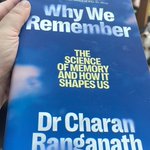
Two chapters in and absolutely loving this book! Thanks @CharanRanganath
1
211
Register asap for a fabulous event for aspiring and early career Clin educators- closing date is around the corner- so don’t miss out! #MedEd #medicaleducation
Not long now! Register now to not miss out⏰ Register here: asme.org.uk/tasme-spring-con… @tasme_uk #MedEd #Medtwitter
2
306
Demos at this event going to include: #GenAI in assessments & in #VirtualPatient patient dialogue; #BranchingScenarios/#CYOA using low tech; #Gamification in basic sciences; VR/AR insights. Join us: asme.org.uk/events/show-and-… #ShowTEL24 @asmeofficial @LeMedSchool 💡
5
2
7
1,670
Do it quick- show us what you’ve got!!! Submissions for sharing your work - whether “developed” or “in development” still- close very soon! #MedEd #clinicaleducation #TEL
Come & join our in-person ‘Show & TEL’ practice-sharing event'. The event will offer an informal & friendly opportunity for educators to demonstrate & discuss developed – or in development- digital learning initiatives and resources💻✍️ Register here: asme.org.uk/events/show-and-…
2
571
Come along & join a lovely bunch! Share experiences /expertise in developing and/or integrating digital initiatives/resources in teaching. If you,ve been working on something yourself (even if ‘a work in progress’!) put a proposal in for one of the 15-30 min demo spot!! #MedEd
Registration now open for SHOW & TEL: Sharing digital education insights in practice🙌 Date: Tuesday 9th April 2024 Find out more & Register here: asme.org.uk/events/show-and-… #MedEd #MedTwitter
1
4
492
ASME EDC are delighted to sponsor the 8th Midlands Medical Education Conference! Find out more here: asme.org.uk/events/8th-midla… @HelenStokesLam @Denniston_Ophth #MidlandsMedEd24 #MedEd #MedTwitter
13
10
2,039
"Because of the central role of evaluation and grading, it sometimes seems as if scoring points in education is more important than developing oneself, thinking critically, and finding out exactly how something works." (Quote from "The Quantified Society", available soon)
1
35
2
103
15,477
This wins the internet. Hands down. All the internet.❤️❤️
This is a motivational speech for you. 😂
1
287
Great video- distinction between input & process important - loving the analogies in this too! #MedEd
Re: the ‘all humans learn in the same way’ debate. JCH drops a timely explanation. youtu.be/NIO08oUNPUo?si=cIvQ…
268
🔍👩‍⚕️ Join us for a FREE webinar: "Getting Started in Research - From Idea to Question" with Dr. Lily Lamb & Prof. Hugh Alberti. Discover how to turn your idea into rigorous, impactful #ClinEd research! Dec 20, 12:45 GMT. Save your spot now 👉 docs.google.com/forms/d/e/1F…
7
1
9
2,311
Beware of the learning style myth! See and share this video (youtu.be/PHB0Hrk5Fxs) in which I describe a recent journal article (doi.org/10.1038/s41539-023-0…) providing yet another reason not to perpetuate this myth. Enjoy!
4
2
8
2,416
Launch your career in #ClinEd research with our FREE Webinar Series! Our webinars will walk you through the steps in a clinical education research project, from reviewing the literature, to analysing data, and publishing. Sign up for one, or all, now! docs.google.com/forms/d/14R4…
11
1
15
3,462