

Assistant Professor @UCSD @CogSci | Past: Postdoctoral researcher @MIT , Phd @Cornell, BTech @IITKanpur | Interested in biological and artificial intelligence
Cambridge, MA
Joined January 2018
- Tweets122
- Following675
- Followers1K
- Likes458




Pinned Tweet
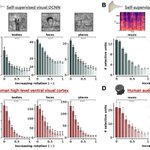
Super excited to share our recent work on privileged representational axes in biological and artificial neural networks! w/
@Nancy_Kanwisher
@JoshHMcDermott @ItsNeuronal biorxiv.org/content/10.1101/…

Super proud of this work led by Shreya showing that neural networks can organize different functions into distinct subspaces even when individual neurons contribute to several functions. To appear at #NeurIPS2026

Can a neural network have specialized computations without specialized neurons? We answer this in our latest work Neural networks are more modular than single neurons suggest (arxiv.org/pdf/2610.12842) with @meenakshik93 and Benjamin Bergen (to appear in Neurips 2026 Proceedings)!
Meenakshi Khosla retweeted

Version 2 of Theory of Contravariance is out! arxiv.org/pdf/2607.08561 New material on contravariance for Transformers, and the theory of Representational Similarity Analysis (RSA) and centered kernal analysis (CKA).
For transformers: it turns out that they have privileged axes, just like convnets, if you look in the right place (MLP layers and attention heads.) The identification of privileged heads is a potentially key result for emergence of interpretable stucture in LLMs. @meenakshik93
For RSA: it turns out that you can decompose RSMs into unique task-relevant "core geometry" and a task-irrelevant symmetry-generated term. Weak-strong equivalence holds for the core geometry and by projecting onto privileged axes you can filter out the task-irrelevant part so it doesn't interfere. This builds on work from Marvin Theiss @sciencelukas @saxelab @ermgrant
The Principle Investigator will do a deep dive on both topics in the coming days! danyamins.substack.com
Excited to share two #ICLR2026 papers from our group on making representational comparisons more faithful to the structure of neural systems.
In Multi-Level Optimal Transport, led by Shaan, we move beyond independent layer-by-layer “best match” comparisons and align entire representational hierarchies through a globally consistent optimal transport framework. Link: arxiv.org/pdf/2510.01706
In Partial Soft-Matching, led by @ckapoor07, we tackle the fact that not every neuron/voxel/unit should have a counterpart: the method isolates shared tuning correspondences while leaving unreliable or system-specific units unmatched. Link: arxiv.org/pdf/2602.19331
Meenakshi Khosla retweeted

Excited to be in Rio for #ICLR2026! 🇧🇷
If you're into Representational Alignment, Mech Interp, Multimodal Representations, Neuro AI or just want to chat, let's meet up:)
I will be giving an oral talk at the Re-Align workshop on April 27th, a mini thread:
So proud to see this out from @ckapoor07 - a really elegant and efficient way for identifying shared vs divergent tuning across model systems

Super excited to share our latest work Partial Soft-Matching Distance for Neural Representational Comparison with Partial Unit Correspondence in ICLR 2026 with the inimitable @itsneuronal and my phenomenal advisor @meenakshik93!
(1/n)
Meenakshi Khosla retweeted

Ever wished you had a bigger fMRI dataset beyond the (amazing) NSD? Introducing MOSAIC! Incredible effort led expertly by @Blahner with help from @mayukh091 in collaboration with the amazing @AudeOliva.
Meenakshi Khosla retweeted

🔵🔴 Join us this Saturday at @NeurIPSConf 2025 for the @unireps Workshop: Unifying Representations in Neural Models!
We’re excited to host an exceptional lineup of speakers and panelists:
@yuqirose @elmelis @evadyer @randall_balestr @KriegeskorteLab @abeirami @sarahookr @meenakshik93

Excited for @NeurIPSConf 2025! If you’re interested in comparative analysis of neural representations (new tools, why representations align, and large-scale audits of convergence), I’d love to chat. Our lab has several posters this year by @ckapoor07, @andre_longon, Sudhanshu Srivastava, Jialin Wu, @shreya_saha_25, Yiqing Bo, @Ansh_soni1234 @unireps

Meenakshi Khosla retweeted
🔵🔴 Join us for the UniReps Workshop: Unifying Representations in Neural Models at @NeurIPSConf 2025!
📍 Ballroom 20D, San Diego Convention Center
Dec 6
Don’t forget to fill out the participation form. Joining in person or remotely? We welcome your questions for the panel.
🔗 unireps.org/

If you’re at #EMNLP2025, don’t miss Zoe’s talk (Nov 7). The Platonic Representation Hypothesis (@phillip_isola @minyoung_huh @thisismyhat ) proposed that vision-only and language-only models — trained on disjoint data — nonetheless converge on a shared semantic structure.
But how deep does this convergence go?
Where does it emerge, what visual / linguistic cues drive it, and does it align with human judgments? So proud of Zoe, who tackled all these questions head-on!

Excited to give our oral presentation at #EMNLP2025!
Vision-only and language-only models, trained on disjoint modalities, still converge toward a shared representational space. But where does this alignment arise––and what drives it?
🗓️ Nov 7 · 11:15 AM · Room A106-107
(Session: Multimodality & Language Grounding 5)
🔗 Paper: arxiv.org/abs/2509.20751

Meenakshi Khosla retweeted

For more on the method @KriegeskorteLab and I have been developing that honors both geometry and mean response preferences (which we call "Framed RSA"), check out the poster highlights below—many thanks for the great feedback and questions from those who came by yesterday


Superposition has reshaped how we think about interpretability. In our new work (to appear at @unireps proceedings), we show it has important implications for how we measure alignment too! Two systems can represent the same features yet appear misaligned if those features are mixed differently across neurons. Huge credit to my fantastic RA @andre_longon, who led this project from theory to experiments. He’s applying to PhD programs this fall—keep an eye out for him! also to @klindt_david for an incredible collaboration. 🔗 arxiv.org/abs/2510.03186

Across toy models, ImageNet DNNs (ResNet, ViT), and even brain data (NSD), alignment scores jump once we replace base neurons with their disentangled SAE latents—showing that superposition can mask shared structure.
Thrilled to see this work out! 🎉 Beautifully led by my brilliant student Shreya Saha, who drove an ambitious, systematic comparison of models & readouts for the human visual system and and introduced a novel biologically grounded readout that surpasses prior methods.
Excited to share that our paper on modeling the Human Visual System with @meenakshik93 and Ishaan Chadha has been published under #CCN2025 (8-page paper track)!
arxiv.org/pdf/2410.14031
(1/n)
Meenakshi Khosla retweeted

Super excited to share our new article: “Dissociable cortical regions represent things and stuff in the human brain” with @Nancy_Kanwisher, @PramodRT9 and Josh Tenenbaum
Video Abstract: youtube.com/watch?v=B0XRG_G6…
Paper: authors.elsevier.com/a/1lWxv…
